
Export Verified Solutions
High-Velocity Engineered Systems for Japanese Projects
Pre-selected composite decking, cladding, and architectural outdoor modules manufactured to withstand extreme Asian maritime microclimates.
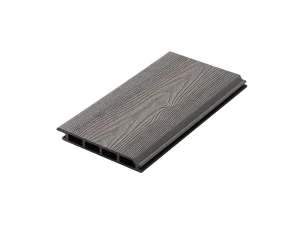
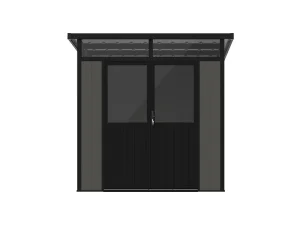
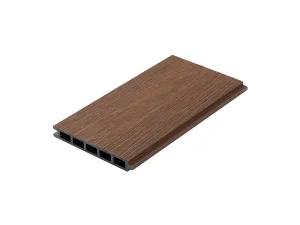
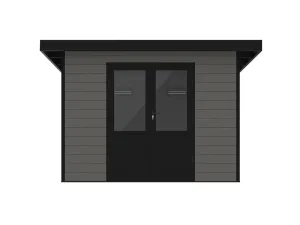
Industrial Whitepaper Report
Macroeconomic Landscape & WPC Transition in Japan
Analysis of Japan's structural timber shortage, the 2050 Carbon Neutral Policy, and the transition toward recycled polymer-matrix composites in Japanese civic engineering.
Japan's "Wood-Shock" Shift
Following chronic domestic cedar (Sugi) processing shortages and post-pandemic import volatility, Japan's Ministry of Land, Infrastructure, Transport and Tourism (MLIT) has accelerated mandates for synthetic timber composites across public facilities and multi-family residential assets.
Typhoon & Tsuyu Resiliency
The annual East Asian rainy season (Tsuyu) coupled with Category 4-5 typhoons brings severe fungal decay, dimensional twisting, and fastener pull-out in traditional wood. Capped co-extruded WPC provides complete moisture non-porosity, preventing micro-organic rot in humid coastal prefectures.
CASBEE Green Building Ratings
Japanese tier-one general contractors (Zenecon) actively favor building materials contributing to CASBEE environmental efficiency. Forestar's utilization of up to 90% post-industrial circular polymers and reclaimed wood flour provides measurable ESG credits for sustainable urban renewal.
Architectural Integration
Tailored Application Profiles Across Japanese Prefectures
From sub-zero Hokkaido thermal shifts to the humid subtropical conditions of Okinawa, Forestar WPC modules solve acute localized engineering challenges.
Heavy Snow Load Regimes (Hokkaido / Tohoku)
Engineered storage sheds and decking frameworks reinforced with internally ribbed galvanized steel cores resist cyclic snow compaction reaching 120 kg/m² without beam sagging, warping, or brittle failure in sub-zero thermal cycling.
Coastal Salt-Fog Exposure (Seto Inland & Okinawa)
Total resistance to saline oxidation. Unlike steel buildings that rust or timber that delaminates under maritime winds, our 360-degree capped fluoropolymer skin prevents chloride ion ingress and retains UV structural integrity.
Seismic Interlocking Tolerances (Kanto / Kansai)
Engineered concealed clip arrays feature engineered micro-expansion margins. This accommodates multi-directional shear displacement during seismic tremors without snapping clip fixtures or buckling deck board runs.
Operational Excellence
Chinese Manufacturing Precision & Supply Chain Resilience
Combining world-class extrusion efficiency in Xuancheng, Anhui with short-sea direct shipping routes to Japan's primary maritime container hubs.
Short-Sea Transit to Tokyo & Osaka
Forestar's direct shipping corridors from Ningbo and Shanghai guarantee port-to-port arrival times of 3 to 5 days to Tokyo, Yokohama, Osaka, and Kobe, empowering Japanese trading conglomerates with reliable JIT inventory rotations.
Vertical Integration & Cost Control
From in-house polymer formulation and wood micronization to proprietary extrusion dies and co-extrusion capping, Forestar controls the full manufacturing stream, mitigating global price spikes for distributor stability.
Stringent Six-Sigma QA Protocol
Every extrusion batch undergoes rigorous hot-water immersion testing, impact resistance checks, spectrophotometric delta-E color matching, and flexural creep analysis, conforming with ISO 9001 and strict Japanese commercial specs.
Future Horizon
Technical Roadmap: Next-Generation Composite Innovation
Driving forward the frontier of synthetic polymer-wood chemistry for demanding architectural and infrastructural environments.
Phase 1: Present Deployment
Heat-Reflective Cool-Touch Cap
Infusion of specialized infrared-reflective ceramic pigments within the 360-degree polyethylene protective shield, reducing surface temperatures under direct midday solar irradiation by up to 12°C compared to conventional composites.
Phase 2: Transition Protocol
Bio-Circular Carbon-Negative Matrices
Integration of certified bio-based thermoset waste alongside recycled marine plastics, achieving full lifecycle circularity and zero-VOC off-gassing, directly addressing Japan's corporate scope-3 emissions accountability.
Phase 3: Next Horizon
Self-Extinguishing Flame-Retardant Systems
Formulation of mineral-infused core matrix composite alloys reaching non-combustible performance benchmarks for dense municipal architectural and high-rise balcony fire egress standardizations across downtown Tokyo.
Compliance & Partnership
Global Standards Alignment & Dedicated OEM Support
Ensuring complete documentation conformity, structural transparency, and supply security for Japanese distributors and global developers.
Full Dossier Compliance
Complete testing reports are pre-compiled for SGS, CE, FSC, REACH, RoHS, and Japanese Building Standard Law guidelines, expediting customs clearance and architectural submittal approvals.
Bespoke OEM / ODM Capabilities
Custom profile cross-sections, hollow versus solid board adaptations, customized length cut-to-order protocols (e.g., standard Japanese 2000mm / 3000mm building dimensions), and distributor-branded packaging.
Dedicated International Trade Support
Multilingual account managers provide comprehensive project takeoff calculations, container space optimization matrices, and physical sampling kits dispatched directly to your Tokyo or regional office.
Complete Catalog Lineup
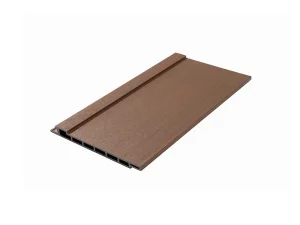
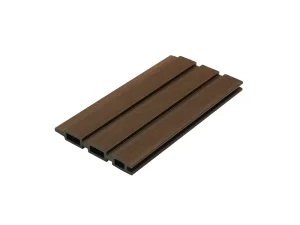
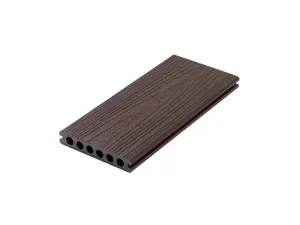
Hot Products Series: Extended Architectural Line
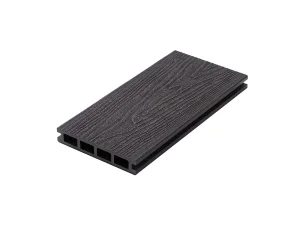
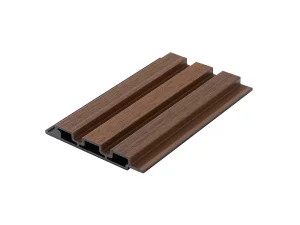
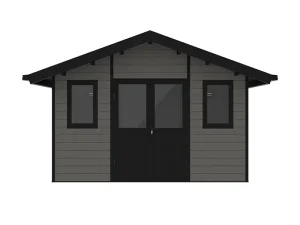
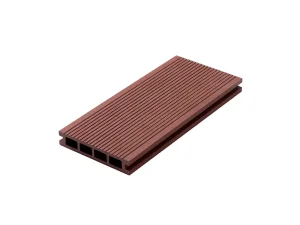
Explore the full breadth of Forestar's factory-direct exterior cladding, anti-slip pool decking, heavy-duty snow-rated storage, and private security fencing.
Procurement Intelligence
Frequently Asked Questions: Sourcing for Japan
Essential guidance covering technical compliance, port logistics, custom dimensions, and long-term durability performance.
How do Forestar WPC formulations comply with Japanese Industrial Standards (JIS A 5741)?
Our specialized export formulations for Japan strictly align with JIS A 5741 parameters, emphasizing flexural strength, linear thermal expansion stability, screw-holding force, and volatile organic compound (VOC) limits. Test documentation validated by recognized third-party laboratories like SGS and Intertek is provided with every container manifest.
What are the lead times and shipping logistics from Anhui to major Japanese ports?
Production lead time for standard containerized orders averages 14 to 21 business days. Our factory in Xuancheng, Anhui, maintains bonded trucking corridors to Shanghai and Ningbo ports. Port-to-port maritime freight to Tokyo, Yokohama, Osaka, Nagoya, and Kobe typically takes only 3 to 5 days, enabling faster cycle times than European or Southeast Asian alternatives.
Can Forestar produce custom dimensions tailored to standard Japanese architectural grids (Ken/Shaku)?
Yes. We routinely manufacture lengths tailored to standard Japanese modular construction systems (such as 1,820mm, 2,000mm, and 3,640mm lengths), significantly minimizing on-site cutting, labor overhead, and material waste for Japanese contractors and pre-fab builders.
How does the composite surface withstand extreme UV exposure and high summer humidity?
Our capped co-extrusion technology surrounds the recycled polymer-wood core in a 360-degree high-density polyethylene protective barrier embedded with high-grade hindered amine light stabilizers (HALS) and antioxidant matrices. This structure achieves less than 0.05% moisture absorption while maintaining color fastness (Delta E < 3.0) over decades of direct weathering.
Is it possible to mix different product categories within a single shipping container?
Yes. We actively support container consolidation across our composite deck boards, exterior cladding profiles, privacy fence panels, and garden shed flat-packs. Our logistics engineering team calculates load volumes to maximize container cube utilization and minimize transit damage.