
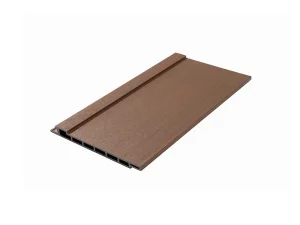
Architectural Cladding
Direct from our precision manufacturing facility in Xuancheng, Anhui, China. Explore our verified composite cladding profiles, acoustic fence assemblies, and weather-sealed modular outdoor structures.
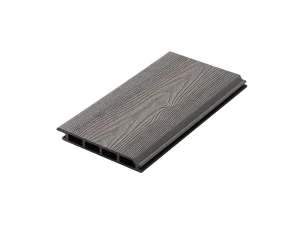
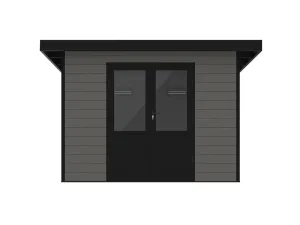
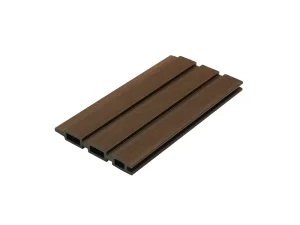
How institutional developers, wholesale distributors, and façade engineers mitigate structural and supply-chain liability through empirical composite material vetting.
"Modern architectural cladding procurement has migrated from aesthetic evaluation to granular mechanical physics. Specifiers demand verifiable thermal expansion coefficients (ΔT ≤ 35×10−6 K−1), zero rot risk in extreme humidity, and quantifiable Life Cycle Assessments (LCA) capable of securing LEED v4.1 and BREEAM certifications."
Unlike natural timber, which experiences hygroscopic dimensional movement perpendicular to the grain, wood-plastic composites exhibit linear thermal expansion along the extrusion axis. Forestar incorporates proprietary coupling agents (maleic anhydride grafted polyethylene, MAPE) that bridge inorganic wood flour with polyolefin polymers, restricting thermal elongation to less than 1.2 mm per linear meter across a 50°C thermal delta.
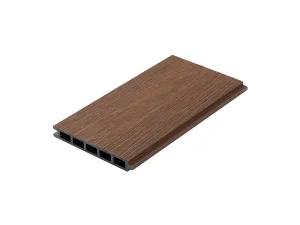
Our PlaneSleek and SlatWeave series employ dual-screw simultaneous co-extrusion technology. The core matrix (composed of 55% recycled hardwood flour and 35% recycled HDPE) is permanently bonded with a 1.0mm-1.5mm modified polymer shell infused with Hindered Amine Light Stabilizers (HALS) and nano-ceramics, preventing moisture sorption (≤0.5% after 28 days direct immersion) and microbial degradation.
Façade integrity under severe cyclic wind-loading requires rigorous structural testing. Forestar composite wall cladding profiles undergo ASTM E330 / EN 12179 uniform load deflection verification. Equipped with concealed 304/316 marine-grade stainless-steel clips, our systems demonstrate fastener shear resistances exceeding 2.4 kN per anchor node, enabling use on high-rise structures.
Addressing moisture migration, continuous insulation (ci), and thermal bridging in modern residential and commercial architectures.
When installed on aluminum or treated timber sub-frames with a minimum 20mm-38mm continuous air gap, Forestar WPC cladding functions as an engineered pressure-equalized rainscreen. The pressure gradient between exterior ambient air and the interstitial cavity induces an upward convective airflow (stack effect), rapidly evaporating wind-driven rain and preventing interstitial condensation behind the primary weather barrier.
Conventional metal or solid masonry façades often suffer from severe thermal bridging across structural studs. Forestar composite profiles have an inherently low thermal conductivity (λ ≈ 0.13 W/m·K). By decoupling exterior radiative heat from the building core, our cladding systems assist in maintaining continuous R-value insulation, reducing HVAC operational cooling loads by up to 18% in high-ambient-heat zones.
With an extruded density exceeding 1.35 g/cm³, Forestar dual-phase WPC panels exhibit exceptional acoustic mass. Standard installations offer a Sound Transmission Class (STC) improvement of 8 to 12 dB across mid-to-high frequency bands (500 Hz to 2000 Hz), mitigating airborne urban traffic noise in mixed-use residential developments and hospitality settings.
| Performance Characteristic | Forestar Capped WPC | Untreated Softwood Timber | Fiber Cement Siding | Aluminum Composite Panels |
|---|---|---|---|---|
| Bulk Density (ρ) | 1.30 – 1.40 g/cm³ | 0.45 – 0.55 g/cm³ | 1.20 – 1.35 g/cm³ | 1.50 – 1.80 g/cm³ |
| Moisture Absorption (24h) | ≤ 0.5% (Impermeable) | 15.0% – 25.0% (Severe) | 8.0% – 12.0% (Moderate) | 0.0% (Non-porous) |
| Maintenance Cycle | None (Soap & Water Wash) | Annual Stain / Seal (High Cost) | Repainting every 5–7 Years | Periodic Clean / Sealant Upkeep |
| Biological Decay / Termite | Immune (Synthetic Shell) | Susceptible to rot / bugs | Immune | Immune |
| Recycled Composition | Up to 90% Circular Content | 0% (Virgin Harvest) | 5% – 15% Industrial Byproducts | Variable (High Embodied Energy) |
| Thermal Expansion (α) | 35 × 10−6 K−1 | Anisotropic / Swelling | 10 × 10−6 K−1 | 24 × 10−6 K−1 |
Strategic advancements implemented across Forestar's continuous extrusion facilities to optimize longevity, circularity, and structural safety.
Integration of surface-modified sub-micron titanium dioxide and silica nanoparticles within the capped outer shell, yielding a scratch resistance grade 4 (EN 15534-1) and preventing superficial micro-fractures under intense UV bombardment.
Cool-Touch surface technology utilizing complex inorganic color pigments (CICPs) that reflect near-infrared (NIR) solar radiation. Reduces surface temperature buildup by 8°C to 12°C relative to traditional dark timber and dark composite facades.
Replacing traditional post-consumer fossil-derived polymers with second-generation bio-resins synthesized from agricultural residues. Targets a net-zero cradle-to-gate carbon footprint across all SlatWeave and PlaneSleek profiles.
Direct supply of parametric Revit, IFC, and ArchiCAD models pre-loaded with Life Cycle Assessment (LCA) data, environmental product declarations (EPD), and structural load calculation parameters for automated green-building verification.
Forestar composite cladding, fencing, decking, and modular outdoor storage systems comply with demanding structural, fire, and toxicity frameworks worldwide.
Certified in accordance with ASTM D7032 (Standard Specification for Establishing Performance Ratings for Wood-Plastic Composite Deck Boards and Guardrail Systems) and ASTM E84 Surface Burning Characteristics (achieving flame spread index ≤ 75 for Class B commercial applications). ICC-ES acceptance criteria compliance protocols ensure effortless approvals across all US municipal building divisions.
Exhaustive compliance with EN 15534 parts 1 and 4 for load-bearing wood-polymer composites. Fire propagation tested to EN 13501-1, reaching Euroclass B-s1, d0 flame retardancy with minimal smoke production and zero flaming droplets. Verified SVHC-free under EU REACH regulations and audited annually under FSC Chain of Custody standards.
Evaluated under AS/NZS 1530.8.1 for structures subject to ember attack and radiant heat flux up to BAL-29 (Bushfire Attack Level). High salt spray fog resistance (ASTM B117 > 1,000 hours) validates coastal infrastructure deployment across Sydney, Brisbane, Auckland, and tropical Pacific islands.
Operational strategies designed to eliminate supply-chain bottlenecks, reduce dead freight, and protect profit margins for trade importers.
Maximize ocean freight utilization by combining long-run cladding boards, decking profiles, modular WPC fencing kits, and flat-pack garden shed components inside a single 40ft High Cube container. We handle cubic volume balancing at our Xuancheng facility to ensure zero wasted volumetric capacity.
Partnering with major regional building merchants across Europe, North America, and Latin America. We support bespoke die extrusion engineering, proprietary grain roller embossing patterns, barcoding integration, and localized branded export crating tailored to domestic retail distribution.
Continuous trade engagement backed by seasoned multilingual technical directors. Connect with Forestar at premier international construction events, including PISCIMAD in Madrid (Booth 7A49), or schedule an in-depth on-site audit of our automated production lines in Anhui, China.
Comprehensive answers compiled by our chief chemical engineers and export logistics specialists for architects, façade consultants, and master distributors.
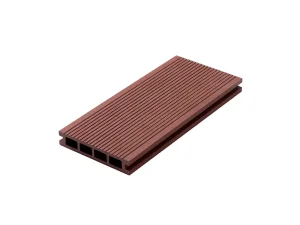
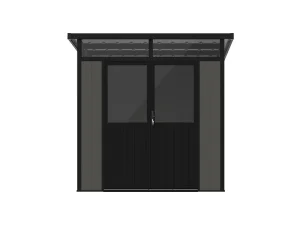
Complete your procurement specifications with our companion composite decking boards, boundary acoustic screens, and lockable storage structures.
Contact our technical export engineering desk for custom extrusion dies, comprehensive ASTM/EN test packages, container load simulations, and localized project sample boxes delivered via air courier within 3 business days.