
High-Performance Perimeter & Surface Systems
Engineered for maximum tensile stability, zero toxic coatings, and seamless integration across modern outdoor architectural spaces.
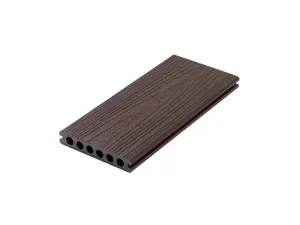
TerraShield Low-Maintenance WPC Decking Systems
Explore Product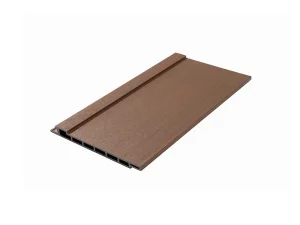
Forestar SlatWeave Waterproof Deck Cladding
Explore Product
TerraShield High-Durability Modular WPC Profiling
Explore Product
TerraShield Bio-Polymer Architectural Decking
Explore Product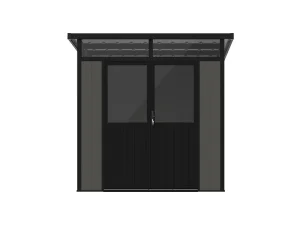
MiniStar Modular Outdoor Storage Shed Series
Explore Product
FORESTAR SlatWeave Exterior Facade Cladding
Explore Product
MiniStar Secure Lockable Modular Utility Shed
Explore Product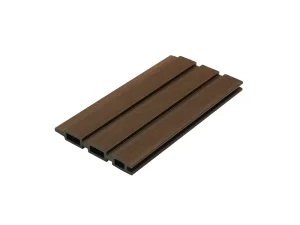
WPC Privacy Fencing with Hidden Fastener Matrix
Explore ProductMacro Industrial Solutions & Global Commercial Shift
An authoritative analysis of civil perimeter architecture, environmental regulations, and material transitions from treated timber to co-extruded bio-composites.
In modern industrial real estate and residential master planning, the traditional perimeter fence is undergoing a radical technical evolution. Historically reliant on chromated copper arsenate (CCA) chemically-treated softwoods or carbon-intensive galvanised chain links, modern developers face stringent environmental standards (such as EU Deforestation Regulation and LEED v4.1 certification). Traditional timber demands biennial painting, toxic biocide coatings, and still succumbs to subterranean fungal rot within a 7-to-10-year cycle.
The Global Composite Alternative: As an integrated fencing manufacturer operating an automated compounding and extrusion facility in Xuancheng, Anhui, our manufacturing facility engineers solutions directly targeted at solving cross-climate failure points. Wood-Plastic Composite fencing engineered from up to 90% reclaimed high-density polyethylene (HDPE) and refined industrial hardwood micro-fibres delivers tensile equilibrium, imperviousness to moisture intrusion, and superior UV degradation thresholds (ΔE < 3.0 after 3000h QUV exposure).
Perimeter Structural Integrity
Multi-cavity internal reinforcement paired with aerospace-grade anodised aluminium core posts withstands wind load pressures exceeding Eurocode 1 (EN 1991-1-4) standards up to Beaufort Scale 11.
Zero Chemical Leaching
Zero microplastic shedding and zero chemical runoff ensure safety for perimeter zones surrounding agricultural hubs, public kindergarten perimeters, municipal parks, and potable water reservoirs.
Acoustic Attenuation Design
Solid-core and co-extruded acoustic fencing panels deliver documented weighted sound reduction up to Rw = 29 dB, providing high-efficiency sound barriers along arterial transportation corridors.
Localized Support & International Compliance Assurances
Seamless qualification across European, North American, and Oceanian industrial building statutory requirements.
CE & EN 15534 Testing
Full CE certification conforming to EN 15534-1:2014 and EN 15534-5:2014. Verified mechanical properties covering flexural resistance, impact loads, and cyclic thermal stress tests.
Fire Safety Specifications
Engineered fire-retardant compounding achieves Class Bfl-s1 / ASTM E84 Class A flame spread indices, ensuring compliance in wildland-urban interface (WUI) zones and dense master communities.
Customs & B2B Logistics
Dedicated customs documentation support including Certificates of Origin (Form A, RCEP), REACH declarations, heavy metals test reports (RoHS), and flat-pack optimized loading geometries.
Localized Engineering Use Cases & Field Adaptations
How composite perimeter engineering resolves real-world climatic and architectural challenges globally.
Arid & High-UV Enclosures (Middle East / SW USA)
Incorporating micro-titanium dioxide and hindred amine light stabilizers (HALS), boards resist 50°C+ thermal fluctuations without surface blistering, warp, or photodegradation chalking.
Sub-Zero Freeze-Thaw Zones (Nordics / Canada)
Closed-cell co-extruded outer cap layers boast water absorption metrics under 0.5%, preventing internal ice crystallization that fractures standard cellular PVC or wet-processed softwood boards.
Coastal Salt-Mist Perimeters (Oceania / Caribbean)
Eliminating galvanic corrosion risks, our hidden fastener clips utilize marine-grade 304/316 stainless steel combined with non-porous polymer caps completely impervious to salt air oxidation.
Technical Roadmap & Factory R&D Trajectory
Leading the next generation of circular composite technology with integrated smart IoT capabilities.
Phase I: 100% Recycled Circular Carbon Stream
Establishing closed-loop post-consumer plastic reprocessing to lift verified recycled resin ratios to 95%, with life cycle assessments (LCA) verifying net-negative carbon footprints per metric ton.
Phase II: Structural Bio-Resin Nano-Reinforcement
Integrating graphene micro-platelets into the structural polyolefin matrix, increasing elastic modulus by 40% while slimming profile weight for lower international ocean freight emissions.
Phase III: Smart Boundary Sensor Integration
Co-extruding microscopic sensor conduits directly inside hollow posts to accommodate plug-and-play IoT security, low-voltage perimeter ambient lighting, and seismic intrusion alert networks.
Comprehensive Fencing & WPC Procurement FAQ
Technical clarifications designed for civil contractors, commercial distributors, and OEM purchasing managers.
What sets industrial co-extruded composite fencing apart from 1st-generation WPC?
First-generation WPC was uncapped, leaving organic wood fibers exposed to atmospheric moisture, resulting in surface staining and progressive fungal decay. Our co-extruded fencing systems feature a 360-degree protective fluoropolymer shield that completely seals the core, providing absolute stain, scratch, and UV resistance.
How do composite fencing posts compare against steel and CCA-treated pine posts?
Treated pine posts rot at ground level within 7–10 years due to soil microbe exposure, while galvanised steel posts are susceptible to electrolytic rust and aesthetic oxidation. Our reinforced composite posts, braced with internal heavy-gauge aluminium profiles, deliver non-corroding, rot-free structural performance rated for over 25 years without maintenance.
What are the maximum recommended center-to-center post spans for hurricane zones?
For regions subject to high dynamic wind pressures (such as coastal Florida or the Australian eastern seaboard), we engineer post centers at 1.2 meters to 1.5 meters using internal aluminium structural stiffeners. Standard residential setups safely support 1.8-meter post spans.
How does the factory manage thermal linear expansion across extreme seasons?
WPC natural expansion and contraction coefficients approximate 1.5 to 2.0 mm per linear meter across a 30°C temperature delta. Our modular tongue-and-groove tongue pockets and post slot profiles include integrated expansion clearances, ensuring zero board buckling during heat waves or joint dislocation during deep winter freezes.
Can importers consolidate decking, cladding, sheds, and fencing in a single 40ft HQ container?
Yes. As a comprehensive production facility covering 4 unified product sectors, our manufacturing schedule enables direct multi-category freight consolidation. This minimizes inventory holding costs for international distributors and maximizes container cubing efficiency up to 98%.
What documentation is provided to satisfy project architectural tenders?
Every commercial production run includes batch-specific factory Quality Assurance certificates, third-party SGS test reports covering ISO 178 flexural strength, EN 13501 fire classifications, anti-slip certifications, and verified Life Cycle Assessment (LCA) declarations.
Complete Architectural WPC & Fencing Solutions
Explore our secondary lineup featuring anti-slip deck profiles, heavy-duty outdoor storage, and commercial cladding panels.
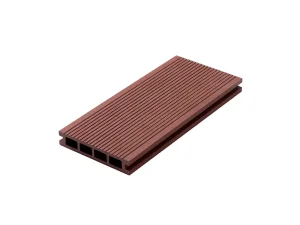
TimberFlow Anti-Slip Heavy Commercial Decking
Explore Product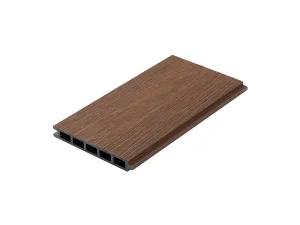
HorizonLine Engineered WPC Modular Fence Panels
Explore Product
HorizonLine Boundary Composite Screening Slabs
Explore Product
FORESTAR Weatherproof Cladding Architectural Panels
Explore Product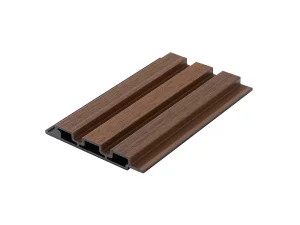
CrestWall Exterior Wood-Polymer Fluted Siding
Explore Product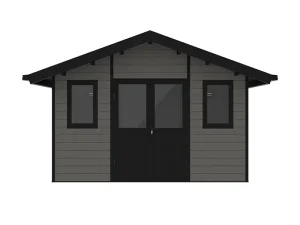
RidgeStar Heavy Snow Load Reinforced Storage Shed
Explore Product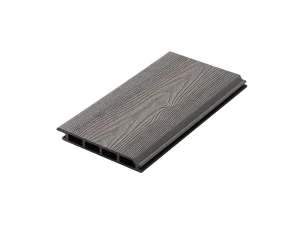
PlaneSleek Anti-UV High Protection Exterior Facade
Explore Product