
High-Performance Exterior Enclosure Systems for Houston Projects
Engineered to resist the intense heat, UV degradation, and storm surges of Harris and Montgomery County developments. Verified by international ASTM mechanical standards.
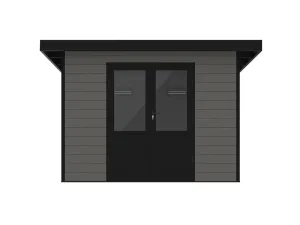
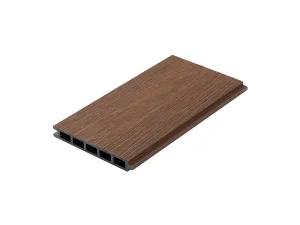
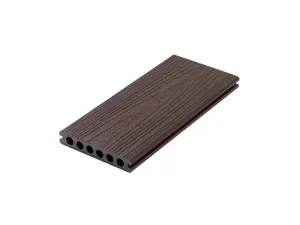
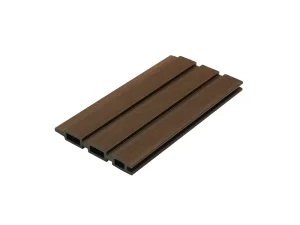
Engineering Facades for the Texas Gulf Coast Micro-Climate
The Greater Houston metropolitan area presents an exceptionally demanding convergence of environmental stressors that rapidly accelerate the mechanical breakdown of conventional exterior cladding materials.
Extreme Hygrothermal Cycling
Houston’s International Energy Conservation Code (IECC) Climate Zone 2A status dictates severe humidity, torrential precipitation, and rapid thermal cycling. Standard porous timber or unshielded composites suffer internal fiber swelling, micro-cracking, and rotting under persistent Gulf moisture vapor pressures.
Severe Solar Radiation & UV-B
With annual solar irradiation often reaching UV Index ratings above 10 across more than 110 summer days, non-engineered architectural facades experience photo-oxidation, polymer matrix embrittlement, and drastic color shifting (Delta-E degradation) unless shielded by advanced fluoropolymer co-extrusion caps.
TDI Windstorm & Shear Pressures
Harris, Galveston, and Brazoria counties fall within designated Windstorm Inspection Areas. Commercial cladding facades must withstand positive and negative cyclic design wind pressures up to 140–150 mph without clip failure, anchor pull-out, or longitudinal bowing across the substructure.
The Evolution from Commodity Siding to Bio-Polymer Composite Envelopes
Across the United States and global metropolitan centers, building envelopes are undergoing an aggressive transition away from high-embodied-carbon aluminum and toxic preservative-treated softwoods toward high-density engineered composites.
Modern commercial architects, energy auditors, and general contractors in Texas are actively moving beyond traditional autoclaved fiber cement, cedar shake, and mineral wool assemblies due to life-cycle maintenance costs and catastrophic moisture retention issues. The introduction of 360-degree co-extruded wood-plastic composite (WPC) cladding delivers an impervious barrier that addresses building envelope failures common to sub-tropical regions.
By blending refined recycled lignocellulosic fibers with post-consumer polyolefins at a microscopic compounding ratio, our composite formulation suppresses directional thermal expansion while maximizing flexural rigidity (modulus of rupture). Capping the structural core with a modified cross-linked polyolefin shield seals the material against moisture absorption, hydrocarbon pollution in industrial corridors, and bio-growth such as black mold and fungal rot.
Globally, sustainable construction frameworks such as LEED v4.1, BREEAM, and the Living Building Challenge require quantifiable reductions in embodied carbon. Utilizing up to 90% recycled raw feedstocks prevents deforestation while actively mitigating municipal plastic waste streams.
When installed within a rear-ventilated rainscreen (RVR) assembly, our cladding panels create a continuous chimney-effect ventilation cavity. This thermal break actively dislodges interstitial condensation, blocks radiant convective heat transfer from penetrating commercial insulation, and drastically curbs HVAC electrical consumption during Houston's relentless heat waves.
| Performance Characteristic | Forestar Capped WPC Façade | Fiber Cement Siding | Treated Natural Cedar | Stucco / EIFS Envelope |
|---|---|---|---|---|
| Moisture Absorption (ASTM D1037) | < 0.35% (Submersion stable) | 8.0% – 12.0% (Capillary prone) | Up to 25.0% (Swelling/rot) | Permeable / Prone to micro-fractures |
| Maintenance Cycle | Zero sealing, soap-and-water wash | Repainting required every 5–7 yrs | Annual chemical staining/sealing | Patching & elastomeric recoating |
| Termite & Bio-Rot Resistance | Immune (Inert polymer shield) | High resistance | Vulnerable to subterranean termites | Vulnerable to mold colonization |
| Thermal Expansion Control | Calibrated expansion gap joints | Brittle, cracking at joints | Cupping, twisting, warping | Expansion joint cracking |
| Carbon Footprint / Recycled % | Up to 90% recycled content | High embodied carbon (clinker) | Virgin timber depletion | High energy manufacturing |
Localized Support & Regulatory Compliance for Harris County
Streamlined logistics, direct container consolidation, and strict adherence to Texas building mandates and International Building Code (IBC) guidelines.
IBC Section 1404 Compliance
Full engineering submittal packages including ASTM D7032 performance reports, evaluation of transverse wind-load resistance, deflection limitations under live load conditions, and creep testing data for structural municipal approvals.
Fire Protection (ASTM E84)
Formulations tested for Flame Spread Index (FSI) and Smoke Developed Index (SDI), offering Class A rating compatibility essential for commercial developments, healthcare facilities, and multi-family residential zoning in dense urban centers.
Port of Houston Logistics
Factory-direct consolidated container deliveries direct to Bayport Container Terminal (BPT) or Barbours Cut, eliminating intermediate distributor margins, providing job-site staging, custom extrusion lengths, and coordinated schedule dispatch.
Houston Application Scenarios & Architectural Implementations
Engineered flexibility designed to excel across distinct structural topologies throughout the Texas Gulf metropolitan expanse.
Energy Corridor Corporate Campuses & R&D Hubs
For high-profile corporate facilities along Interstate 10, Eldridge Parkway, and Memorial Drive, our architectural cladding profiles offer warm, organic timber aesthetics combined with zero structural deterioration. Integrated rainscreen designs protect precision interior laboratories and server clusters by blocking external humidity penetration and insulating exterior structural concrete slabs.
Ship Channel & Industrial Corridor Admin Facilities
Along the Houston Ship Channel, Pasadena, and Baytown, ambient air carries elevated levels of airborne chemical particulates and maritime saline fog. Metal siding frequently experiences premature rust, while brick mortar joints can deteriorate under acidic precipitation. Capped WPC panels resist chemical absorption, requiring only an occasional pressure wash to retain structural integrity.
High-Density Mixed-Use in Midtown & The Heights
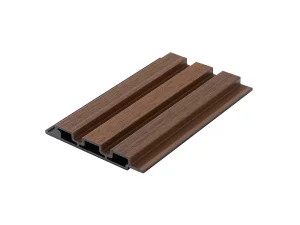
In modern multi-family podium developments throughout Washington Corridor, Montrose, and Houston Heights, developers demand acoustic dampening and high aesthetic differentiation. Our slat-weave and fluted cladding modules significantly absorb urban acoustic reverberation while providing architects with contemporary, biophilic facades.
Galveston Bay Coastal Waterfront Developments
Coastal properties in Kemah, Seabrook, and Galveston Island endure continuous airborne salt mist, coastal wind shear, and prolonged thermal expansion. Natural wood facades rapidly split and require constant re-staining every 12 months. Our composite systems will not splinter, dry out, or degrade under direct marine exposure.
Technical Roadmap: Next-Generation Building Envelope Science
Continuing R&D investments targeting the next generation of smart architectural facades through 2030.
Micro-Encapsulated Phase Change Materials (PCM)
Integrating organic paraffin micro-capsules directly within the composite core. By absorbing latent thermal energy during peak afternoon Texas sun and discharging it during nocturnal cooling cycles, our upcoming profiles will directly lower HVAC cooling energy demand in commercial envelopes.
Nano-Ceramic IR Reflective Capping
Deploying specialized nano-ceramic particulate additives in the exterior protective shell that actively reflect near-infrared (NIR) solar waves. This lowers surface heat absorption by up to 22°F compared to standard composite boards, making facades cooler to the touch and structurally stable.
BIM Integration & Parametric Façade Modules
Complete integration of Autodesk Revit and IFC digital twin BIM libraries. Architects can run instantaneous structural wind-shear calculations, thermal envelope simulations, and custom fabrication scheduling directly within project modeling software.
Comprehensive Exterior Systems for Importers & General Contractors
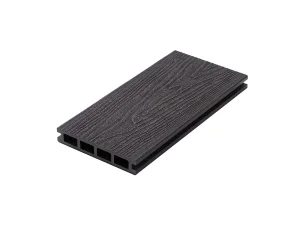
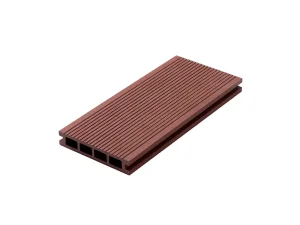
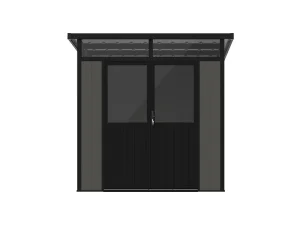
Explore our complete inventory of high-performance composite exterior products, precision engineered for direct export shipping and certified for commercial specifications.
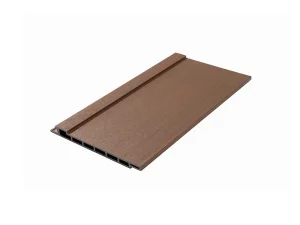
Frequently Asked Engineering & Sourcing Questions
Essential guidance for commercial developers, facade engineers, and building material distributors serving the Houston metropolitan territory.