
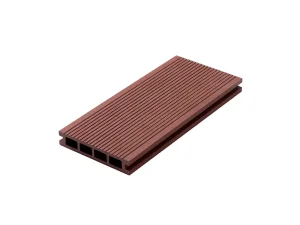
Featured Product Architectures
High-Performance Exterior Envelopes for Korea Projects
Direct supply for Korean urban redevelopment, Gangwon ski-resort decking, and Incheon waterfront cladding systems.
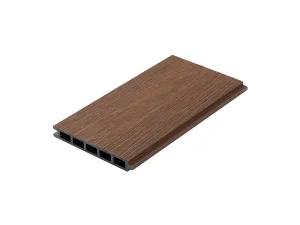
HorizonLine Acoustic & Weatherproof Composite Screening System
Explore Korea Spec →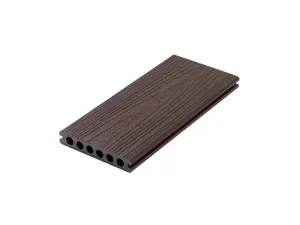
TerraShield Extreme-Durability Marine Grade Decking Profile
Explore Korea Spec →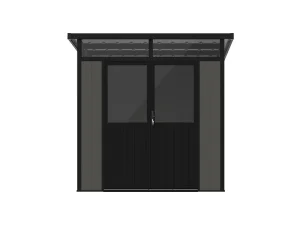
MiniStar Modular Weather-Tight Composite Architectural Enclosure
Explore Korea Spec →
Industry Intelligence & Macro Strategy
South Korea's Architectural Cladding & Façade Reality
Meeting the stringent structural requirements of KS F 3230, high-rise fire containment mandates, and the complex climate patterns of the Korean Peninsula.
Severe Monsoon & Sub-Zero Cycles
The Korean peninsula encounters extreme thermal fluctuations ranging from -18°C during Siberian winter winds in Gangwon-do to over 36°C with 90% humidity during the summer Jangma season. Standard softwood siding suffers severe expansion failure, warping, and fungal degradation. Our co-extruded polymers deliver linear thermal expansion coefficients under 35×10⁻⁶/°C, neutralizing warping across seasons.
Amended Building Act & Fire Codes
Following strict revisions to the South Korean Building Act concerning exterior cladding combustibility in mid- and high-rise structures, developers prioritize quasi-noncombustible or fire-retardant exterior panels. Our modified ceramicized matrix and halogen-free fire barriers limit flame spread and suppress toxic smoke release in compliance with KS F ISO 5660-1 standards.
Green Building Certification (G-SEED)
South Korea's Green Standard for Energy and Environmental Design (G-SEED) encourages the adoption of certified low-emission building products. By incorporating up to 90% recycled polyolefins and bio-mass wood fibers without volatile organic compounds (VOCs) or formaldehydes, our cladding helps tier-one Korean general contractors accrue vital ESG credits.
< 0.8%
24-Hour Water Absorption Rate
Class B-s1,d0
EN 13501-1 Flame Retardant Level
42 MPa
Flexural Strength Modulus
25+ Yrs
Engineered Commercial Life Expectancy
Material Performance Comparison
Why International EPCs & Korean Builders Shift to Advanced WPC
Engineered performance across weathering resilience, lifecycle costs, and structural wind-load capacity.
| Evaluation Parameter | Forestar High-Shield WPC | Preserved Softwood (Redwood/Pine) | Aluminum Composite Panels (ACP) | Fiber Cement Siding |
|---|---|---|---|---|
| Moisture Absorption & Swelling | < 0.8% (No rot, structural integrity intact) | 18% – 28% (High swelling, splitting) | 0% (Waterproof, risk of edge corrosion) | 8% – 15% (Risk of freeze-thaw cracking) |
| UV Degradation (5,000h Xenon Arc) | ΔE < 2.0 (High-density ASA/Polymer cap) | Severe greying, checks within 6 months | Chalking depending on PVDF grade | Paint degradation; repainting required |
| Maintenance Cycle | Rinse with clean water only | Annual sanding, chemical re-staining | Chemical surface washing required | Periodic sealant and coating refresh |
| Typhoon Wind Resistance | Engineered interlocking tongue & groove + clips | Fastener pulling under high gust loads | Panel warping under suction pressure | Brittle under direct storm debris impact |
| Lifecycle Carbon Footprint | Ultra-low (Up to 90% closed-loop recycled) | Moderate (Deforestation & chemical biocides) | High energy consumption in bauxite smelting | High embedded carbon in curing cement |
Technological Roadmap
Next-Gen Composite R&D for Demanding Built Environments
Continuous chemical refinement targeting thermal deflection barriers, automated clip retention, and carbon neutrality.
360-Degree Fluorocarbon Co-Extrusion
Deploying advanced aerospace-grade fluoropolymer capping layers across the entire perimeter of cladding profiles. This layer repels automotive emissions, coastal salinity in Busan and Incheon, and acid rain while eliminating thermal heat traps within the substrate.
Acoustic Dampening Matrix
Engineered hollow architectural profiles designed with internal multi-chambered baffles. These internal structures reduce urban noise pollution by up to 28 dB, making them ideal for high-density multi-family residential complexes and transport-adjacent developments.
Seismic Interlocking Bracket Systems
Responding to enhanced seismic safety requirements in South Korea, our proprietary concealed bracket assembly incorporates stainless steel clips (SUS304/SUS316) providing dynamic tolerance against shear movement without panel pop-off.
Supply Chain Reliability
Direct Logistics to Busan, Incheon & Gwangyang Ports
Short-sea shipping routes, comprehensive documentation, and direct factory-to-site container consolidation.
Fast 3 to 5 Day Maritime Transit
Operating from our primary manufacturing base in Xuancheng, Anhui, orders reach coastal departure ports efficiently, ensuring ocean transit to Incheon Port or Busan Port within 3 to 5 days. This enables Korean developers to maintain lean site inventories and minimize warehousing overheads.
RCEP & Tariff Streamlining
Taking full advantage of the Regional Comprehensive Economic Partnership (RCEP) and the China-Korea Free Trade Agreement, all shipments include authenticated Certificates of Origin (CO) to secure preferential zero or reduced tariff rates through Korea Customs Service.
Batch Traceability & Testing
Every production run undergoes strict quality verification covering tensile limits, density uniformity, flame propagation index, and boiling-water immersion test routines. Full SGS, CE, and ISO 9001 test mill sheets accompany all project dispatches.
Trade Verification & Guidance
Technical & Commercial FAQ for Korean Importers
Direct clarity on compliance, custom profile extrusions, minimum volumes, and structural specifications.
How do Forestar cladding panels comply with Korean construction standards?
Our exterior wall panels align with international ASTM and EN standards, harmonized to support Korean KS F 3230 test protocols. Specific fire retardant profiles achieve Class B-s1,d0 certifications, allowing safe specification on multi-story residential and commercial installations across Korean metro areas.
Can you provide custom profiles and lengths to minimize cutting waste?
Yes. While 2.2m, 2.9m, and 5.8m are standard container lengths, we support custom profile tooling and cut-to-length services for large-scale Korean architectural contracts, reducing on-site scrap and labor costs during high-rise facade installation.
What is the lead time for standard full-container shipments to South Korea?
Standard manufacturing cycle times range between 14 to 21 days depending on profile and extrusion complexity. Combined with the 3 to 5 day maritime voyage from eastern Chinese ports to Busan or Incheon, total turnaround typically remains under 3 to 4 weeks.
How do co-extruded panels withstand heavy coastal salt mist in Busan or Jeju?
Our panels feature an impermeable high-density polymer shield that fully encapsulates the core. Unlike traditional timber or metal cladding susceptible to oxidation, our panels exhibit near-zero reaction to saline exposure, passing extensive cyclic salt spray testing without surface pitting or peeling.
Complete Project Portfolio
Comprehensive Outdoor Architecture Systems for Korea Distribution
Engineered for seamless container consolidation, architectural color-matching, and zero-maintenance exterior longevity.
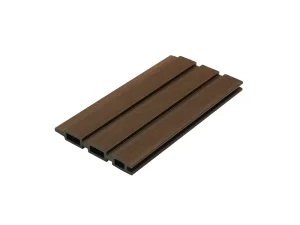
Concealed-Fastener Modern Architectural Privacy Fencing
Explore Korea Spec →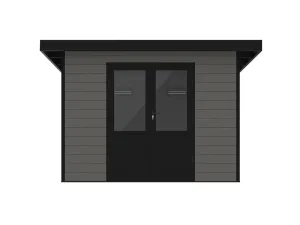
CeilingStar Heavy-Duty Weather-Proof Storage Structure
Explore Korea Spec →
TerraShield Heavy-Footfall Commercial Composite Decking
Explore Korea Spec →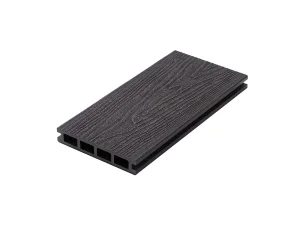
Eclipse Grain Hydro-Resistant Poolside Composite Decking
Explore Korea Spec →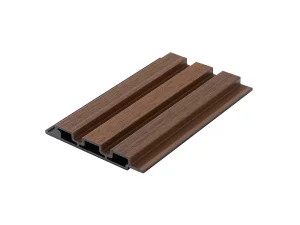
CrestWall Architectural Exterior Composite Cladding Board
Explore Korea Spec →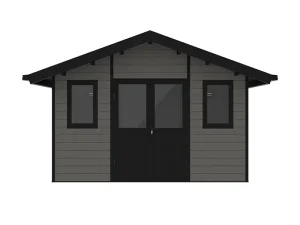
Snow-Load Certified Reinforced Outdoor Utility Shed
Explore Korea Spec →
TerraShield Anti-Abrasion Low-Expansion Composite Decking
Explore Korea Spec →