
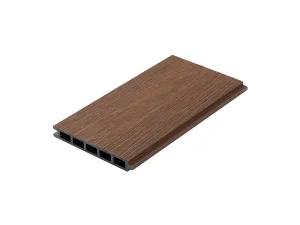
Primary Architectural Profiles
High-Performance Exterior Envelopes for Hamburg Projects
Engineered for high-humidity river basins, Elbe waterfront salt mist, and high-wind structural loads. Explore our baseline co-extruded architectural profiles.
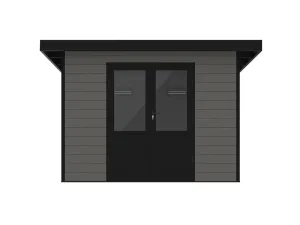
CeilingStar Premium Weatherproof Outdoor Architectural Shed with Secure Closure for Hamburg Developments
View Profile Specs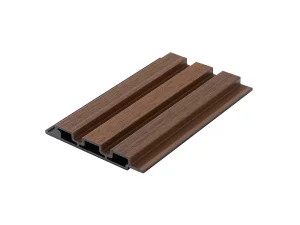
CrestWall Commercial Engineered WPC Wall Siding - Anti-Moisture & Freeze-Thaw Resistant for North Germany
View Profile Specs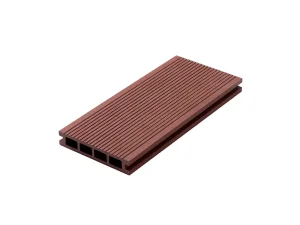
TimberFlow High-Traction WPC Anti-Slip Decking System - Engineered for Hamburg Harbor & Marina Boardwalks
View Profile Specs
Local Market Analysis
The Hamburg Architectural Landscape: Facade Engineering Under Maritime Stress
The Free and Hanseatic City of Hamburg represents one of Europe's most rigorous testing grounds for external building envelopes. Situated along the tidal river Elbe and in direct proximity to the North Sea, Hamburg experiences a harsh hyper-oceanic microclimate characterized by elevated relative atmospheric moisture, recurrent driving rain cycles (Schlagregen), cyclonic squalls, and persistent salt-laden aerosols.
Stringent Regulatory Mandates (HBauO & GEG)
Under the Hamburg Building Code (Hamburgische Bauordnung - HBauO) and the federal Building Energy Act (Gebäudeenergiegesetz - GEG), exterior cladding in multi-family dwellings, public infrastructures, and commercial office clusters (such as HafenCity and Altona) must exhibit uncompromising thermal barrier continuity, non-combustibility ratings conforming to DIN EN 13501-1 Class B-s1, d0, and guaranteed lifecycle circularity.
VHF: The Standard Rainscreen Façade
The standard architectural approach across Northern Germany is the rear-ventilated rainscreen façade (Vorgehängte Hinterlüftete Fassade - VHF). Conventional timber siding fails prematurely due to fungal rotting, surface cupping, and intensive periodic staining costs. Conversely, co-extruded 360° capped WPC provides absolute moisture insulation while harmonizing with urban red-brick aesthetic traditions.
Harbor Salinity & Wind Pressure
In locations such as the Waltershof port logistics zone, Finkenwerder aviation hub, and HafenCity waterways, wind loads conform to Eurocode 1 (DIN EN 1991-1-4 Wind Zone 3). Façade claddings must possess structural flexural modulus exceeding 3,000 MPa to prevent mechanical shear, deflection, and fastener pull-out under sudden storm surges.
Macro Economic & ESG Trends
Decarbonization, Circular Economy & Global Procurement Shifts
The international building sector is undergoing an irreversible transition from high-embodied carbon materials—such as primary extruded aluminum and fiber cement composites—toward low-carbon circular composites. Global engineering, procurement, and construction (EPC) conglomerates are actively prioritizing suppliers with validated Environmental Product Declarations (EPD) and verifiable life cycle assessments (LCA).
In accordance with EU CSRD (Corporate Sustainability Due Diligence Directive) standards, European asset managers are eliminating traditional chemically-treated tropical hardwoods (e.g., Bangkirai, Teak, and Ipe) that contribute to equatorial deforestation. Forestar's composite formulations utilize up to 90% reclaimed agricultural hardwood fiber and post-industrial polymers, offering a carbon-neutral alternative that yields substantial DGNB and LEED Germany certification credits.
Procurement Priority Matrix (2026–2030)
-
Zero Hazardous Leaching: Mandatory compliance with EU REACH and zero formaldehyde or heavy metal emission thresholds.
-
Dimensional Thermal Stability: Linear thermal expansion co-efficient under 35 × 10⁻⁶ K⁻¹ for severe continental/maritime transitions.
-
Supply Chain Agility: Guaranteed multi-line extrusion capacity, rapid custom color-matching, and container consolidation directly to the Port of Hamburg.
Manufacturing Excellence
China Industry 4.0: Scalable Precision & European Logistics Integration
Operating from our primary manufacturing base at Xuancheng, Anhui (Anhui Fumeida New Material Technology Co., Ltd.), Forestar delivers an intelligent manufacturing pipeline engineered specifically to mitigate European contractor supply chain vulnerabilities.
Automated Micro-Compounding
Our facility utilizes high-torque multi-zone compounding extruders integrated with closed-loop loss-in-weight gravimetric dosing. This eliminates batch density variations, ensuring identical profile mechanical densities and color constancy across 50+ shipping containers.
360° Shield Co-Extrusion
Unlike first-generation composites that expose wood fibers directly to atmospheric humidity, Forestar’s co-extrusion technology applies an impervious modified-polymer shield around all four sides. This provides absolute barrier defense against UV oxidation, chlorine, salt crust, and biofilm formation.
Direct Port-to-Port Supply
Seamless intermodal logistics via Shanghai/Ningbo direct to HHLA Container Terminals (Altenwerder & Burchardkai) in Hamburg. We provide trade partners with export-certified palletization, customs pre-clearance documents, CE declaration dossiers, and batch inspection reports.
Architectural Benchmark
Comparative Performance Specification Matrix
A side-by-side engineering evaluation between Forestar High-Performance Co-Extruded WPC and traditional building envelope options utilized in the metropolitan area of Hamburg.
| Evaluation Parameter | Forestar Capped WPC | Siberian Larch (Timber) | Fiber Cement Panels | Anodized Aluminum Facade |
|---|---|---|---|---|
| Moisture Absorption (24h) | < 0.5% (Impermeable) | 18% - 28% (Swelling risk) | 7% - 12% (Pore absorption) | 0% (Non-porous) |
| Maintenance Cycle | Soap & Water Wash Only | Bi-annual chemical staining | Periodic joint caulking & seal | Specialized wash down |
| Salt Spray / Halide Resistance | Class 1 Immune (No corrosion) | Degrades surface lignocellulose | Potential efflorescence | Pitting corrosion over time |
| Embodied Carbon Footprint | Ultra-Low (Recycled Raw Material) | Low (if virgin FSC certified) | High (Portland cement intensive) | Extremely High (Smelting energy) |
| Rot, Splinter & Insect Defense | 100% Resistant (Polymer Encapsulated) | Vulnerable to fungal dry rot | Impervious | Impervious |
| Color Fastness (Delta E < 3) | 5,000 hrs Xenon Arc Tested | Greys within 6-12 months | High (Factory coated) | High (Anodized/Powder) |
Architectural Applications
Localized Hamburg Structural & Façade Use Cases
Forestar WPC architectural cladding and decking profiles are engineered to solve specific urban, residential, and industrial engineering challenges across Greater Hamburg.
HafenCity Promenade & Waterfront Balconies
Waterfront developments along the Baakenhafen and Strandkai demand cladding materials that tolerate brackish water vapors, sudden tidal flooding exposure, and intense pedestrian friction without splintering, rotting, or bleaching in UV radiation.
Altona & Eimsbüttel Residential Upgrades
In multi-family energy retrofits complying with KfW Efficiency House 40 standards, our CrestWall and PlaneSleek siding integrates seamlessly with exterior mineral wool insulation to minimize thermal bridging while eliminating ongoing landlord maintenance overhead.
Harbor Logistics Enclosures & Screening
Industrial parks around Billbrook, Wilhelmsburg, and the Port of Hamburg require rugged acoustic fences, weather-tight equipment sheds, and external building envelopes that maintain structural rigidity against high-wind shear and mechanical vibration.
Engineered Product Portfolio
Full Commercial System Profiles for Hamburg Importers & Contractors
Consolidate your exterior portfolio directly from a single ISO-certified source. Decking, cladding, perimeter security, and modular structures shipped in single consolidated containers.
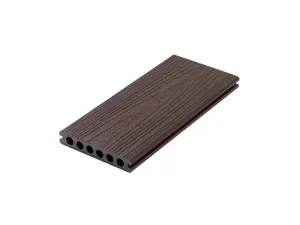
TerraShield Heavy-Duty Wood Plastic Composite Decking - Low Maintenance Solution for North German Climates
View Technical Data
TerraShield Capped Composite Decking - High-Durability Waterproof Formulation for Outdoor Living
View Technical Data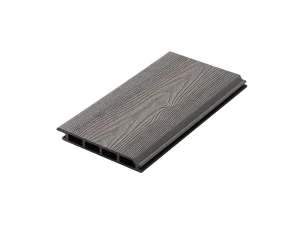
PlaneSleek UV-Protected WPC Exterior Cladding Panels - Modernist Architectural Aesthetic
View Technical Data
TimberFlow Engineered WPC Anti-Slip Decking Boards - Factory Direct Bulk Sourcing Pricing
View Technical Data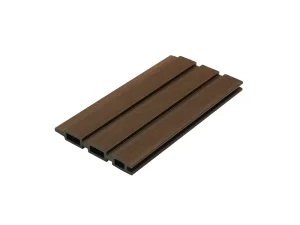
Engineered WPC Privacy Fencing with Concealed Fastener System - Wind-Load Resistant Barrier
View Technical Data
Modular Privacy Screening Panels - Concealed Interlocking Tongue-and-Groove Profile
View Technical Data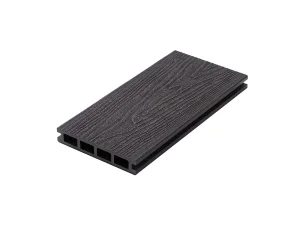
EclipseGrain Waterproof UV-Stabilized Composite Decking - Engineered for Poolside & Water Features
View Technical Data
CeilingStar Premium Weatherproof Outdoor Storage Shed for Tools & Urban Mobility Logistics
View Technical Data
Procurement & Technical Consultation
Frequently Asked Questions: Sourcing Cladding for Hamburg
Critical compliance, engineering specifications, logistics, and material behavior data for procurement managers and structural specifiers.
How do Forestar WPC cladding panels comply with Hamburg fire safety (HBauO)?
Our co-extruded WPC façade systems are engineered with targeted flame-retardant mineral additives to achieve EN 13501-1 Class B-s1, d0 classification (equivalent to German Baustoffklasse B1 schwerentflammbar). This qualifies them for use in Building Classes 1 through 4 under the Hamburgische Bauordnung without requiring supplementary fire breaks on residential elevations under 22 meters.
What is the performance under Hamburg's severe freeze-thaw cycles?
Forestar composite profiles comply with DIN EN 15534-1 testing protocols. With a 24-hour total water absorption rate below 0.5%, our capped cladding eliminates internal capillary freezing, preventing internal spalling, surface cracking, and micro-delamination commonly observed in fiber-cement and un-shielded timber claddings during North German winter freezes.
How are lead times and shipping managed directly to the Port of Hamburg?
Our factory operates automated extrusion lines 24/7 in Xuancheng, Anhui. Standard 40ft High Cube containers are typically produced within 15–20 business days. Transit from Shanghai or Ningbo deep-water port to Hamburg (HHLA CTA/CTB) takes approximately 28 to 35 days, enabling predictable just-in-time delivery for German site construction schedules.
Can custom architectural colors and profiles be OEM-formulated?
Yes. We support German architectural firms and distributors with custom profile tooling and spectrophotometer color matching (RAL equivalents). Whether matching the classic dark anthracite tones of northern brick architecture or traditional Scandinavian timber hues, our in-house tooling lab delivers custom extrusion dies within 14 calendar days.
What substructure systems are recommended for rear-ventilated rainscreens?
We recommend corrosion-resistant aluminum substructures (EN AW-6063 T6) or structural galvanized steel battening with thermal break wall brackets. A minimum rear ventilation cavity of 20mm to 40mm must be maintained to ensure unhindered thermodynamic convective airflow according to DIN 18516-1 standards.
Are technical samples and test certificates provided for tender submissions?
Yes. We furnish comprehensive procurement dossiers including physical sample boxes (showing core density, woodgrain textures, and 360° cap thickness), complete test reports (SGS, Intertek, CE, ISO 9001, ISO 14001, and REACH dossiers), and technical specification sheets directly to procurement offices and engineering consultants.
Equip Your Next Hamburg Project with Engineered Cladding
Direct factory pricing, verified European engineering compliance, and resilient container logistics direct to the Hamburg market. Connect with our technical export engineering desk today.