
Engineered Products for Australian Projects
Factory-direct structural composite profiles and modular garden units calibrated to Australian wind classifications and extreme solar irradiance.
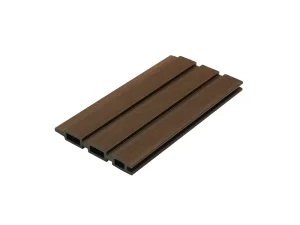
High-Durability WPC Architectural Privacy Fencing with Concealed Interlocking Fasteners
Explore Profile Spec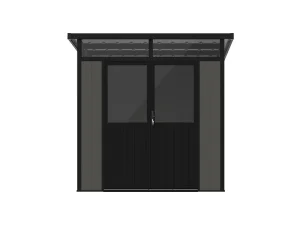
MiniStar Heavy-Duty Weatherproof WPC Outdoor Utility Shed with Dual Integrated Deadbolt
Explore Profile Spec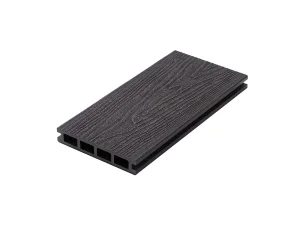
EclipseGrain Hydrophobic High-UV Resistant Capped Composite Decking for Coastal Environs
Explore Profile Spec
High-Traction Anti-Slip EclipseGrain Co-Extruded Deck Boards with AS/NZS 4586 Slip Testing
Explore Profile SpecThe Australian Cladding Market: Commercial Realities & NCC Evolution
Navigating Australia's de-risking era: how stringent compliance mandates, insurance imperatives, and thermal performance are shifting developer demand toward certified co-extruded composites.
The Australian Façade Market: Post-Combustible Re-Engineering
The Australian architectural cladding industry operates under one of the most stringent regulatory environments worldwide. Following comprehensive revisions to the National Construction Code (NCC Volume 1 & 2) and elevated scrutiny from state bodies such as the Victorian Cladding Safety Victoria (CSV) and NSW Project Intervene, commercial developers, quantity surveyors, and tier-1 builders can no longer rely on unvetted architectural panels.
Australia’s building ecosystem faces a distinct confluence of challenges: intense annual solar radiation reaching up to 24 MJ/m² in northern corridors, saline coastal moisture exposure affecting over 85% of the population living within 50km of the coast, and escalating bushfire safety requirements governed by AS 3959 (Construction in bushfire-prone areas). Traditional timber cladding requires bi-annual recoating and is susceptible to cupping, dry-rot, and termite degradation. Conversely, standard aluminium or painted steel assemblies present high embodied carbon metrics and thermal bridging issues that conflict with tightening Section J energy efficiency targets.
NCC Performance Solution Compliance
Our co-extruded composite cladding systems are engineered to facilitate DTS (Deemed-to-Satisfy) and Verification Methods under the NCC, ensuring seamless signing off by registered Australian building certifiers and façade engineers.
- Combustibility & Flammability Index: Tested to AS/NZS 1530.3
- Bushfire Attack Level: Formulations engineered up to BAL-29 / BAL-40
- Wind Load Structural Deflection: Certified under AS 4055 & AS/NZS 1170.2
- Corrosion Atmospheric Category: ISO 9223 / AS 4312 Category C4/C5 Coastal
| Material Typology | Australian Code Compliance (AS 1530 / AS 3959) | UV Degradation & Colour Shift (ΔE @ 3000hrs QUV) | Maintenance Lifecycle & OPEX | Coastal Salt-Mist Durability | Embodied Carbon & Recycled Content |
|---|---|---|---|---|---|
| Forestar Capped WPC Façade | AS 1530.3 / BAL-29 Capable | ΔE < 2.1 (Ultra-Shield Polymer Shell) | Zero Staining / Soapy Water Wash Only | Impervious (No metal skin delamination) | Up to 90% Recycled Fibres & Polyolefins |
| Hardwood Timber (Blackbutt/Spotted Gum) | BAL-19 / BAL-29 (Species Dependent) | Severe Greying without annual re-oiling | High ($45–$80/m² per annum maintenance) | Prone to surface rot and fungal mould | High Initial Timber Logging Footprint |
| Anodised Aluminium Siding | Non-combustible AS 1530.1 | High Surface Scratch Vulnerability | Moderate (Prone to denting & thermal expansion) | Galvanic corrosion at fastener points | High Embodied Energy (Virgin Bauxite smelting) |
| Fibre Cement Cladding | Non-combustible AS 1530.1 | Paint chalking; requires 5-year repainting | Moderate (Joint sealant repointing required) | Good, but water ingress causes efflorescence | Moderate embodied energy |
Global Industry Trends: Circularity, Co-Extrusion, and Green Star
How environmental rating schemes and advanced material extrusion chemistry are redefining building façades across Sydney, Melbourne, and Brisbane.
Green Star & LEED Alignment
Australia’s Green Building Council (GBCA) Green Star Buildings tool prioritizes responsible products with verifiable Environmental Product Declarations (EPD). Utilizing recycled post-industrial HDPE and reclaimed FSC-certified hardwood flour, our cladding delivers up to 90% recycled composition, contributing directly to Materials & Circularity credits.
360-Degree Micro-Capping
First-generation WPC suffered from exposed wood fibers leading to moisture absorption in tropical Queensland climates. Our second and third-generation profiles leverage a 360-degree cross-linked fluoropolymer co-extruded shield, locking out humidity, mould spore propagation, and airborne sea salts.
Thermal Reflectance & Cool-Touch
Dark cladding traditionally absorbs extreme thermal energy, increasing HVAC loads and building envelope expansion. Our advanced infrared-reflective pigments diminish heat retention by up to 25%, maintaining lower dimensional movement and improving urban heat island metrics.
China Industry 4.0: Factory Resilience, Twin-Screw Precision & Container Efficiency
At our automated production base operated by Anhui Fumeida New Material Technology Co., Ltd. in Xuancheng, Anhui, we combine German-engineered twin-screw parallel extruders with centralized computerized gravimetric dosing systems. For Australian importers, wholesalers, and project managers, this guarantees millimeter-accurate cross-sectional geometry, constant density, and batch-to-batch chromatic stability.
Sourcing directly from an Industry 4.0 manufacturer mitigates the erratic lead times and cost surges experienced in the domestic Australian wholesale supply chain:
- Continuous Optical Laser Gauging: Automated inline profile scanning checks every meter for expansion tolerance within ±0.3mm, eliminating clip-binding issues on construction sites.
- Container Consolidation Synergy: Mix exterior cladding, matching soffit panels, heavy-duty composite decking, and modular garden sheds in a single 40ft High Cube container, optimizing cash flow and SKU breadth.
- Raw Material Homogenization: Controlled drying of hardwood wood flour down to <1% moisture content prior to compounding ensures zero internal micro-voids, delivering peak tensile strength for high-wind cyclonic zones (AS 4055 Wind Class N1 to C4).
Precision Supply Chain Matrix for Australia
Direct Port-to-Port Freight Corridors
Direct routes from Shanghai and Ningbo to Port Botany (Sydney), Port of Melbourne, and Port of Brisbane within 14–18 days sail time.
Strict Palletizing & Australian Quarantine
ISPM-15 heat-treated export pallets wrapped in moisture-barrier polymer shields, fully compliant with Australian Department of Agriculture, Fisheries and Forestry (DAFF) biosecurity protocols.
Full Mill Test Certificates & QA Traceability
Every master shipping container includes batch-tested mechanical property sheets (flexural strength, modulus, density, water absorption, thermal expansion coefficient).
Localized Australian Built Environments
Engineered to meet geographical building codes and microclimatic stresses across the Commonwealth.
Tropical & Coastal Queensland
Resistant to high humidity, monsoonal driving rains, and salt mist from the Coral Sea. Eliminates black mould staining and swollen profiles in Cairns, Whitsundays, and Sunshine Coast developments.
AS 4312 C5 Extreme Marine SpecSydney & Melbourne Urban Densification
Ideal for townhouses, multi-residential façades, and commercial screening where low-flammability index (AS 1530.3) and acoustic attenuation are prioritized by city councils.
NCC Acoustic & Fire RatingBushfire-Prone Urban Fringes
For installations in the Blue Mountains, Adelaide Hills, or Perth Hills requiring AS 3959 BAL-19 to BAL-29 compliance. Resists ember attacks with self-extinguishing co-polymer properties.
AS 3959 BAL-29 AttestationArid WA & Outback Extreme Heat
Formulated with premium Hindered Amine Light Stabilizers (HALS) and thermal stabilizers, preventing embrittlement, thermal warping, and degradation under blistering Pilbara conditions.
UV 3000hr Xenon Arc TestedFrequently Asked Questions
Technical and procurement clarifications for Australian architects, developers, and wholesale importers.
How do Forestar composite cladding systems comply with the Australian National Construction Code (NCC)?
Can we procure custom profile extrusions and bespoke Australian timber colours (e.g., Spotted Gum, Ironbark)?
What is the structural performance under Australian cyclonic wind ratings (AS 4055 / AS 1170.2)?
How do you handle shipping logistics, palletization, and DAFF biosecurity compliance for Australia?
Can mixed product lines (Cladding, Decking, Sheds, Fencing) be consolidated in a single order?
AS/NZS Tested & Certified Building Envelopes
Browse our complete range of certified outdoor storage systems, privacy screening, and advanced composite profiles for the Australian building trade.
MiniStar Heavy-Duty Lockable Composite Utility Shed for Residential Garden Storage
View Specifications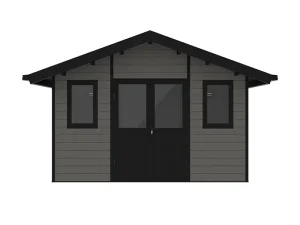
RidgeStar Heavy-Duty Wind & Load Rated Waterproof Garden Shed with Reinforced Truss
View Specifications
RidgeStar Monobloc Weather-Tight Backyard Shed with UV-Stabilized Polymer Wall Panels
View Specifications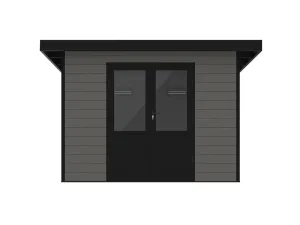
CeilingStar Premium Lockable Outdoor Tool, Equipment & Bicycle Workshop Shed
View Specifications
Unbreachable Heavy-Gauge WPC Acoustic & Privacy Boundary Fencing with Concealed Fixings
View Specifications
High-Capacity Structural Composite Outdoor Utility Shed with Galvanized Internal Frame
View Specifications
RidgeStar Premium High-Wind Rated Flat-Pack WPC Garden Shed Kit for Importers
View Specifications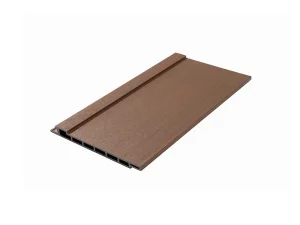
FORESTAR High-Performance Waterproof WPC Exterior Façade & Soffit Cladding System
View SpecificationsPartner with an Industry 4.0 Cladding Manufacturer
Streamline your supply chain with direct factory pricing, verified Australian compliance data, and container-level flexibility. Speak directly with our export engineering team today.