
Primary High-Performance Architectural Solutions
Engineered for intense UV indices, marine humidity, and termite defense in high-value resort, municipal, and industrial developments across Indonesia.
Indonesia Industrial & Commercial Landscape
The demand for advanced fencing and boundary systems across Indonesia is experiencing unprecedented acceleration, fueled by nationwide master-planned infrastructure projects, the expansion of the Ibu Kota Nusantara (IKN) administrative hub, and thriving commercial resort corridors in Bali, Lombok, and the Riau Islands. However, the Indonesian equatorial climate poses severe architectural vulnerabilities: extreme relative humidity (consistently exceeding 80%), intense UV radiation degradation, and invasive subterranean termites.
Traditional hardwood (Merbau and Bengkirai) fences, once prevalent, now suffer from escalating procurement costs, strict domestic logging controls, and rapid rot when unmaintained. Similarly, conventional galvanized iron and steel fencing succumb quickly to coastal saline corrosion. As a result, engineering consultancies and Tier-1 general contractors in Jakarta, Surabaya, and Medan are aggressively transitioning to wood-plastic composite (WPC) boundary barriers and modular perimeter fencing.
The Strategic Advantage of Direct Chinese Factory Integration
While local Indonesian fabrication focuses mainly on manual PVC welding or lightweight timber slat finishing, Chinese Tier-1 manufacturing facilities bring automated co-extrusion technology, precision polymer stabilization, and cost structures unattainable through local batch processing. By pairing high-density polyethylene (HDPE) polymer science with sustainably salvaged cellulose fibers, our factory outputs heavy-duty composite fencing panels that maintain dimensional stability between -20°C and +65°C.
For Indonesian corporate buyers, direct-from-factory procurement from China eliminates domestic distributor markups, provides bespoke die-mold customization for wind-shear ratings up to Typhoon Class 10, and facilitates unified container consolidation spanning matching decking, facade cladding, and gate assemblies—all certified under strict CE, ISO9001, and SGS standards.
Engineered Architectural Solutions Across the Indonesian Archipelago
Proven engineering modules solving real environmental and security challenges in tropical urban and seaside settings.
Balinese Luxury Hospitality
Complete zero-maintenance perimeter fencing featuring natural wood textures that withstand high salt spray, heavy monsoon squalls, and intense UV exposure without bleaching or splintering.
Industrial Parks: Cikarang & Karawang
Reinforced high-privacy composite boundary barriers integrated with internal galvanized steel posts to withstand high wind loads and provide secure, anti-climb warehouse perimeter safety.
Gated Residential Townships
Modern acoustic and visual barrier solutions designed for fast interlock installation in master-planned communities across BSD City, PIK 2, and Surabaya luxury developments.
Comparative Engineering Benchmark: WPC vs Traditional Materials
Rigorous quantitative analysis detailing performance longevity under tropical exposure conditions.
| Engineering Parameter | Forestar Co-Extruded WPC | Indonesian Hardwood (Bangkirai) | Galvanized Wire / Steel Fence |
|---|---|---|---|
| Termite & Fungal Resistance | Immune (Synthetic Polymer Blend) | Vulnerable without chemical treatment | Immune to insects / Fungi neutral |
| Saline Coastal Corrosion | Zero Oxidation (Salt Mist Tested) | Moderate surface erosion | Severe rust within 18–24 months |
| UV Stabilization & Color Fastness | Delta E < 3.0 (3,000 hrs Xenon Arc) | Severe graying and checking | Powder coat fading / chalking |
| Recurrent Maintenance Costs | Zero (Water Wash Only) | High (Annual staining, oiling, sealing) | Moderate (Repainting, rust-inhibitors) |
| Lifecycle Expectancy | 20+ Years Continuous | 5 - 8 Years | 4 - 7 Years in marine environments |
Frequently Asked Questions: Indonesian Specifiers & Importers
Clear operational, regulatory, and engineering guidance for procuring factory-direct composite systems into Indonesia.
How do Forestar composite fences hold up against Indonesia's intense monsoon climate and high humidity?
Can Indonesian developers and contractors import full containers directly to Tanjung Priok or Tanjung Perak?
How does composite fencing compare with local Balinese timber (Ulin or Bengkirai) in project cost?
What internal structure is recommended for high-wind coastal installations in Indonesia?
Can we consolidate fencing boards with decking and wall cladding in the same container?
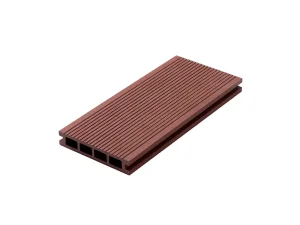
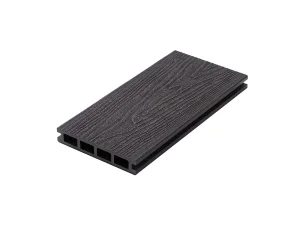
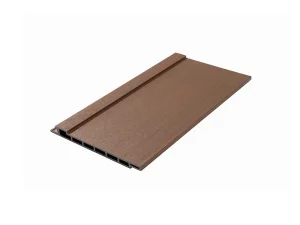
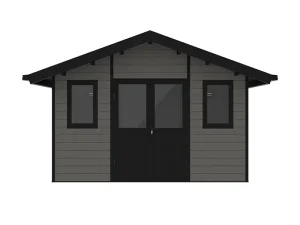
Architectural Profiles for Comprehensive Project Integration
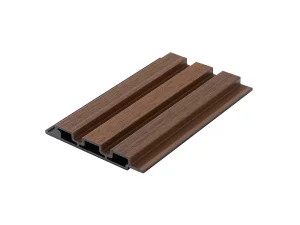
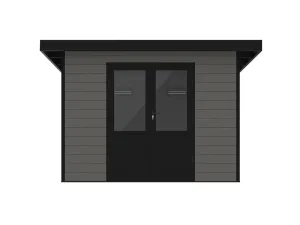
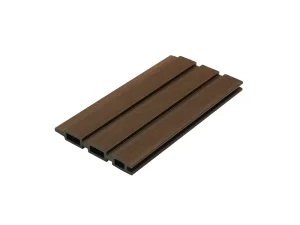
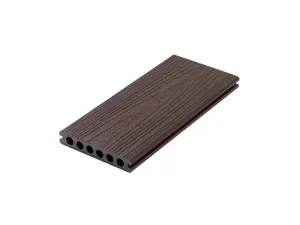
Explore our full line of decking, cladding, boundary screens, and utility sheds engineered for seamless outdoor integration.
Partner with the Leading Fencing Factory for Indonesian Projects
From initial design sketches and structural wind load calculations to on-time port delivery in Jakarta or Surabaya, get full OEM/ODM technical specifications, physical sample kits, and factory-direct volume pricing.
Send Inquiry Now