
Milan Urban & Commercial Core Infrastructure Portfolio
Engineered for thermal expansion resilience, high UV stability under northern Italian summers, and strict compliance with EU CE & REACH standards.
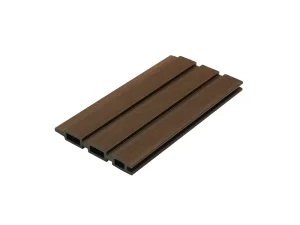
Milan Modern Landscape: WPC Architectural Privacy Fencing with Concealed Clip Fasteners
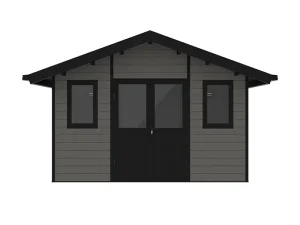
RidgeStar Heavy-Snow Load Engineered Waterproof Modular Backyard Utility Suite
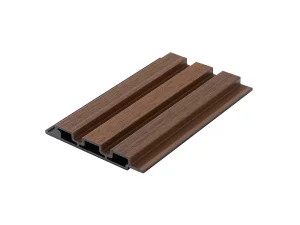
CrestWall Exterior Façade Siding: Industrial Precision WPC Cladding for Milan Commercial Hubs
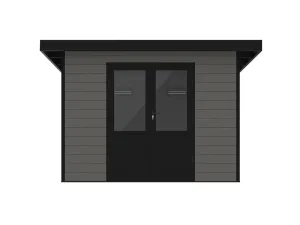
CeilingStar Smart Security Outdoor Utility Enclosure for Milan Luxury Residential Terraces
Milan Architectural Reality: The Composite Decking Evolution in Lombardy
An engineering and supply chain analysis for Italian architects, general contractors, and landscape distributors navigating environmental legislation and continental thermal stresses.
1. Macro-Economic & Architectural Context of Milan & the Po Valley
Milan represents the epicentre of Italian contemporary design, commercial real estate redevelopment, and advanced urban greening initiatives. From mega-developments like Porta Nuova and CityLife to the revitalization of historic courtyards in the Brera and Navigli design quarters, outdoor living spaces are subject to uncompromising aesthetic demands and rigorous climatic variables. The metropolitan territory of Lombardy exhibits a distinct continental microclimate characterized by severe thermal dynamics: intense solar irradiance and ambient temperatures exceeding 38°C during mid-summer months, contrasted against sub-zero winter temperatures, persistent high relative humidity, and damp freeze-thaw cycles along the Po Plain.
Traditional timber decking—historically dominated by tropical hardwoods like Teak, Ipe, or chemically treated European conifers—has witnessed widespread obsolescence across Milanese municipal and private tenders. Hardwoods face astronomical import tariffs, severe deforestation sanctions under the EU Deforestation Regulation (EUDR), and unacceptable lifecycle maintenance costs. Softwoods routinely fail within 3 to 5 years due to fungal decay, warping from moisture absorption, and thermal splintering. In response, Tier-1 architectural studios in Milan now prescribe advanced co-extruded Wood-Plastic Composite (WPC) as the primary material for elevated terraces, hospitality decks, civic promenades, and boutique lakefront villas around Lake Como and Lake Maggiore.
"In Milanese civic architecture, timber-replacement materials must satisfy dual mandates: the strict aesthetic nuance demanded by the global furniture capital, and zero structural degradation under extreme seasonal humidity swings."
2. Technical Material Engineering: Why Co-Extrusion Outclasses First-Gen WPC
Uncapped composite profiles manufactured during the early 2010s suffered from chalking, pigment fading from ultraviolet exposure, and deep oil staining from cosmopolitan al-fresco dining environments. Forestar’s Milan-Spec Composite Decking solves these structural liabilities through molecular-level polymer engineering. Utilizing an advanced co-extrusion process, each board features a high-density, 360-degree protective shield fused to a structural bio-fiber matrix core under extreme extrusion pressure.
360° Surlyn/Modified PE Capping
An impenetrable outer layer chemically bonded to the core. Completely resists red wine, espresso, balsamic vinegar, and olive oil spills common in Milan hospitality setups.
Nano-Particle UV Inhibitors
Formulated with Hindered Amine Light Stabilizers (HALS) that preserve chromatic integrity under intense Alpine-foothill UV radiation with a Delta E < 2.0 over a 15-year lifecycle.
Controlled Expansion Cavities
Engineered hollow or engineered solid cores engineered to minimize linear thermal coefficient to ≤ 0.035 mm/m/°C, mitigating board buckling across sudden seasonal swings.
Engineering Comparison: Forestar Milan-Grade WPC vs. Market Alternatives
| Performance Parameter | Forestar Capped Co-Ex WPC | First-Generation Uncapped WPC | Standard Softwood (Treated Pine) | Tropical Hardwood (Ipe / Teak) |
|---|---|---|---|---|
| Annual Upkeep Required | Zero sealing; periodic water wash | High; prone to mold scrubdowns | Biannual chemical staining & sanding | Annual sanding & toxic oil saturation |
| Water Absorption (24h immersion) | ≤ 0.08% (Hermetic barrier) | 1.2% – 2.5% (Capillary uptake) | > 25.0% (Cellular swelling) | 8.0% – 14.0% (Cellular expansion) |
| UV Color Fastness (ISO 4892-2) | Grey Scale 4-5 (Negligible delta) | Grey Scale 2-3 (Noticeable fading) | Rapid silver-greying & surface rot | Deep greying & surface micro-checking |
| Slip Resistance (DIN 51130) | R11 Certified (Wet bare-foot safe) | R9 – R10 (Slippery when wet) | R9 (Extreme moss slipping hazard) | R10 (Smooth surface hazards) |
| Reaction to Fire (EN 13501-1) | Class Bfl-s1 achievable (Self-extinguish) | Class Cfl-s1 or Dfl-s1 | Class Dfl-s1 (Flammable) | Class Cfl-s1 (Combustible) |
| Environmental Certifications | FSC Core, REACH Compliant, 90% Recycled | Variable, often non-traceable | FSC certified at extreme premium | High risk of illegal logging under EUDR |
3. China Industry 4.0: Manufacturing Prowess & Global Supply Chain Resilience
For Lombardy building conglomerates, landscape wholesalers in Brianza, and procurement managers orchestrating fast-track hotel renovations in downtown Milan, sourcing directly from a China Industry 4.0 manufacturer offers unparalleled economic predictability and structural uniformity. The conventional critique of offshore manufacturing has been completely dissolved by the automation standards of modern smart plants.
Forestar’s manufacturing hub in Xuancheng, operated by Anhui Fumeida New Material Technology Co., Ltd. since 2008, operates synchronized, computer-controlled co-extrusion production lines that ensure dimensional tolerances under ±0.2mm. Raw materials undergo closed-loop gravimetric dosing, compounding 60% reclaimed natural wood micro-powder with 30% recycled high-density polyethylene (HDPE) and 10% structural stabilizers, color masterbatches, and fire-retardant polymers.
Automated Laser Profile Inspection
Every linear meter is analyzed via high-frequency optical sensors for cap thickness uniformity, surface defect elimination, and concealed clip groove accuracy.
Multi-System Consolidation
Lombardy distributors can pack decking boards, architectural cladding, privacy screening panels, and garden shed modules inside a unified 40-foot HQ container.
Factory-Direct Margin Protection
By circumventing multi-tiered European middlemen, Italian commercial contractors preserve 35% to 50% on cost-per-square-meter while maintaining warranty coverage.
4. Localized Architectural Application Scenarios Across Milan & Northern Italy
Deploying composite materials in Milan requires hyper-contextualized product design that addresses the diverse typologies of Northern Italian real estate:
Elevated urban penthouses demand lightweight substructures, wind-uplift clip compliance, and Class Bfl-s1 fire ratings. Forestar’s grooved composite deck profiles snap directly onto adjustable aluminum pedestal systems, providing drainage clearance over roofing membranes without mechanical roof penetration.
Municipal street cafe platforms require rapid assembly, anti-slip certifications under rainy evenings, and extreme stain resistance against alcohol, carbonated drinks, and culinary grease. The sealed polyethylene cap ensures that spilled espresso or Aperol will not permeate the surface even if left overnight.
Direct water exposure, pool chlorine, and bare-foot usage demand splinter-proof, cool-touch surfaces with deep wire-brushed wood grain textures. Forestar’s EclipseGrain board configuration guarantees safe traction and barefoot comfort while defying fungal rot along shoreline micro-climates.
Accelerate Your Milan Construction or Distribution Project
Direct containerized delivery from our Xuancheng manufacturing facility to Milan Intermodal terminals (Busto Arsizio / Melzo) with full CE compliance, mill test certificates, and free sample boxes.
Send Inquiry Now & Request Milan Sample Kit5. In-Depth Technical Q&A: Architectural & Procurement FAQ for Milan Buyers
Composite deck boards inherently expand and contract along their longitudinal axis in response to ambient thermal shifts. Forestar profiles are engineered with a balanced 60/30 wood-to-polymer formulation that yields a low linear thermal expansion coefficient of approximately 0.035 mm/m/°C. When installing in Northern Italy, our engineered hidden stainless-steel clip systems enforce a standard 4-6 mm side-to-side gap and a calculated 3-5 mm butt-joint gap based on installation temperature. This completely prevents edge-crush, warping, or fastener tear-out during July heatwaves.
Yes. Forestar boards incorporate up to 90% recycled raw ingredients, comprising post-industrial reclaimed wood fibers from managed sustainable forests and recycled high-density polyethylene (HDPE). Our facilities possess ISO 14001 environmental management and ISO 9001 quality systems. Forestar products are certified non-toxic under EU REACH regulations, free from volatile organic compounds (VOCs), halogenated blowing agents, and heavy-metal pigments, directly qualifying projects for LEED, BREEAM, and Italian CAM public procurement tenders.
Containerized shipments depart from the Port of Shanghai or Ningbo directly to Italian gateways including the Port of Genoa or the Port of La Spezia (transit time ~28-32 days). From the maritime terminals, bonded intermodal rail or direct heavy-haul transport moves cargo into Milan’s primary freight hubs such as Melzo, Segrate, or Busto Arsizio within 24 to 48 hours of customs release. Forestar coordinates all export documentation, Fumigation/Phytosanitary clearances, and CE declarations for immediate local entry.
Absolutely. Beyond our standard European palette (Milan Graphite, Grigio Fumo, Rovere Naturale, Castagno Scuro, and Teak Moderno), Forestar operates dedicated pigment-matching extrusion labs. For orders meeting minimum container quantities (MOQs), we formulate bespoke hues matched to RAL or Pantone references. Furthermore, custom cut-to-length boards (e.g., precise 3.0m, 3.6m, or 4.2m runs) can be extruded to minimize on-site cutting waste in urban Milan jobsites where debris disposal costs are steep.
Uncapped dark composites can retain excessive heat, reaching surface temperatures above 65°C on peak August afternoons. Forestar’s co-extrusion technology employs specialized reflective core pigments that actively disperse solar infrared wavelengths. In comparative thermal imaging tests, Forestar Cool-Touch surfaces maintain surface temperatures up to 8°C to 12°C cooler than conventional dark WPC, ensuring pleasant bare-foot navigability around commercial poolside and terrace environments.
For standard residential rooftop terraces, a maximum center-to-center joist span of 400 mm is prescribed for perpendicular board layouts. In heavy commercial environments—such as busy bar platforms, exhibition corridors at Fiera Milano, or public boardwalks—joist spacing should be reduced to 300 mm or 350 mm on-center. If decking is installed at a 45-degree diagonal angle, joists must be placed at 300 mm maximum. We recommend paired aluminum or hot-dipped galvanized steel sub-frames with adequate ventilation clearances of at least 30 mm beneath the joist base.
Specialized Milan Architecture & Exterior Solutions Portfolio
Engineered for direct container consolidation: pool-grade decking, architectural facade cladding, modular sheds, and acoustic privacy systems.
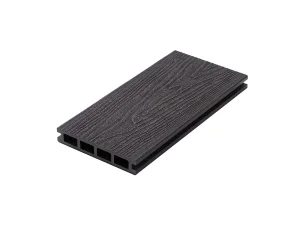
EclipseGrain Poolside Grade: Hydrophobic UV-Shielded Composite Decking for Milan Resorts
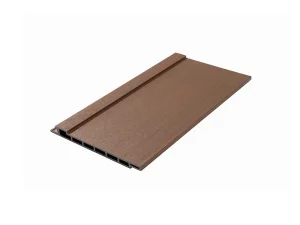
FORESTAR SlatWeave Exterior Architectural Envelope Cladding for Contemporary Milan Villas
CeilingStar Certified Lockable Tool & E-Bike Outdoor Storage Cabin for Milan Suburbs
RidgeStar Heavy-Duty Engineered Snow-Load Proof Structural Outbuilding for Northern Italy
EclipseGrain Hydro-Shield Composite Deck Board for High-Traffic Milan Urban Lido Facilities
High-Security WPC Architectural Perimeter Screen with Hidden Sub-Lock Fasteners for Milan Estates
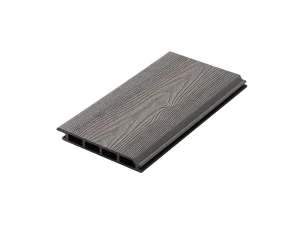
PlaneSleek Minimalist WPC Architectural Exterior Wall Siding with Anti-Aging UV Shielding
EclipseGrain Heavy-Traffic Exterior Composite Deck System for Milan Commercial Walkways
Standard Operating Procedure for Italian Trade Partners
From initial digital blueprint review to on-site container unloading in Lombardy: an automated, transparent supply ecosystem.
Stage 1: Technical Bill of Quantities (BOQ)
Submit architectural CAD drawings and square meter requirements. Our engineering desk verifies profile load parameters, sub-frame spacing, and generates consolidated packing lists.
Stage 2: Courier Sample Box Dispatch
Within 48 hours, a physical sample kit containing color swatches, co-extruded profile cross-sections, and clip components is dispatched via DHL Express to your Milan office.
Stage 3: High-Cube Container Shipping
Goods are wrapped with reinforced edge protectors and palletized for zero-damage transit. Shipped via major Mediterranean lines with live GPS and Bill of Lading tracking.