
Flagship Composite Solutions Tailored for Luxembourg Specification
Forestar architectural systems meet extreme weather resilience parameters, ensuring seamless durability from the Moselle River valley microclimates to the elevated frost regions of Oesling.
The Luxembourg Composite Decking Landscape: Circular Economy, High-Yield Performance, and Urban Standards
The Grand Duchy of Luxembourg represents one of Western Europe’s most sophisticated and demanding construction and landscape architecture sectors. Possessing an exceptionally high GDP per capita and rigorous environmental regulations led by the Ministry of the Environment, Climate and Sustainable Development, Luxembourg has transitioned rapidly away from traditional virgin hardwoods and chemically treated softwoods toward high-performance Wood-Plastic Composites (WPC).
In municipal hubs such as Luxembourg City, Kirchberg, Esch-sur-Alzette, and Strassen, urban planning initiatives dictate low-embodied-carbon construction materials that satisfy strict criteria under the EU Taxonomy and circular economic frameworks. Luxembourgish contractors, real estate developers, and landscape architects are operating within unique structural dynamics:
- Rigorous Ecological Certifications: Luxembourg builders prioritize REACH compliance, zero toxic leachates, and FSC-certified cellulose matrix components to comply with Lëtzebuerger Nohaltegkeetszertifizéierung guidelines.
- High Labor Cost Constraints: With skilled craft labor rates among the highest in the European Union, developers cannot tolerate systems requiring recurrent painting, oiling, or sanding. A failure in board dimensional stability leads to prohibitive warranty rectification costs.
- Extreme Weather Oscillation: The climatic divide between the mild, humid microclimate along the Moselle river and the sub-zero, heavy-freeze winters of the northern Ardennes plateau requires composite boards to endure severe freeze-thaw cycles without surface micro-fissuring, warp, or delamination.
Direct-from-Factory 4.0: Bridging Precision Manufacturing with Global Project Yield
Forestar (Anhui Fumeida New Material Technology Co., Ltd.) establishes an agile, automated supply ecosystem engineered to eliminate intermediary friction for European importers, building material conglomerates, and commercial project developers.
Continuous Co-Extrusion Tech
Our 360-degree protective cap layer is co-extruded simultaneously with the composite core under high pressures, creating an impermeable barrier against wine spills, UV degradation, chlorine, and oil absorption without using toxic coatings.
Automated Quality Assurance
Industry 4.0 digital optical sensors monitor real-time profile tolerances within ±0.3mm across every extrusion line. Spectrophotometric batch analysis ensures delta-E color consistency across multi-container supply programs.
Intermodal Logistics Precision
Integrated packaging optimized for Antwerp and Rotterdam port unloading guarantees direct onward transit into Bettembourg Multimodal Terminal in southern Luxembourg, maintaining zero-breakage moisture barrier packaging throughout.
By leveraging Anhui Fumeida’s high-throughput intelligent factory footprint in Xuancheng, Anhui, institutional buyers circumvent inflated domestic distribution markups while maintaining total design control over board lengths (custom cut to eliminate site scrapage), custom woodgrain embossed rollers, and private-label packaging.
Plan Your Next Luxembourg Project Tender
Request technical dossiers, full container freight quotes, and custom extrusion tooling options.
Tailored Execution: High-Value Composite Use Cases Across the Grand Duchy
1. High-Density Urban Terraces & Penthouse Balconies
In Luxembourg City's modern developments (Kirchberg, Belval, and Gasperich/Cloche d’Or), composite boards serve as low-profile pedestal systems on flat roof membranes. With enhanced fire-retardant formulation (Class Bfl-s1) and ultra-lightweight structural configurations, our decking ensures compliance with high-rise residential building codes while minimizing joist dead-loads.
2. Commercial Hospitality & Moselle Winery Pavilions
Along Remich, Grevenmacher, and the Moselle wine trail, outdoor tasting terraces require resistance to tannin spills, food grease, and intensive hospitality foot traffic. Forestar’s TerraShield capped systems offer stain-proof surfaces cleanable with standard pressure washers, avoiding seasonal varnishing that disrupts vineyard tourism.
3. Public Boardwalks & Municipal Aquatic Centers
Wet environments such as the lake districts in Echternach, Upper Sûre, and open-air aquatic parks require splinter-free barefoot safety with certified R11 slip resistance under DIN 51130. Our deep embossed woodgrain surfaces provide secure grip under both wet and dry conditions without peeling or micro-checking.
4. Perimeter Screening & Estate Architectural Harmony
Suburban residential estates in Mamer, Bertrange, and Niederanven demand cohesive outdoor perimeter design. By pairing composite decking with matching WPC privacy screens and modular garden storage systems, installers deliver unified architectural visual continuity across fencing, façades, and ground decking.
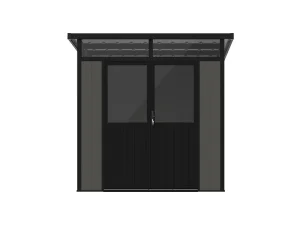
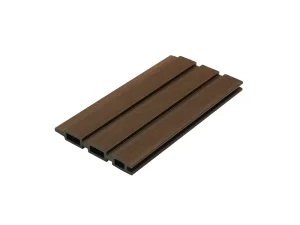
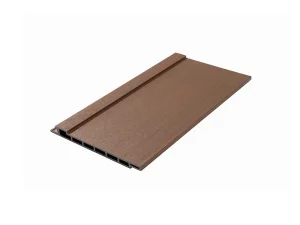
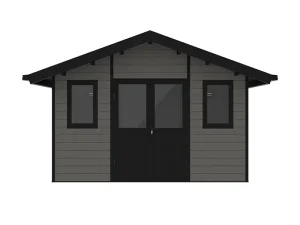
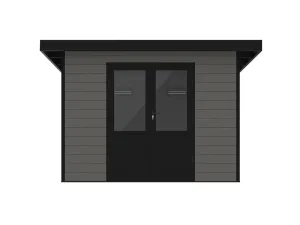
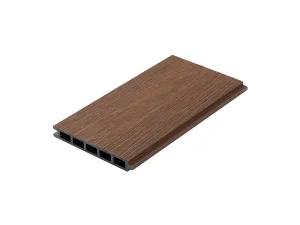
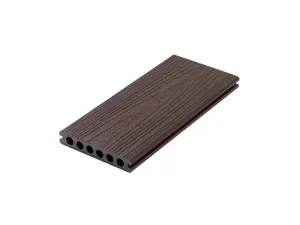
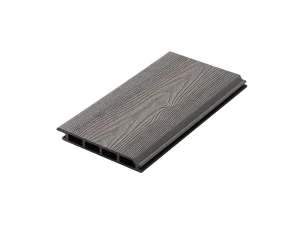
Industrial Grade Composite Profiles: Decking, Fencing, Cladding & Shed Systems
Forestar’s comprehensive extrusion portfolio allows Luxembourg importers and trade partners to consolidate diversified outdoor building product lines within single container consignments.
Frequently Asked Questions for Luxembourg B2B Buyers & Engineers
Comprehensive answers clarifying standard compliances, structural span tolerances, thermal coefficients, and container procurement protocols.
What specific CE and European standard test reports does Forestar furnish for Luxembourgish public tenders?
Forestar composite profiles comply with comprehensive EN performance testing standards, including EN 15534 (WPC materials specification), EN 13501-1 for reaction to fire (achieving Class Bfl-s1 or Cfl-s1 depending on capped profile selection), and DIN 51130 for slip resistance (achieving R11 ratings). Full technical dossier packs containing certified SGS and Intertek third-party test verification are supplied with container order consignments.
How do Forestar composite boards withstand the seasonal freeze-thaw cycles of the Luxembourg Ardennes?
Our co-extruded capping incorporates advanced polymer encapsulation around a dense composite core (formulated with virgin high-density polyethylene and reclaimed hardwood cellulose). With a water absorption coefficient below 0.5% after continuous 24-hour immersion, moisture cannot penetrate the matrix. As a result, repetitive sub-zero freezes will not cause internal expansion, micro-fractures, or structural surface spalling.
What is the recommended joist substructure spacing for residential versus commercial pedestrian loads in Luxembourg?
For standard residential applications in Luxembourg, we prescribe a center-to-center joist spacing of 400mm (16 inches) for perpendicular board orientation. For high-traffic commercial applications (such as restaurant terraces, municipal boardwalks, or 45-degree diagonal board installations), joist centers must be restricted to 300mm (12 inches) to guarantee zero board deflection under load.
Can Luxembourg distributors consolidate mixed items (Decking, Fencing, Cladding, and Garden Sheds) in a single container?
Yes. Forestar operates fully integrated, high-capacity extrusion and fabrication workshops at our Xuancheng facility. This gives importers the flexibility to order customized 40-foot HQ containers containing matched batches of composite deck boards, cladding panels, privacy fence slats, and flat-pack garden sheds under one cohesive commercial invoice and bill of lading.
How does Forestar manage thermal linear expansion across broad European temperature ranges?
Composite materials naturally expand and contract with temperature shifts. Forestar deck boards have a low thermal expansion coefficient of approximately 3.0 × 10^-5 /°C. Our engineered hidden clip fixing systems provide uniform 4mm to 6mm lateral expansion relief while allowing longitudinal slide at joist contact points, ensuring surfaces remain flat and unbuckled across annual temperature swings from -15°C in winter to +38°C in summer.
What is the standard production and shipping lead time from your factory to the Port of Bettembourg / Luxembourg?
Standard manufacturing lead time for standard container orders is 14 to 21 business days. Ocean transit from Shanghai/Ningbo ports to European gateway hubs (Rotterdam or Antwerp) typically spans 28 to 35 days, followed by quick inland barge or rail transit directly into the Bettembourg Intermodal Terminal in Luxembourg, providing an organized 7 to 8 week end-to-end delivery cycle.
Establish Your Factory-Direct Supply Advantage
Partner with Forestar to secure premium circular WPC composite systems manufactured directly to your market's technical standards. Gain margin resilience, dependable container shipments, and dedicated engineering support.
Send Inquiry Now