
Featured Façade & Decking Solutions for Uruguay
Engineered to withstand the salinity of the Río de la Plata and the intense Atlantic ultraviolet spectrum with zero maintenance coatings required.
-
Coastal Grade
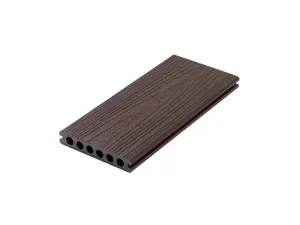
-
UV Shield 360°
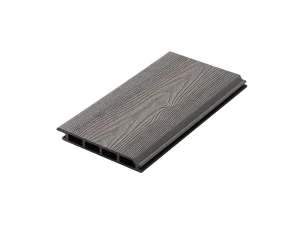
-
Modular Enclosure
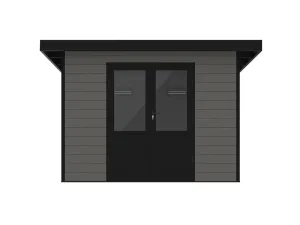
-
Waterproof Core
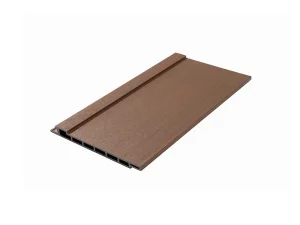
The Architectural Cladding Transformation in Uruguay
Uruguay is recognized across South America for its institutional stability, modern design aesthetics, and aggressive adoption of sustainable building practices. From the commercial skyscrapers in Montevideo's Buceo financial district to ultra-luxury waterfront residential compounds in Punta del Este, José Ignacio, and La Barra, architectural designers demand exterior building envelopes that balance organic beauty with exceptional environmental resilience.
Historically, Uruguayan builders relied on indigenous hardwood siding such as Lapacho or imported treated pine. However, the unique macroclimate of Uruguay—characterized by sudden shifts between humid Atlantic gale winds (El Pampero), severe atmospheric salinity along the coastline, and high seasonal UV radiation indexes reaching 11+ in summer—presents devastating degradation vectors for traditional timber. Natural timber envelopes in coastal Maldonado or Canelones require biannual sanding, toxic chemical sealing, and frequent slat replacements due to severe warp, cupping, and fungal colonization.
With modern municipal regulations emphasizing thermal efficiency, LEED certifications, and the national UNIT (Instituto Uruguayo de Normas Técnicas) construction standards, co-extruded Wood-Plastic Composite (WPC) cladding has emerged as the premier cladding specification for developers seeking 25+ year lifecycle envelopes with negligible maintenance liabilities.
Atlantic Salinity & Wind Resistance
Structures within 15 km of the Uruguayan coastline experience accelerated chloride ion deposition and sudden relative humidity swings of up to 90%. Forestar's 360-degree fluoropolymer co-extruded capping shields the core from saline penetration, preventing delamination, efflorescence, and moisture swelling common in porous fiber-cement and un-capped composites.
Wind uplift resistance rated for wind pressure zones up to Category 4 gusts (exceeding 180 km/h) when fixed with continuous extruded aluminum substructure brackets.
Technological Roadmap & Next-Gen Extrusions
Forestar engineers composite envelopes through nanoscale cross-linking, hyper-dense core polymers, and high-stability antioxidant pigments designed for extreme weathering.
Capped 360° Shield Technology
Unlike older, open-pore generation 1 WPC profiles that readily absorbed moisture and grease, Forestar employs an impermeable engineering polymer shell co-extruded around the entire perimeter, covering the tongue, groove, and internal chamber walls. This prevents hydraulic ingress even under torrential coastal rainfall.
UV Nano-Absorption Matrix
Solar irradiance in Uruguay frequently causes discoloration and polymer embrittlement. Forestar integrates high-purity Hindered Amine Light Stabilizers (HALS) and inorganic ceramic pigments directly into the extrusion melt, arresting photolytic degradation and maintaining color integrity across multi-decade exposures.
Thermal Expansion Stabilization
Sudden Antarctic cold fronts followed by subtropical summer heat can cause extreme dimensional movement. Forestar's proprietary lignocellulosic-to-polyolefin ratio limits longitudinal thermal expansion to < 0.9 mm/m at ΔT=30°C, ensuring hidden clip fasteners and vertical expansion joints never buckle or shear.
| Performance Characteristic | Forestar Capped WPC Cladding | Native Hardwood (Lapacho / Ipé) | Autoclaved Fiber Cement | Aluminum Composite Panels (ACP) |
|---|---|---|---|---|
| Coastal Saline & Rust Resistance | Impermeable & Inert | Moderate (Requires Sealer) | Susceptible to Efflorescence | Good (Risk of Edge Oxidation) |
| Annual Maintenance Burden | Zero (Water Rinse Only) | High (Biannual Sand & Oil) | Repainting every 5–7 Yrs | Low (Panel Cleansing) |
| Thermal Envelope (Rainscreen R-Value) | High Acoustic & Heat Dissipation | High Insulation | Moderate Conductivity | High Thermal Bridging |
| Circular Content & Sustainability | Up to 90% Recycled Content | Deforestation Pressures | High Energy Clinker Base | High Embodied Carbon |
| Total Cost of Ownership (15-Yr Outlook) | Lowest Lifecycle Cost | Extremely High Upkeep | Medium Lifecycle Cost | High Capital & Scratch Cost |
Macro Architectural Solutions for Uruguayan Developments
Engineered rainscreen cladding and wall panel profiles matching the structural codes of the South American Southern Cone.
Luxury Coastal Hospitality & Estates (Punta del Este)
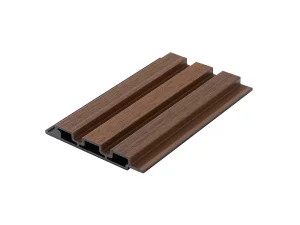
Luxury residential properties in La Juanita, Manantiales, and José Ignacio face direct exposure to ocean spray, blowing dune sands, and intense summer occupancy. Forestar's 3D deep-embossed timber grain cladding reproduces the organic visual warmth of Brazilian Teak and Ipe without vulnerable surface coatings that peel or pit under salt crystallisation.
- Profile: PlaneSleek & SlatWeave
- Salt Resistance: ASTM B117 > 3,000 hrs
- Fire Rating: EN 13501-1 Class B-s1, d0
- Installation: Concealed Marine Clips
Commercial Envelopes & Free Trade Zones (Zonamerica & Montevideo)
For office complexes, corporate campuses in Zonamerica, and high-density towers in Pocitos, energy efficiency and acoustic performance are critical. Forestar's ventilated rainscreen assemblies create a continuous air buffer behind the panels, reducing direct thermal transmission into the primary masonry and slashing HVAC loads during peak summer temperatures.
- Thermal Gain: R-Value Optimization
- Noise Damping: Rw + Ctr > 28 dB
- Wind Load: Up to 2.8 kPa Design Load
- Span Interval: 400 mm Joist Spacing
Forestar Advanced Manufacturing: Supply Chain Resilience for Mercosur
Located in Xuancheng, Anhui, China, operated by Anhui Fumeida New Material Technology Co., Ltd. (founded 2008), Forestar's facility is recognized globally for high-volume automated composite extrusion. For Uruguayan distributors, large-scale general contractors, and hardware import consortiums, working directly with our manufacturing hub guarantees unmatched cost-performance advantages.
Our smart facility features 32 parallel twin-screw high-torque co-extrusion production lines equipped with real-time optical colorimetry and inline laser dimensional scanning. This ensures that every cladding tongue and groove fits with micrometer-level precision, preventing costly on-site panel sorting or installation delays in Montevideo.
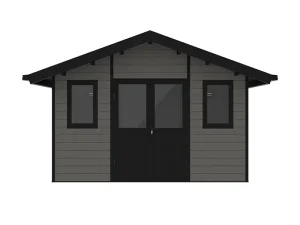
Moreover, Forestar solves the most significant logistics hurdle for South American importers: **Multi-Line Consolidated Container Loading**. Importers can consolidate architectural WPC exterior cladding, matching composite decking boards, privacy boundary fencing, and modular outdoor sheds into a single 40ft High Cube container, reducing port handling fees and working capital requirements.
Request Direct Factory QuotationContainer Consolidation Matrix for Port of Montevideo
Integrated Composite Solutions Available for Export
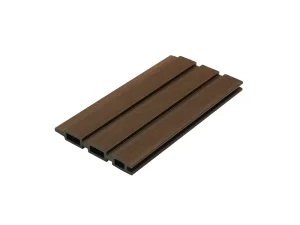
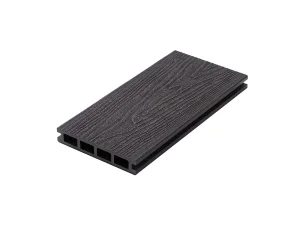
Browse our complete range of certified exterior products for Uruguayan residential developments, municipal contracts, and landscape distribution.
-
Low Maintenance
-
High Security
-
UV Proof Shield
-
Anti-Slip R11
-
Acoustic Shield
-
Heavy-Duty Frame
-
Chlorine Resilient
-
Wind Rated
Direct Maritime Logistics to Puerto de Montevideo
Maritime freight to Uruguay is routed directly through the specialized container terminal in the Port of Montevideo (Terminal Cuenca del Plata). Forestar maintains direct partnerships with premier maritime alliances (including Maersk, MSC, and COSCO), ensuring consistent container equipment availability, competitive ocean freight rates, and guaranteed Bill of Lading (B/L) processing.
We assist Uruguayan clients with full customs compliance documentation, including Verified Gross Mass (VGM), fumigation certificates, Certificate of Origin, and technical lab testing dossiers that facilitate rapid customs clearance under Uruguayan Dirección Nacional de Aduanas (DNA) protocols.
Goods can be cleared directly for entry into free trade zones (Zonamerica, Parque de las Ciencias, or Colonia Free Trade Zone) under suspension of import VAT and duties, allowing regional distributors to establish South American re-export hubs.
Compliance & Engineering Test Certifications
Every production batch destined for Uruguay is backed by comprehensive third-party testing documentation, assuring compliance with national and regional architectural standards:
- ISO 9001:2015 & ISO 14001: Certified Quality and Environmental Management Systems.
- CE Certification (EN 15534-1 / EN 15534-5): Compliance for composite façade claddings.
- ASTM E84 Class A Fire Rating: Low flame spread and minimal smoke toxicity.
- REACH & RoHS Compliance: Heavy-metal-free, zero volatile organic compound (VOC) emissions.
Frequently Asked Questions: Cladding Sourcing in Uruguay
Clear, authoritative guidance for architects, civil engineers, project developers, and building material importers.
How does Forestar WPC cladding perform in the saline coastal conditions of Punta del Este?
Forestar’s co-extruded cladding utilizes an impermeable 360-degree high-density polymer shield that completely encloses the composite core. In coastal areas like Punta del Este, José Ignacio, and Piriápolis, airborne salt particles cannot penetrate the core matrix. This completely eliminates internal crystallization pressures, swelling, warping, and fungal growth that frequently destroy natural hardwoods and un-capped composites within three to five years of installation.
What are the import duties and customs considerations for WPC cladding entering Uruguay?
WPC architectural cladding panels typically classify under Mercosur Common Nomenclature (NCM) tariff codes 3925.90 or 3918. Import duties (AEC - Arancel Externo Común) generally range from 12% to 14%, plus the standard national import VAT and port consular fees. Importers utilizing Uruguayan Free Trade Zones (such as Zonamerica or Puerto Libre de Montevideo) can defer or eliminate duties until dispatch into the domestic territory or re-export to Argentina or Brazil.
How is the rainscreen sub-frame engineered to resist Uruguayan wind gusts?
For installations in Uruguay, we recommend fixing on structural aluminum battens (minimum 6063-T5 alloy, 2.0 mm wall thickness) or treated steel studs spaced at 400 mm on center. Each cladding plank is secured via concealed 304 or 316 marine-grade stainless steel clips that allow controlled longitudinal thermal expansion while locking the panel mechanically against dynamic wind suction up to 2.8 kPa, satisfying local UNIT building regulations.
What is the minimum order quantity (MOQ) and production lead time for full containers?
Our standard production MOQ is one 20ft container (approx. 800–1,000 square meters of cladding) or a 40ft High Cube container (approx. 1,800–2,200 square meters). Standard production lead times are 15 to 20 working days from deposit confirmation. Maritime transit from Shanghai or Ningbo to Puerto de Montevideo typically averages 35 to 42 days depending on the shipping line routing.
Can we order custom colors, lengths, or private-label packaging for local retail?
Yes. Forestar provides comprehensive OEM/ODM manufacturing. We routinely extrude custom lengths (such as 2.9m, 3.6m, or 4.0m to minimize on-site cutting waste) and develop bespoke color formulations to match specific architectural palettes (e.g., Charcoal Gray, Nordic Teak, Smoked Walnut). Custom barcode labeling, protective film, and branded distributor cartons are available for container-scale orders.
How does Forestar cladding contribute to LEED Certification in Uruguayan building projects?
Forestar composite formulations contain up to 90% recycled post-consumer plastics (HDPE) and reclaimed industrial wood fibers, contributing directly to LEED v4/v4.1 credits under Materials and Resources (MR: Building Product Disclosure and Optimization - Sourcing of Raw Materials). Furthermore, ventilated rainscreen configurations enhance building energy envelope performance (Energy and Atmosphere - EA).