
Factory Direct Catalog: High-Performance Composite Solutions
Direct supply profiles rigorously verified for structural stability, UV degradation immunity, and water ingress prevention.
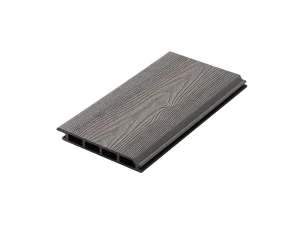
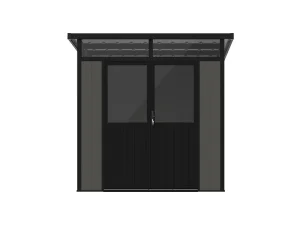
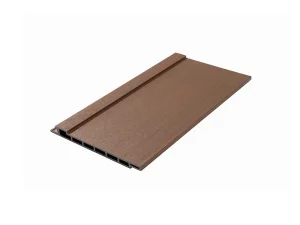
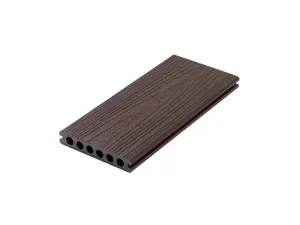
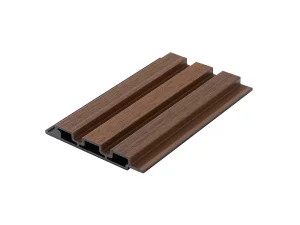
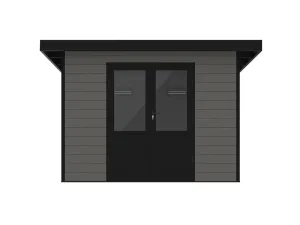
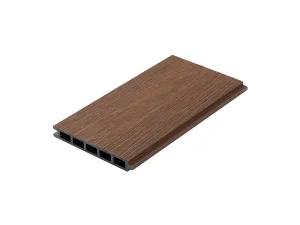
Global Market Reality: The Shift Towards Co-Extruded Façade Architecture
Modern building enclosures are undergoing a fundamental paradigm shift away from high-maintenance natural timber and thermally conductive metals toward high-tech polymer composites.
Life-Cycle Cost Amortization
While traditional tropical hardwoods or untreated softwoods incur steep compounding maintenance costs—such as biennial oiling, fungal remediation, and structural board replacement—co-extruded WPC wall cladding slashes OPEX overheads by up to 78% across a 25-year operational lifecycle.
360-Degree Shield Molecular Shells
Second-generation and third-generation WPC systems incorporate a continuous, modified polyethylene capping that permanently encapsulates the composite core. This impenetrable barrier prevents water penetration, eliminates checking or splitting, and withstands harsh alkaline air in marine conditions.
Stringent Global Building Codes
Tier-1 manufacturers produce formulations tailored to international safety frameworks, achieving EN 13501-1 Class B-s1,d0 fire behavior, ASTM E84 Class A flame spread indices, and heavy metal-free compliance under EU REACH regulations, satisfying urban structural ordinances.
Chinese Manufacturing Ecosystem: Scale, Chemistry & Supply Chain Velocity
Centering around hubs like Xuancheng, Anhui, modern Chinese composite manufacturing combines upstream industrial synthesis with precise high-speed automation.
Automated Continuous Extrusion
Equipped with twin-screw extruders operating with gravimetric micro-dosing systems, our manufacturing facilities guarantee homogeneous polymer-to-fiber dispersion. This automated thermal profiling eliminates hollow pockets, structural brittle points, and internal shear stresses.
Circular Economy Integration
By refining and pelletizing up to 90% post-industrial wood residue and reclaimed olefins, China-based facilities provide an eco-sustainable product without depleting virgin old-growth timber, delivering quantifiable carbon credits for international LEED building certifications.
Consolidated Container Logistics
Unlike single-line facilities, centralized Chinese multi-system plants let importers pack composite wall cladding, decking boards, co-extruded fencing, and outdoor garden storage sheds into a single, volume-optimized container, reducing ocean freight costs per cubic meter.
Material Performance Matrix: WPC vs. Traditional Cladding Systems
A quantifiable architectural analysis evaluating structural reliability, weathering resistance, and lifecycle maintenance requirements.
| Evaluation Parameter | Capped Composite WPC | Treated Softwood Timber | Aluminum Composite (ACM) | Fiber Cement Board |
|---|---|---|---|---|
| Moisture Absorption (24hr submersion) | < 0.5% (Impermeable) | > 22.0% (Risk of Rot) | 0.0% (Hermetic) | 7.0% - 12.0% |
| Color Fastness (QUV 3000h Accelerated) | ΔE ≤ 2.0 (High Stability) | Severe Graying / Silvering | ΔE ≤ 1.5 | Requires Repainting |
| Surface Thermal Conductivity | Low (Pleasant Touch) | Very Low | High (Thermal Bridging) | Moderate |
| Splinter & Crack Susceptibility | Zero Risk | High Over Operational Life | None (Prone to Dents) | Brittle upon Impact |
| Maintenance Routine | Water & Mild Detergent Rinse | Annual Chemical Staining | Specialized Surface Wash | Joint Resealing & Painting |
| Recycled Composition | Up to 90% Recycled Inputs | 0% (Virgin Harvest) | Variable (10% - 30%) | Minimal Post-Consumer |
Engineered for Demanding Real-World Microclimates
From hyper-arid desert regions to sub-zero Nordic environments, our WPC architectural systems deliver proven performance across global installations.
Commercial Ventilated Rain-Screens
Integrated rear air-cavity designs prevent condensation pooling and enhance structural cooling across commercial developments.
Coastal Villa Exterior Siding
High salt-spray resistance prevents saline etching and oxidation, protecting residences along harsh oceanfront properties.
Luxury Hospitality Terraces & Courtyards
Combines realistic dual-tone woodgrain aesthetics with high slip-resistance for pool perimeters and outdoor resort environments.
Global B2B Sourcing Protocol: Mitigating Risk from Factory to Port
A reliable methodology designed for commercial importers, builders' merchants, and regional distributors sourcing high-volume composites.
1. Profile Customization
Engineered structural wall profiles (fluted, tongue-and-groove, or shiplap), calibrated for local wind-load and building code specifications.
2. Precision Tooling & Testing
Pre-production sample verification under natural light conditions, with physical evaluations of flexural modulus and thermal expansion.
3. In-Line Quality Assurance
Continuous dimensional tolerance checks (±0.5mm), online spectrophotometric color control, and cap-adhesion peel testing.
4. Optimized Export Logistics
Custom-length moisture-barrier palletizing, corner-edge reinforcement, and direct intermodal drayage to regional deep-water ports.
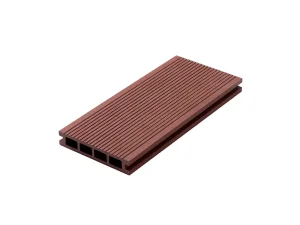
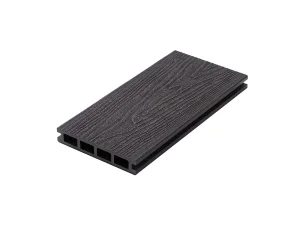
Engineered Decking, Cladding & Perimeter Infrastructure
Factory-direct inventory optimized for commercial builders, exterior contractors, and overseas volume distribution networks.
Emerging Industry Trends: The Technological Frontier
How materials science and advanced polymers are reshaping the next generation of wood-plastic composites.
Infrared Heat-Reflective Pigments
By integrating complex inorganic color pigments into outer capping polymers, modern WPC panels reflect solar near-infrared (NIR) wavelengths. This lowers surface heat absorption by 10–15°C compared to conventional composites, helping reduce urban heat island effects.
Bio-Based & Recycled Polymers
Next-generation R&D is progressing beyond post-consumer polyethylene toward certified ocean-bound plastics and bio-polymer resins. This reduces carbon footprints without sacrificing mechanical tensile strength or long-term UV resistance.
Engineered Substructure Integration
Modern exterior wall systems increasingly deploy quick-locking, anti-corrosive aluminum and polymer clipping rails. These systems reduce labor requirements, support thermal expansion, and ensure clean lines without visible surface fasteners.
Frequently Asked Questions for Importers & Commercial Specifiers
Detailed technical, compliance, and logistical answers from our senior engineering team to guide your procurement decisions.
What core advantages does co-extrusion capped WPC provide over first-generation uncapped composite cladding?
First-generation composite lacked a separate outer shield, leaving exposed wood fibers open to moisture uptake, gradual UV chalking, and environmental staining. Co-extrusion permanently fuses a protective 360-degree high-density polymer shell around the composite core during extrusion. This shell contains concentrated UV inhibitors, anti-fungal agents, and stain-resistant additives, keeping the panel color-stable and water-resistant over decades of service.
How does WPC wall panelling accommodate thermal expansion and contraction across variable climate zones?
Like all polymer-based building materials, WPC experiences thermal movement along its length (approximately 1.5mm to 2.0mm per linear meter over a 30°C temperature swing). Our installation systems manage this natural movement using specialized concealed clips and slotted fastening profiles that allow boards to slide smoothly within their tolerances. Correct edge clearances and butt-joint gap spacing—detailed in our installation guides—prevent structural warping, buckling, or surface distortion.
Can Forestar engineer customized cross-sectional profiles and custom color tones for volume commercial tenders?
Yes. Our manufacturing infrastructure includes full internal tooling design and wire-EDM extrusion die creation. For qualified commercial volumes, we design and extrude custom decorative and structural profiles within 3 to 4 weeks. In addition, our on-site spectrophotometric laboratory matches target RAL colors, natural wood stains, and architectural finishes while maintaining batch-to-batch consistency across high-volume container runs.
What regulatory testing and compliance certifications support international tender submissions?
Forestar composite wall panel profiles and outdoor systems undergo accredited third-party testing via international certification bodies such as SGS and Intertek. Standard technical documentation packs include EN 13501-1 Reaction to Fire assessments, ASTM D6109 mechanical flexural strength testing, ASTM D1037 water immersion data, accelerated QUV weather aging reports, and full chemical safety declarations under EU REACH standards.
What is the minimum order quantity (MOQ) and lead time for consolidated full container orders (FCL)?
Standard profile catalog runs carry a baseline MOQ of approximately 300 to 500 square meters per profile/color, allowing clients to consolidate multiple items—such as exterior cladding, decking boards, and garden shed packages—into a single 20ft or 40ft High Cube container. Average production turnaround runs between 15 and 22 business days from deposit and sample sign-off, with direct tracking provided from our manufacturing gates to departure ports.