Primary Composite Systems & Engineered Enclosures
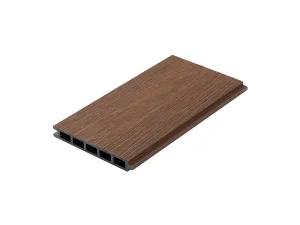
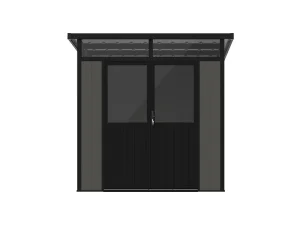
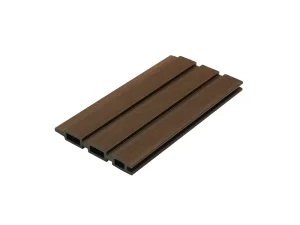
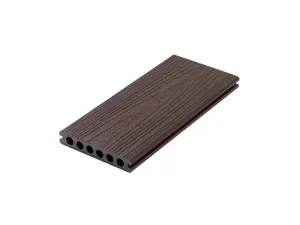
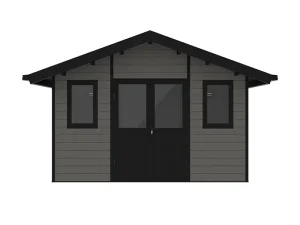
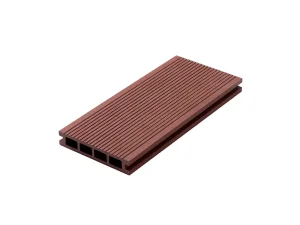
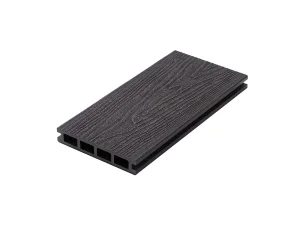
Explore Forestar's precision-manufactured exterior building envelopes, architectural cladding profiles, heavy snow load garden sheds, and composite decking boards engineered for global markets.
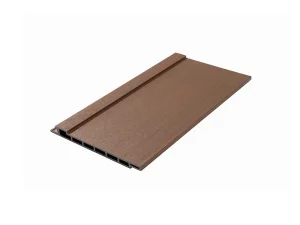
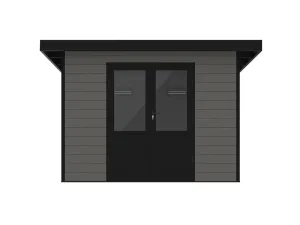
Global Commercial Landscape of WPC Great Wall Panels
The transition from high-maintenance timber claddings and cold metallic curtain walls to bio-composite fluted panels has reshaped modern building envelopes across the Americas, Europe, Middle East, and Asia-Pacific.
Architectural Shift to Fluted Geometries
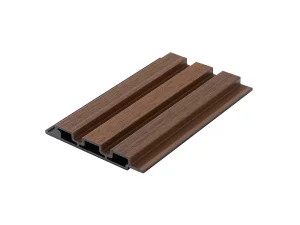
The "Great Wall Panel"—recognized globally as fluted, slatted, or multi-grooved cladding—has evolved from a boutique interior acoustic feature into an industry-standard exterior façade solution. Architects leverage vertical repeating relief profiles to create dramatic shadow lines, hide subframe fixings, and break monolithic façade massing without the weight penalties of natural precast concrete or terracotta.
Life-Cycle Cost Defensibility
Commercial developers face crippling OPEX inflation associated with timber preservation treatments, oiling, warping replacement, and structural rotting. Wood-plastic composite systems deliver an internal rate of return (IRR) payback within 36 to 48 months over tropical cedar, thermo-pine, or ipé cladding, completely eliminating biocidal chemical maintenance and fire-treatment recoat cycles.
Acoustic Dampening & Thermal Envelopes
Beyond optical aesthetics, the ribbed geometry of Great Wall panels acts as a macro-diffuser for airborne sound waves. When integrated into rainscreen ventilations, the high thermal inertia of high-density polyethylene (HDPE) combined with cellular wood fiber matrix creates an effective secondary microclimatic layer, lowering HVAC load demands in intense sunbelt zones.
China Factory Efficiency & Supply Chain Supremacy
Operating from our core manufacturing facility in Xuancheng, Anhui (Anhui Fumeida New Material Technology Co., Ltd.), Forestar delivers world-class polymer compounding, high-speed automated extrusion lines, and rigorous dimensional tolerance control.
Vertical Upstream Compounding
Direct in-house fiber milling and high-density polymer recycling facilities eliminate intermediaries. We refine virgin-grade reground HDPE plastics and kiln-dried wood micro-fibers under strict moisture controls (<1% moisture) before twin-screw barrel feeding.
Automated Multi-Cavity Extrusion
Our intelligent continuous extrusion lines utilize real-time laser micrometer inspection, ensuring wall thickness variations are kept within a tight ±0.3mm tolerance across 5.8m export shipping lengths, mitigating lateral crowning and field warping.
Container Consolidation Matrix
Unlike single-product factories, Forestar consolidates Great Wall panels, standard cladding, decking boards, fencing profiles, and flat-pack garden shed kits into single FCL 40HQ containers, radically lowering shipping footprint and inventory overhead.
Continuous QA Batch Testing
Every production shift performs continuous physical testing: boiling water immersion swell tests, ASTM D696 linear thermal expansion verifications, screw-withdrawal resistance profiling, and Xenon-arc accelerated artificial UV weathering chamber monitoring.
Co-Extrusion Engineering & Chemical Formulation
The superior durability of Forestar WPC Great Wall Panels stems from an advanced 360-degree co-extruded capping shield over a fiber-reinforced core, formulated to defy moisture ingress and UV photolytic degradation.
| Performance Characteristic | Forestar WPC Great Wall Panel | Standard Softwood / Cedar Cladding | Testing Protocol Benchmark |
|---|---|---|---|
| Water Absorption Rate (24h Full Immersion) | < 0.45% (Hydrophobic) | 22.0% – 38.0% (Cellular Ingress) | ASTM D1037 / EN 317 |
| Linear Thermal Expansion Coefficient | 3.5 × 10⁻⁵ mm/mm/°C | Anisotropic Shrinkage & Checking | ASTM D696 |
| Flexural Strength (Modulus of Rupture - MOR) | ≥ 32.8 MPa | 18.0 – 28.0 MPa (Knots Reduce Value) | EN 310 / ASTM D790 |
| Fire Reaction Classification | Class B-s1, d0 / ASTM E84 Class A Available | Class D or F (Untreated Timber) | EN 13501-1 / ASTM E84 |
| UV Accelerated Colorfastness (3,000h QUV) | ΔE*ab ≤ 2.2 (Negligible Optical Shift) | Severe Silvering, Greying & Surface Fibrillation | ISO 4892-2 Cycle 1 |
| Termite & Fungal Decay Resistance | Grade 0 Rating (Immune to Attack) | Requires CCA / Copper Quaternary Pressure Treating | ASTM D2017 / AWPA E1 |
| Formaldehyde & VOC Emission Class | E0 / CARB Phase 2 / French VOC A+ | Depends on Chemical Sealer / Varnishes | EN 717-1 |
Modified Polymer Cap Shield
The external fluted surface is enveloped in a cross-linked high-impact modified polymer alloy enriched with hindered amine light stabilizers (HALS), phenolic anti-oxidants, and micro-ceramic matting particles. This continuous impermeable barrier stops grease, wine, acidic rain, and airborne salinity from ever making contact with the inner organic core.
Interfacial Coupling Chemistry
The central matrix uses maleic anhydride grafted polyethylene (MAPE) functional coupling agents to bridge the polar hydrophilic wood fiber hydroxyl groups with non-polar hydrophobic polyolefins. This molecular bonding prevents delamination across severe freeze-thaw thermal cyclings from -40°C in Finnish winters to +65°C in Middle Eastern summers.
Non-Directional Matte Embossing
Rather than synthetic uniform plastic sheens, Forestar applies online thermomechanical 3D sync-embossing rollers. The resultant micro-textured natural timber fissures scatter light omnidirectionally, providing authentic architectural warmth without the artificial specular reflections common in inferior vinyl sidings.
Engineered for Varied Microclimates & Uses
With shipments spanning over 45 countries, Forestar WPC Great Wall Panels are engineered to satisfy strict local building regulations across high-salinity coasts, alpine snow belts, and intense desert regions.
Nordic Freeze-Thaw Façades
Installed from Helsinki to Oslo, the tongue-and-groove interlocking geometry and sub-0.5% moisture absorption prevent interstitial water entrapment that bursts traditional claddings during sub-zero freeze cycles. Concealed starter-clip systems accommodate dynamic seasonal movement without fastener shearing.
High UV Middle East & Desert Zones
Projects across Dubai, Riyadh, and Doha require extreme photolytic stabilization. Our proprietary surface cap shield integrates inorganic rutile-grade titanium dioxide and micronized carbon blacks to deflect intense solar infrared rays, mitigating surface blistering and chalking.
Coastal Marine & High-Salinity Resorts
In resort developments across the Mediterranean, Florida Keys, and Caribbean coasts, salt spray corrodes conventional metal siding and rapidly rots softwoods. Forestar bio-composite panels are inert to salt fog (ASTM B117 >2000 hours), making them ideal for seaside cabanas and hotel porticos.
Commercial Lobbies & Acoustic Interlock
Internally, fluted Great Wall panels serve as wall accents in airports, corporate headquarters, and luxury retail stores. Pre-cut acoustic cavity battens and fire-rated mineral wool backings combine with the ribbed surface to disperse internal room echoes and raise reverberation ratings.
Global Enterprise Sourcing, OEM Profiles & Compliance
B2B trade buyers, national retail chains, and commercial contractors require more than sample kits—they require verified compliance documentation, stable extrusion runs, and customized private-label packaging.
Custom Profile Die Development
Have an exclusive architectural drawing? Our internal tool and die tooling department designs, wires, and CNC tests bespoke multi-rib, asymmetrical, or micro-groove extrusion dies within 21 working days. We guarantee profile exclusivity agreements for qualified regional distributors.
Heavy-Duty Ocean Freight Bundling
Export panel bundles are individually stretch-filmed, edge-cushioned with heavy multi-layer honeycomb cardboard, and banded to reinforced fumigated wooden pallets optimized for standard 40-foot high-cube (HQ) container forklifts without panel bending or corner crush.
Full Certification Dossiers
Procurement teams receive full test certification packages including SGS EN 13501-1 reaction-to-fire documentation, CE Declaration of Conformity (DoP), Intertek physical stress and slip resistance reports, and verified Chain-of-Custody FSC recycled timber verification.
Emerging Industry Megatrends & Carbon Accounting
As global environmental regulations mandate stringent embodied-carbon metrics (EPD) in construction projects, wood-plastic composite manufacturers are evolving their chemical sourcing and energy footprints.
ASA & Fluoropolymer Capping Blends
The latest co-extrusion technology blends Acrylonitrile Styrene Acrylate (ASA) into the outer cap. ASA delivers automobile-grade surface resilience that withstands extreme weather conditions, lowering surface thermal absorption even in ultra-dark charcoal and midnight ebony tones.
Circular Economy & Carbon Credits
Forestar's material closed-loop formulation uses agricultural timber waste (bamboo dust, reclaimed hardwood shavings) and post-consumer milk containers/detergent bottles. This diverts thousands of metric tons of plastic waste from landfills annually, delivering tangible carbon-reduction credits for BREEAM and LEED v4 certified developments.
Integrated Photovoltaic & Smart Façades
Next-generation R&D explores the integration of thin-film photovoltaic (BIPV) tracks within the concave flutes of Great Wall panels. This enables multi-story commercial buildings to generate solar power along vertical elevations without sacrificing natural wood aesthetics.
Frequently Asked Questions for Importers & Engineers
Direct technical answers addressing structural substructure design, fire ratings, expansion gaps, maintenance regimens, and factory order procedures.
For exterior rainscreen cladding installations, the recommended maximum spacing between aluminum, galvanized steel, or composite battens is 400 mm on center for standard residential applications and 300 mm on center for high wind-load commercial façades. Never install panels directly over solid sheathing without an open rear drainage cavity of at least 20 mm.
Because polymers expand longitudinally with ambient temperature changes, an expansion clearance of 2 mm to 4 mm per linear meter must be calculated at panel butt joints, corner flashings, and window returns. Forestar supplies dedicated sliding aluminum concealed clips that allow axial panel expansion while securing lateral pull-out wind resistance.
Yes. While our standard residential grade achieves standard EN 13501-1 Class C ratings, our commercial architectural formulation incorporates micro-encapsulated non-halogenated magnesium hydroxide and aluminum trihydrate flame retardants. This custom batch compound achieves EN 13501-1 Class B-s1, d0 and ASTM E84 Class A flame spread indices.
For standard catalog fluted profiles and core stock colors (Teak, Walnut, Charcoal, Oak, Smoke Grey), our standard production lead time is 15 to 20 calendar days for a 40HQ container. Standard MOQ is 300 square meters per color/profile. Custom color matching via Pantone/RAL samples requires 7 business days for laboratory sample approval.
No. Forestar WPC panels are factory-pigmented and co-extruded with permanent color stabilizers. The exterior layer never requires varnishing, sanding, or chemical preservative treatments. Periodic maintenance is limited to gentle washing with lukewarm water and mild biodegradable soap or low-pressure rinsing (under 1200 PSI) once or twice annually.
Yes, this is one of Forestar's primary competitive advantages. We allow importers to mix Great Wall panels, standard exterior cladding, decking boards, composite fencing, and modular flat-pack garden shed kits within the same container shipment, enabling our partners to carry complete outdoor living lines with minimal capital exposure.
Engineered Fencing, Specialty Cladding & Outdoor Structures
Complete your container consolidation with factory-direct modular garden storage units, privacy fencing systems with hidden fasteners, and poolside capped composite decking.