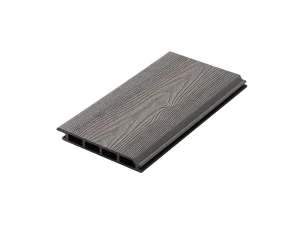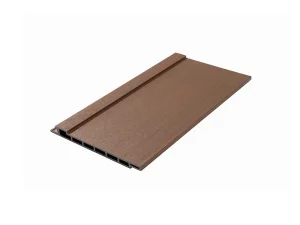
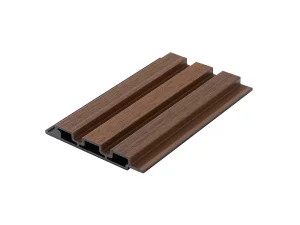
Direct-From-Factory Series
High-Efficiency Extruded Decking, Cladding & Outdoor Structures
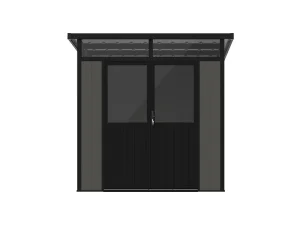
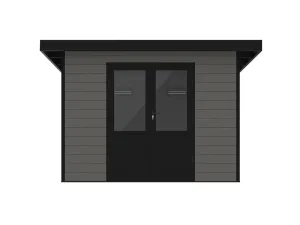
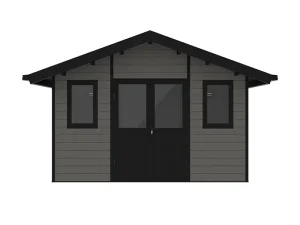
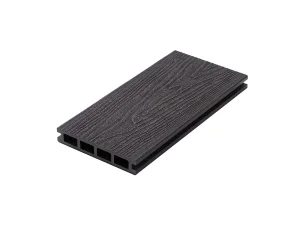
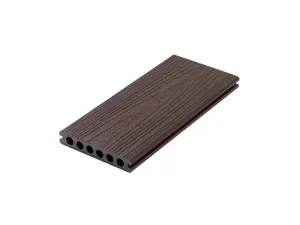
Examine our certified production portfolio. Below is the primary selection of export-grade WPC architectural profiles and garden storage systems manufactured in our Xuancheng manufacturing complex.
2008
Established In China
Over 16 years of continuous WPC research & extrusion innovation
90%
Recycled Feedstock
Post-consumer polymers and reclaimed wood fibers diverted from landfills
45+
Global Trade Markets
Supplying container-load shipments to builders' merchants worldwide
1M+
Installations Completed
Boardwalks, residential backyards, hospitality terraces, and resorts
Executive Summary & Semantic Scope
The Industrial Evolution of Wood-Plastic Composite (WPC) Decking
The global architectural decking sector has shifted permanently from pressure-treated timber to high-performance, circular bio-composites. Sourcing from a tier-one manufacturing plant requires a comprehensive grasp of polymer rheology, dual-screw extrusion dynamics, and multi-climate service lifecycles.
Material Science Precision
Forestar composite formulas synthesize high-density polyethylene (HDPE) with micronized kiln-dried hardwood fibers, compatibilizers, and thermal light stabilizers. This molecular interlocking eliminates water absorption and internal shear failure.
Multi-Decade Durability
Traditional pressure-treated softwood begins cellular degradation within 36 months under weathering. Forestar capped composites endure 25+ years without rot, insect tunneling, fungal bloom, or splinter hazard, significantly driving down lifetime ownership cost.
Circularity & ESG Alignment
With up to 90% recycled mass, Forestar empowers international contractors to obtain LEED, BREEAM, and DGNB green building credits. Every linear meter repurposed keeps consumer plastic packaging and lumber mill offcuts out of waste streams.
Global Market Architecture
Macro Trends & Industrial Demand Dynamics Across Continents
The international market for Wood-Plastic Composite decking has outpaced traditional timber substitutes, driven by stringent national fire safety updates, zero-deforestation policies, and surging commercial tourism infrastructure investments.
North American Retrofit Wave
In the United States and Canada, over 40 million aging residential decks are currently entering their structural replacement cycles. High labor rates have rendered repetitive deck staining economically unviable for homeowners, propelling the demand for pre-engineered, low-maintenance capped decking boards with concealed fastening systems.
European Green Building Directives
The EU Taxonomy and Circular Economy Action Plan require commercial developers in DACH, Scandinavia, and Benelux to substantiate material origin and cradle-to-gate carbon impact. Forestar's utilization of up to 90% reclaimed polymer/wood blends serves as a compliant benchmark across modern urban courtyards and municipal public boardwalks.
Middle East & Coastal Tropics Expansion
Hyper-saline coastlines in the GCC and high-humidity tropical zones across Latin America and Southeast Asia cause untreated tropical hardwoods to warp, leach tannins, and rot within years. Advanced co-extruded WPC with fluorocarbon UV shields has emerged as the premier standard for luxury resorts, marinas, and island properties.
Manufacturing Engine
Supply Chain Dominance: The Chinese Factory Efficiency Advantage
High-volume composite manufacturing is fundamentally an operational synergy of raw material upstream integration, screw barrel heat control, and precision tool engineering. Here is how Anhui Fumeida New Material Technology Co., Ltd. (Forestar) sets the benchmark for international importers.
Automated Extrusion Lines
Our facility houses high-torque, parallel twin-screw extruders operating continuous 24/7 cycles. Computerized gravimetric feeders ensure that resin-to-fiber distribution variance remains strictly below ±0.3%.
In-House Die Engineering
By engineering extrusion molds, calibrators, and cooling baths internally, Forestar accelerates custom profile creation from technical CAD drawing to first container run in under 21 business days.
4-In-1 Consolidation
Overseas distributors face high inventory carrying expenses. Forestar enables clients to consolidate decking boards, wall cladding, perimeter fencing, and modular garden sheds in one 40ft High Cube container.
Comprehensive QA Testing
Every batch undergo continuous laboratory testing: 2-hour water boiling swell resistance, modulus of rupture (MOR), Charpy impact strength, and xenon arc accelerated weathering chamber trials.
Chemical & Mechanical Engineering
The Science of Co-Extrusion: 360° Shield vs. 1st Gen Composite
Early composite formulations suffered from surface moisture absorption, mold spotting, and oil staining because the wood fibers remained exposed to outdoor precipitation. Forestar’s co-extrusion technology molecularly fuses a protective barrier to the core.
| Performance Characteristic | 1st Generation Uncapped WPC | Forestar TerraShield Capped WPC | Traditional Softwood Timber | Verification Standard |
|---|---|---|---|---|
| Surface Water Uptake (24hr immersion) | 1.8% – 3.2% (Moderate) | < 0.2% (Impermeable) Optimal | 15% – 28% (Severe Swelling) | ASTM D1037 / EN 317 |
| Color Fastness (Xenon Arc 3000h) | ΔE > 6.5 (Noticable Fade) | ΔE < 2.0 (Virtually Unchanged) Optimal | Severe Graying / Silvering | ISO 4892-2 / ASTM G155 |
| Stain Resistance (Wine, Oil, BBQ) | Permanent Absorption | Class 0 – Cleanable with Water Optimal | Deep Penetration / Staining | EN 15534-1:2014 |
| Flexural Strength (Modulus of Rupture) | 28 – 32 MPa | 38 – 44 MPa Heavy Duty | 20 – 40 MPa (Variable knots) | EN 310 / ASTM D790 |
| Slip Resistance (Pendulum 4S Rubber) | PTV 32 (Moderate risk wet) | PTV 45+ (Low slip risk) Compliant | PTV 20 – 28 (Slick when wet) | BS 7976-2 / AS 4586 |
| Maintenance Routine | Annual pressure wash & anti-fungal | Occasional warm soap wipe only | Bi-annual chemical sanding/staining | Field Maintenance Protocol |
Field Engineering & Global Microclimates
Engineered for Regional Extremes: From Sub-Zero Nordic to Desert UV
A single extrusion profile cannot be treated as a universal solution without factoring in ambient thermal expansion coefficients, subterranean joist ventilation, and radiant surface temperatures.
Nordic & Alpine Freeze-Thaw Zones
Deployment: Finland, Austria, Sweden, Northern Japan.
Engineering Focus: Zero moisture penetration eliminates structural spalling caused by subsurface ice expansion. Forestar’s heavy-duty hollow and solid cores accommodate seasonal thermal contraction through calibrated concealed gap clips, remaining structurally uncompromised at -35°C.
Arid & High-Radiation Regions
Deployment: Texas, Arizona, UAE, Saudi Arabia, Australia.
Engineering Focus: Severe ultraviolet indices (UV 11+) degrade inferior polymer formulations. Forestar incorporates Hindered Amine Light Stabilizers (HALS) and inorganic ceramic pigments to preserve chromatic integrity and reduce infrared heat retention under blazing sun.
High-Humidity & Marine Waterfronts
Deployment: Florida, Caribbean, Colombia, Coastal Mediterranean.
Engineering Focus: Constant water spray, salt fog, and chlorine splash accelerate rot in wood joists and untreated siding. Forestar’s EclipseGrain and TerraShield series deliver Class 1 slip resistance, zero termite vulnerability, and zero rust-leaching compatibility with stainless-steel hardware.
Strategic B2B Procurement Playbook
Criteria for Global Importers, Distributors, and Turnkey Contractors
Containerized procurement requires diligent quality control. When procuring wood-plastic composites at commercial scale, enterprise purchasing directors evaluate the following five non-negotiable operational checkpoints.
Polymer Melt Flow Index (MFI) Consistency
Inconsistent post-industrial plastic sources result in brittle profiles prone to cross-sectional cracking during cold-weather cutting. Forestar strictly controls the raw HDPE resin MFI (within 0.7–1.2 g/10min at 190°C/2.16kg) to guarantee high structural ductility.
Export Seaworthy Packaging Architecture
Defective seaworthy crating causes corner deformation during multimodal crane transshipment. Our export pallets utilize reinforced bottom runners, protective edge protectors, moisture barrier wraps, and heavy-gauge polyester banding designed for fast forklift offloading.
Full Regulatory Dossier Support
Forestar furnishes clients with complete regulatory dossiers: CE compliance under EN 15534-4:2014, Class Bfl-s1 fire reaction reports (EN 13501-1), REACH SVHC non-toxicity declarations, and third-party laboratory audits conducted by SGS and Intertek.
Financial & Ecological Economics
25-Year Total Cost of Ownership (TCO): Real Wood vs. Forestar WPC
While natural softwood timber has a lower initial invoice price at raw material checkout, its maintenance liabilities across a quarter-century lifecycle render it significantly more expensive than high-durability composite decking.
The Hidden Drain of Timber Upkeep
A standard 50 m² pressure-treated pine or larch deck requires pressure washing, sanding, and chemical oil staining every 12 to 24 months. Over 15 years, coating consumables and specialized maintenance labor accumulate to 2.5× to 3.8× the initial procurement capital.
Additionally, warped planks, splintering surface boards, and popped screws necessitate ongoing localized plank replacement, resulting in disruptive downtime for commercial cafes, hotel terraces, and vacation rentals.
The Forestar Predictable CapEx Standard
Investing in Forestar TerraShield capped composite stabilizes lifecycle budgeting. Aside from quarterly rinsing with mild soapy water, expenditure on chemicals, sealers, biocides, and painting services is eliminated.
From an ecological standpoint, every container load of Forestar composite prevents roughly 18,000 kg of post-consumer plastic bottles and film from ocean dumping, converting municipal scrap into stable, long-lasting urban architecture.
Emerging Horizon
Technological Frontiers: AI Optimization & Bio-Composite Evolution
The wood-plastic composite sector is experiencing rapid technological refinement. Leading industrial factories are investing heavily in intelligent production and advanced polymer chemistry to overcome the physical limits of extruded profiles.
Cool-Touch Infrared Heat Reflective Pigments
Standard dark composite boards can absorb substantial heat when exposed to direct summer solar radiation. Forestar is deploying micro-encapsulated inorganic cool pigments that selectively reflect near-infrared radiation (NIR), reducing board surface temperatures by up to 8°C to 12°C compared to standard polymers.
AI-Monitored Laser Dimension Calibration
Extrusion cooling rates can introduce subtle longitudinal bow or camber across 5.8m export lengths. Forestar's automated extrusion lines feature in-line multi-axis laser sensors that scan cross-sectional tolerances continuously, keeping linear deviations under 0.5mm per running meter.
Bio-Based Circular Cross-Linking Polymers
As petroleum derivatives face elevated environmental carbon tariffs, our R&D team is piloting natural bio-polymers and agricultural fiber composites (such as rice husk and bamboo cellulose) paired with bio-based coupling agents, pioneering the next generation of net-zero footprint structural materials.
Procurement & Technical FAQ
Frequently Asked Questions by Global Importers & Engineers
Actionable answers to core technical, operational, and supply questions gathered from our international B2B client base across 45+ countries.
What precise raw material ratio is used in Forestar high-performance WPC decking?
Our engineered core matrix is formulated with approximately 55% to 60% kiln-dried, reclaimed hardwood fibers (screened to 60–80 mesh), 30% to 35% recycled high-density polyethylene (HDPE grade), and 10% chemical performance additives including maleated coupling agents, inorganic UV absorbers, color masterbatches, and internal lubricants. In our capped series (such as TerraShield), an outer modified polymer shell encapsulates the core, delivering impenetrable stain, oil, and moisture resistance.
How does Forestar guarantee batch-to-batch color stability over multi-container rollouts?
We utilize high-precision spectrophotometers to control chromatic variance (ΔE) under a strict threshold of < 0.8 between production batches. Furthermore, all virgin wood flour inputs undergo automated dehumidification and moisture normalization to ensure that polymer absorption does not create localized shading variations across production dates.
Can Forestar accommodate custom profiles, special lengths, and private-label embossing?
Yes. As a direct manufacturer, Forestar provides full OEM/ODM engineering services. We design custom tooling, precision calibration dies, 3D woodgrain embossing cylinders, and customized retail packaging with your company’s brand identity, EAN/UPC barcodes, and custom multilingual installation inserts.
What are the recommended joist spans and thermal expansion gap allowances?
For residential installations, we mandate a center-to-center joist span of no more than 350mm to 400mm (14 to 16 inches). For heavy commercial projects or diagonal layouts (45°), maximum joist spacing must be reduced to 300mm (12 inches). Because composite expands longitudinally with temperature flux (approx. 1.5mm to 2mm per meter over a 30°C delta), butt-joint end gaps must follow Forestar’s temperature installation index, maintained cleanly using our stainless-steel concealed clip system.
What is the minimum order quantity (MOQ) and standard container delivery lead time?
Our standard factory MOQ is one 20ft container (approx. 800 to 1,000 square meters depending on profile thickness and hollow vs. solid cross-section). For regular trade partners, we offer mixed 40ft High Cube containers containing decking, wall cladding, fencing panels, and flat-pack garden shed kits. Typical manufacturing lead time is 14 to 21 calendar days from deposit confirmation.
Where can overseas procurement teams inspect Forestar products and verify factory audits?
International buyers can conduct live on-site or third-party video audits of our main production facilities at 5 Mezigang Road, North District Industrial Park, Xuancheng, Anhui, China. We also exhibit annually at major international building materials exhibitions, including PISCIMAD in Madrid, Spain (Booth 7A49), and regional construction showcases worldwide.
Engineered Cladding & Shed Portfolio
High-Durability Architectural Profiles & Precision Shed Solutions
Explore the secondary selection of our specialized composite building products, featuring anti-UV architectural wall cladding and secure garden storage systems manufactured for global supply chains.