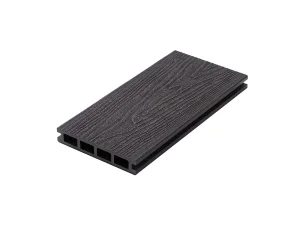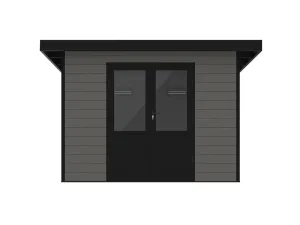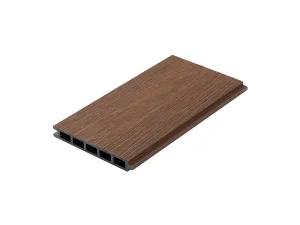
Signature Architectural Decking & Enclosure Solutions
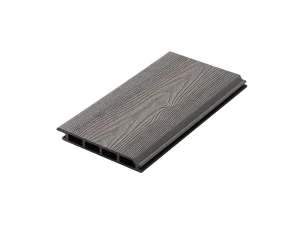
Precision-milled composite profiles featuring high thermal stability, co-extruded protective encapsulation, and ultra-realistic woodgrain textures engineered for export distribution.
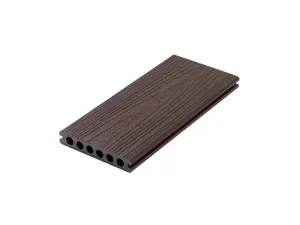
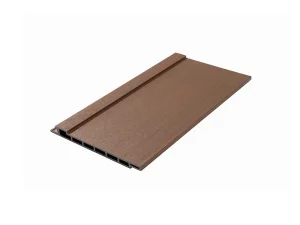
Macro Dynamics & Global Procurement Evolution in Decking
Wood plastic composites (WPC) have evolved from basic lumber substitutes into advanced structural polymer solutions meeting stringent circular economy, ESG, and building resilience criteria.
Circular Material Circularity
Global architectural specifications require verified recycled inputs. Tier-1 real estate firms demand boards engineered with up to 90% reclaimed fibers and post-consumer polymers to qualify for LEED v4.1 and BREEAM certifications without compromising tensile stability.
Co-Extruded Shield Chemistry
Traditional uncapped composite profiles are being phased out in commercial applications. Co-extruded 360-degree acrylic-polyethylene polymer shields (such as TerraShield) provide non-porous resistance against thermal degradation, wine stains, chlorinated pool water, and high-salinity marine air.
Total Life-Cycle Economy
Facility asset managers have shifted focus from initial procurement unit cost to 25-year lifecycle performance. By eliminating chemical pressure treatments, cyclical sandings, and seasonal repainting, commercial projects realize complete capital payback within 48 months of installation.
High-Yield Solutions Across Heavy Commercial & Residential Projects
Engineered deck formulations designed to handle extreme environmental stressors, rigorous foot-traffic wear, and strict municipal building codes.
Public Municipal Boardwalks
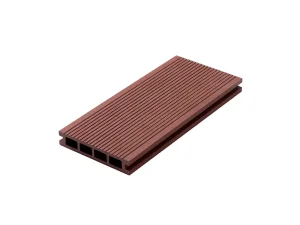
High-span load capacities engineered for heavy urban traffic. Anti-slip micro-grooved patterns provide wet-pendulum PTV > 36 ratings under EN 15534 standards, maintaining pedestrian traction in coastal piers and wetlands.
Luxury Hospitality & Resorts
Thermal-reflective cap formulations reduce surface heat absorption under direct equatorial UV exposure. Resistance to chlorine, sunscreen oils, and continuous pool splash makes capped composites the standard for luxury hotel pool terraces.
Volume Importer Consolidation
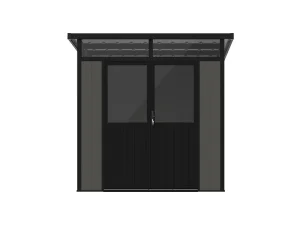
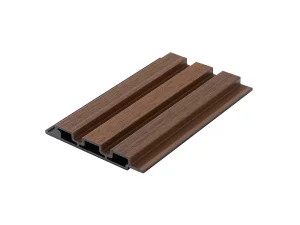
Single-source supply integration allows distributors to consolidate premium decking boards, WPC cladding panels, perimeter fencing, and modular outdoor sheds within consolidated 40ft HQ ocean containers, lowering freight risk and overhead.
Engineering Verification: Co-Extruded Composite vs. Softwood vs. Hardwood
Laboratory tested parameters demonstrating physical shear limits, moisture equilibrium, and environmental maintenance requirements over an extended duty cycle.
| Evaluation Parameter | Capped Composite (TerraShield) | Treated Softwood (Pine) | Tropical Hardwood (Ipe/Teak) |
|---|---|---|---|
| Moisture Absorption (24h immersion) | < 0.5% (Impermeable Core) | > 22% (Swelling / Warping) | 8% - 14% (Checking / Splitting) |
| Annual Upkeep Requirement | Zero (Mild soap clean) | Mandatory sealing / staining | High-cost periodic oiling |
| Slip Resistance Classification | Class R11 / PTV > 36 Wet | Variable (Hazardous wet) | R10 (Smooth surface wear) |
| Insect & Termite Vulnerability | 100% Resistant (ASTM D3345) | Chemical treatment dependent | Naturally moderately resistant |
| Color Degradation (Delta E < 5) | UV Shielded (> 3000 hrs QUV) | Grays within 4–6 months | Silvers without ongoing oiling |
| Recycled Content Composition | Up to 90% Circular Matrix | 0% (Virgin forest timber) | 0% (Deforestation risk) |
Localized Engineering Support & International Compliance Assurance
Ensuring frictionless cross-border distribution through accredited quality management and certified multi-jurisdictional compliance paperwork.
Full CE & EN 15534
Comprehensive third-party load-bearing, flexural modulus, and thermal expansion documentation certified by SGS for the European Union market.
ASTM Flame & Slip
Class B flame spread ratings (ASTM E84) and static coefficient of friction testing compliant with North American building safety regulations.
Custom OEM Profiles
Rapid CNC tooling fabrication for bespoke groove designs, co-extruded dual-color finishes, and custom cross-sections matched to proprietary clip systems.
Optimized Packing
Moisture-barrier shrink wrapping, reinforced corner protectors, and palletized lengths up to 5.8m designed for fork-lift efficiency and container utilization.
Technology Roadmap: Next-Gen Composite Formulations
Strategic R&D pathways leading material science improvements across thermal performance, bio-based matrices, and intelligent tracking.
Phase 1: Solar-Reflective Pigments
Deployment of infrared-reflective inorganic pigment formulations within the capped sheath layer, reducing peak board surface temperatures by up to 12°C in hot desert climates and intense sun zones.
Phase 2: Bio-Polymer Matrixing
Transitioning beyond standard post-industrial plastics to bio-derived polyethylene matrices combined with agricultural fiber by-products, lowering the carbon footprint toward Net-Zero carbon targets.
Phase 3: Digital Product Passports
Incorporation of traceable batch micro-markers supporting EU Digital Product Passport (DPP) regulations, delivering authenticated chain-of-custody data from resin receipt to construction site disposal.
Frequently Asked Questions for Importers & Contractors
Essential technical clarifications regarding extrusion parameters, MOQ requirements, subframe structures, and thermal tolerances.
What is the structural difference between capped and traditional WPC decking?
Traditional composite decking features a single composite extrusion exposed to weather, which can slowly absorb surface oils and atmospheric humidity over time. Capped composite decking (such as TerraShield) utilizes an integrated co-extruded polymer shield that covers all sides of the inner core, delivering superior resistance against UV color fading, wine or food stains, and deep moisture ingress.
What subframe joist spacing is recommended for commercial vs. residential use?
For standard residential decking installations, we specify joist centers at a maximum of 400mm (16 inches) on center. For heavy commercial installations, public walkways, or diagonal (45-degree) board placement patterns, joist spans should be reduced to 300mm (12 inches) on center to maintain deflection criteria under high dynamic pedestrian loads.
How does the composite material manage linear thermal expansion and contraction?
Engineered composites experience linear thermal movement along their length in response to ambient temperature swings. Our hidden fastener clip system automatically preserves a 5mm to 6mm side gap, while butt-joint end gaps should be calibrated between 3mm and 6mm based on the ambient installation temperature and board lengths (typically up to 5.8m).
Can distributors order mixed-product containers across decking, cladding, and sheds?
Yes. A primary operational advantage of partnering with Forestar is cross-system container consolidation. Trade importers can balance composite decking boards, exterior WPC cladding panels, fencing components, and flat-pack garden shed kits in a single 40ft container to minimize inventory exposure and optimize ocean freight costs.
High-Performance Outdoor WPC Systems & Profiles
Explore our complete export catalog: weather-resistant cladding systems, poolside anti-slip composite decking, and secure outdoor storage sheds.