High-Quality China MiniStar WPC Outdoor Storage Shed with Lockable Door - Quality from Trusted Suppliers and Factory Product, Products
Inspect Module
A Comprehensive Engineering & B2B Procurement Whitepaper on Decommissioned Modular Dwellings, Secondary Structural Assemblies, and Circular Upcycling Solutions.
Verified structural modules, mobile containerized frameworks, and certified composite housing assemblies directly available from vetted manufacturing facilities.
Addressing structural urban density constraints, rapid deployment needs, and the transition toward decarbonized, circular modular construction assets.
The secondary industrial tiny house market has transformed from ad-hoc retail reselling into an engineered remanufacturing ecosystem. Factory-certified reconditioned units yield an estimated 64% reduction in embodied carbon compared to greenfield site construction, extending structural lifespans by up to 30 years.
Global lead times for pre-engineered structural insulated panels (SIPs) and cold-formed steel frames continue to fluctuate. Procuring factory-inspected used tiny units allows commercial operators and municipal contractors to bypass up to 180 days of upfront fabrication delays while retaining structural warranties.
Unregulated peer-to-peer secondhand tiny homes frequently carry hidden envelope fatigue or compromised electrical runs. Modern specialized factories utilize standardized testing protocols—incorporating thermal imaging, structural deflection audits, and MEP pressure diagnostics—prior to secondary commercial deployment.
Ensuring cross-border commercial compliance across North America, the European Union, Australia, and GCC development zones.
Units refurbished for North American deployment are audited against the International Residential Code (IRC) standards governing ceiling height limits, emergency escape systems, egress roof access windows, and loft fall-protection measures.
European imports undergo certification checks for road-transportable holiday caravan requirements (EN 1647), alongside thermal boundary validations (EN ISO 6946) to guarantee condensation-free interior envelopes in high-latitude climates.
Where units occupy recreation vehicle (RV) or park model designations, specialized factory audits confirm compliant gas-system piping, low-voltage 12V/120V hybrid breakers, UL-rated egress exits, and flame-retardant interior barriers.
Secondary market units destined for alpine regions (such as Austria or Finland) or active seismic territories (Chile, Japan) receive specialized structural reinforcement schedules, ensuring certified roof load limits up to 2.5 kN/m².
Scalable, modular, and capital-efficient applications designed for rapid return on investment across commercial verticals.
Hotel networks deploy batches of refurbished WPC-clad tiny cabins into ecologically sensitive forest or coastal territories. Units arrive pre-plumbed with greywater diverters, eliminating major ground-disturbance civil engineering while commanding premium ADR (Average Daily Rates).
Engineering EPCs operational in isolated terrains leverage ruggedized used tiny housing as executive command offices and sleeping quarters. Units outfitted with co-extruded composite exteriors withstand corrosive salt fog, sandstorms, and extreme thermal cycling without maintenance shutdowns.
City planning authorities utilize standardized, factory-serviced micro-dwellings for rapid transitional urban communities. Modular layouts enable fast installation on disused parking structures or brownfield sites with minimal municipal service tie-ins.
Pioneering advancements in digital twins, closed-loop composites, and off-grid automation shaping the next generation of pre-owned housing assets.
Factory refitters are embedding passive RFID and environmental sensor chips directly inside structural insulated walls. This provides secondary buyers with transparent, verified moisture logs, thermal-efficiency histories, and frame deflection analytics.
Advancements in upcycled capping allow factories to strip weathered exteriors and re-clad frames in high-durability WPC made with up to 90% recycled plastics and post-industrial wood fibers, resisting rot and fading indefinitely.
Standardizing pre-owned modules with plug-and-play solar photovoltaic roofs, lithium ferro-phosphate (LFP) energy storage, and onboard condensation potable water filtration, unlocking zero-footprint off-grid living.
Integration of computer-vision disassembly robotic cells in central manufacturing facilities. Decommissioned micro-homes are mechanically assessed, stripped of worn hardware, and reassembled under clean-room conditions with zero landfill waste.
Comprehensive manufacturing frameworks engineered by Anhui Fumeida New Material Technology Co., Ltd. (Forestar).
Forestar is the outdoor brand of Anhui Fumeida New Material Technology Co., Ltd. in Xuancheng, Anhui, China. We supply importers, distributors, builders' merchants, and landscape contractors with factory-direct WPC (wood-plastic composite) systems. These systems are designed to look like timber and to perform for decades without deterioration.
By blending reclaimed wood fibre with recycled polymers—containing up to 90% recycled content—our materials provide a high-performance alternative to traditional timber in tiny houses, outdoor sheds, modular façades, and decking substructures.
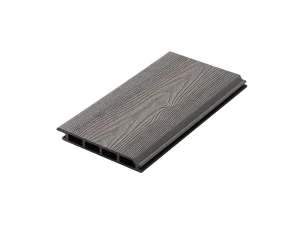
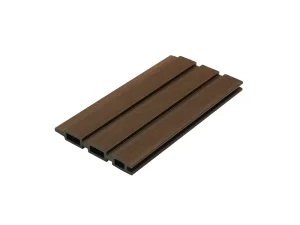
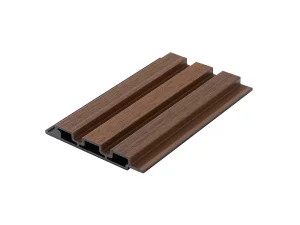
Timber-look façade and feature-wall panels engineered for modular tiny homes, luxury villas, and commercial facilities. Capped surface finish delivers exceptional UV stability and zero seasonal painting requirements.
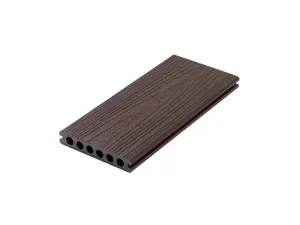
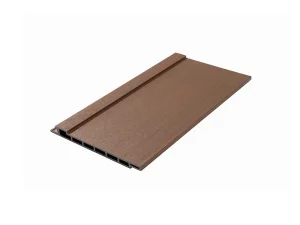
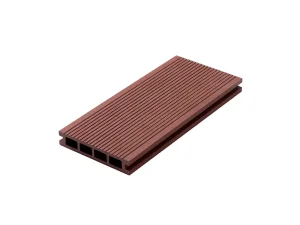
Splinter-free, slip-conscious decking for outdoor living decks, terraces, and recreational vehicle patios. Cool-touch formulations engineered for bare-foot safety around aquatic zones.
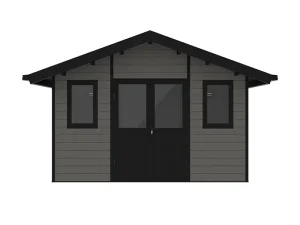
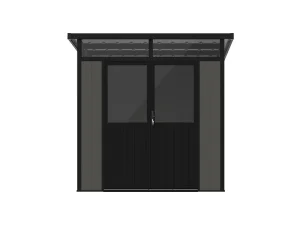
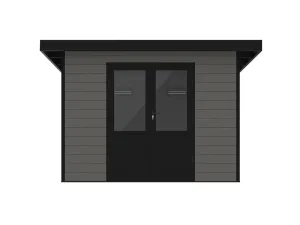
Weather-tight, rot-proof composite storage units and miniature annexes. Manufactured as flat-pack kits for optimized overseas container stuffing and swift on-site mechanical assembly.
Actionable intelligence for importers, commercial project leads, and trade partners sourcing modular units and composite envelopes.
When re-engineered with cold-formed galvanized steel framing and retrofitted with high-density WPC composite cladding, a factory-inspected pre-owned tiny home maintains an operational service life of 25 to 35+ years, outlasting conventional softwood timber builds with minimal surface maintenance.
Specialized reconditioning factories employ calibrated thermal imaging to detect insulation settling or moisture accumulation. Compromised mineral wool or EPS cores are replaced with closed-cell polyurethane foam or advanced PIR boards to achieve target U-values complying with local building energy codes.
Yes. Certified facilities inspect the integrated trailer chassis, examining axle camber, magnetic braking assemblies, coupler shear tolerances, and frame corrosion. Units are issued updated VIN plates and compliance documentation for DOT, ADR, or European Type Approval standards.
Forestar composite blends reclaimed wood fiber with polymers (utilizing up to 90% recycled material) and is co-extruded with a protective cap layer. This prevents moisture ingress, rot, warping, and insect damage—imperative for tiny homes exposed to road vibration and harsh ambient climates.
Yes. Importers frequently consolidate flat-packed modular garden sheds, exterior composite cladding profiles, decking boards, and modular sub-assemblies inside 40ft High Cube containers directly from the factory, drastically reducing per-unit freight overheads.
Trade buyers, glamping developers, and dealer distributors can specify custom woodgrain embossing patterns, custom extrusion lengths, targeted Pantone colors, and custom protective packaging to fit local distributor retail channels.
Explore heavy-duty composite deck boards, exterior architectural cladding, and modular weatherproof storage systems engineered for long-term project longevity.