
Featured Industrial Envelopes & Modular Enclosures
Direct from the manufacturing plant floor: precision-extruded profiles, heavy-load sheds, and capped weather envelopes designed for turnkey micro-dwellings and modern backyard transformations.
The Commercial Landscape of Industrialized Micro-Dwellings
Analyzing the macroeconomic drivers, regulatory transitions, and structural shifts propelling prefabricated modular units, Accessory Dwelling Units (ADUs), and composite backyard architecture into mainstream commercial real estate.
Urban Densification & ADU Legislation
Across North America and Western Europe, municipal zoning overhauls (such as California's SB 9/ADU mandates and UK permitted development rights) have unlocked unprecedented demand for modular back-lot structures. Commercial developers are bypassing slow, labor-constrained traditional stick-framing in favor of industrial pre-engineered micro-homes and high-performance composite storage units that install within days instead of months.
Hospitality & Experiential Eco-Tourism
The global hospitality sector is directing substantial capital expenditures toward glamping resorts, off-grid modular retreats, and remote boutique cabins. These projects mandate exterior building materials that deliver genuine timber aesthetics without the crushing operational expense of regular staining, sanding, and mold abatement. Composite framing and cladding systems maintain structural integrity under continuous guest turnaround.
Decarbonization & Circular Supply Mandates
Corporate ESG directives and stringent building energy codes (such as Europe's EPBD and the International Green Construction Code) penalize carbon-heavy materials. By utilizing composite wall sidings, heavy-snow load rated storage frameworks, and high-density flooring composed of up to 90% recycled raw ingredients, builders earn substantial LEED points while reducing upfront material procurement overhead.
Engineering Superiority: Scale, Precision & Vertical Integration
How our Xuancheng facility operated by Anhui Fumeida New Material Technology Co., Ltd. leverages state-of-the-art automated twin-screw extrusion, tight compounding controls, and complete modular logistics.
Vertical Compounding Integration
Unlike assembly-only plants that purchase outsourced profiles, our facility manages the entire synthesis pipeline: from granulating post-industrial polymers and micro-milling wood fiber to our proprietary co-extrusion capping formulas. This eliminates batch-to-batch color shifts and guarantees molecular tensile consistency.
Continuous Automated Extrusion
Operating dozens of parallel high-torque extrusion lines equipped with vacuum calibration cooling baths, our production facility maintains dimensional tolerances within ±0.3mm across multi-meter panel lengths. This precision enables effortless tongue-and-groove interlocking during final modular on-site erection.
Stringent In-Line QC Metrology
Every production shift conducts ASTM and EN compliant empirical testing: boiling water swell testing, flexural modulus verification (yielding high load-bearing values), accelerated Xenon arc UV weather aging, and Charpy impact resistance evaluations. Compliance documentation (SGS, CE, REACH) is compiled for instant customs clearance.
Flat-Pack Modular Consolidation
Through proprietary knock-down engineering, complete garden shed building kits, sub-frame decking members, cladding lengths, and matching trim systems are packed in high-density, moisture-barrier steel-strapped crates. This maximizes 40ft HQ container cubic utilization, significantly driving down ocean freight cost per unit.
Architectural Scenarios Across Varied Climatic Zones
Detailed field analyses showing how Forestar exterior envelopes and structural modular sheds perform across international microclimates, environmental stresses, and regional compliance standards.
North America (Sunbelt & Coastal)
Deployment: ADU backyard guest houses and poolside cabanas in Texas, Florida, and Southern California.
Technical Challenge: High thermal expansion, blistering solar UV indexing, and sporadic humidity surges.
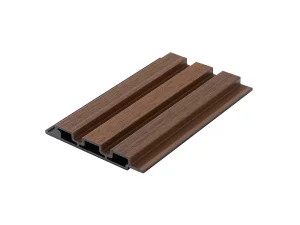
Engineering Response: PlaneSleek and CrestWall siding utilize modified ASA-capped formulations that reflect solar infrared energy, reducing skin surface temperatures and eliminating board warping up to 70°C (158°F).
Nordic & Central Alpine Europe
Deployment: Mountain micro-cabins, ski-chalet ski sheds, and terrace garden offices in Austria, Finland, and Germany.
Technical Challenge: Deep freeze-thaw cycles, prolonged ground frost, and heavy snow crusting.
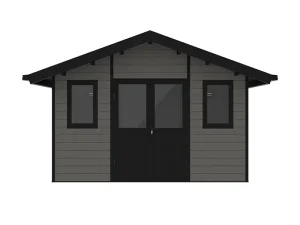
Engineering Response: RidgeStar heavy snow load rated shed geometry incorporates internal reinforcement ribs and slope angles engineered to handle >150 kg/m² snow accumulation without joint failure or thermal bridging.
Latin America & Equatorial Regions
Deployment: Eco-lodges in Colombia and coastal residential terraces across Chile.
Technical Challenge: Intense biological mold exposure, wood-boring insects, and torrential rainfall.
Engineering Response: Complete encapsulation of polymer-cellulose matrix ensures zero organic food source for subterranean termites, carpenter ants, and rot-inducing fungal spores, delivering multi-decade durability.
Australasia Coastal Urban Centers
Deployment: Suburban granny flats, coastal holiday homes, and multi-residential courtyard fencing in Australia & New Zealand.
Technical Challenge: Extreme marine salt-spray corrosion and high UV radiation.
Engineering Response: Stainless steel grade 304/316 concealed clip attachment systems paired with HorizonLine and TerraShield systems completely isolate the envelope from galvanic rust and coastal degradation.
Forestar WPC Composite Systems vs. Conventional Building Materials
Comparative mechanical, physical, and environmental metrics demonstrating why engineered wood-plastic composite envelopes outperform pressure-treated lumber, PVC vinyl, and lightweight sheet metal.
| Performance Vector | Forestar WPC Composite Systems | Softwood (Pressure-Treated Pine) | PVC / Vinyl Panels | Galvanized Sheet Steel |
|---|---|---|---|---|
| Flexural Strength (MOR) | 32.4 – 38.6 MPa | 22.0 – 28.0 MPa (Subject to knots) | 18.0 – 24.0 MPa | High (Subject to local buckling) |
| Moisture Absorption (24h) | < 0.35% (Capped Shell) | 18.0% – 28.0% (Severe swelling) | < 0.15% | 0.00% (Rust risk at cut edges) |
| Maintenance Cycle | Zero (Periodic Water Wash Only) | Annual sanding, oiling, or painting | Pressure washing, anti-static wipes | Periodic anti-corrosion repainting |
| Thermal Stability Range | -35°C to +75°C without embrittlement | High (Drying splits & warping) | Becomes brittle below -10°C | Extreme radiant heat conduction |
| Resistance to Pests / Mold | Immune (ASTM G21 Certified) | Vulnerable to rot, borer insects | High resistance | Immune (Prone to condensation mold) |
| Recycled Content | Up to 90% (Post-consumer resin/wood) | 0% (Harvested virgin forest logs) | Typically 0% – 15% virgin petrochem | 25% – 35% scrap content |
| Standard Warranty Scope | 15 – 25 Years Structural & Fade | 1 – 5 Years (Limited warranty) | 5 – 10 Years (Chalking risk) | 5 – 10 Years (Rust perforation risk) |
Key Trajectories Reshaping Global Micro-Building Procurement
Strategic intelligence for international importers, building material distributors, and tiny house builders seeking resilient supply chains over the coming decade.
Prefabricated Hybrid SIP-WPC Envelopes
The industry is rapidly shifting toward unified sandwich panels: pre-laminating rigid polyurethane (PUR) or expanded polystyrene (EPS) structural insulated core panels directly with co-extruded wood-plastic composite skins in factory-controlled presses. This eliminates multiple subcontractor steps, delivering an R-20+ thermal performance in an envelope that snaps together on site with zero exterior framing labor required.
Embedded Smart IoT & Thermal Tracing
Next-generation tiny house builders are specifying composite extruded battens with integrated routing channels for low-voltage wiring, hidden solar conduit paths, and internal humidity micro-sensors. Our production engineering team works alongside OEM buyers to extrude customized cavities and edge-profiles that simplify plug-and-play mechanical, electrical, and plumbing (MEP) retrofits in tiny living modules.
Container Optimization & Mixed Consolidations
B2B margins are preserved by consolidating complementary SKUs into single sea freight bookings. Global distributors are ordering balanced 40ft HQ loads consisting of 4–6 garden shed structural kits, surrounded by high-density horizontal packs of matching composite decking boards, wall cladding runs, and perimeter fencing panels. This maximizes weight-to-volume container limits while reducing landed warehouse handling costs.
Engineering & Procurement Inquiries for B2B Partners
Detailed answers addressing engineering feasibility, building code compliance, container consolidation strategies, and custom manufacturing workflows.
How do Forestar composite garden sheds and wall sidings achieve heavy snow-load certification?
Can your WPC cladding and decking systems be integrated into tiny house steel chassis or timber frame construction?
What makes your 90% recycled composite superior to virgin plastic or untreated lumber in eco-tourism modular cabins?
What are the thermal performance and flame-spread ratings of your building envelope panels?
How do you support custom profile extrusions, proprietary colors, and private-label packaging for B2B brands?
What is your typical production lead time and minimum order quantity (MOQ) for international container shipments?
How are Forestar modular garden sheds packaged to prevent transit damage during multi-modal ocean shipment?
Can importers and contractors inspect full third-party compliance testing and raw material audit documentation?
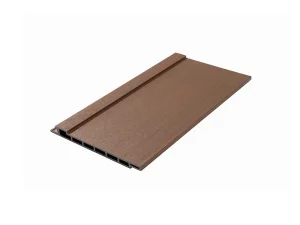
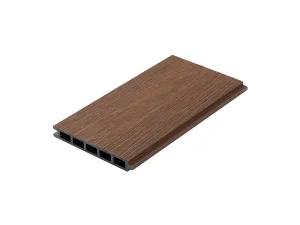
Explore Complete Architectural Envelopes & Modular Profiles
Mix, match, and consolidate these high-demand composite product lines into a single shipping container to optimize your supply chain costs and satisfy regional project demands.
How Forestar Partners with Global Modular Builders & Distributors
A predictable, documented 4-stage engineering path from digital architectural blueprints to full container load delivery, ensuring risk-free execution on high-value projects.
CAD & Specification Review
Clients submit their architectural layouts, target structural spans, and local fire/wind load codes. Our engineering team calculates load requirements, assesses expansion joint layouts, and suggests optimal profile options from our shed, cladding, and decking systems.
Physical Sample & Color Verification
Prior to committing to container quantities, partners receive physical sample boxes containing multi-tone color swatches, full-depth board cross-sections, and fasteners. This allows you to evaluate surface texture, heat resistance, and color rendering under your local sunlight conditions.
Batch Compounding & QC Sign-off
Production follows strict ISO 9001 protocols. Each lot undergoes testing for density, moisture content, tensile breaking points, and UV stability. Comprehensive test reports and high-resolution pre-shipment photos are provided for your compliance and warranty documentation.
Optimized Crating & Export Clearance
Goods are secured in export-grade steel-reinforced pallets and weatherproof protective wrapping. We handle ocean freight logistics, provide fumigation documentation, packing lists, and commercial invoices to ensure smooth customs clearance at major international ports.