
Standard-Setting Architectural & Exterior Assemblies
Direct-from-factory co-extruded architectural components engineered for heavy environmental tolerances and low thermal expansion.
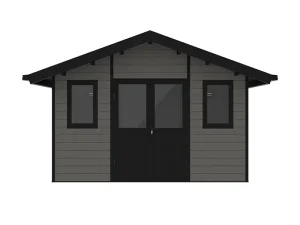
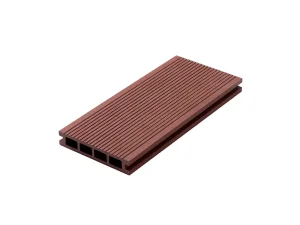
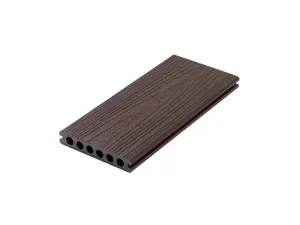
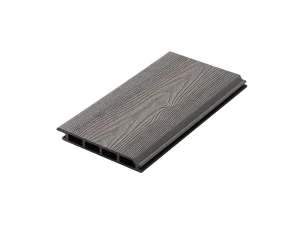
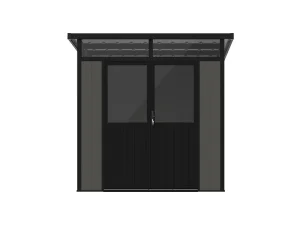
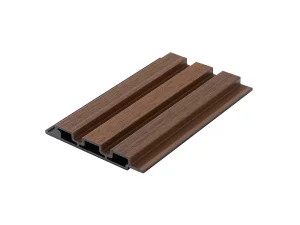
Architectural Comparison: SPC vs. WPC Polymer Matrices
Understanding the micro-structural differences, thermal performance, and mechanical shear tolerances between calcium carbonate-bound SPC and polymer-encapsulated natural fiber WPC.
SPC: Rigid Core Density & Hydrophobic Matrix
Stone Plastic Composite (SPC) integrates approximately 60%–70% natural limestone powder (CaCO3) blended with polyvinyl chloride and specialized stabilizers. This formulation yields an exceptionally dense, rigid core engineered to minimize indentation and guarantee absolute dimensional stability in indoor high-traffic zones without hygroscopic swelling.
WPC: Viscoelastic Damping & Thermal Insulation
Wood Plastic Composite (WPC) synthesizes refined reclaimed wood fibers with virgin or recycled thermoplastic polymers (HDPE, PVC, or PP). The micro-cellular cellular structure acts as a natural thermal barrier with high viscoelastic shock absorption, preventing acoustic resonance while giving exterior profiles authentic tactile warmth.
Co-Extrusion Shield Engineering
Modern composite extrusion incorporates high-pressure 360-degree co-extrusion caps. Engineered with advanced acrylic-modified fluoropolymer shields, this surface layer blocks intense ultraviolet oxidation, prevents deep organic wine and oil staining, and arrests superficial moisture penetration completely.
Parametric Engineering Comparison
Quantitative benchmarks measured under standard ASTM and EN ISO laboratory testing methodologies.
| Evaluation Parameter | Stone Plastic Composite (SPC) | Wood Plastic Composite (WPC) | Standard Softwood / Hardwood |
|---|---|---|---|
| Primary Composition | Limestone (CaCO3) + PVC Polymers | Reclaimed Hardwood Fiber + Recycled Polyolefins | Virgin Natural Timber |
| Density Profile | 1,900 – 2,100 kg/m³ (Ultra-Dense) | 1,200 – 1,400 kg/m³ (Balanced High Density) | 450 – 850 kg/m³ |
| Linear Thermal Expansion | < 0.10% (Exceptional Dimensional Core) | < 0.25% (Controlled by Substructure Joisting) | Hygroscopic expansion up to 2.5% |
| Primary Application Envelope | Indoor Commercial, Acoustic Subfloors, Wet Rooms | Exterior Decking, Facades, Architectural Sheds | Framing, Treated Decks (High Maintenance) |
| Maintenance & Longevity | Zero waxing; damp wipe maintenance | Occasional soapy water wash; no sealants | Mandatory bi-annual staining and sealing |
| Termite & Rot Vulnerability | Zero Biodegradation Risk | Zero Fungal Decay / Termite Inert | High vulnerability without chemical toxins |
Precision Chinese Factory Infrastructure & Cost Efficiencies
Maximizing capital efficiency through multi-line extrusion capacity, integrated tooling centers, and closed-loop raw material recycling clusters in Anhui.
Vertically Integrated Raw Sourcing
Our centralized manufacturing ecosystem directly sources polymer feeds and wood fiber residues at local processing plants. This localized supply network insulates project budgets against global commodity price spikes and ensures homogenous raw mix quality before batching.
High-Throughput Twin-Screw Extrusion
Operating dozens of parallel automated extrusion lines equipped with vacuum degassing systems and real-time infrared temperature controllers guarantees high plasticization efficiency. Bulk container orders are manufactured with minimal turn-around delays.
Optimized Export Packaging & Consolidation
Flat-pack crating architectures and modular bundle lengths are calibrated directly to 40ft High Cube container volumetric limits. Mixed profile packing allows dealers to import decking, wall cladding, and complete garden sheds under a unified customs code.
Macro Trends & Application Scenarios Across Geographies
Engineered structural solutions tailored to extreme local conditions—from high-humidity tropical microclimates to heavy-freeze Nordic regions.
Tropical Resort Boarding
Installed extensively in high-humidity zones across Latin America and Southeast Asia, our co-extruded WPC eliminates moisture uptake, preventing bacterial mold spread and surface delamination along oceanfront boardwalks.
Nordic Sub-Zero Enclosures
Tested throughout Finland, Sweden, and Canada, the dense cellular structure resists repeated freeze-thaw cycles without brittle micro-fracturing or surface checking, maintaining structural integrity across winter snow loads.
High UV Arid Climates
In high solar irradiance locations such as the American Southwest and Middle East, our proprietary UV stabilizers avoid discoloration and protect surface temperatures through reflective inorganic pigmenting.
Urban Multi-Family Enclosures
Meeting fire rating criteria and strict low-maintenance municipal covenants, capped composite panel systems provide sound dampening and high privacy screening for contemporary terrace and rooftop projects.
Meeting the Demands of Global Importers & Contractors
B2B project lifecycles demand strict adherence to traceability, structural safety, environmental certification, and modular supply logistics.
Strict Quality Verification (QC)
Professional procurement teams rely on multi-tier inspection protocols: flexural strength evaluations, boiling water swelling tests, screw withdrawal load testing, and UV xenon arc weathering reports validated by third-party testing bureaus like SGS.
LEED & ESG Alignment
By incorporating up to 90% post-industrial recycled plastics and recovered timber by-products, our composite profiles contribute directly to LEED MR credits, eliminating virgin deforestation pressures and offering traceable sustainability documentation.
Private Labeling & OEM Tooling
We provide comprehensive OEM packaging, including customized barcoding, specialized pallet dimensions for automated warehouse rack retrieval, custom protective films, and tailor-made extrusion dies designed to client cross-sectional drawings.
High-Performance Outdoor Decking & Storage Catalog
Browse our co-extruded architectural range engineered for high residential durability and commercial code compliance.
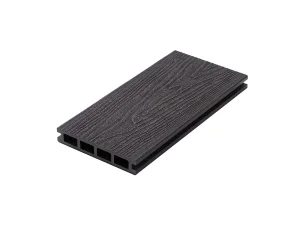
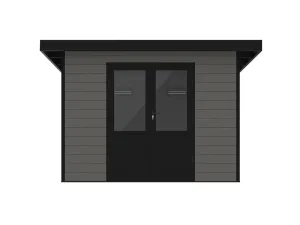
Substructure Framing & Fastener Physics
Essential contractor guidelines to ensure structural warranties remain valid over decades of dynamic thermal loading.
Joist Span & Cantilever Dynamics
For standard residential deck patterns, joist center-to-center spacing should never exceed 350mm–400mm. For diagonal (45-degree) commercial installations or high-load pedestrian plazas, contract spans must tighten to 300mm max to eliminate board flexure under dynamic load.
Thermal Expansion Joint Allowance
Polymer composites exhibit predictable thermal coefficient movement. Installers must leave calibrated butt-joint gaps (typically 3mm to 6mm) calculated based on ambient installation temperature versus local extreme summer highs to avoid buckling.
Continuous Subfloor Aeration
Never install composite decking flush against flat solid concrete or damp ground without elevating joist cradles. Proper ground clearance of at least 100mm with unobstructed ventilation paths prevents heat buildup and water ponding beneath boards.
Frequently Asked Questions: Global Sourcing & Tech Specs
Comprehensive answers addressing technical capabilities, export logistics, and comparative formulation chemistry.
What core mechanical attributes differentiate SPC and WPC in high-load installations?
Stone Plastic Composite (SPC) prioritizes extreme indentation resistance and dimensional stability under static loads due to its dense calcium carbonate (limestone) core, making it the premier choice for indoor commercial flooring and heavy footwear areas. In contrast, Wood Plastic Composite (WPC) introduces organic fiber resilience and micro-air pockets that grant superior shock absorption, thermal insulation, and surface realism, making it optimal for outdoor deck surfaces, cladding, and outdoor buildings.
What are the exact constituent materials in Forestar's composite formulations?
Our exterior profiles integrate up to 90% recycled content, comprising reclaimed hardwood micro-fibers blended with post-industrial high-density polyethylene (HDPE) polymer chains. Stabilized with non-heavy-metal coupling agents, UV light absorbers, and inorganic colorants, our capped models add an all-around engineered shield to permanently lock out moisture and prevent color fading.
Can wholesale distributors obtain physical verification samples prior to container commitments?
Yes. Importers, landscape contractors, and regional distributors can request customized sample packs via our Order Sample portal. We advise assessing surface grain friction, thermal touch under native environmental lighting, and chemical resistance prior to signing off on full 20ft or 40ft High Cube container loads.
Do your extrusion facilities support OEM custom tooling, bespoke colors, and private-label packaging?
We routinely collaborate with global private-label brands. We provide in-house CNC die mold manufacturing for bespoke architectural profiles, proprietary custom surface embossing grains, tailored lengths to fit regional residential joist norms, and fully branded weather-sealed master carton packaging.
Which global markets have verified performance references for your composite lines?
Forestar composite solutions are active in more than 45 countries across North America, Europe, South America, and Australasia. Proven project installations operate across diverse climates, such as Dallas (extreme summer UV), Helsinki (deep sub-zero freeze-thaw), and Medellín (high tropical humidity). Explore our capabilities on the Global Service page.
Where can commercial specifiers and foreign procurement teams meet your engineering staff?
Trade delegates can schedule technical discussions directly at international expos including PISCIMAD in Madrid (Booth 7A49), or schedule on-site factory visits and production audits at our main manufacturing campus in Xuancheng, Anhui Province, China. For remote inquiries, connect with our export team via our contact interface.