Global Portfolio Release
Core Architectural WPC Infrastructure Systems
Engineered solutions fabricated direct-from-factory, delivering structural resilience, UV-stabilized polymer encapsulation, and circular lifecycle performance.
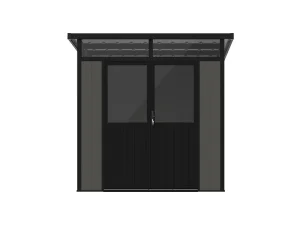
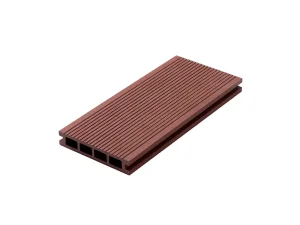
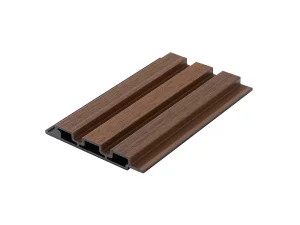
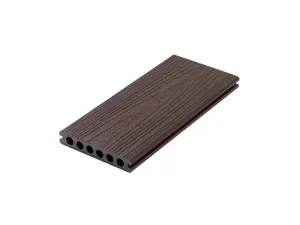
Macro Structural Engineering
Technical Roadmap: Next-Gen Composite Privacy Barriers
The global boundary fencing market is transitioning from legacy pressure-treated timber and unreinforced PVC to 360-degree co-extrusion composites. Modern privacy fencing functions as an acoustic barrier, thermodynamic shield, and structural perimeter.
Micro-Cellular Foaming Polymeric Cores
Forestar's third-generation privacy panels utilize closed-cell micro-foaming agents within the reclaimed HDPE-wood matrix. This reduces panel mass by 18% while enhancing transverse flexural stiffness, allowing 1.8m spans without center-sagging under high wind-load conditions.
Active UV-Inhibitor Nanotech Capping
Our 360-degree capping technology uses Hindered Amine Light Stabilizers (HALS) and modified acrylic shell formulations. These layers reject ionizing solar radiation, limiting color shifts to Delta E < 2.0 over 10-year accelerated QUV chamber testing.
Acoustic Attenuation & Wind Buffering
Engineered tongue-and-groove interlocking profiles eliminate air bypass gaps. This yields a certified Sound Transmission Class (STC) rating of 29 dB, providing high acoustic dampening for perimeters along transit corridors and urban developments.
2008
Operational Establishment
90%
Recycled Sustainable Feedstock
45+
Global Export Jurisdictions
1M+
Square Meters Deployed
Factory 4.0 Operations
China Factory 4.0: Supply Chain Resilience & Precision Extrusion
Operated by Anhui Fumeida New Material Technology Co., Ltd. in Xuancheng, Anhui, our production infrastructure integrates real-time ultrasonic wall-thickness tracking, automated gravimetric dosing, and continuous dual-screw extrusion lines.
Gravimetric Batch Precision
Automated feeding loops meter reclaimed timber fibres, high-density polyethylene polymers, coupling agents, and color masterbatches with +/-0.1% accuracy. This eliminates batch-to-batch density drift and ensures uniform thermal expansion profiles.
Closed-Loop Eco Scalability
Our manufacturing uses internal closed-loop water cooling circuits, zero-effluent extrusion systems, and clean recycling loops. Production offcuts and calibration trims are granulating directly back into base core compounding, reducing landfill footprint.
Intermodal Shipping Optimization
Panels, posts, caps, and hardware accessories are packaged using precision nesting algorithms. We configure 20GP and 40HQ containers to maximize floor-load density and eliminate shipping breakage, keeping container volume utilization above 94%.
Procurement Directives
Enterprise Procurement Demands & Architectural Customization
We serve international importers, hardware chains, master developers, and civil contractors with high-volume manufacturing capacities and customized technical parameters.
High-Volume Turnkey Private-Labeling (OEM/ODM)
Complete private-label integration is available for trade partners, including laser-etched extrusion profiles, bespoke paper corner protectors, barcoded retail labeling, and branded UV-protective shrink packaging.
Color Matching & Embossed Finishes
Customization options include multi-chromatic 3D woodgrain patterns, sanded matte textures, micro-grooved modern facades, and RAL/Pantone color-matched co-extrusion shells engineered for local aesthetic demand.
Container Multi-System Consolidation
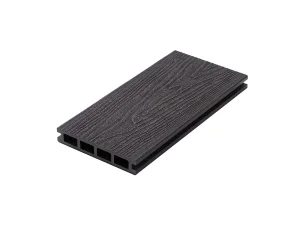
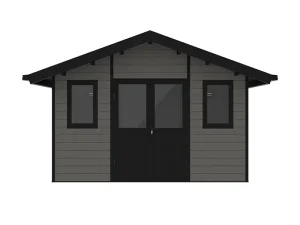
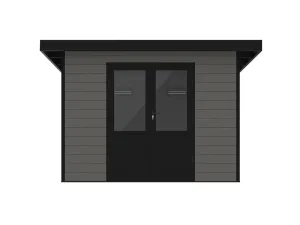
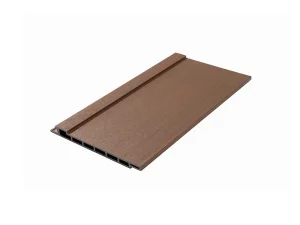
Optimize ocean freight logistics by combining privacy fencing sections, composite decking, outdoor wall cladding, and kitset garden sheds into a single 40HQ container, lowering inventory carrying costs.
Compliance Architecture
Localized Testing, Certification & Building Code Compliance
Cross-border building materials require strict compliance verification. Forestar materials undergo independent, accredited lab testing to satisfy regional safety and environmental benchmarks.
North American Standards (ASTM)
Tested in accordance with ASTM D7032 for load-bearing flexural capacity, freeze-thaw degradation resistance, flame spread index (ASTM E84 Class B rating), and screw-withdrawal retention strength for hurricane-prone regions.
European Standards (EN/CE Mark)
Certified under EN 15534 for wood-polymer composites. Verified compliance covering EN 13501-1 Reaction to Fire (Bfl-s1), moisture absorption resistance below 0.8%, and REACH Annex XVII chemical safety standards.
Circular Economy & ESG Credits
Third-party FSC-certified sourcing pathways and recycled polymer verification provide transparent documentation, helping developers secure LEED v4 and BREEAM building points.
Knowledge Base
Frequently Asked Questions (Trade & Technical FAQ)
Direct engineering insights into raw materials, thermal dynamics, structural profiles, and distribution partnerships.
What core raw material chemistry makes Forestar composite privacy fencing superior to standard wood?
Forestar composite blends 55-60% reclaimed, industrial-grade hardwood fibres with 30-35% recycled high-density polyethylene (HDPE) and 10% structural coupling agents, thermal stabilizers, and anti-fungal additives. Unlike traditional wood, each wood fiber is encapsulated within moisture-impermeable polymer matrix, eliminating rot, subterranean insect attack, splintering, and fungal growth without periodic chemical treatment.
How does co-extrusion technology resist weather extremes and wind loading?
Our co-extrusion line produces an exterior protective cap simultaneously with the core profile under high heat and pressure. This outer polymer jacket provides continuous protection against moisture, scratches, and UV radiation. When installed with our reinforced internal aluminum posts, the interlocking tongue-and-groove system withstands sustained wind speeds over 120 km/h (Beaufort Scale 12).
Can developers and distributors order mixed-item container shipments?
Yes. Forestar specializes in container consolidation across our four main manufacturing lines: privacy fencing systems, decking boards, exterior cladding, and flat-pack garden storage sheds. Importers can combine compatible profiles and colors within a single 40HQ container, lowering minimum order quantities per SKU and optimizing freight logistics.
What are the recommended thermal expansion tolerances during installation?
Because wood-plastic composites naturally expand and contract with temperature shifts, our aluminum post channels include designated expansion zones. Installers should maintain an end-gap tolerance of 3-5mm inside the post channels, depending on ambient installation temperatures. Our comprehensive contractor technical guides outline precise expansion formulas across temperature ranges from -30°C to +55°C.
How does Forestar support overseas dealers, distributors, and EPC tenders?
We provide full commercial partner support, including physical sample boxes, high-resolution 3D renders, architectural CAD/BIM profile details, localized test reports (SGS, CE, REACH, ASTM), and co-branded marketing literature. We also assign technical engineers to verify wind loads, subframe engineering, and hardware requirements for major tender bids.
Factory Inventory Direct
Composite Architectural Solutions: Decking, Cladding & Storage
Expand your perimeter fencing offerings with integrated outdoor structures, capped decking, and structural wall siding systems.