High-Performance Outdoor Composite Solutions
Architectural grade decking, heavy-duty modular sheds, and composite boundary systems engineered for international distributors, landscape contractors, and multi-residential projects.
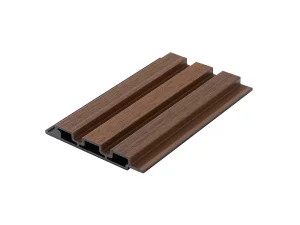
Macro Dynamics of Modern Exterior Space Architecture
Analyzing the evolutionary pivot from preservative-treated lumber to advanced biopolymer composite matrices across international civil, hospitality, and residential development sectors.
Material Decarbonization Pressures
Global architectural standards such as LEED v4.1, BREEAM, and DGNB are systematically penalizing the life-cycle carbon footprint of tropical hardwoods and arsenic-treated softwood timber. The international building sector demands circular materials that eliminate periodic chemical resealing, biocidal applications, and unsustainable deforestation while maintaining rigorous mechanical load compliance.
Mitigating Lifecycle Warranty Volatility
For high-volume distributors, building merchant conglomerates, and general contractors, structural callbacks due to fungal rot, hygroscopic warping, and splintering represent crippling margin erosions. Industrial-grade WPC systems bypass conventional timber vulnerability through comprehensive fiber encapsulation, reducing structural failure claims to statistically negligible margins.
Holistic Exterior Systems Consolidation
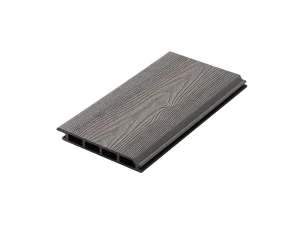
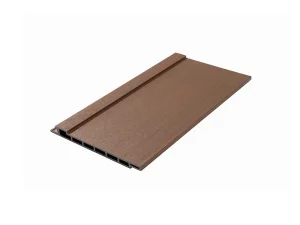
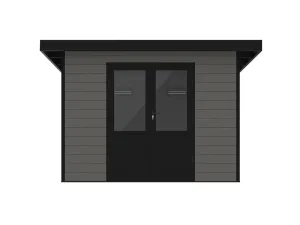
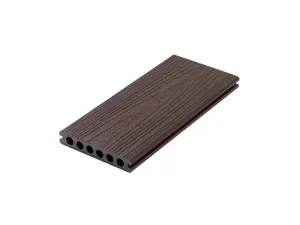
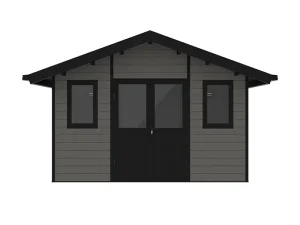
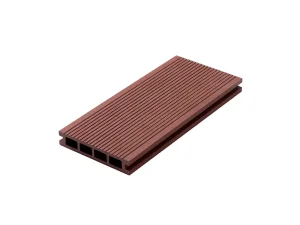
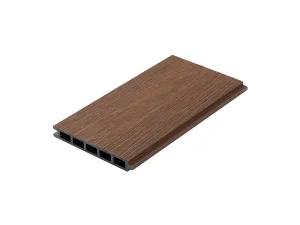
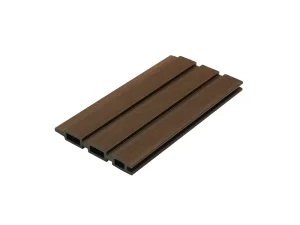
Modern commercial procurement models have outgrown disparate fragment sourcing. Modern specifiers require integrated patio ecosystems where horizontal walking surfaces (TerraShield, TimberFlow), vertical rain-screen cladding (CrestWall, PlaneSleek), perimeter boundaries (HorizonLine), and heavy-duty storage outbuildings (RidgeStar) share identical pigment stability and interlocking thermal tolerance profiles.
| Evaluation Parameter | Forestar Capped Co-Extruded WPC | First-Generation Uncapped WPC | Preservative Treated Softwood | Imported Tropical Hardwood (Ipe/Teak) |
|---|---|---|---|---|
| Post-Consumer Recycled Content | Up to 90% (Circularity Certified) | 50% - 60% Uncontrolled | 0% (Virgin Clear-Felled Timber) | 0% (High Deforestation Impact) |
| Annual Chemical Treatment Required | Zero (Clean water only) | Periodic Anti-Mildew Wash | Mandatory Biocides & Oil Stains | Annual Deep Sanding & Oil Saturation |
| Moisture Absorption (24h Immersion) | < 0.5% (Impermeable Shell) | 3.0% - 7.0% (Risk of Swelling) | > 25.0% (Severe Expansion/Rot) | 8.0% - 15.0% (Checking & Twisting) |
| Coefficient of Friction (Wet Slip) | Class 3 / PTV > 36 (Anti-Slip Safe) | Class 1 / PTV 18 - 24 (Slick when Wet) | Algae-Prone (Extremely Hazardous) | Algae-Prone (Requires Etching) |
| Flame Spread Classification | EN 13501-1 Class B-s1 / ASTM E84 Class A | Class C / D | Class D (Readily Combustible) | Class B / Class A (High Density) |
Localized Patio Decorating Scenarios Across Global Geographies
Optimizing mechanical stability, thermal dissipation, and structural design across diverse environmental extremes from sub-arctic permafrost to equatorial moisture zones.
Nordic & Alpine Freeze-Thaw Environments
Geographic Focus: Scandinavia, Finland (Helsinki references), Austria (Vienna installations), Canada.
Engineering Demands: Extreme diurnal thermal expansion, cryogenic brittleness resistance, and dynamic snow load bearing. The RidgeStar composite garden shed integrates galvanized internal structural frames rated for 150 kg/m² snow loading. TerraShield boards utilize high-ductility polymers preventing micro-fractures during repetitive -35°C to +20°C freeze-thaw cycles without moisture uptake.
Arid & Intense Solar Radiation Zones
Geographic Focus: Southwestern USA (Texas, Arizona), Middle East, Australian Outback.
Engineering Demands: UV-A and UV-B photodegradation, surface blistering, and excessive heat retention. Forestar's proprietary surface chemistry integrates inorganic infrared-reflective pigments, reducing surface temperatures under direct solar irradiance compared to standard composites. PlaneSleek exterior cladding maintains color fidelity with Delta E < 1.0 after 3,000 hours of accelerated QUV weathering.
Tropical Humid & Monsoon Belts
Geographic Focus: Central & South America (Colombia, Brazil), Southeast Asia, Gulf Coast USA.
Engineering Demands: Relentless relative humidity (>90%), aggressive fungal mycelium growth, and subterranean termite colonization. Traditional wood rots within 24 months. Forestar co-extruded capping acts as an impermeable physical and biological shield, preventing spore penetration. Zero organic nutrients are exposed on the outer shell, eliminating fungal degradation entirely.
Coastal Marine & Salt Fog Microclimates
Geographic Focus: Mediterranean Basins, Florida Keys, Caribbean Hospitality Terraces.
Engineering Demands: Airborne saline crystallization, high mechanical slip hazards around pools, and fastener corrosion. TimberFlow WPC decking delivers deep, micro-grooved anti-slip friction textures achieving British Standard BS 7976-2 Pendulum Test Values (PTV) exceeding 36 under wet conditions. Hidden fasteners utilize marine-grade 304/316 stainless steel to eliminate galvanic oxidation.
High-Density Urban Rooftops & Multi-Residential Terraces
Geographic Focus: Metropolitan Centers, Commercial Plaza Penthouses, Mixed-Use Skydecks.
Engineering Demands: Strict structural dead-load constraints, acoustic impact dampening, and stringent municipal fire ratings. Forestar lightweight hollow-core profiles provide optimal strength-to-weight ratios, easing crane logistics and structural loading while the matching CrestWall siding delivers unified aesthetic envelope coherence.
Perimeter Security & Architectural Privacy Screenings
Geographic Focus: Suburban Master-Planned Communities, Luxury Villa Perimeters.
Engineering Demands: High wind-load resistance without seasonal warping. HorizonLine WPC Privacy Fencing systems with hidden structural tongue-and-groove fasteners establish unbreachable defense boundaries resistant to ground moisture contact, delivering complete acoustic and visual seclusion.
Forestar Technical Roadmap & Advanced Polymer Engineering
Inside the molecular engineering, co-extrusion shielding, and next-generation smart patio surface formulations developed by Anhui Fumeida New Material Technology Co., Ltd.
Phase 1: Molecular Coupling & Fiber Encapsulation (Baseline Mastery)
Achieving interfacial bonding between hydrophilic cellulose fibers (hardwood flour) and hydrophobic thermoplastic polymers (recycled HDPE) via maleic anhydride grafted polyethylene (MAPE) coupling agents. This eliminates moisture voids, maximizes flexural modulus (> 32 MPa), and guarantees that raw bio-fillers are hermetically isolated from environmental humidity.
Phase 2: 360-Degree Capped Co-Extrusion Shielding (Current Standard)
Deployment of our proprietary TerraShield protective outer mantle. Co-extruded synchronously with the core profile at 210°C, this high-density engineered shell completely encompasses the perimeter, including the locking channels. Formulated with fluoropolymer additives, hindered amine light stabilizers (HALS), and antioxidants, the shell prevents wine, grease, oil, and chemical stains from penetrating the inner core.
Phase 3: Multi-Chromophoric Rotary Embossing & Low-Gloss Haze
Eliminating artificial plastic gloss through randomized multi-tonal pigment dosing and dual-action heated embossing calenders. The surface exhibits random, authentic hardwood cathedrals, authentic tactile grain depth, and light-refraction indexes that replicate aged teak, walnut, and Nordic ash timber without repeating pattern artifacts.
Phase 4: Next-Gen Smart Bio-Composites & PCM Heat Dissipation (2026-2030 Horizon)
Active development of micro-encapsulated Phase Change Materials (PCM) embedded within the top 2mm capping layer. These latent-heat absorbing microcapsules regulate deck temperature under peak summer conditions, maintaining walking surfaces within barefoot comfort thresholds (< 42°C) even under severe tropical solar irradiance.
China Supply Chain Resilience, Scalability & Cost Efficiency
How Forestar's vertically integrated manufacturing hub in Xuancheng, Anhui drives unparalleled lead-time compression, quality consistency, and consolidated container logistics.
Vertical Granulation & Milling Integration
Unlike assembly-only plants that outsource raw compound blending, our Xuancheng facility manages the entire value loop: sorting post-industrial recycled polymers, precision micronizing reclaimed agricultural timber flour, and proprietary compounding. This end-to-end control insulates international distributors from raw material price shocks and ensures identical melt flow indexes (MFI) batch after batch.
Consolidated Mixed-Container Cargo Optimization
International freight costs require maximum TEU/FEU container space utilization. Forestar allows importers to consolidate decking boards, wall siding panels, fencing modules, and flat-pack garden shed kits in a single 40ft High Cube container. Our engineered packaging optimizes pallet footprints, mitigating shipping damages while minimizing inventory carrying costs for local stockists.
Stringent In-Line QC & QA Spectrometry
Every extrusion run undergoes rigorous continuous quality validation: automated laser dimension profiling for millimeter groove precision, cyclic boiling water delamination tests, and multi-angle spectrophotometer verification (Delta E < 0.8 tolerance). Structural flexural modulus tests are documented per production lot to ensure zero defect shipments.
Localization Support, Regulatory Compliance & Engineering Protocols
Navigating global building codes, substructure calculation frameworks, and on-site assembly standards to protect dealer reputation and accelerate project sign-offs.
International Certification Compliance
Forestar composite profiles comply with international structural and environmental benchmarks. Testing records cover CE marking (EN 15534-1:2014, EN 15534-4:2014 for decking and cladding), ISO 9001:2015 manufacturing quality controls, FSC Chain of Custody for sustainable wood sourcing, SGS toxicological analysis, and full REACH regulation compliance with zero SVHC chemicals.
Substructure Engineering & Joist Spacing
Structural reliability depends on framing design. Forestar provides engineered span tables: standard residential installations require joist centers at 400mm on-center, while high-traffic commercial terraces require 300mm spacing. Diagonal herringbone or chevron patio layouts demand 250mm centers to prevent board deflection under concentrated live loads.
Thermal Expansion Dynamic Formulas
Unlike wood, composites expand longitudinally with temperature change according to linear thermal expansion coefficients (α ≈ 3.5 × 10⁻⁵ /°C). Our localized technical guides provide precise calculation tables: ΔL = α × L × ΔT. System hidden clips automatically calibrate 5mm side-to-side drainage gaps while preserving expansion tolerances at butt joints.
Global Event Representation: Meet Forestar at PISCIMAD 2026 (Madrid, Spain)
Reinforcing our international trade commitment, the Forestar export engineering team will exhibit at PISCIMAD 2026 in Madrid, Spain (Booth 7A49, November 10–13, 2026). European distributors, landscape architects, and project developers can inspect physical stress-tested samples, capped profile assemblies, and review OEM/ODM private-label partnerships in person.
Frequently Asked Questions: Commercial Specifications & Procurement
In-depth responses covering mechanical tolerances, container load logistics, chemical resistance, and trade cooperation protocols.
What specific chemical composition makes Forestar WPC resistant to rot and termites?
Forestar composite combines 55-60% micro-pulverized reclaimed hardwood fiber with 30-35% recycled high-density polyethylene (HDPE) and 10% structural coupling additives, stabilizers, and colorants. During thermal compounding at >200°C, the polymers melt and encapsulate each wood fiber, eliminating moisture absorption routes. Without moisture and accessible cellulose, wood-decay fungi and subterranean termites cannot survive or consume the material.
How does the RidgeStar Garden Shed handle high-snow loads in northern climates?
The RidgeStar system integrates double-wall extruded WPC structural panels reinforced with internal hot-dip galvanized steel framing columns and roof trusses. Engineered to meet strict northern building requirements, the roof profile achieves a verified load rating of up to 150 kg/m², allowing it to withstand prolonged heavy snow accumulation in Scandinavian, Alpine, and North American winter regions without structural sagging.
Can we order custom board lengths and private-label packaging for our distributor network?
Yes. As an OEM/ODM manufacturing factory (operated by Anhui Fumeida New Material Technology Co., Ltd.), we regularly supply custom extrusion lengths (e.g., 2.2m, 2.9m, 3.6m, 4.8m, 5.4m) to fit local shipping formats and minimize cut wastage. We provide complete private-label branding, including barcode labeling, branded protective tape, shrink-wrap packaging, and multilingual dealer installation booklets.
What is the difference between TerraShield capped boards and traditional composite decking?
First-generation traditional composites lack an exterior protective mantle, leaving wood fibers exposed to surface stains, moisture uptake, and UV fading over time. TerraShield features a synchronous 360-degree co-extruded polymer shield around the entire board. This shield delivers non-porous resistance against grease, wine spills, and chlorine pool splash, while providing UV protection that preserves original board coloration.
How does TimberFlow WPC decking ensure wet slip safety around swimming pools?
TimberFlow decking is manufactured with engineered micro-textured surface channels and directional brushing, achieving a Pendulum Test Value (PTV) greater than 36 under wet conditions (tested per BS 7976-2 / EN 16165). This classifies the surface in the lowest slip risk category under standard barefoot walking conditions, making it well-suited for pool perimeters, marina boardwalks, and commercial hospitality decks.
What sample evaluation support is provided prior to placing a full container order?
We provide full sample support for commercial partners, stocking curated sample boxes containing various board profiles (solid and hollow), cladding siding variants, and fence panel cross-sections in all available color options. Samples are dispatched via DHL/FedEx air freight to allow clients to evaluate surface texture, flexural rigidity, and color performance under local sunlight conditions before confirming production orders.
What substructure spacing is required for CrestWall and PlaneSleek exterior cladding?
CrestWall and PlaneSleek exterior cladding must be mounted to vertical battens (aluminum, galvanized steel, or treated timber) spaced at a maximum of 400mm center-to-center. For coastal or high wind-load installations, batten spacing should be tightened to 300mm. A continuous ventilation gap of at least 20mm must be maintained behind the cladding to allow free air circulation and drainage.
What export documentation and testing certificates accompany commercial shipments?
Every commercial container shipment is supported by comprehensive trade and compliance paperwork: Commercial Invoice, Packing List, Bill of Lading, Certificate of Origin (CO/Form A/Form E), internal quality batch inspection reports, and official laboratory test certificates including CE (EN 15534), RoHS, REACH, SGS mechanical flexure tests, and ISO 9001 compliance documentation.
High-Spec Architectural Facades, Decks & Storage Units
Explore our co-extruded architectural panels, slip-resistant terrace profiles, and weather-sealed composite structures engineered for global commercial distribution.