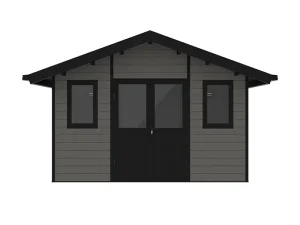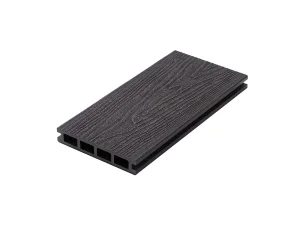
Featured High-Performance Architectural Systems
Consolidated factory-direct product catalog engineered to rigid commercial tolerances.
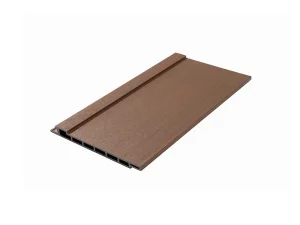
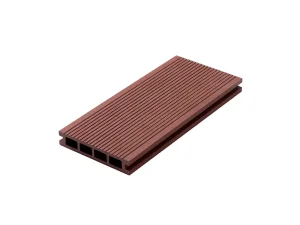
Global Commercial Landscape: The Transition to High-Performance WPC Sheds
Market realities, cross-continental demand shifts, and material substitution economics.
Supply Chain Consolidation
Traditional outdoor storage sheds were historically bifurcated into two vulnerable paradigms: lightweight sheet metal prone to denting, condensation, and corrosion; and raw pressure-treated timber subject to rot, termite infestation, and substantial labor costs. Modern global supply chains mandate factory-calibrated Wood Plastic Composite (WPC) modular assemblies capable of international containerization and drop-in installation.
- Elimination of localized multi-source hardware dependency.
- Optimized volumetric packaging enabling up to 40% more units per 40ft HQ.
- Fully integrated joinery designed for rapid contractor deployment.
Total Lifecycle Economics
From an enterprise procurement perspective, upfront unit cost no longer serves as the primary evaluation metric. Tier-1 real estate builders, multi-family landlords, and municipality project managers judge investments based on Life Cycle Cost Analysis (LCCA). Wood structures generate an ongoing 8-12% annual maintenance surcharge in repainting and wood preservation chemicals.
- Zero chemical re-staining, oiling, or antifungal painting schedules.
- Complete structural immunity against rot, mold, and subterranean termites.
- Extended 25+ year commercial lifespan with minimal facility management costs.
Global Logistics Resilience
With unpredictable global ocean freight fluctuations, industrial clients demand robust packaging engineering. Forestar utilizes precision robotic flat-pack kitting, reinforced steel edge protections, and internal humidity-buffered membranes. This architecture guarantees that modular profiles endure intermodal transit across transatlantic, transpacific, and equatorial sea routes without dimensional warping.
- Direct factory-to-port loading protocols out of Xuancheng, Anhui.
- Standardized pallet footprints calibrated for universal forklift entry.
- Pre-labeled, QR-coded structural components for frictionless site erection.
Technological Evolutions: Next-Generation Co-Extrusion & Thermal Stability
From fundamental wood-fiber plastic extrusion to molecular-grade multi-layer capped engineering.
Co-Extruded Polymer Shielding
Early iterations of composite outdoor structures suffered from unshielded porous exteriors, making them susceptible to airborne oily soot, wine or chemical staining, and surface chalking under intense ultraviolet irradiation. Our continuous co-extrusion engineering integrates a 360-degree protective modified acrylic/polyolefin outer shield over an ultra-dense composite core.
This barrier chemically blocks UV radiation through micro-encapsulated organic hinderers (HALS) and light stabilizers. The surface tension remains impenetrable to damp moisture penetration, effectively terminating micro-fissuring, water absorption swelling, and frost-induced delamination.
Thermodynamic Expansion Mitigation
A primary failure mode of rudimentary prefabricated outdoor sheds involves non-uniform linear thermal expansion along longitudinal joints. During rapid temperature swings (such as desert diurnal cycles or continental summer-winter variations), unanchored polymers warp out of alignment, causing door jamming and seal compromises.
Forestar integrates internalized engineered core geometries reinforced with high-modulus, pre-conditioned cellulose micro-fibers. Coupled with precision-calculated expansion receivers within hidden perimeter fasteners, our shed panels maintain absolute dimensional integrity across extremes from -35°C up to +65°C.
| Performance Parameter | Forestar Capped WPC Engineered Sheds | Conventional Softwood Timber Sheds | Galvanized / Corrugated Sheet Metal Sheds |
|---|---|---|---|
| Structural Rot & Termite Vulnerability | Zero degradation; 100% resistant to biological decay and insect boring. | Severe vulnerability; demands frequent hazardous chemical toxic treatment. | Not vulnerable to termites; susceptible to corrosive oxidation at seams. |
| Thermal Insulation & Internal Climatization | Superior low thermal conductivity (U-value optimized); reduces condensation. | Moderate natural insulation; suffers from seam gaps over drying cycles. | Extremely poor thermal buffer; creates high internal condensation drips. |
| Maintenance & Surface Treatment Cycle | Zero recoating; routine high-pressure or soapy water rinse is sufficient. | Requires bi-annual power washing, surface sanding, sealing, or staining. | Requires rust removal, zinc primer patches, and protective perimeter repainting. |
| Wind Uplift & Snow Load Capacity | Steel-reinforced framing anchors engineered for heavy snow and high winds. | High strength when new; degrades exponentially as joints rot and fasteners strip. | Prone to wind panel tear-off and roof buckling under localized snow drifts. |
| Circular Economy Index | Up to 90% recycled wood flour and clean post-consumer polyolefins. | Frequently virgin forest felling; high carbon footprint in kiln-drying. | Energy-intensive smelting and zinc mining processes. |
Localized Multi-Climate Applications: Engineering for Extreme Global Geographies
Field-proven performance across demanding architectural environments worldwide.
Nordic & Alpine High Snow Zones
Deployment: Finland, Sweden, Austria, Northern Canada.
Technical Challenge: Sustained static snow drifts, ice dams, and severe sub-zero freeze-thaw cracking cycles.
Forestar Solution: Internalized galvanized steel box-truss rafter reinforcements coupled with high-pitch roof envelopes. Water-impermeable composite walls prevent internal moisture micro-absorption, eliminating catastrophic freeze expansion fracturing.
Arid Desert & High-UV Regions
Deployment: Texas, Arizona, Middle East, Australia Outback.
Technical Challenge: Intense ultraviolet photon degradation, surface fading, and extreme midday radiant heat.
Forestar Solution: Proprietary heat-reflective pigmentation formulations that reflect near-infrared radiation. Advanced UV stabilization packages inhibit polyolefin matrix breakdown, preserving tensile flexural properties and rich woodgrain tones without blistering.
Tropical & High-Humidity Belts
Deployment: Florida, Colombia, Southeast Asia, Caribbean Basin.
Technical Challenge: Constant relative humidity above 85%, torrential monsoonal moisture, aggressive fungal spores, and subterranean termites.
Forestar Solution: Fully encapsulated composite profiles where each wood particle is micro-sealed in synthetic polymer matrices. Biological organisms find no digestible nutrients, ensuring immunity against rot and termite digestion.
Coastal & Marine Saline Environments
Deployment: Mediterranean resorts, North Sea coastlines, Pacific Rim islands.
Technical Challenge: Airborne saline mist, cyclic salt crystallization pressures, and galvanic fastener corrosion.
Forestar Solution: Marine-grade 304/316 stainless-steel installation clips combined with chemically inert composite panels. Zero risk of electrochemical rust weeping or galvanic structural pitting common in metal buildings.
Macro Industry Solutions & Factory Sourcing Protocol
A systematic framework for multinational procurement directors and wholesale distribution executives.
1. Spec & Container Architecture
Navigating international shipping requires precise container cubing calculations. Forestar's industrial design department works directly with enterprise clients to plan mixed-consignment shipping manifests. Combining low-profile, high-density decking boards and fencing panels with modular garden shed assemblies optimizes both weight limits and cubic capacity within 40ft High Cube containers.
2. Rigorous In-Line Batch Testing
Every extrusion batch undergoes strict factory quality assurance at our Xuancheng manufacturing campus. In accordance with ISO 9001, CE, and SGS international directives, we test for modulus of rupture (MOR), impact resilience under dropped weights, boiling-water swell resistance, and colorimetric delta-E UV aging. Traceable batch numbers accompany all export bills of lading.
3. OEM Customization & Private Label
For high-volume retail chains and building material merchant distributors, brand integrity is crucial. We offer full turnkey white-label packaging, multilingual high-resolution assembly manuals, localized barcoding (UPC/EAN), and proprietary profile geometries engineered specifically to satisfy exclusive territorial supply concessions.
Technological Roadmap & Sustainable Manufacturing Horizon (2026–2030)
Pioneering closed-loop decarbonization, AI-guided precision extrusion, and bio-circular composites.
AI-Driven Extrusion Dynamics
Forestar's manufacturing facilities are transitioning toward neural-network-supervised extrusion lines. Machine-vision laser micrometers continuously gauge profile wall thicknesses at micron resolutions, instantly modulating barrel cooling zones and screw speeds to eradicate dimensional variations before boards exit the calibration cooling troughs.
Closed-Loop Circularity
By capturing reclaimed clean post-industrial sawdust from certified architectural millwork and blending it with upcycled post-consumer detergent canisters and plastic bottles, we keep tens of thousands of metric tons of discarded waste out of landfills annually. This enables global project developers to secure significant LEED, BREEAM, and WELL certification points.
Integrated Solar Envelopes
Forestar’s R&D team is developing structural composite shed roofs compatible with integrated thin-film photovoltaic (BIPV) arrays. This will transform outdoor storage sheds from passive enclosures into decentralized micro-power stations capable of lighting garden landscapes, recharging power tools, and supporting off-grid micro-inverters.
Frequently Asked Questions (Trade & Engineering)
Authoritative insights for procurement teams, architects, and international supply leads.
How does a composite shed compare to timber or steel in high-wind conditions?
Our engineered WPC shed systems incorporate an internal galvanized high-tensile steel structural skeletal frame that securely anchors the composite wall and roof sections together. When properly tied into a flat concrete pad with concrete wedge expansion anchors, Forestar sheds withstand sustained wind gusts exceeding 100 km/h (Beaufort Force 10-11), preventing the roof uplift and sidewall racking common in lightweight sheet-metal sheds.
What foundation specifications are required for commercial installations?
For commercial and long-term residential installations, we recommend a level reinforced concrete slab with a minimum thickness of 100mm (4 inches), or well-compacted sub-base gravel supported by a pressure-treated composite timber joist grid. Complete flatness is essential to guarantee accurate alignment of interlocking wall channels and weather-tight door operation.
Can multiple outdoor profiles be consolidated into a single container order?
Yes. Many international distributors optimize freight costs by consolidating multiple product lines into one 40ft High Cube container. We can combine prefabricated WPC garden sheds with palletized composite decking boards, architectural wall cladding, and fencing panels from our Xuancheng facility, supported by unified export documentation.
What are the fire safety performance ratings for Forestar composite panels?
Our composite materials can be engineered with flame-retardant additives to meet international fire rating benchmarks, including EN 13501-1 Class Bfl-s1 for flooring profiles and Class B/C for vertical wall cladding and shed panels. This provides reliable burn-through resistance and low smoke toxicity for stringent commercial building codes.
Global Supply Portfolio & Project Systems
Precision-extruded outdoor living products ready for commercial import and contractor distribution.