Certified Low-Carbon Material Assemblies
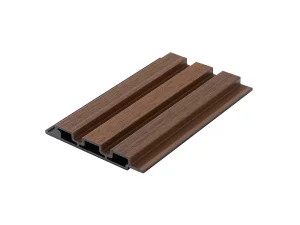
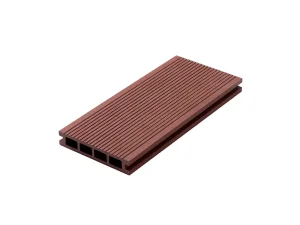
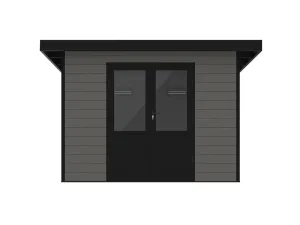
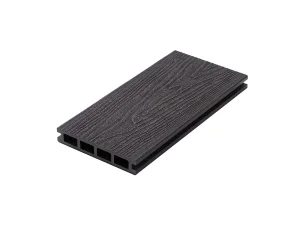
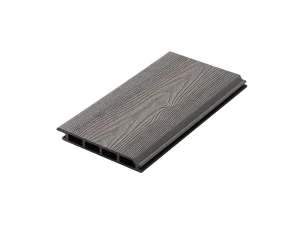
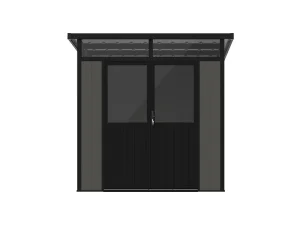
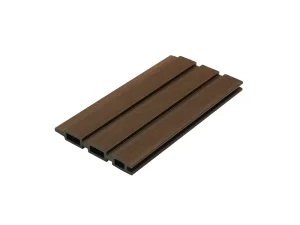
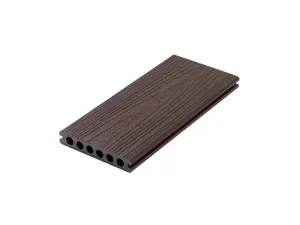
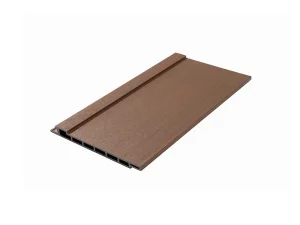
Engineered Wood Plastic Composite (WPC) panels, modular sheds, and co-extruded decking systems designed for minimal embodied energy and extreme lifecycle resilience.
Enterprise Procurement Trends in Circular Construction
Analyzing global demand shifts toward Scope 3 carbon reduction, extended material lifecycles, and institutional green certifications across worldwide commercial builds.
Stringent ESG Compliance & Scope 3 Mandates
Institutional property developers, REITs, and Tier-1 general contractors are under rigorous regulatory directives (such as the EU CSRD and SEC Climate Disclosures) to slash embodied carbon across supply chains. Utilizing up to 90% recycled content composites directly eliminates deforestation-linked virgin timber and reduces primary polymer reliance, fundamentally upgrading architectural sustainability balance sheets.
Life Cycle Assessment (LCA) Driven Total Cost
Traditional timber frameworks demand recurring solvent-based chemical treatments, sealants, and scheduled remediation cycles every 24–36 months. Sustainable high-density WPC structures shift procurement evaluation from initial purchase price to Life Cycle Cost Optimization. Zero rot, splinter-free durability, and zero chemical recoating deliver exponential OPEX savings over multi-decade lifespans.
Green Building Rating Optimization (LEED & BREEAM)
Engineered composite building materials unlock critical contribution points across green building assessment platforms. Standardized recycled polymer content, FSC-aligned fiber sourcing, low-VOC matrix curing, and closed-loop recyclability qualify installations for advanced points under LEED v4.1 Materials & Resources and BREEAM Mat 01 Life Cycle Impacts.
Performance Benchmarking: WPC Composite vs. Conventional Timber
Empirical engineering data showing comparative mechanical, ecological, and economic durability characteristics under standard laboratory stress testing.
| Evaluation Parameter | High-Performance Capped WPC Composite | Pressure-Treated Softwood Timber | Tropical Hardwood Sourcing |
|---|---|---|---|
| Post-Industrial Recycled Mass | Up to 90% (Wood Flour + Recovered Polyolefins) | 0% (Virgin forest logging) | 0% (High risk of rainforest deforestation) |
| Hydrophobic Stability (Moisture Absorption) | < 0.5% after 24h submersion (Zero swelling) | > 25% (Extensive swelling, rot, fungal breakdown) | 8% - 15% (Cellular shifting, checking) |
| Chemical Coatings & Remediation | Zero requirements (Soap & water wash only) | Annual polyurethane, biocides, solvent stains | Periodic teak-oil saturation and scraping |
| Ultraviolet Colorfastness (Delta E) | ΔE < 3.0 after 3000h QUV accelerated weather | Rapid silvering, fiber erosion within 6 months | Surface graying, micro-cracking in high solar zones |
| Structural Splinter & Slip Resistance | Engineered anti-slip grain, 100% splinter-free | High surface splintering risk as grain checks | Slick when wet, variable pedestrian hazard |
| VOC Emissions & Indoor Air Safety | Class A / REACH non-hazardous compliant | Leaches copper naphthenate / arsenic compounds | Natural VOC resins with variable off-gassing |
Future-Proofing Composite Science: 2026–2030 Horizon
Advancing composite material technology with nano-engineered co-extrusion caps, bio-based polymers, and closed-loop lifecycle return programs.
Phase 1: Full-Spectrum Polymer Matrix Decarbonization
Integration of 100% certified bio-circular polyolefins derived from agricultural by-products, eliminating petrochemical dependence while preserving high flexural tensile modulus and structural load tolerance across extreme thermal swings (-40°C to +65°C).
Phase 2: Molecular Shield & Cool-Deck Reflectance
Proprietary infrared-reflective pigment matrices embedded inside multi-layer 360-degree co-extrusion capping layers. This active micro-barrier dissipates solar radiation absorption, reducing barefoot thermal buildup by up to 25% in equatorial resort deployments.
Phase 3: Digital Product Passports (DPP) & Closed Loop
Implementation of individual lot-level traceability using integrated QR/RFID digital passports. This allows institutional building operators to certify provenance, quantify recycled fractions, and access guaranteed buyback recycling streams at building deconstruction.
Localized Validation & Global Cross-Border Standards
Stringent internal and third-party laboratory verification guaranteeing compliance across North American, European, and Australasian building codes.
Fire Safety Performance
Certified adherence to EN 13501-1 Class Bfl-s1 and ASTM E84 Class A flame spread specifications, making it viable for high-density multi-family and commercial developments.
Mechanical Structural Integrity
Exceeds ASTM D7032 static load-deflection metrics and concentrated point-loading durability protocols, ensuring high safety margins for elevated boardwalks and civic infrastructure.
Toxicology & Environmental Safety
Fully compliant with EU REACH Regulation No 1907/2006, certifying zero heavy metals, phthalates, toxic leaching, or hazardous secondary chemical stabilizers.
Quality Assured Manufacturing
Operated by Anhui Fumeida New Material Technology Co., Ltd. under strict ISO 9001 and ISO 14001 continuous multi-point quality auditing protocols.
Frequently Asked Questions on Sustainable WPC Engineering
Essential technical clarifications for structural engineers, project specifiers, commercial contractors, and international import agents.
What specific raw materials constitute the sustainable composition of Forestar WPC products?
Forestar composite profiles integrate up to 90% reclaimed inputs, consisting of pulverized post-industrial clean wood flour merged with purified recycled high-density polyethylene (HDPE) resins, performance cross-linkers, and non-toxic color stabilizers. This dense matrix completely eliminates requirements for recurring chemical sealers, toxic preservation baths, and seasonal clear-cuts.
How does thermal linear expansion behave across sub-zero and high-heat climates?
WPC matrices exhibit predictable thermal expansion characteristics governed by their composite polymer nature. By calculating joist intervals, continuous perimeter ventilation openings, and engineered spacing via specialized hidden stainless steel clip systems, our profiles handle temperature fluctuations ranging from Scandinavian sub-zero conditions (-35°C) to Middle Eastern desert heat (+60°C) without buckling or delamination.
What documentation is provided to support commercial green project certifications?
We provide full third-party physical testing documentation, complete Environmental Product Declarations (EPD), verified recycled content percentages, and toxicological non-hazardous reports (REACH compliant). These datasets streamline submissions for LEED v4.1 MR credits, BREEAM certification, and regional municipal green public procurement (GPP) approvals.
Can wholesale importers consolidate different product categories into single shipping containers?
Yes. As an integrated manufacturer operating across 4 major outdoor lines, Anhui Fumeida allows partners to consolidate exterior cladding panels, co-extruded decking boards, privacy boundary fencing, and modular flat-pack garden shed kits within single 40ft High Cube containers. This cuts inventory risk and lowers logistical carbon intensity.
What surface treatments preserve slip resistance near commercial poolside installations?
Forestar pool-grade decking systems undergo dynamic surface embossing that forms deep micro-textures, achieving high wet-slip ratings under British Pendulum Test (BS 7976-2) and DIN 51130 R11 ratings. The low-porosity co-extruded cap layer stops chlorinated pool water and saline deposits from degrading structural polymers.
How are samples, custom colors, and OEM profiles requested and coordinated?
We supply sample boxes containing physical grain samples, color swatches, and structural cutaway profiles to evaluate under natural local lighting conditions. Bespoke profile designs, project-specific cut lengths, and custom Pantone or RAL color formulations are supported subject to container-scale manufacturing minimums.
Engineered Building Profiles & Outdoor Living Systems
Explore durable, weather-resistant wood-plastic composite lines engineered for high-traffic public, residential, and corporate outdoor builds.