
Featured Maintenance-Free Architectural Solutions
Explore our high-performance extruded composite collections, engineered with up to 90% circular recycled compounds for high-traffic and extreme-climate outdoor spaces.
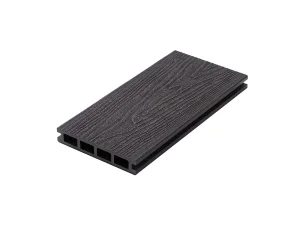
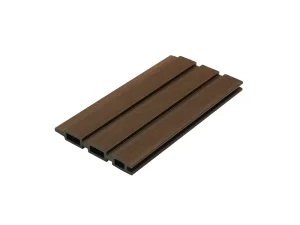
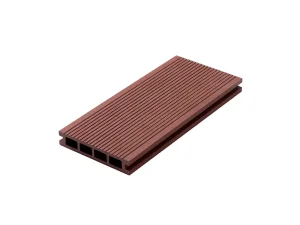
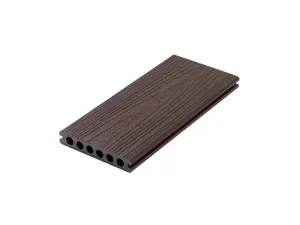
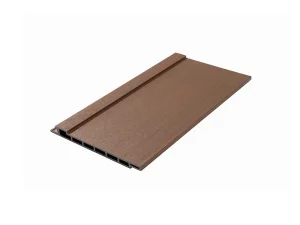
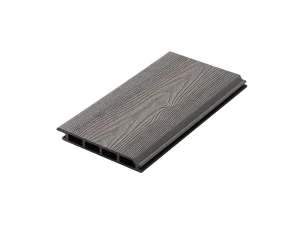
Global Commercial Landscape of Maintenance-Free Outdoor Decking
Analyzing structural shifts from traditional timber to co-extruded wood-plastic composite systems across commercial, residential, and marine municipal applications.
Total Lifecycle ROI Shift
Global civil planners and commercial asset managers are aggressively pivoting away from pressure-treated lumber. Traditional softwood systems incur annual lifecycle maintenance costs equating to 12-18% of initial capital expenditure through chemical resealing, anti-fungal treatments, and warped plank replacements.
Modern co-extrusion technology completely eliminates structural decay, delivering a maintenance-free profile that preserves tensile strength and aesthetic vibrancy across a 25-year operational lifecycle.
Extreme Climate Resilience
From high-humidity tropical coastal boardwalks to high-latitude Nordic zones experiencing sub-zero freeze-thaw cycles, maintenance-free decking boards must withstand intense linear thermal expansion. Forestar's 360-degree high-density polymer capping shields core fibers from water uptake, achieving an ultra-low absorption rate below 0.5%.
This barrier prevents internal ice crystallization, micro-fissures, and surface splintering under extreme weather swings.
Decarbonization Mandates
Institutional procurement protocols—such as LEED v4.1, BREEAM, and ESG mandates—require building materials with certified recycled inputs and documented carbon sequestration profiles. By integrating up to 90% reclaimed timber fibers and recycled PE/PP polymers, our production minimizes virgin deforestation while diverting municipal post-industrial plastics from landfills.
This provides distributors with competitive compliance advantages in regulated western markets.
Advanced Chinese Factory Production Dynamics
How state-of-the-art multi-cavity co-extrusion technology and integrated industrial clusters deliver unmatched cost-performance efficiency.
Scalable Co-Extrusion Lines
Operating out of our advanced plant in Xuancheng, Anhui, our manufacturing ecosystem deploys high-torque twin-screw extrusion lines. These computerized systems ensure homogeneous melt blending, microscopic dispersion of antioxidant UV blockers, and precision temperature profiling across all barrel sectors.
The result is a ±0.3mm tolerance consistency in profile geometry, guaranteeing rapid on-site assembly and structural alignment across multi-container tenders.
Single-Source Consolidation
A primary friction point for international importers is multi-vendor procurement logistics. Forestar integrates four core architectural exterior systems into a unified manufacturing pipeline: Decking, Façade Cladding, Architectural Fencing, and Modular Garden Sheds.
Distributors consolidate their orders within singular 40ft HQ containers, harmonizing woodgrain textures, matching dye formulations, and drastically cutting landed freight overheads.
Rigorous Batch-Level QC
Factory QA processes encompass 24-hour continuous water boil tests, QUV accelerated artificial weathering chambers (exceeding 3,000 hours), slip-resistance pendulum friction verification, and static load deflection testing to ASTM and EN standards.
Comprehensive metallurgical and polymer diagnostic certificates accompany each bill of lading, shielding trade partners from post-installation warranty disputes.
Material Performance Matrix: Co-Extruded WPC vs. Softwood vs. PVC
Quantitative breakdown of critical engineering parameters required for architectural project specification.
| Evaluation Parameter | Forestar Capped WPC Composite | Pressure-Treated Softwood | Unreinforced Cellular PVC |
|---|---|---|---|
| Annual Maintenance Requirement | Zero (Warm water wash only) | Mandatory seasonal staining, stripping & oiling | Periodic power washing; chalking mitigation |
| Water Absorption (24h immersion) | < 0.5% (Non-porous polymer shield) | 18.0% - 28.0% (Capillary uptake) | < 0.2% (Polymer based) |
| Splintering & Surface Fissuring | None; skin-safe tactile finish | High hazard due to moisture checks | Low risk; brittle at sub-zero cold |
| Linear Thermal Expansion | Stable (~1.2 mm/m under Δ30°C) | Unpredictable cross-grain movement | High coefficient; requires wide joint tolerances |
| Structural Density & Flexural Modulus | High stiffness; spans up to 400mm centers | Variable based on moisture & grade | Low stiffness; requires closer joist spacing |
| Environmental Sustainability | Up to 90% recycled post-industrial content | Virgin harvesting; biocidal preservative leeching | Pure petrochemical origin; difficult to recycle |
Global Application Engineering Scenarios
Customized profile implementations tailored to geographical and climatic demands across major continents.
Nordic & Central European Zones
Climatic Challenge: Long sub-zero winters, extensive snow cover, followed by rapid spring thawing that generates internal hydraulic pressure inside porous boards.
The Solution: Forestar engineered hollow and solid core profiles with micro-channeled bottom geometry, combined with hidden 304/316 stainless-steel expansion clips, preventing thermal buckling and ice burst failures.
Middle East & Desert GCC Regions
Climatic Challenge: High UV radiation index exceeding level 11, surface ambient temperatures crossing 50°C, and extreme diurnal temperature fluctuations.
The Solution: Integration of specialized inorganic heat-reflective pigments and Hindered Amine Light Stabilizers (HALS) into the outer cap layer. This prevents color shift, plasticization breakdown, and keeps the boards cooler underfoot.
Coastal Resorts & High-Salinity Marines
Climatic Challenge: Salt spray corrosion, mold and fungal colonies driven by hyper-humidity, and chlorine chemical degradation near swimming pools.
The Solution: Anti-microbial additives incorporated directly into our co-extruded polymer shell. The surface is impervious to chlorine whitening and saltwater scaling, retaining high wet-slip resistance (R11/PTV 36+ rating).
Architectural Substructure & Engineering Rules
Best-practice structural installation criteria to maximize the performance of maintenance-free composite installations.
Subframe Spacing
Maintain joist centers at a maximum of 350mm to 400mm for standard residential traffic. For heavy commercial boardwalks or 45-degree diagonal laying patterns, reduce centers to 300mm to guarantee deflection under 1/360 of span.
Cross Ventilation
Ensure an unobstructed sub-deck ventilation clearance of at least 100mm above ground or solid concrete pads. Never install composite planks directly onto dirt surfaces or completely enclose the perimeter without air intake louvers.
Expansion Jointing
Composite profiles naturally expand longitudinally during peak temperature variance. System clips govern side gaps (5-6mm); end-to-end gaps must be calculated based on ambient installation heat (typically 3mm to 6mm at butt joints).
Fastener Integrity
Specify exclusively austenitic 304 or 316 marine-grade stainless-steel hidden clip systems with anti-glare coated screws. Substandard carbon screws will corrode, causing premature failure and voiding manufacturer system warranties.
Engineered Modular Systems & Cladding Profiles
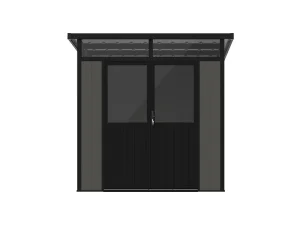
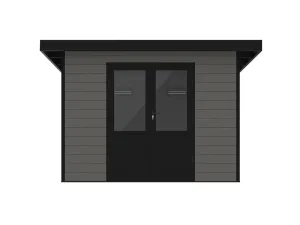
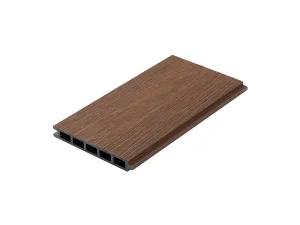
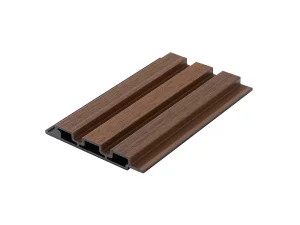
Complete your architectural layout with synchronized WPC fencing panels, engineered sheds, and acoustic cladding facades.
Global Enterprise Procurement Trends & Sourcing Standards
Essential guidance for commercial contractors, national timber merchants, and volume building material importers.
OEM / ODM Custom Extrusions
Global architectural distributors frequently require bespoke hollow-cavity geometries or custom embossed textures matching exclusive retail portfolios. Our factory engineering department operates dedicated tooling and CNC mold-making shops, reducing custom profile prototyping lead times to under 21 business days.
From co-extruded wood-grain dual-tone color mapping to specialized barcoding and customized dealer packaging, our production caters directly to tier-1 supply networks.
International Compliance Standards
Commercial tender eligibility hinges on verifiable third-party certification. Forestar products are rigorously validated across international testing laboratories, holding active CE, FSC, SGS, and REACH certifications.
Our composite boards meet strict criteria including EN 13501-1 Class Bfl-s1 fire resistance ratings, ASTM D1037 dimensional stability standards, and BS 7976-2 / EN 15534 pendulum slip resistance criteria for high-footfall public environments.
Total Container Optimization
Export packaging is engineered for seamless mechanical forklift unloading at distributor distribution hubs. Planks are packed with multi-layer heavy-duty polymer strapping, reinforced edge corner protectors, and moisture-barrier shrink films.
Our logistical team generates customized container loading schematics to maximize space efficiency in standard 20ft and 40ft HQ ocean containers, preventing board deformation and scuffing during long-haul sea freight voyages.
Frequently Asked Sourcing & Technical Questions
Comprehensive technical details for commercial procurement teams, structural architects, and regional import partners.
What specifically distinguishes Forestar capped composite decking from traditional first-generation WPC?
First-generation composite decking features uncapped core material where wood fibers remain exposed to atmospheric humidity, creating risks of mold growth, surface fading, and food-oil staining. Forestar manufactures advanced 360-degree co-extruded capped boards. The outer layer is an engineered shield containing specialized polymers, UV stabilizers, and anti-oxidants that fully seal the internal core. This shield guarantees zero water permeability, absolute stain resistance (tested against red wine, cooking grease, and barbecue oils), and permanent color retention without periodic chemical sealing or painting.
What raw material ratios are utilized in production, and how is eco-compliance documented?
Our proprietary formulation balances structural rigidity and elasticity through a compound of approximately 55-60% reclaimed industrial hardwood fibers, 30-35% high-grade recycled HDPE polymers, and 10% structural bonding agents, coupling additives, and mineral pigments. We operate under full ISO 9001 and ISO 14001 factory governance, providing FSC-certified wood fiber tracking and REACH-compliant environmental dossiers upon request for institutional green-building audits.
Can Forestar accommodate mixed-product container orders for overseas regional importers?
Yes. As an integrated manufacturer operating across multiple exterior categories, we actively support consolidating deck boards, exterior architectural cladding, composite fence panels, and flat-pack WPC garden sheds within a single 40ft High Cube container. This streamlined supply approach enables regional dealers to maintain balanced product inventories across full exterior collections without committing to four individual full-container orders from different vendors.
How does Forestar composite perform regarding surface heat and bare-foot poolside safety?
Our Eclipse Grain and TimberFlow product lines incorporate specialized surface grain micro-texturing engineered for high coefficient of friction under both dry and wet conditions, achieving an R11 / PTV 36+ slip resistance rating. Furthermore, our modern co-extrusion capping integrates cool-touch inorganic pigments that reflect infrared radiation more effectively than traditional composite materials or dark timber, mitigating surface heat buildup around poolside terraces, commercial boardwalks, and exposed hotel sun decks.
What are the lead times for custom export orders and regional distribution contracts?
Standard profile production for repeat container orders is typically fulfilled within 14 to 20 working days from deposit confirmation. Custom profile extrusions, custom color matching (via CIELAB color coordinate alignment), or private-label distributor packaging require an additional 10 to 14 days for production setup and physical master sample sign-off. We provide full shipping documentation including bill of lading, certificate of origin, and custom export packing lists for expedited customs clearance.
Corporate Ecosystem & Full Architectural Portfolio
Comprehensive corporate profiles, technical systems, and global exhibition archives direct from our manufacturing headquarters.
Manufacturing Infrastructure: Anhui Fumeida New Material Technology Co., Ltd.
Founded in 2008 in Xuancheng, Anhui, China, Forestar represents the outdoor brand of Anhui Fumeida New Material Technology Co., Ltd. We manufacture and supply high-precision WPC composite decking boards, exterior and interior wall cladding, composite fencing, and engineered modular garden sheds to builders' merchants, landscape contractors, and building material importers across more than 45 countries worldwide.
Our manufacturing philosophy focuses on sustainable circular economics, deploying up to 90% recycled wood fiber and post-industrial polymers, ensuring zero deforestation impact and completely removing the need for regular chemical painting, sealing, or staining.
Global Trade References
Proven cross-climate operational performance across extensive architectural installations in the United States (Dallas, Houston), Colombia (Medellín), Austria (Vienna), Finland (Helsinki), and Chile (Santiago). Dedicated technical support and regional reference portfolios are available for commercial tender preparations.
Upcoming Exhibition Schedule
PISCIMAD 2026 — Madrid, Spain
Booth 7A49 • 10–13 November 2026
Meet the Forestar engineering and export leadership team directly to inspect our full product range, physical tactile sample kits, and architectural finish systems.