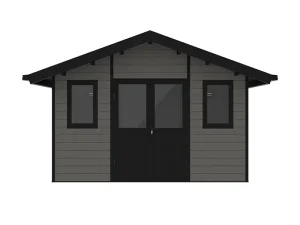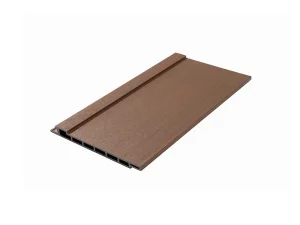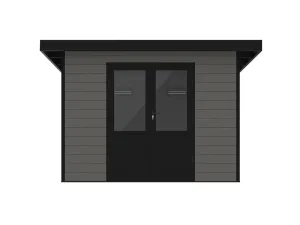
Featured Composite Architecture & Fascia Systems
Explore certified high-density wood-plastic composite lines engineered for seamless subframe concealment, perimeter rim joists, pool borders, and perimeter privacy frameworks.
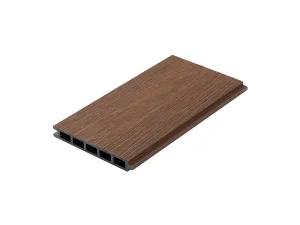
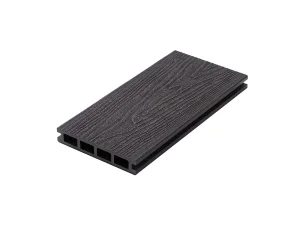
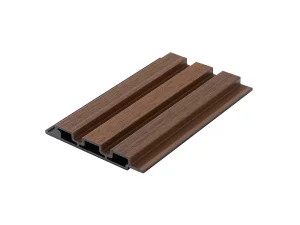
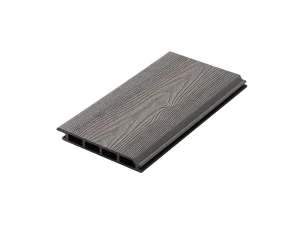
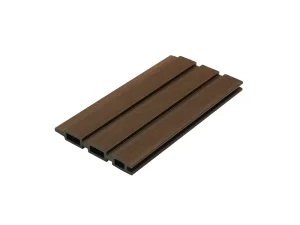
Engineering Principles of High-Performance Fascia Deck Boards
In modern architectural outdoor living, deck fascia boards—often designated as rim joist trim boards or perimeter skirts—perform the vital structural-aesthetic role of weatherproofing, framing, and enclosing the timber or aluminum substructure.
360° Co-Extruded Shielding
Unlike conventional first-generation uncapped composite trims that suffer from environmental stress cracking, our fascia profiles incorporate a modified polyolefin-based capping matrix. This advanced shell completely encapsulates the high-density internal core, preventing micro-capillary water intake, tannin bleed, and ultraviolet polymer photo-oxidation.
Optimized Core Rheology
The core formulation balances 60% super-fine micro-milled oak/bamboo wood flour with 30% recycled high-density polyethylene (HDPE) and 10% thermal coupling agents, color pigments, and anti-oxidants. This precise rheological synergy ensures exceptional dimensional stability, high modulus of rupture (MOR), and superior screw withdrawal resistance.
Linear Thermal Dilatation Control
Perimeter fascia boards experience higher direct thermal exposure due to vertical framing orientation and radiant ground bounce. Our specialized annealing production cooling cycles reduce residual stress, maintaining an ultra-low linear thermal expansion coefficient of 35–40 × 10⁻⁶ K⁻¹ to prevent perimeter buckling, bowing, and seam deformation.
| Performance Parameters | Forestar Capped Fascia (China Factory) | Uncapped First-Gen WPC | Pressure-Treated Softwood Trim |
|---|---|---|---|
| Water Absorption Rate (24h immersion) | ≤ 0.42% (ASTM D1037) | 2.8% – 5.5% | > 25.0% (Risk of Rot) |
| Flexural Strength (MOR) | 34.8 MPa (EN 15534-1) | 22.1 MPa | Variable / Grain Defect Prone |
| Color Fastness (QUV Accelerated 3000h) | ΔE ≤ 2.1 (ISO 4892-2) | ΔE ≥ 8.5 (Fades to Grey) | Severe Weathering & Leaching |
| Maintenance & Coating Life Cycle | Zero Staining / Mild Detergent Wash | Frequent Deep Scrubbing | Annual Sanding, Priming & Painting |
| Fungus & Termite Decay Immunity | Class 1 Complete Resistance | Moderate Resistance | Requires Toxic Chemical Treating |
Why Top Global Brands Source Fascia Deck Boards from Our Anhui Factory
China's manufacturing powerhouse is driven by deep raw material supply chains, advanced twin-screw compounding extrusion systems, and stringent quality control protocols.
Proprietary Polymer Blending
Located in Xuancheng, Anhui, Anhui Fumeida New Material Technology Co., Ltd. controls the upstream sorting, washing, and pelletizing of high-grade post-consumer HDPE. Direct pellet compounding prevents cross-contamination, guaranteeing uniform density and structural durability across heavy-duty fascia runs.
Parallel Dual-Screw Extrusion
Our facility runs high-torque, synchronized conical and parallel twin-screw extruders equipped with precision multi-zone vacuum devolatilization chambers. This removes volatile vapors, prevents internal porosity, and yields dense profiles with an exact 10mm to 15mm thickness balance.
Automated In-Line Inspection
Every extrusion batch undergoes laser-guided cross-sectional profiling, dynamic inline weight inspection, and spectrophotometer color-drift monitoring. This stringent process keeps delta variations well below commercial tolerances, preserving consistent batch-to-batch aesthetics.
Multi-System Consolidation
Global procurement teams can combine deck boards, fascia trims, wall cladding, fencing, and modular garden shed kits in a single 40ft HQ container. This streamlines port customs clearance, cuts freight overhead, and guarantees color harmony across different outdoor products.
Macro Industry Trends Shaping Composite Deck Trim Engineering
Architectural exterior demands are shifting from purely functional timber covers toward high-durability, biophilic composites engineered for demanding climates.
Solar-Reflective & Cool-Touch Pigments
Because vertical fascia boards absorb substantial direct and ground-reflected solar heat, next-generation formulations utilize complex inorganic color pigments (CICPs). These reflect near-infrared radiation (NIR), keeping surface temperatures up to 8°C to 12°C cooler than traditional dark composite trims, reducing thermal expansion stress.
Dual-Tone 3D Biophilic Texturing
Uniform monochromatic grain stampings are being replaced by synchronized random multi-tonal streaking and true 3D matte wire-brushed textures. Our hot-embossing rollers reproduce the authentic grain, growth rings, and cathedral patterns of exotic hardwoods like Ipe, Teak, and Walnut—without cutting down virgin forests.
Stricter Global Fire Safety Compliance
Urban building interfaces and Wildland-Urban Interface (WUI) jurisdictions now require flame-retardant exterior building envelopes. Our specialized Class B (EN 13501-1) and ASTM E84 Class A fire-rated formulations integrate halogen-free intumescent agents that char under flame exposure, preventing flame propagation across the deck perimeter.
Localized Application Scenarios: Where Fascia Boards Excel
Forestar composite fascia profiles are engineered for complex architectural geometries, moisture-heavy perimeters, and diverse commercial applications worldwide.
Rim Joist & Under-Deck Concealment
Standard pressure-treated timber rim joists are often rough, warped, and weathered. Forestar fascia boards create a smooth, color-matched border around the entire deck circumference, hiding structural framing hardware, joist ends, and concealed substructure drainage systems.
Stair Stringer Cladding & Risers
Outdoor staircases experience heavy foot-scuffing and high structural stress. Our durable fascia boards function perfectly as stair risers and stringer skirts, resisting scuffs, heel impact, and ground-level splashback far better than painted timber or thin vinyl trims.
Poolside & Marine Waterfront Borders
Continuous exposure to chlorinated water, salt spray, and extreme humidity causes rapid rot in conventional softwood skirts. Forestar's zero-absorption co-extrusion technology prevents water infiltration, mold blooming, and chemical delamination in high-splash zones.
Commercial Boardwalk & Resort Decks
Heavy public foot traffic, hospitality equipment, and maintenance carts require edge boards with high impact resistance. Forestar fascia boards act as protective bumpers, preventing edge chipping and structural board abrasion in high-density public venues.
Multi-Level Terrace Transitions
Terraced decking schemes require crisp, clean vertical changes between deck heights. Our engineered fascia boards create seamless, dimensional transitions that conceal ledgers, wiring for perimeter step lighting, and subtle sub-floor ventilation air-gaps.
Architectural Planters & Garden Bench Boxing
Landscape designers increasingly utilize Forestar fascia profiles to enclose built-in backyard seating, custom garden planters, and utility box concealment surrounds, establishing complete stylistic harmony across all outdoor living structures.
Fascia Deck Board Installation Guidelines & Structural Solutions
Proper installation prevents common field failures such as oil-canning, thermal ripple, joint separation, and moisture entrapment behind perimeter rim joists.
Substructure Joist Spacing & Backing
Fascia boards are non-structural trim components. They must never be installed over unsupported spans wider than 300mm to 400mm (12" to 16") on-center. When securing around rim joists, install solid blocking between timber joists to deliver a continuous, rigid structural backing plane.
Pre-Drilling & Fastener Clearances
Always pre-drill oversized pilot holes (typically 1.5mm to 2.0mm larger than screw shank diameter) when face-fastening fascia boards. Use grade 316 stainless steel composite fascia screws equipped with reverse-thread heads to prevent mushrooming and accommodate thermal movement.
Ventilation & Thermal Expansion Gap Matrix
Never butt fascia boards tightly together end-to-end. Maintain a calculated 3mm to 6mm expansion gap at butt joints and miter corners, scaled to ambient installation temperatures. Ensure a minimum 20mm free-air continuous gap beneath the bottom fascia edge for airflow.
Enterprise Sourcing: OEM/ODM, Consolidation & Quality Assurances
We tailor production to international distributors, hardware retail chains, and project developers, supported by complete regulatory documentation.
Full Container Consolidation
Maximize your logistics budget by mixing matched fascia boards, grooved deck boards, fence panels, and flat-pack garden shed components in a single container. Mixed container sourcing lowers local warehousing risks and eases regional inventory management.
Custom Tooling & Private Labeling
Our in-house precision tooling workshop designs, extrudes, and validates custom profiles, widths (up to 300mm), and branded embossed patterns in just 20 business days. We provide comprehensive private-label protective wrapping, corner edging, and barcode packaging.
Worldwide Certification Compliance
Forestar products are fully certified under EN 15534 (European Standard for Composite Materials), CE Marking, ASTM D7032, FSC Chain of Custody for sustainable wood flour sourcing, REACH environmental chemical limits, and ISO 9001 / ISO 14001 factory governance.
Frequently Asked Questions: Fascia Deck Boards & Manufacturing
Clear, technical answers to common questions asked by distributors, commercial contractors, and international procurement managers.
What is the functional difference between a standard composite deck board and a fascia board?
Why is capped composite superior to uncapped WPC for perimeter fascia applications?
How does Anhui Fumeida New Material Technology Co., Ltd. ensure color consistency across product batches?
Can Forestar composite fascia boards be used as stair risers?
What fastening system is recommended to avoid oil-canning and surface buckling?
What are the minimum order quantities (MOQ) and production lead times for custom orders?
Explore Complete Outdoor Living Architecture
Streamline your supply chain by pairing Forestar high-performance fascia profiles with matching composite wall siding, garden sheds, and perimeter fence systems.