
Enterprise Engineering & Industrial Scale
High-Quality Exterior WPC Wall Cladding Factories & Factory
Next-Generation Co-Extrusion Architecture, High-Durability Cellular Formulations, and Precision Supply Chain Integration for Global Importers, Facade Engineers, and Commercial Developers.
Direct Sourcing Infrastructure
High-Spec Exterior Systems: Featured Products
Engineered for high-volume specification, turnkey commercial facades, and resilient residential siding. Explore our factory-direct batches below.
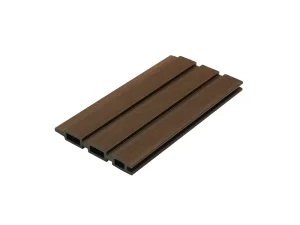
WPC Privacy Fencing with Hidden Fasteners - Unbreachable Defense
View Product Specs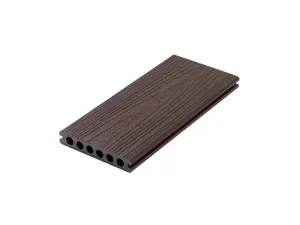
TerraShield Low Maintenance Wood Plastic Composite Decking Systems
View Product Specs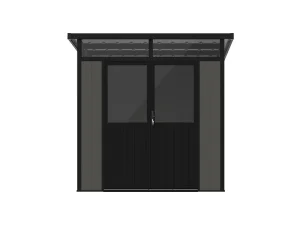
MiniStar WPC Outdoor Storage Shed with Lockable Safety Enclosure
View Product Specs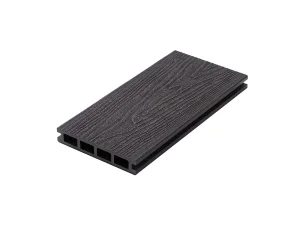
EclipseGrain Waterproof UV-Resistant Composite Decking for Poolside
View Product Specs
EclipseGrain Waterproof Composite Decking Engineered for Harsh UV
View Product Specs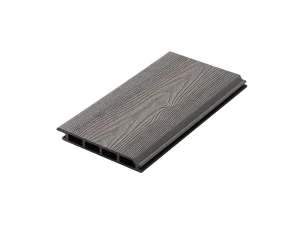
PlaneSleek WPC Exterior Cladding Panels with Weather Shield Protection
View Product Specs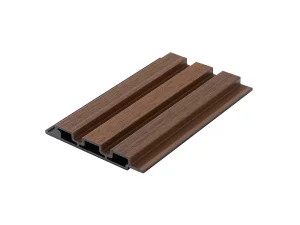
CrestWall Wood Plastic Composite Wall Siding - Low Maintenance Cladding
View Product Specs
Industrial Landscape Analysis
The Global Architectural Shift Toward High-Performance WPC Wall Cladding
Architects and developers are transitioning away from vulnerable natural timbers and high-embodied-carbon aluminum composites toward cellular co-extruded WPC composite cladding.
Life-Cycle Cost Disruption
Traditional tropical hardwood facades demand cyclical chemical oiling, power-washing, and sealing every 12 to 18 months. Over a 25-year structural lifecycle, the recurring maintenance cost of timber exceeds initial material acquisition by 320%. Premium WPC cladding completely amortizes operational upkeep, delivering zero painting cycles and predictable ROI for commercial REITs and multi-family developers.
Severe Climate Resilience
Rapid climate destabilization presents severe challenges: hyper-saline coastal mist, extreme diurnal heat swings, and driving monsoon cycles. Traditional fiber cement and untreated wood suffer from micro-fissures and water absorption. Polymer-encapsulated WPC engineered with hydrophobic co-extrusion shielding exhibits water absorption rates of <0.5%, successfully negating freeze-thaw spalling.
LEED & ESG Procurement Mandates
Corporate environmental disclosure rules have made virgin timber harvesting a high compliance liability. Forestar composites integrate up to 90% post-consumer HDPE and upcycled wood flour from FSC-audited wood process waste streams. Every metric ton of high-density WPC saves 1.8 cubic meters of virgin forest while permanently sequestering industrial waste polymers.
Material Science Roadmap
Engineering Architecture: 1st Gen to 4th Gen Co-Extrusion
The technological shift from porous mono-extrusion to multi-layer polymer molecular grafting provides radical improvements in durability, thermal stability, and aesthetic authenticity.
1st Gen: Raw Compounding
Bare composite blends without protective shielding. High wood-fiber exposure to sunlight resulted in UV-induced chalking, fungal surface staining, and excessive thermal expansion rates.
2nd Gen: 360° Shielding
Introduction of the continuous capped layer. High-melt-index modified polyolefins completely encapsulate the core, stopping water permeation and mitigating direct solar fiber degradation.
3rd Gen: Multi-Tone Micro-Grain
Synchronized physical embossing with multi-chromatic color blending. Elimination of the artificial "plastic look" in favor of natural matte woodgrain profiles, featuring enhanced scratch resistance.
4th Gen: Nano-Ceramic CoolTouch
Next-gen infra-red reflective pigments integrated into the polymer shell. Surface heat absorption drops by up to 25% under intense solar radiation, lowering cooling demands across green buildings.
| Evaluation Parameter | Forestar Capped 4th Gen WPC | Unshielded 1st Gen Composite | Natural Hardwood (Teak/Ipe) | Fiber Cement Panels |
|---|---|---|---|---|
| Water Absorption (24h immersion) | < 0.42% (Impermeable) | 4.5% - 8.2% (Porous) | 12% - 24% (Organic swelling) | 8.0% - 14% (Capillary action) |
| Flame Spread Rating (EN 13501-1) | Class B-s1, d0 / ASTM E84 Class A | Class C / D | Class D / Combustible | Class A1 / Non-combustible |
| Delta E Color Shift (3000h QUV) | ΔE ≤ 2.1 (Virtually undetectable) | ΔE ≥ 7.8 (Noticeable greying) | Rapid silver-grey bleaching | ΔE ≤ 3.0 (Requires repainting) |
| Annual Maintenance Burden | Zero chemical treatments; water wash only | Bi-annual power wash & biocide | Mandatory seasonal staining & sanding | Repainting every 5–7 years |
Manufacturing Precision & Agility
China Factory Ecosystem: Scalable Resilience in Xuancheng, Anhui
Managed directly by Anhui Fumeida New Material Technology Co., Ltd. since 2008, Forestar balances rigorous German-standard twin-screw extruders with deep domestic supply-chain clustering.
Vertical Raw Polymer Compounding
Unlike assembly assemblers who purchase third-party pellets, Forestar operates closed-loop pelletizing lines. We precisely balance high-density polyethylene viscosity, coupling compatibilizers, and Hindered Amine Light Stabilizers (HALS) to guarantee uniform density and stress relief across every production run.
Full Multi-System Consolidation
Minimize ocean freight risks and reduce import duties. Global distributors can load exterior wall cladding, matching corner architectural trims, composite decking, privacy fencing, and prefabricated garden sheds inside a single consolidated 40HQ container, ensuring matched surface textures across lines.
Traceability & In-Line Quality Assurance
Every extrusion batch undergoes destructive tensile modulus testing, flexural modulus verification (ASTM D790), boiling-water adhesive peel evaluation, and continuous computerized laser profiling to keep dimensional tolerance within ±0.3mm across 5.8m board lengths.
Engineered Regional Applications
Localized Structural Use Cases Across 45+ Markets
Forestar WPC wall cladding systems adapt to diverse environmental demands, international fire codes, and regional architectural aesthetics.
Nordic & Sub-Zero Envelopes
Primary Market: Finland, Sweden, Norway, Canada.
Technical Demand: Severe sub-zero freeze-thaw cycling and prolonged snow accumulation.
Engineering Execution: Cellular core void design relieves internal expansion stresses during moisture freeze events, paired with ventilated rainscreen clip systems to allow water vapor egress.
Arid & High-Solar Deserts
Primary Market: UAE, Saudi Arabia, Arizona & Texas (USA).
Technical Demand: Constant ambient temperatures above 45°C, heavy UV exposure, windblown abrasive silica.
Engineering Execution: Specially formulated cross-linked shielding with nano-ceramic heat dissipation additives prevents board sagging, softening, or color fading over decades.
Tropical Maritime & Coastal Zones
Primary Market: Southeast Asia, Florida, Caribbean, Colombia.
Technical Demand: 95%+ relative humidity, termite colonies, airborne marine saline corrosion.
Engineering Execution: Completely non-digestible polymer matrices eliminate termite attacks, while 316-marine-grade hidden stainless fasteners eliminate rust streaks on building facades.
Zero-Failure Project Governance
Comprehensive Compliance & International Standards
Forestar products are backed by fully documented third-party testing to support direct project specifications and streamline municipal building code sign-offs.
Fire Safety
EN 13501-1 & ASTM E84
Tested by SGS and Intertek for commercial building exteriors. Class B-s1, d0 flame propagation resistance ensures reduced smoke generation and eliminates flaming molten droplets.
Health & Toxins
REACH & RoHS
Fully compliant with EU Regulation (EC) No 1907/2006. Completely free from harmful plasticizers, lead stabilizers, asbestos, or hazardous volatile organic compounds (VOCs).
Forest Stewardship
FSC Chain-of-Custody
All biological components within our composite matrix are procured exclusively from documented, responsibly managed circular timber mill scraps.
Mechanical Reliability
ISO 9001 / ISO 14001
Audited quality control and environmental workflows ensure structural stability, consistent thermal expansion indices, and verified batch uniformity.
Structural Engineering Best Practice
Ventilated Rainscreen Installation Standard
Following correct installation methods protects your factory warranty and guarantees multi-decade facade performance.
01. Sub-Batten Spacing
Fasten aluminum or composite battens at maximum 400mm centers (300mm in high-wind regions) to establish a rigid foundation that resists wind uplift loads.
02. Continuous Cavity
Maintain an uninterrupted 20mm to 30mm vertical air cavity between the water-resistive barrier and the back of the cladding to promote passive stack-effect drying.
03. Thermal Expansion Gaps
Always leave a calculated gap (1mm per linear meter of board length per 10°C of expected temperature shift) at all butt joints to allow seasonal movement without board buckling.
04. Concealed Clip Fastening
Employ system-specific marine stainless steel starter clips and hidden sliding fixings. Hidden clips allow linear thermal expansion while maintaining a sleek, uninterrupted exterior aesthetic.
Direct Container Logistics
Catalog Highlights: Cladding, Decking & Precision Outdoor Solutions
Discover our expanded collection of high-density co-extruded boards and storage systems, packaged and ready for export across global hubs.
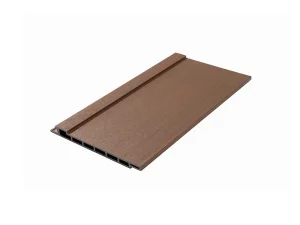
Waterproof Composite Deck Cladding - FORESTAR SlatWeave Series
View Product Specs
Waterproof UV-Resistant Composite Decking - Eclipse Grain Design
View Product Specs
EclipseGrain Waterproof UV-Resistant Composite Poolside Decking
View Product Specs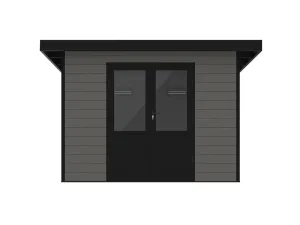
CeilingStar Premium Outdoor Storage Tool & Bike Shed with Lock
View Product Specs
High-Quality Waterproof UV Resistant Composite Decking - Eclipse Style
View Product Specs
TerraShield Capped Wood Plastic Composite Decking - Durable Solutions
View Product Specs
TerraShield Low-Maintenance Durable Outdoor WPC Decking Boards
View Product Specs
CeilingStar Premium Lockable Outdoor Tool & Bike Storage Shed
View Product Specs
Procurement & Engineering Q&A
Frequently Asked Questions for Importers & Facade Engineers
In-depth responses covering custom tooling, MOQ structures, fire compliance, and supply chain verification.
What are the key technical differences between mono-extrusion and co-extrusion exterior WPC cladding?
Mono-extrusion blends wood fiber and polymers into a single homogenous profile without an outer barrier. While cost-effective, exposed wood fibers on the surface can absorb environmental moisture (up to 8%), resulting in gradual fading and susceptibility to mold in humid climates. Co-extruded cladding (2nd to 4th generation) introduces an impermeable, 360-degree cross-linked polymer shield. This shield incorporates UV stabilizers, specialized antioxidants, and flame retardants to bring water absorption below 0.5%, preserve original color integrity, and deliver superior scratch resistance over a 25-year design life.
Can Forestar manufacture custom extrusion profiles, proprietary lengths, and custom Pantone colors?
Yes. We run an in-house tooling and die-manufacturing workshop in Xuancheng, Anhui. We regularly build custom extrusion molds based on client CAD/BIM technical drawings, with turnaround times of 15 to 21 business days. Custom lengths can be produced to fit 20GP or 40HQ container specifications (e.g., 2.2m, 2.9m, 3.6m, or 5.8m), minimizing job-site trimming waste. Custom color matches against Pantone or RAL charts can be achieved via specialized masterbatch formulations, with test-swatch approvals completed prior to high-volume extrusion.
What fire safety rating do Forestar exterior cladding systems achieve for multi-story residential builds?
Standard residential-grade composite cladding meets Euroclass D-s2, d0. For commercial and multi-family facades requiring enhanced fire performance, Forestar formulates composite profiles with non-halogenated organophosphorus and magnesium hydroxide flame retardants. These achieve European Class B-s1, d0 compliance under EN 13501-1 testing, as well as Class A flame-spread ratings under ASTM E84. This ensures low flame propagation, minimal smoke density, and zero flaming droplet release.
How does Forestar ensure color uniformity across different container shipments for phased projects?
To prevent color variance on large, phased projects, we retain physical reference samples and spectral data from every production batch. Our laboratory utilizes computerized spectrophotometers to verify that batch-to-batch variation remains strictly within ΔE ≤ 1.0. Furthermore, we pre-blend raw polymers and use single-source wood flour milling within uniform moisture boundaries (below 1.5%), mitigating the base material variations common among lower-tier composite mills.
What is the minimum order quantity (MOQ) and production lead time for full container loads?
For standard stocked colors and running profiles (such as CrestWall, PlaneSleek, and SlatWeave), the MOQ is 300 square meters per profile/color. For fully custom colors or bespoke structural molds, our initial run MOQ is one full 20-foot container (approx. 800 to 1,000 square meters). Average manufacturing lead times range from 14 to 21 calendar days following master-sample confirmation and deposit settlement. Mixed-product container consolidation across decking, cladding, fencing, and shed units is supported.