High-Performance Exterior Envelopes & Kits
Engineered Wood-Plastic Composite (WPC) profiles, co-extruded architectural panels, and modular prefabricated kit solutions for DIY tiny structures.
Macro Dynamics in Modern Tiny House & Modular Living
The global small-footprint living market is shifting rapidly from fragmented timber DIY endeavors to standardized, factory-controlled composite systems engineered for longevity and compliance.
Affordability Crisis & ADU Surges
Across North America, Oceania, and Western Europe, severe housing supply shortages and escalating urban real estate costs have driven an unprecedented boom in Accessory Dwelling Units (ADUs). Municipal zoning reforms (such as California's SB 9 or equivalent Australasian relaxed bylaws) have made DIY tiny house structures legally viable as permanent micro-residences, backyard work pods, and high-yield short-term hospitality units.
The Demise of Untreated Softwood
Traditional DIY tiny homes historically relied on stick-built timber framing and cedar or pine cladding. However, extreme weather events, pest infestations (termites and carpenter bees), and prohibitive seasonal maintenance regimes have caused major warranty liability for builders. The industry is rapidly adopting co-extruded polymer-capped composite materials that resist rot, cracking, and water ingress.
Containerized Flat-Pack Logistics
Transporting fully assembled tiny houses across international oceans creates astronomical shipping penalties due to volumetric deadweight. The modern industrial model leverages precision CNC-milled, interlocking flat-pack kit solutions. Standard 40-foot High Cube (40HQ) containers can accommodate multi-unit full building packages, reducing landed logistics costs by up to 65% for regional distributors.
China's Manufacturing Moat in Tiny House Production
How state-of-the-art polymer chemistry, automated continuous co-extrusion, and centralized raw material clusters create unmatched cost-to-performance efficiency.
Anhui Industrial Cluster Clustering
Operated by Anhui Fumeida New Material Technology Co., Ltd. in Xuancheng, Anhui, our manufacturing plant sits at the heart of the world's most concentrated new-material and chemical engineering corridor. Direct access to reclaimed industrial wood flour, certified virgin and recycled polyolefins, and high-efficiency extrusion die tooling ensures zero raw material bottlenecks and unmatched production agility.
Continuous Co-Extrusion Tech
Our facility runs high-torque parallel twin-screw extruders operating 360-degree co-extrusion technology. This processes the high-density wood-polymer composite core simultaneously with a 100% encapsulated modified-polymer shield (surlyn-grade resin). The result is micro-structures impervious to moisture absorption, swelling, UV chalking, and oil staining.
Full-Container Consolidation
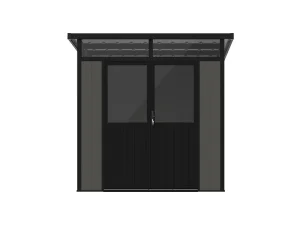
Unlike single-line vendors, Forestar provides complete envelope consolidation: exterior cladding profiles, structural composite deck platforms, privacy boundary fencing, and prefabricated lockable storage sheds all pack cleanly into the same logistics unit. Distributors eliminate mixed-supplier friction and consolidate freight documentation effortlessly.
| Evaluation Parameter | Forestar Industrial WPC / Modular Kits | Traditional Softwood DIY Kits | Light Steel Frame + Drywall |
|---|---|---|---|
| Weather & Moisture Absorption | <0.5% water uptake, impervious to mold/rot | High hygroscopic expansion, requires re-sealing | Requires multiple vapor membranes and insulation seals |
| Assembly Speed (Modular DIY) | Interlocking panels, hidden tongue-and-groove | Laborious cutting, measuring, screwing & painting | Requires specialized framing tools and screwdrivers |
| Post-Installation Upkeep | Occasional soapy water wash; zero staining | Annual sanding, oiling, and preservative treatment | Paint patching, rust treatment on fastener penetrations |
| Supply Chain Lead Time | Standardized continuous extrusion; rapid scale | Subject to volatile timber logging quotas & warping | Dependent on steel sheet rolling lead times |
Localized Engineering & Application Scenarios
A DIY tiny house must withstand vastly different environmental stresses depending on its deployment latitude. Forestar composite systems are structurally tuned for distinct microclimates.
Arid & High-UV Regions
Deployments: Texas, Arizona, Middle East, Western Australia.
Challenge: Surface embrittlement, thermal warping, and severe color degradation.
Solution: Proprietary hind-amine light stabilizers (HALS) and inorganic ceramic pigments reflecting infrared radiation for a cooler touch under extreme heat.
Tropical High-Humidity Zones
Deployments: Southeast Asia, Florida, Colombia, Caribbean.
Challenge: Unrelenting humidity, fungal colonization, drywood termites, and torrential rain.
Solution: Complete fiber encapsulation prevents internal bio-feeding; zero swelling preserves window/door joinery tolerances indefinitely.
Sub-Zero Nordic Freeze-Thaw
Deployments: Finland, Sweden, Canada, Alpine regions.
Challenge: Moisture infiltration followed by ice expansion, causing structural cracking.
Solution: Hydrophobic density matrices eliminate internal capillary voids, sustaining structural integrity through hundreds of cyclic -30°C to +20°C freeze-thaw events.
Coastal Marine Air Exposures
Deployments: Mediterranean, Pacific coastlines, UK shores.
Challenge: High salinity, salt-mist crystallization, and accelerated metal fastener rust.
Solution: Paired with 316-grade marine stainless hidden clip assemblies; exterior composite skins are completely inert to chemical salt oxidation.
Localized Support & Compliance Safeguards
Overcoming jurisdictional import barriers and building code compliance with third-party verified mechanical and chemical certifications.
Fire Retardancy & Reaction-to-Fire
Forestar composite building skins undergo rigorous European (EN 13501-1 Class B-s1, d0) and American (ASTM E84 Class A/B flame spread index) laboratory benchmarking. This enables compliance approval for urban wildland-urban interface (WUI) zones and stringent municipal backyard living fire clearances.
Structural Flexural Load Resistance
Tested in accordance with ASTM D7032 and EN 15534 standards, our load-bearing floor spans and roof-load profiles resist deflection under heavy snow accumulation and cyclonic wind shear forces, ensuring safety in both residential DIY annexes and commercial glamping applications.
Environmental & Chemical Safety
Tiny house interiors require immaculate indoor air quality (IAQ). Forestar materials pass strict EU REACH SVHC chemical screenings and emit zero harmful volatile organic compounds (VOCs) or formaldehydes. All wood components derive from responsibly managed, recycled timber byproducts.
Technical Roadmap: The Next Generation of Micro-Living
Forestar's research and development engineering trajectory for the 2026–2030 horizon incorporates smart materials, integrated off-grid energy, and robotic fabrication.
Building-Integrated Photovoltaics (BIPV)
Integrating flexible thin-film solar laminates directly into the interlocking WPC roof panels and south-facing cladding profiles. This converts standard tiny house siding into quiet, passive kilowatt generators without compromising aesthetics or creating penetration leak vectors.
Bio-Polymer Matrices & Carbon Capture
Advancing from recycled HDPE to next-generation lignin-reinforced bio-polymers and agricultural waste stalks (rice husk and bamboo silica matrixes). Our roadmap targets net-negative embodied carbon for standard tiny home flat-pack shell kits by 2028.
Tool-Less Quick-Lock Joinery
Engineered self-locating internal tension latches and composite wedge anchors that allow two unspecialized adults to lock structural walls, subfloors, and ceiling diaphragms together in under six hours, eliminating external screw heads and dramatically lowering DIY assembly times.
Frequently Asked Questions for Importers & Builders
In-depth technical and operational answers to support engineering review, quality assurance, and commercial import decisions.
Why is composite cladding superior to solid wood for DIY tiny homes?
Solid wood swells and contracts noticeably across seasonal humidity shifts, placing severe torque on fasteners, breaking window weather seals, and creating moisture leaks. Forestar Wood-Plastic Composite possesses a meager linear thermal expansion coefficient (≤ 0.35%) and moisture absorption rate (<0.5%), meaning tiny houses retain factory tolerances without rotting, warping, or demanding seasonal re-staining.
How are tiny house kits packaged for intercontinental shipping?
Components are flat-packed onto heavy-duty, moisture-barrier wooden pallets using automated stretch-wrapping with corner-edge protectors. High-density packing maximizes container cubic capacity, fitting panels, decking boards, trim profiles, and hardware kits systematically so that builders can assemble structures in step-by-step order directly from the pallet.
Can Forestar manufacture custom profiles or private label designs?
Yes. As the direct manufacturing brand of Anhui Fumeida New Material Technology Co., Ltd., we operate an in-house tooling and die workshop. We develop custom co-extrusion dies, specific board widths, architectural woodgrain embossments, and client-branded packaging cartons for regional distribution networks with documented order commitments.
What substructure spacing is required for composite tiny home floors?
For standard residential human foot traffic, we recommend a joist span of 350mm to 400mm center-to-center. For tiny homes deployed on mobile trailer chassis subject to dynamic road vibrations, we recommend 300mm joist spacing with adequate cross-blocking to maintain floor deflection stiffness under transport stresses.
How does Forestar manage product warranty and compliance?
Our composite boards and exterior wall profiles are covered by a comprehensive 15-to-25-year structural warranty against rot, fungal decay, insect attack, and excessive color fading. Our factory holds ISO 9001 and ISO 14001 certifications, with international test reports verified by SGS, Intertek, and TÜV.
Can trade buyers inspect facilities or review physical samples prior to orders?
Physical sample sets with calibrated finish textures and profile cut-offs are express-dispatched worldwide for evaluation under local sunlight conditions. Trade buyers can inspect our facility in Xuancheng, Anhui, book virtual factory audits, or meet our international export team directly at global industry trade expos like PISCIMAD in Madrid.
Precision Modular Components & System Decking
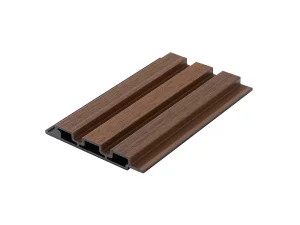
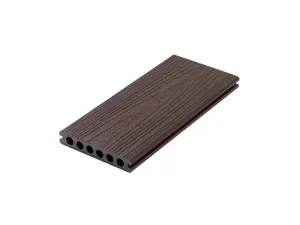
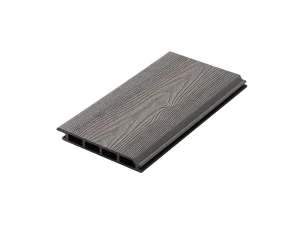
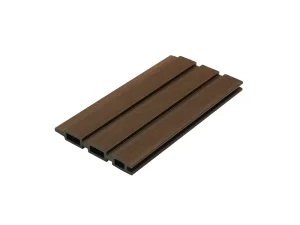
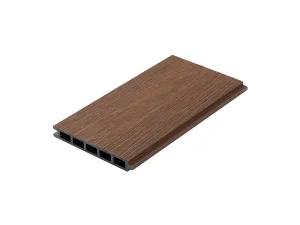
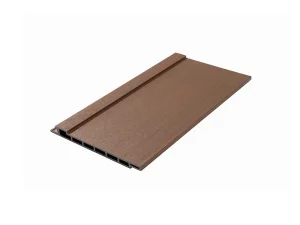
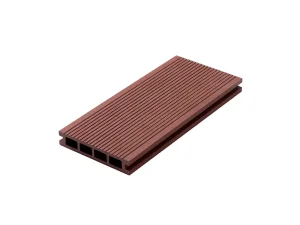
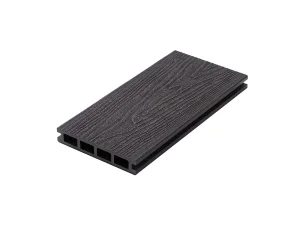
Complete your tiny house projects with engineered slat cladding, concealed-fastener perimeter fencing, and high-performance composite decking systems.