
Engineered Composite Building Assemblies
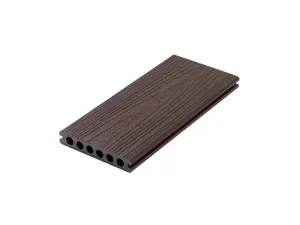
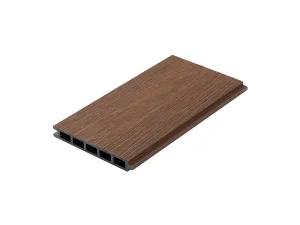
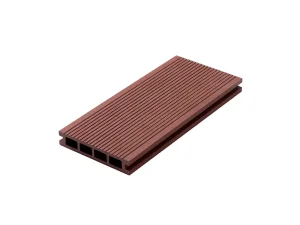
Direct factory output engineered with multi-layer co-extrusion technology, precision dimensional tolerances, and ultra-low water absorption ratings under 0.5% for extreme weather durability.
Macro-Industry Solutions: Carbon Lifecycle Cost vs. Traditional Timber
The international landscape architecture, outdoor flooring, and urban development industries have arrived at a critical inflection point. As traditional lumber faces volatile harvest tariffs, pressure from international anti-deforestation legislation (such as EUDR regulations in Europe), and high recurrent maintenance liabilities, specification trends have shifted dramatically toward advanced capped wood-plastic composites (WPC). Forestar operates directly at the intersection of recycled polymer chemistry and sustainable forestry waste conversion.
Total Cost of Ownership (TCO)
Over a 25-year operational lifecycle, conventional pressure-treated pine and softwood decking accumulate recurrent maintenance costs equal to 3.2x to 4.7x their initial capital purchase price. Annual high-pressure washing, chemical wood strippers, biocide coatings, and micro-crack polyurethane sealers represent sustained labor and operational expenditures. Forestar co-extruded composite assemblies eliminate recurrent chemical sealing cycles, reducing multi-year facility maintenance budgets to standard hydraulic cleaning.
Embodied Carbon & ESG Metrics
By blending up to 90% recycled plastics and reclaimed organic fibers, each metric ton of Forestar composite decking boards diverts hundreds of kilograms of high-grade polymers from municipal landfills and marine channels. Our factory facilities utilize closed-circuit thermal chilling networks and variable-frequency screw extruders, minimizing production energy intensity. The resultant carbon offset aligns directly with Scope 3 corporate reporting mandates and regional net-zero municipal building criteria.
Structural Creep & Flexural Integrity
Unlike virgin timber which suffers from anisotropic swelling, internal cup defects, and anisotropic fiber relaxation, Forestar composite core substrates are engineered using specialized high-load rheological modulators. Under ASTM D7032-17 continuous flexural static testing, our capped deck profiles retain continuous structural deflection below L/360 criteria under 100 PSF (4.79 kPa) distributed design live loads, delivering uncompromised deck safety over prolonged commercial loading.
Intelligent Manufacturing: Co-Extrusion Engineering & Polymeric Precision
Forestar, operating under the formal manufacturing entity Anhui Fumeida New Material Technology Co., Ltd. in Xuancheng, Anhui, utilizes advanced high-torque twin-screw automated extrusion lines. Our multi-zone thermal extrusion technology creates an inseparable molecular bond between the dense interior composite core and the 360-degree fluoropolymer/ASA protective shield.
| Performance Dimension | Forestar Capped WPC Systems | First-Generation Uncapped WPC | Softwood / Pressure Treated Pine | Hardwood (Ipe / Teak / Cumaru) |
|---|---|---|---|---|
| Encapsulation Shield | ✓ 360° Modified Polymer Matrix | ✗ Exposed Unshielded Fibers | ✗ None | ✗ None |
| Water Absorption (24h immersion) | < 0.45% (ASTM D1037) | 3.20% – 6.50% | > 25.0% (Cellular Saturation) | 8.0% – 14.0% |
| UV Photodegradation (ΔE) | ΔE ≤ 2.5 (3000h QUV Xenon Arc) | ΔE > 8.0 (Severe Greying) | Rapid silvering without stain | Surface weathering within 6 mos |
| Slip Resistance Classification | Class C / R11 / P4 (BS 7976 Pendulum) | Class B / R9 (Slippery when wet) | High slip risk when algae occurs | Variable, very slick if unwashed |
| Splinter & Check Resistance | ✓ 100% Barefoot Splinter-Free | Minor surface edge flaking | ✗ Frequent Splinters & Splits | ✗ End-checking, sharp grain splits |
| Pest & Termite Immunity | ✓ Class 1 Termite Barrier (ISO 139) | Moderate resistance | Requires CCA / ACQ chemical poisons | Natural resistance, but variable |
| Environmental Certification | FSC, CE, REACH, RoHS, ISO 9001 | Variable / Basic | Requires FSC tracing | High deforestation risk (CITES risk) |
Feedstock Micro-Milling
Reclaimed wood and agricultural fiber residues are refined into micro-mesh organic flour, followed by deep vacuum oven moisture extraction below 1.5% moisture content to prevent internal steam cavitation.
Thermodynamic Compounding
Virgin and high-purity recycled HDPE flakes are compounded with maleated coupling agents, nano-antioxidants, and cross-linking thermal stabilizers inside twin-screw co-rotating high-torque barrels.
Co-Extrusion Capping
The molten composite core is simultaneously pushed through multi-channel die lips, where an elastomeric, UV-impervious fluoropolymer shield encapsulates the profile at 190°C without glue or adhesive binders.
Dual-Heated In-Line Embossing
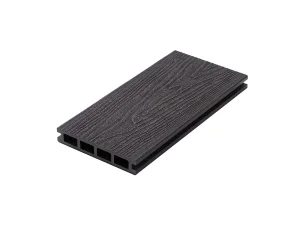
Synchronized embossing cylinders apply deep multi-tonal wood grain patterns while the surface is malleable. This permanent thermal impress will never flatten out or peel throughout the decking's lifespan.
Localized Regulatory Support, Fire Codes & Architectural Safeguards
Procurement directors and municipal specifiers cannot afford delays resulting from building code rejections. Forestar materials undergo complete, standardized independent laboratory evaluation through SGS, Intertek, and TÜV SÜD to guarantee structural and safety conformance across international jurisdictions.
North America: ICC-ES & ASTM Standards
Engineered to comply with ASTM D7032-17 (Standard Specification for Establishing Performance Ratings for Wood-Plastic Composite Deck Boards and Guardrail Systems). Our profiles meet IRC and IBC building code load span tables for up to 16" (406 mm) on-center residential joist configurations and 12" (305 mm) on-center high-density commercial configurations. Fire resistance testing conforms to ASTM E84 Class B / Class C surface flame spread index limitations.
European Union: CE Marking & EN 15534
Fully compliant with EN 15534-1:2014 and EN 15534-4:2014 covering composite deck boards for outdoor use. Material compliance holds CE conformity assessment for safety, mechanical stability, and thermal conductivity. Reaction-to-fire performance meets EN 13501-1 Class Bfl-s1 / Cfl-s1 requirements, making Forestar decking ideal for public squares, hospitality terraces, and multi-family balconies across EU member states.
Environmental Health: REACH & RoHS
Forestar composite formulations are completely free of hazardous leaching compounds. Independent analytical testing verifies zero presence of pentachlorophenol, chromium, arsenic, heavy metals, or SVHC (Substances of Very High Concern) under EU Regulation (EC) No 1907/2006 (REACH). Safe for direct installation over drinking water reservoirs, aquatic wildlife habitats, school playgrounds, and municipal botanical parks.
Wind Uplift & Coastal Corrosion Engineering
Paired with our proprietary 304/316 grade stainless-steel hidden clip fastener assemblies, Forestar deck board interfaces withstand wind uplift negative pressures exceeding 4.2 kPa, satisfying hurricane-zone structural parameters. The non-metallic polymer matrix is inherently impervious to salt-spray atmospheric oxidation, preventing coastal decay.
Localized Application Scenarios: Proven Durability Across Climates
From sub-zero Scandinavian freeze-thaw cycles to high-humidity tropical zones and arid desert climates, Forestar composite engineering delivers permanent dimensional stability and visual excellence.
Marine, Estuary & Waterfront Boardwalks
Constant exposure to saline water, brackish spray, and diurnal tidal submersion leads to rapid mold and dry rot in timber. Forestar capped boards, featuring zero exposed organic wood matter on their exterior surfaces, prevent structural swelling and rotting. The anti-slip micro-grooved surface profile ensures pedestrian safety even under wet foot traffic.
Sub-Zero Alpine & Freeze-Thaw Environments
In high-altitude regions like the Austrian Alps and Helsinki, Finland, trapped interior water expansion shatters traditional concrete and splits natural lumber during freeze-thaw cycles. Forestar's homogeneous core and impermeable capping prevent moisture ingress, handling temperature drops down to -40°C without internal fissures or brittle fracturing.
High Solar UV & Thermal Desert Zones
Projects across the southern United States, Australia, and the Middle East require materials that resist intense solar degradation. Incorporating hindered amine light stabilizers (HALS) and cool-touch inorganic pigments, Forestar boards reflect infrared radiation, maintaining surface temperatures up to 8°C – 12°C cooler than typical uncapped dark composite boards.
Urban Rooftops & Podium Terraces
Metropolitan developments must balance lightweight substructure limits with stringent fire safety regulations. Forestar decking delivers high strength-to-weight ratios that protect structural membranes when set on adjustable pedestal systems, all while meeting urban exterior envelope fire requirements.
Technology Roadmap: Next-Generation Materials & Circular Systems
Continuous polymer science research led by Anhui Fumeida New Material Technology Co., Ltd. ensures Forestar products maintain a competitive edge across international procurement markets.
Phase 1: Nano-Ceramic Shielding (Current)
Integration of nanometer aluminum oxide and glass-ceramic spheres directly into the extrusion cap, boosting scratch resistance from 20N to over 35N under ISO 1518 stylus testing. This innovation is ideal for pet-friendly installations, outdoor cafes, and high-foot-traffic commercial settings.
Phase 2: Bio-Circular Polymers (2026-2027)
Replacing standard fossil-fuel polypropylene/polyethylene carriers with certified second-generation bio-attributed polymers derived from cooking oil refining and non-food biomass. This advancement targets a further 35% reduction in cradle-to-gate embodied carbon emissions.
Phase 3: Smart Embedded Substructures (2028+)
Developing integrated conductive composite traces within the joist substructure to enable plug-and-play low-voltage architectural lighting, surface-level de-icing heating networks, and environmental monitoring without visible wiring or intrusive channel routing.
Installation Architecture & Substructure Mechanics
Proper mechanical anchoring and substructure airflow design are essential to ensure warranty coverage and long-term durability. Trade partners can share these engineering principles directly with their installation networks to minimize job-site errors.
1. Substructure Joist Spacing Criteria
For standard perpendicular installations, joist center-to-center spacing should not exceed 16 inches (400 mm) for residential projects. For high-traffic commercial installations or diagonal (45-degree) herringbone board layouts, maximum joist centers must be reduced to 12 inches (300 mm) to maintain zero perceptible deflection under load.
2. Thermal Expansion & End-to-End Gap Matrix
Composite materials naturally expand and contract along their longitudinal axis in response to ambient temperature changes. For a standard 4-meter board installed at an ambient temperature of 20°C, a minimum end-to-end gap of 4 mm to 6 mm must be maintained, alongside a 6 mm to 8 mm perimeter gap adjacent to permanent masonry walls.
3. Continuous Ground Clearance & Aeration
Never install composite boards directly over unpaved dirt, mud, or unvented flat rooftops. A minimum continuous ground clearance of 4 inches (100 mm) must be maintained underneath the joist substructure, paired with open perimeter ventilation grilles to prevent moisture entrapment and vapor pressure build-up.
4. Hidden Fastener Shear & Screw Pull-Out
Forestar's austenitic stainless steel hidden clips lock into side profile grooves, delivering a screw-free walking surface while allowing controlled longitudinal thermal glide. When face-screwing fascia perimeter boards, always pre-drill pilot holes to prevent edge splitting and core micro-cracking.
Procurement, Manufacturing & Technical Questions
Clear technical answers to help distributors, commercial contractors, and architectural specifiers evaluate factory capabilities, shipping logistics, and material performance parameters.
What core advantages does Forestar's 360-degree co-extruded capping offer over uncapped composite boards?
Can multiple product categories be consolidated inside a single shipping container?
What fire safety ratings do Forestar outdoor products achieve under international codes?
How does Forestar manage thermal movement and avoid board deformation in extreme climates?
What custom OEM, ODM, and private labeling services are available for commercial distributors?
What certifications support your sustainability and environmental health claims?
Advanced Architectural Composite Systems
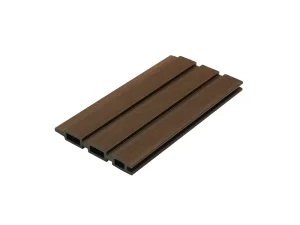
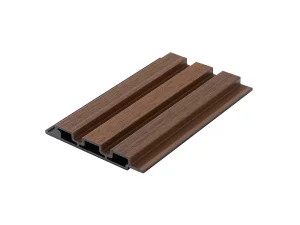
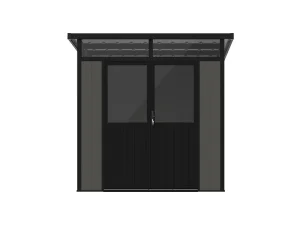
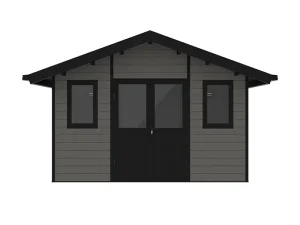
Complete line of low-maintenance exterior wall cladding, weather-tight modular garden sheds, and poolside composite decking boards ready for high-volume export packaging.
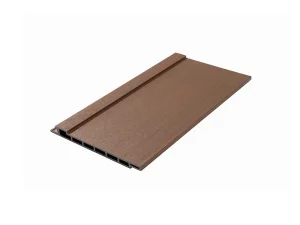
Partnering with Forestar: Commercial Procurement Protocol
We maintain dedicated engineering and logistics teams to support project tenders, volume wholesaling, and private label development. Learn more about our technical resources and support programs below.
Architectural Sample Dispatch
Order full-profile sample boxes including co-extruded decking planks, cladding cross-sections, and fasteners to evaluate textures, structural density, and surface temperatures under local sunlight before placing a container order. Request Architectural Sample Kit →
Technical Catalogs & BIM Data
Access our complete product catalog, complete with mechanical load span tables, CAD profile drawings, and material safety data sheets (MSDS) to streamline architectural planning and municipal submittals. Download Master Product Catalog →
Global Distribution Network
Forestar composite outdoor building solutions are exported to distributors, building supply centers, and contractors in over 45 countries across North America, Europe, Australia, and South America. Explore International Distribution →
Factory Audits & Direct Consultation
Arrange an in-person audit at our manufacturing campus in Xuancheng, Anhui, or schedule a live video conference with our engineering team to review production line capabilities, custom colors, and container scheduling. Contact Manufacturing Engineering →