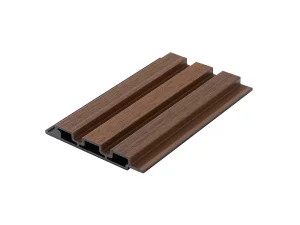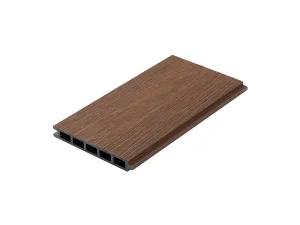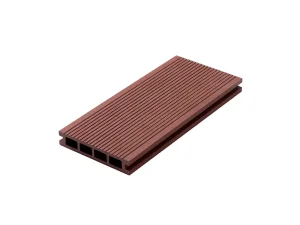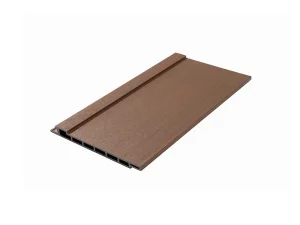
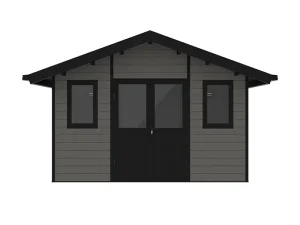
Primary Portfolio Catalog
Featured Industrial Decking, Garden Structures & Cladding Systems
Browse factory-direct architectural profiles engineered for high-impact durability, weather resilience, and structural integrity across residential and commercial deployments.
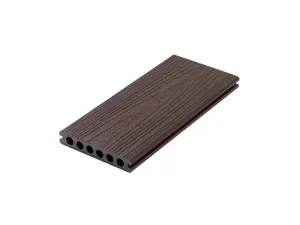
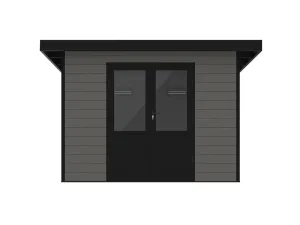
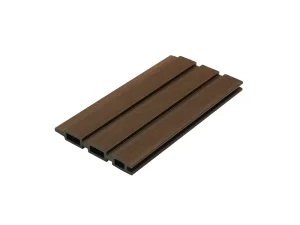
Macro Industry Evolution
Global Trends Redefining Deck Materials & Polymers
Modern infrastructure design necessitates high-durability composites over virgin lumber. Explore the technological and regulatory shifts accelerating WPC adoption across tier-1 building markets.
Life-Cycle Cost Efficiency
Commercial specifiers are rapidly shifting capital expenditure priorities. Composite decking eliminates bi-annual chemical stripping, staining, and sealing routines, delivering an estimated 48% total cost-of-ownership advantage over treated softwood across a 15-year horizon.
- Zero paint or preservative costs
- Extended asset lifecycle guarantees
Co-Extrusion Shielding
Second-generation capped composites leverage high-density polyethylene (HDPE) or ionomer shielding that encapsulates the internal core across a continuous 360-degree perimeter, effectively eliminating the primary historical failure modes: surface mold, moisture swell, and food staining.
- Impervious to wine, oils, and grease
- Hydrophobic core barriers
Thermal & UV Mitigation
Advanced mineral core formulations and infrared-reflective pigment compositions ensure surface foot temperatures remain stable under high-heat solar exposure, protecting both residential bare-foot traffic and expansive hotel pool decking installations from heat buildup and thermal warp.
- IR-reflective core compounds
- Delta E < 3 color fastness
Circular Economy & ESG
Commercial developers face stringent LEED, BREEAM, and ESG mandates. High-performance composite boards repurpose post-industrial reclaimed wood fibers and recycled consumer polymers (up to 90%), preventing deforestation while lowering the cradle-to-gate carbon footprint.
- FSC and PEFC compliance options
- LEED point contribution
2008
Established Heritage
17+ Years Continuous Innovation
90%
Max Recycled Content
Sustainable Core Formulation
45+
Export Destinations
Global Compliance & Standards
1M+
Global Installations
Zero Catastrophic Core Failures
Procurement Intelligence
What Enterprise Buyers Demand in Modern Deck Materials
Global importers, large-scale DIY chains, and commercial contractors prioritize supply reliability, batch-to-batch color stability, and certified load-bearing parameters.
Consistent Extrusion Tolerances
Discrepancies in profile thickness or tongue-and-groove alignments disrupt high-speed installation schedules. Advanced automated extrusion calibrations maintain dimensional tolerances within ±0.5mm, ensuring seamless locking clips and perfectly planar decking planes across multi-thousand-square-meter layouts.
Standardized Test Certification
Bulk purchasers require comprehensive technical compliance verified by third-party testing laboratories (such as SGS and Intertek). Key certification domains include ASTM E84 / EN 13501-1 Class B Fire Behavior, DIN 51130 R11 Slip Resistance, and ASTM D7032 flexural strength thresholds.
Consolidated Supply Multi-SKU Mixed Containers
Minimizing overseas warehousing carrying costs requires responsive freight consolidation. Factory partners must support consolidated maritime containers combining matched composite decking boards, hidden clip kits, exterior wall cladding, and pre-packaged garden sheds within single shipments.
Empirical Comparison
Engineered Composite vs. Traditional Deck Materials
Evaluating structural resilience, maintenance inputs, slip ratings, and long-term weathering under real-world exposure conditions.
| Evaluation Parameter | High-Performance Co-Extruded WPC | Pressure-Treated Pine | Tropical Hardwood (Ipe / Teak) | Hollow Polypropylene Tiles |
|---|---|---|---|---|
| Annual Maintenance Needed | None (Water & Mild Soap Only) | Stripping, Chemical Stain, Sealer | Periodic Oil Treatment | Frequent Pressure Wash |
| Moisture Absorption Rate | < 0.5% (Hydrophobic Capped) | 15% – 25% (High Splintering) | 4% – 8% (Dense But Porous) | Near Zero (Thermal Brittleness) |
| Slip Resistance Coefficient | R11 - R12 Wet/Dry Rated | R9 (Slick When Algae Develops) | R10 (Variable Grain Hazard) | R9 (Prone to Hydroplaning) |
| Termite & Rot Vulnerability | Complete Biological Immunity | High Rot Hazard Post-Chemical Leaching | Natural Resistance (Depleting) | Immune (Prone to UV Degradation) |
| Deforestation / Carbon Impact | Up to 90% Upcycled Raw Material | Monoculture Plantation Impact | Severe Tropical Rainforest Depletion | 100% Virgin Hydrocarbon Base |
Application Engineering
Macro Industry Solutions Across Challenging Environments
Custom formulations engineered to resolve extreme micro-climate issues from saltwater marine corridors to freeze-thaw sub-arctic zones.
Coastal & Marine Boardwalks
Continuous salt fog, marine splash zones, and high pedestrian traffic rapidly corrode timber fasteners and soften wooden fibers. Our specialized polymer formulations resist chloride pitting, zero-swell in 100% relative humidity, and utilize 316-grade stainless hidden clamping systems for public piers and marinas.
Sub-Zero & High-Snow Loads
Extreme freeze-thaw cycles cause trapped internal moisture in standard timber to expand, generating micro-fissures and catastrophic board failure. Our co-extruded composite garden sheds and deck boards are tested down to -40°C, maintaining structural flexural modulus and preventing brittle shear.
Commercial Hospitality & Rooftops
Rooftop terraces and luxury hospitality verandas face strict dead-load limitations and fire-code guidelines. Engineered lightweight cellular profiles provide up to 30% dead-load weight savings over dense tropical woods while maintaining high concentrated point load safety factors.
Operational Assurance
Localized Compliance & Global Supply Assurance
Ensuring flawless regulatory clearance and field longevity through rigorous international quality testing protocols and supply chain governance.
CE & REACH Compliance
Full conformance with the European Construction Products Regulation (CPR). Raw polymer chains and pigments are systematically screened for SVHC substances under EU REACH standards.
ASTM Mechanical Audits
Continuous testing for ASTM D7032 performance under concentrated static loads, creep recovery, and thermal coefficient expansion ensures full approval across North American municipal building inspectors.
Anti-Fungal Bio-Inhibition
Internal blend profiles incorporate broad-spectrum bio-inhibitors preventing fungal hyphae root establishment and dry-rot degradation in high-humidity equatorial rainforest climates.
Batch-Level Traceability
Every extrusion run carries automated barcode and laser lot coding, tying physical boards to their specific raw resin lot, extrusion line temperature telemetry, and 24-hour test retention samples.
Future Horizon
R&D Roadmap: Next-Gen Composite Horizons
Anticipating the next decade of exterior material science through continuous investment in nano-composite chemistry and sustainable matrix development.
Nano-Ceramic Scratch Resistance
Phase 1 development integrates inorganic ceramic nanoparticles into the external capping matrix. This delivers a surface scratch resistance exceeding 40N under Rockwell testing, making decks practically impervious to heavy outdoor metal furniture drags, large pet claws, and commercial footfall abrasion.
Deep Bio-Based Circular Monomers
Developing 100% bio-based binding resins derived from agricultural byproduct oils to completely substitute petrochemical polymers. This innovation will reduce embedded cradle-to-gate carbon emissions by an additional 42% while retaining high tensile stability and thermal resistance.
Integrated Photovoltaic Pathways
Evaluating prototype structural deck materials featuring flush-embedded photovoltaic pathways capable of powering ambient LED balustrades, patio lighting systems, and external low-voltage perimeter automation directly from walking surfaces without visible cabling.
Architectural Inquiry
Frequently Asked Questions: Engineering & Sourcing
Technical clarity for commercial developers, structural engineers, and import procurement managers.
What is the typical expansion gap required between composite deck boards?
Thermal linear expansion in composite materials averages approximately 1.5mm to 2.0mm per linear meter under a 30°C temperature differential. We recommend a standardized side-to-side gap of 4-6mm (governed by our hidden clip spacing) and butt-joint end gaps of 3-5mm depending on ambient air temperatures at the time of installation.
Can composite decking be installed directly on flat concrete surfaces?
Direct contact with concrete or ground surfaces is strictly prohibited. An elevated substructure of aluminum, steel, or composite joists (minimum height 30mm-50mm) is mandatory to ensure unimpeded air circulation and rapid water runoff, preventing hydrostatic pressure buildup beneath the deck.
How does co-extruded capped composite perform under persistent chlorinated pool water?
Our co-extrusion technology creates an impenetrable barrier against chlorine, salt ions, and water-treatment chemicals. Unlike timber, which leaches tannins and suffers cell collapse in pool settings, co-extruded surfaces resist chemical discoloration and preserve wet slip ratings up to DIN 51130 R11 standards.
What joist span spacing is recommended for commercial load requirements?
For standard residential applications perpendicular to joists, we recommend 400mm on-center spacing. For commercial traffic, public parks, or diagonal board installations (45 degrees), joist spacing should be tightened to 300mm on-center to eliminate any perception of flexure under concentrated point loads.
Extended Sourcing Selection
Specialized Cladding, Anti-Slip Boards & Architectural Wall Siding
Expand your sourcing catalog with precision-grooved slip-resistant deck boards, modern slat weave cladding, and fully matched facade solutions.