
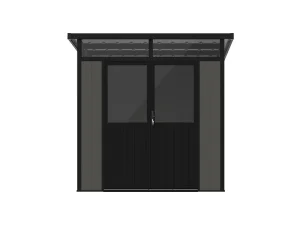
High-Quality China Suppliers MiniStar WPC Outdoor Storage Shed with Lockable Door - Durable Factory-Direct Garden Storage Solution Manufacturers, Factory
View Specifications
Precision-Engineered WPC Systems, Industry 4.0 Co-Extrusion Technology, and Resilient Global Supply Solutions for Commercial and Residential Outdoor Architecture.
Streamlined container consolidation covering anti-slip co-extruded decking, structural garden units, and architecturally paired enclosure panels.
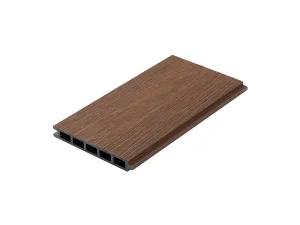
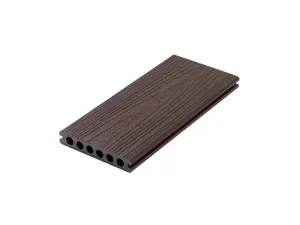
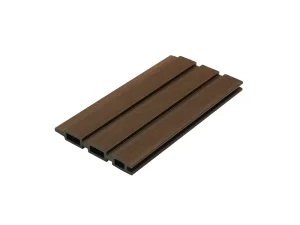
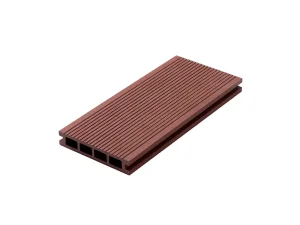
An empirical evaluation of polymer advancements, life-cycle carbon assessment, and the replacement curve of traditional pressure-treated timber.
Global architectural frameworks, including LEED v4.1 and BREEAM, have accelerated the displacement of tropical hardwoods. Modern wood-plastic composites leverage up to 90% reclaimed timber fibers and post-consumer polyethylene, transforming agricultural and industrial byproduct streams into structurally certified, carbon-sequestering building envelopes that eliminate deforestation pressures.
Early-generation composites suffered from surface chalking and thermal expansion differentials. Forestar's 360-degree cross-linked polyolefin protective capping completely encapsulates the composite core, preventing hydrostatic pressure buildup, molecular photodegradation, oil staining, and microbial mildew colonization under harsh oceanic or humid tropical microclimates.
While natural timber carries lower initial material procurement costs, recurrent bi-annual staining, chemical preservatives, anti-fungal treatments, and eventual splinter remediation double ownership costs over 7 years. Capped composite outdoor systems provide an asymptotic maintenance curve, requiring only neutral aqueous washdowns while retaining original shear strength and color saturation.
| Performance Parameter | Forestar Capped Co-Extruded WPC | Traditional Uncapped WPC | Pressure-Treated Pine | Balau / Ipe Hardwood |
|---|---|---|---|---|
| Water Absorption (24h immersion) | < 0.5% (Impermeable) | 1.8% – 3.2% | 18% – 28% | 8% – 12% |
| Modulus of Rupture (MOR) | 38.4 MPa (High Structural Load) | 26.1 MPa | 22.5 MPa | 45.0 MPa |
| UV Color Fastness (Delta E @ 3000h Xenon) | Delta E < 3.0 (Imperceptible Shift) | Delta E > 8.5 (Faded) | Severe Silvering / Graying | Oxidizes to Charcoal Gray |
| Splintering & Surface Fissuring | Zero Risk Over Operational Lifespan | Low Risk | High Risk (Severe checks) | Moderate to High Risk |
| Chemical Treatment & Sealing | None Required (Washdown only) | Surface sealing optional | Mandatory Bi-Annual Chemical Seal | Annual Hardwood Oiling |
Operated by Anhui Fumeida New Material Technology Co., Ltd. in Xuancheng, Anhui, our facility combines automated twin-screw compounding with strict batch traceability.
Over a decade and a half of focused polymer synthesis, tooling engineering, and composite extrusion optimization servicing over 45 destination economies.
Proprietary fiber refining and de-inking procedures converting post-industrial timber scrap and recycled HDPE into high-density composite matrixes.
Exhaustive logistics infrastructure engineered for swift freight handling through Shanghai and Ningbo maritime hubs with zero consignment delays.
Continuous laser caliper dimensional control, real-time temperature rheology tracking, and automated flexural stress batch documentation.
Forestar composite formulas are thermally balanced to thrive across divergent planetary temperature and moisture spectra.
Tested in projects across Helsinki, Finland and Alpine Austria. Our closed-cell molecular density eliminates microscopic water ingress. When external temperatures fluctuate rapidly across the freezing point, internal hydrostatic expansion is eliminated, preventing spalling, structural delamination, and embrittlement down to -40°C.
Deployed across Dallas, Texas, Houston, and the Middle East. Featuring proprietary inorganic chromophores and hindered amine light stabilizers (HALS). The exterior shield mitigates radiant infrared heat buildup, maintaining surface walking comfort under high solar irradiances while resisting thermal degradation up to +70°C.
Specified for waterfront promenades and hospitality decks across Medellín, Colombia and coastal resorts worldwide. The polymer matrix remains completely impervious to salt mist crystallization, chlorine exposure, dynamic rot, and wood-boring marine organisms, retaining complete structural integrity without chemical biocide leaching.
From digital colorimetry mapping to customs clearing, our logistics protocols minimize overseas lead times and safeguard margins for tier-1 distributors.
Initial analysis of regional building code compliances, structural load demands (dead/live loads), joist span recommendations, and bespoke co-extrusion die creation for custom architectural profiles.
Rapid dispatch of calibrated material samples. Buyers verify color values, deep woodgrain embossing patterns, and slip resistance under localized lighting and environmental conditions.
Automated manufacturing runs with continuous optical density validation, MOR/MOE tensile checks, and third-party laboratory verification (SGS, CE, FSC, REACH, ISO 9001).
Moisture-barrier wrapping, heavy-duty edge corner guards, fumigated palletized stacking, and mixed-profile container optimization spanning decking, cladding, fences, and storage sheds.
Preserving structural longevity and validating commercial warranties through rigorous adherence to thermodynamic expansion tolerances.
Residential joist centers must never exceed 400mm (16 inches) center-to-center. For heavy commercial applications, boardwalks, or 45-degree diagonal laying patterns, reduce spans to 300mm (12 inches). Board cantilevers extending unsupported over edge joists must be capped at 25mm to avoid localized shear deformation.
Proper airflow underpins long-term performance. Never install composite decking directly upon flat concrete or bare earth without a minimum 50mm elevation break. A continuous unobstructed perimeter air intake allows convection currents to displace subsurface humidity and equalize temperature gradients.
Because composite expands longitudinally with heat, butt-joint spacing must reflect ambient installation temperatures. Using Forestar hidden austenitic stainless-steel locking clips ensures a default 5mm lateral gap while allowing free linear expansion without board crowning or screw shear.
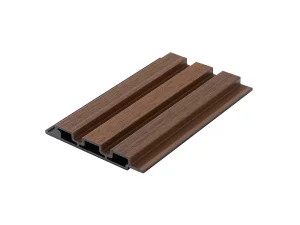
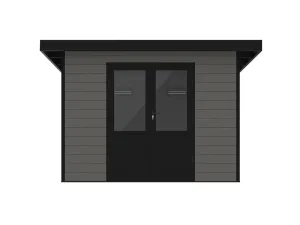
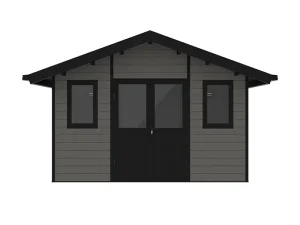
Discover our comprehensive collection of color-matched architectural elements engineered to deliver long-term outdoor visual harmony.
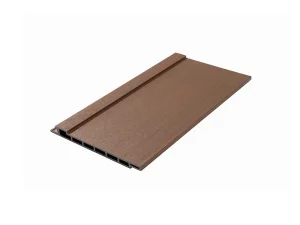
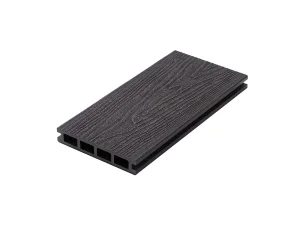
Authoritative answers on material composition, testing certifications, installation methods, and global shipping logistics.
Forestar composite outdoor flooring is manufactured using a dense biocomposite blend of approximately 60% reclaimed natural wood fiber, 30% recycled high-density polyethylene (HDPE), and 10% performance additives including UV stabilizers, coupling agents, lubricants, and inorganic pigments. Our TerraShield and TimberFlow series utilize a co-extruded 360-degree cross-linked polyolefin protective capping that completely seals the core against moisture, scratching, and oxidation.
Unlike natural timber, which expands laterally across the grain via moisture absorption, composite materials expand and contract longitudinally along the extrusion vector due to temperature shifts. The linear thermal expansion coefficient for our profiles is approximately 3.5 x 10^-5 m/m/°C. By implementing our hidden clip systems and following temperature-specific gap calculation charts during installation, boards maintain flawless alignment without binding or warping.
Every commercial consignment is audited against rigorous international standards. Forestar maintains valid conformity reports for SGS, CE EN 15534 standards for composite decking, fire rating classification (EN 13501-1 Class Bfl-s1), pendulum slip resistance (BS 7976-2 / AS 4586 Class P4/P5), heavy metal screening under REACH (EC 1907/2006), and FSC chain-of-custody raw material traceability.
Yes. Our integrated production facilities in Xuancheng, Anhui allow unified procurement across all product groups. Importers can consolidate deck boards, wall cladding systems, composite fence panels, and flat-packed modular garden storage sheds in a single 40ft High Cube container, optimizing ocean freight economics and inventory management.
Custom architectural sample kits featuring exact colors, surface textures, and accessory fixings are typically dispatched via express air courier within 48 to 72 hours. Standard 20GP or 40HC container orders have an average manufacturing lead time of 14 to 21 calendar days from technical profile sign-off, supported by real-time digital batch tracking.
Our facility uses automated gravimetric color dosers and spectrophotometer calibration systems. Polymer pellets and mineral masterbatches are combined under closed-loop thermal monitoring, ensuring batch-to-batch visual variance stays strictly within Delta E < 0.8. This allows distributors to fulfill phased expansion projects without noticeable shade deviations.