
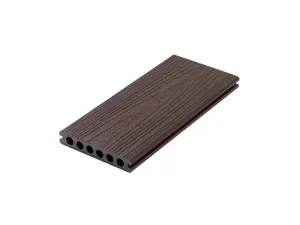
Primary Lineup
High-Performance Composite Profiles & Outdoor Systems
Industrial-scale production runs tested for high flexural stability, zero rot, slip-proof ergonomics, and extreme weather resilience in over 45 international market jurisdictions.
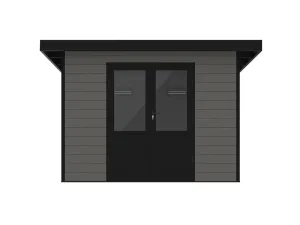
CeilingStar Premium Outdoor Storage Tool & Bike Shed with Lock
View Specifications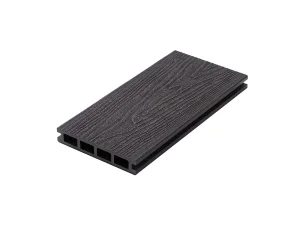
Waterproof UV Resistant Poolside Composite Decking - Eclipse Grain
View Specifications
Factory-Direct Outdoor Storage Tool & Bike Shed With Lock System
View Specifications
EclipseGrain Waterproof UV-Resistant Composite Decking For Poolside
View Specifications
TerraShield Durable Outdoor Wood-Plastic Composite Decking Board
View Specifications
UV-Resistant Pool Decking Board - Eclipse Architectural Style
View Specifications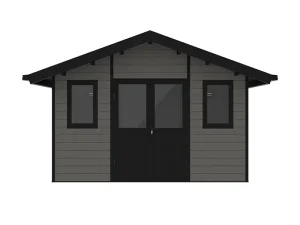
Heavy Snow Load Rated Waterproof Backyard WPC Garden Shed Kit
View Specifications2008+
Operational Manufacturing History
90%
Circular Recycled Polymer Content
45+
Tier-1 Export Destination Jurisdictions
1M+
Square Meters Deployed Worldwide
Industrial Whitepaper
Material Science & Engineering Architecture Behind Modern WPC
The global exterior decking landscape has shifted from basic uncapped composites to advanced co-extruded polymers that balance structural elasticity with thermodynamic resistance.
360° Fully Capped Co-Extrusion
Our composite boards feature an impenetrable outer shield manufactured via synchronous dual-screw co-extrusion. This outer mantle seals the high-density reclaimed wood-polyethylene core against moisture intrusion, preventing subterranean mold bloom and organic rot indefinitely.
Infrared Reflective Cool-Touch
Utilizing proprietary pigment dispersions and crystalline nano-ceramic additives, Forestar boards reflect a major fraction of the infrared spectrum (700nm–2500nm). This reduces thermal retention by up to 22% compared to standard dark timber composites under direct equatorial solar irradiance.
Dynamic Stress Dispersion
Engineered hollow-core profiles and optimized fluted matrices achieve high strength-to-weight ratios without sacrificing point-load integrity. Our boards comply with EN 15534 structural deflections under load, maintaining joist spacing spans up to 400mm center-to-center.
Enterprise Procurement Framework
Localization Support, Regulatory Compliance & Supply Chain Resiliency
Navigating global building codes and supply chain turbulence requires more than standard trade services. Our manufacturing infrastructure aligns with strict international import frameworks.
Compliance Certifications
Turnkey compliance documentation verified by third-party inspection firms (SGS, Intertek) to ensure zero custom delays.
- CE Mark (EN 15534-1/-4): Flexural resistance, mechanical creep, impact resistance.
- Fire Retardancy: Class Bfl-s1 compliance for multi-family commercial developments.
- Slip Testing: DIN 51130 R11 / BS 7976-2 PTV >36 under wet and barefoot conditions.
- Environmental EPD: Formal Environmental Product Declarations for green LEED points.
Localized Climatological Profiles
Profiles tailored to specific climatic variations and national construction requirements.
- Nordic & Alpine Regions: Accelerated -40°C freeze-thaw cycle testing; zero brittle cracking.
- Equatorial & Desert Regions: Extreme UV weathering chambers (QUV 3000h ΔE < 2.5).
- Coastal Environments: Salt-fog resistance ensuring complete anti-corrosion clip systems.
- High-Humidity Tropics: Fungal degradation rate: 0 rating (ASTM D1413).
Chinese Factory Supply Logistics
Capitalizing on complete upstream raw-material integration in Xuancheng, Anhui, China.
- Consolidation Capabilities: Mix decking, fencing, wall panels, and sheds into one 40HQ container.
- Private Label & Packaging: Barcoding, retail-ready protective wraps, and customized cartons.
- Automated Precision Sizing: Laser-guided length cutting minimizing job-site waste for contractors.
- Predictable Lead Times: Large output capacity guaranteeing predictable container dispatches.
Market Evolution
Future Horizons: Emerging WPC Trends & Application Scenarios
The outdoor composite industry is shifting rapidly. Forward-thinking distributors align their portfolios with upcoming trends to safeguard their long-term supply margin.
Digital 3D Synchronization
Moving past standard repeating patterns, modern co-extrusion incorporates synchronized random multi-tonal wood streaking that mimics the visual nuance of natural hardwoods like Teak, Ipe, and Walnut without the deforestation footprint.
Systemic Exterior Modularity
Modern commercial specifiers demand integrated architectural solutions. Rather than isolated decking, current projects require continuous aesthetic lines that transition smoothly from composite sub-framing to vertical wall louvers, boundary screening, and shed enclosures.
Low-Carbon Life Cycle Assessment
Global developers prioritize materials that help earn BREEAM and LEED credits. Utilizing closed-loop recycled wood chips and upcycled post-consumer polymers drops embodied carbon by more than 40% compared to virgin PVC and tropical timber imports.
Technical FAQ
Frequently Answered Specifications & Procurement Queries
Essential operational and technical insights designed for wholesale buyers, importers, specifiers, and landscape contracting procurement managers.
What core components define the high-density material composition of your composite products?
Our boards are engineered with an optimal blend consisting of approximately 55-60% reclaimed industrial hardwood fibers, 30-35% high-density polyethylene (HDPE) polymer resins, and 10% chemical functional additives (coupling agents, UV stabilizers, anti-fungal agents, and thermal process stabilizers). The surface layer utilizes an advanced, high-density polymer shell that protects against stains, ultraviolet degradation, and foot abrasions.
How does co-extrusion technology prevent delamination under extreme thermal cycling?
Unlike secondary lamination processes, Forestar’s co-extrusion occurs within a single die head at high molten pressures and temperatures. The composite core and the protective polymer cap fuse at the molecular level, creating a unified chemical bond. This eliminates interfacial shear stress failure and delamination risks, even during rapid thermal expansion and contraction cycles between -40°C and +65°C.
Can multi-product systems be combined in single-container procurement cycles?
Yes. A key logistical advantage of our Xuancheng facility is container consolidation. Global importers can mix composite decking profiles, matching fascia boards, exterior WPC wall cladding, privacy fencing kits, and prefabricated composite garden storage sheds in a single 40ft high-cube (HQ) shipping container, drastically reducing holding costs and minimum order risks.
What are the recommended substructure spans and joist-spacing standards for installations?
For residential installations laid perpendicular to joists, we recommend a maximum joist center-to-center spacing of 350mm to 400mm (14 to 16 inches). For commercial applications or diagonal herringbone board layouts, substructure spacing should be reduced to 300mm (12 inches) on-center. Continuous ventilation paths (minimum 50mm airflow gap beneath the framework) and perimeter expansion allowances must be preserved to satisfy warranty requirements.
How does your factory accommodate OEM custom branding and distributor private-label requests?
We offer turnkey private-label support. This includes customized extrusion profile mold engineering, bespoke surface embossing patterns, branded protective film applications, edge-printed tracking codes, and customized retail carton packaging featuring your distributor network’s logos and assembly guides.
Secondary Catalogue
Specialized Cladding, Fencing & High-Traffic Decking Solutions
Explore our specialized architectural systems engineered to deliver comprehensive structural reliability, fire safety, and aesthetic cohesion for full-scale property development.
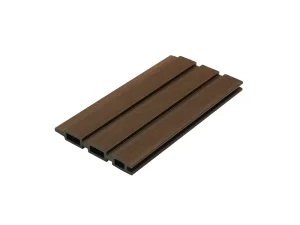
WPC Privacy Fencing with Concealed Hidden Fasteners Architecture
View Specifications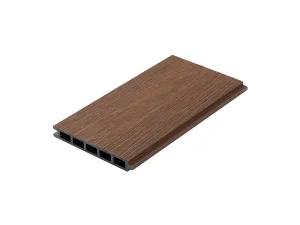
HorizonLine Low-Maintenance Wood-Plastic Composite Fence Panels
View Specifications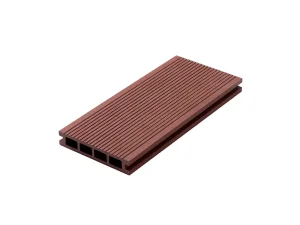
TimberFlow WPC Decking Board with High Traction Anti-Slip Surface
View Specifications
TerraShield Low-Maintenance Solid & Hollow WPC Decking Series
View Specifications
TerraShield Commercial Grade High-Stability Composite Decking
View Specifications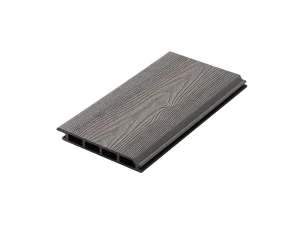
PlaneSleek WPC Exterior Wall Cladding Panels with UV Shielding
View Specifications
HorizonLine Engineered Weather-Resistant Composite Fence Profiles
View Specifications