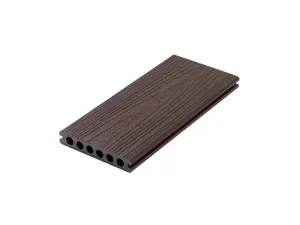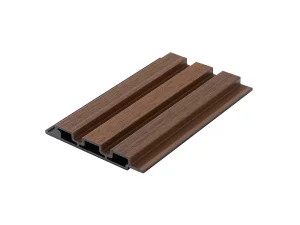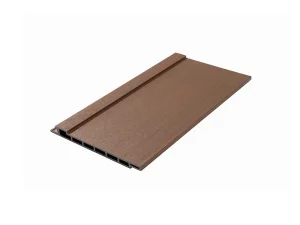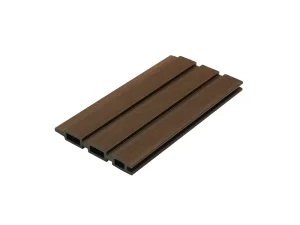
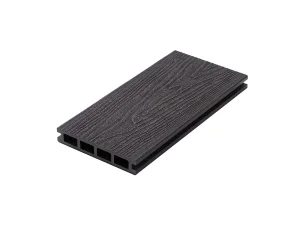
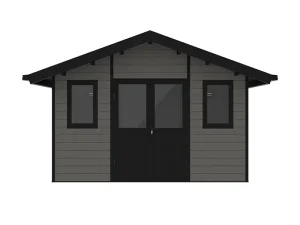
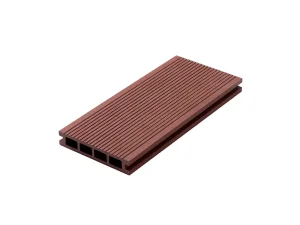
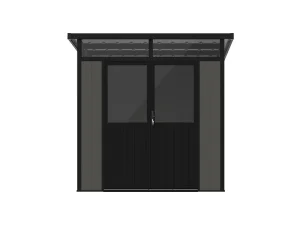
Featured Industrial & Commercial WPC Solutions
Direct OEM/ODM catalog selections verified for tensile resistance, UV shielding, and low water-absorption compliance across international infrastructure standards.
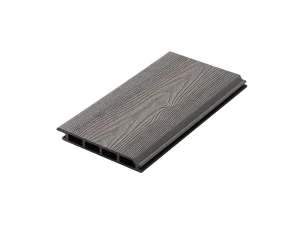
Global WPC Commercial & Industrial Status: Market Paradigm Shift
Wood-Plastic Composite (WPC) technology has evolved far beyond basic composite boards. In 2026 and beyond, commercial landscape developers, municipal project specifiers, and home improvement chains demand second- and third-generation co-extruded polymers that balance high tensile flexural modulus with absolute circularity.
Substitutive Demand Dynamics
Pressure-treated lumber and scarce tropical hardwoods (Teak, Ipe) suffer from rapid price inflation, deforestation bans, and continuous chemical resealing requirements. Engineered WPC plastic wood delivers a 25-year structural service life without requiring hazardous biocides or persistent volatile sealants.
Capstock Polymer Innovation
Forestar's co-extrusion technology fuses an impenetrable 360-degree modified polyethylene armor over a dense core. This eliminates surface micro-porosity, reducing swelling coefficients to under 0.2% during sustained freeze-thaw cycles and severe monsoon immersions.
LEED & ESG Material Compliance
With institutional real estate prioritizing Scope 3 emissions reductions, our formulations utilize up to 90% post-consumer HDPE and industrial reclaimed hardwood flour, qualifying large developments for points in LEED, BREEAM, and DGNB sustainability certifications.
China Factory Automation & Process Consistency Advantages
As the dedicated outdoor brand of Anhui Fumeida New Material Technology Co., Ltd. (Xuancheng, Anhui), Forestar operates at the nexus of high-precision twin-screw extrusion, chemical stability, and consolidated logistics.
Continuous Formulation
Fully automated gravimetric dosing balances polymer matrices, coupling agents, thermal antioxidants, and inorganic pigments to ensure color batch consistency across 50,000+ sqm orders.
High Throughput Velocity
Parallel multi-cavity extrusion tooling allows 24/7 extrusion lines to operate at high linear velocities without micro-tearing the protective capstock shell, drastically trimming lead times for distributors.
Rigorous QA Metrology
On-site laboratories verify flexural strain, pendulum skid resistance (PTV), boiling-water adhesion, and xenon-arc accelerated weathering chambers according to ASTM and EN benchmarks.
Port Proximity & Staging
Located adjacent to major Yangtze River delta shipping hubs, our automated container packing teams maximize volume utilization while ensuring seaworthy barrier packaging against salt spray.
| Performance Characteristic | Forestar Capped WPC | Uncapped First-Gen WPC | Treated Softwood Timber |
|---|---|---|---|
| Water Absorption (24h immersion) | < 0.35% (Hydrophobic cap) | 1.8% – 4.5% | 18% – 35% (Rapid saturation) |
| Surface Hardness & Scratch Resistance | Shore D > 72 (Cross-linked polymer) | Shore D 55 – 60 | Variable / Low (Dent prone) |
| UV Color Fastness (3000h Xenon) | ΔE ≤ 2.5 (High visual retention) | ΔE ≥ 6.0 (Noticeable fading) | Extreme graying / cellulose breakdown |
| Structural Upkeep Requirements | Zero chemical sealants or sanding | Periodic degreasing & brush scrubbing | Annual sanding, biocide and staining |
| Splintering & Rot Risk | Zero risk (Safe for barefoot transit) | Low risk | High risk (Fungal decay & fissures) |
Localized Application Scenarios: Engineered for Climate Extremes
Building materials must withstand intense environmental stresses. Forestar's WPC profiles are deployed in over 45 countries, customized to meet local thermal gradients and regulatory demands.
Arid & High-Solar Zones
(e.g., Dallas, USA / Middle East / Southern Spain)
Under sustained solar irradiation exceeding 1000 W/m², Forestar utilizes infra-red reflective pigments in its Eclipse Grain and PlaneSleek series to lower surface heat absorption by up to 15°C compared to conventional composites, preventing polymer thermal relaxation.
Tropical & High Humidity Areas
(e.g., Medellín, Colombia / Southeast Asia / Florida)
Constant 90%+ relative humidity and micro-fungal attack render untreated timbers unusable within seasons. Forestar's complete molecular encapsulation prevents moisture absorption and mold growth, making it ideal for poolside resort boardwalks and dock walkways.
Sub-Zero Freeze-Thaw Environments
(e.g., Helsinki, Finland / Vienna, Austria / Canada)
Thermal shock can cause porous composites to delaminate when absorbed moisture turns to ice. Forestar profiles withstand hundreds of cyclical -40°C to +30°C thermal transitions without developing micro-cracks or structural failure.
Technological Horizons: What is Shaping the Future of WPC?
The next decade of composite material development hinges on three transformative pillars: advanced mineral-polymer hybrids, precision hidden fastening architectures, and multi-system modular consolidation.
Modular Outdoor Architecture
The market is shifting away from isolated product categories toward integrated outdoor living systems. Buyers increasingly source matching deck boards, fluted exterior siding, privacy louvers, and flat-pack garden storage sheds from a single manufacturer to ensure matched colors and uniform weathering performance.
Enhanced Flame-Retardant Matrices
Driven by tighter fire-safety codes in Europe and North America (such as EN 13501-1 Class B-s1,d0 and California WUI standards), modern WPC formulations integrate non-halogenated intumescent mineral fillers that form an insulating char layer under thermal attack.
Digital Passports & Recycled Traceability
Cross-border procurement teams are beginning to require clear proof of recycled material origins. Forestar's clean feedstock systems track batches from recycled polymer suppliers to the final extruded plank, helping importers breeze through customs verifications.
What Enterprise Buyers Must Audit Before Placing a Bulk WPC Order
For building product distributors, big-box chains, and commercial contractors, sourcing composite building materials requires careful verification across several critical technical checkpoints:
Polymer-to-Fiber Ratio
Check that the formulation maintains an optimal 60:30:10 ratio (wood fiber to high-density polyethylene to additives). Excessive wood dust causes brittleness, while excessive polymer leads to expansion creep.
Linear Thermal Expansion
Review thermal mechanical analysis (TMA) reports. Quality co-extruded boards maintain a thermal expansion coefficient under ≤ 40 × 10⁻⁶ K⁻¹, preventing buckled boards and loose fasteners.
Mixed Container Consolidation
Verify whether the supplier can combine multiple product lines within a single 40ft high cube (HQ) container. Forestar allows importers to mix decking, siding, and sheds to maintain healthy inventory turns.
Third-Party Accreditations
Ensure current laboratory test certs (SGS, Intertek) are available for critical metrics: ASTM D7032 (structural performance), EN 13501-1 (fire behavior), and ISO 4892-2 (UV weathering resistance).
Frequently Asked Technical & Procurement Questions
Clear engineering answers addressing the concerns of importers, civil specifiers, and landscape architects sourcing WPC products.
What raw materials make up Forestar WPC plastic wood products?
Forestar composite material combines up to 90% recycled content: reclaimed hardwood wood flour (60%), recycled high-density polyethylene (30% HDPE from consumer and industrial streams), and 10% functional additives including thermal stabilizers, UV blockers, and coupling agents. In capped profiles, a protective polymeric shield is co-extruded to lock out moisture and organic stains.
How does co-extrusion capped WPC differ from first-generation composite?
First-generation composites are uncapped, leaving wood fibers exposed to ambient humidity, which can lead to mold stains, grease absorption, and gradual UV fading. Co-extruded (capped) WPC adds an impermeable 360-degree high-polymer shell, sealing the core against liquid ingress, surface scuffs, and chemical degradation.
Can wholesale importers request custom board lengths, colors, and embossings?
Yes. We regularly work with overseas trade partners on custom board lengths (from 2.2m to 5.8m to match local container and shipping limits), tailor-made color palettes (from Scandinavian ash greys to rich walnut tones), and specialized surface textures such as deep woodgrain embossing or linear fluted finishes.
What substructure joist spacing is recommended for commercial decks?
For standard residential installations using hollow or solid boards, joist centers should not exceed 350mm to 400mm. For commercial installations subject to heavier rolling loads or diagonal board layouts, we recommend spacing joists at 300mm on-center to ensure minimal deflection and keep deflection limits well within EN 15534 standards.
How does Forestar handle quality control and export documentation?
Every production run goes through rigorous in-house testing: inline laser thickness calipers, flexural rupture strength checks, density gradients, and boil-swell evaluations. Outgoing export orders include comprehensive documentation: Certificate of Origin, test reports, packing slips, bill of lading, and custom product labels with barcoding.
Are physical samples provided before placing a full container order?
Yes. We provide sample boxes for architectural firms, distributors, and procurement teams. Evaluating physical samples in your local climate allows you to check surface slip-resistance, color matching under direct sunlight, and joint fit with our hidden clip hardware before committing to full production.
Architectural Cladding, Decking & Privacy Wall Portfolio
Explore our specialized commercial-grade exterior wall siding, hidden fastener privacy fences, and co-extruded composite decking profiles ready for worldwide export delivery.