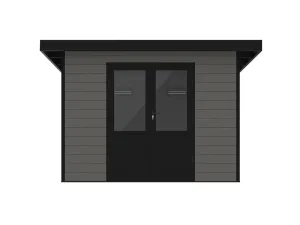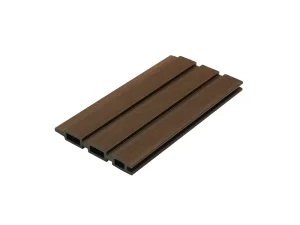
Featured Composite Systems & Fencing Profiles (Batch A)
Direct from Anhui Fumeida New Material Technology Co., Ltd. (Forestar), explore our high-durability composite fencing, decking, and exterior building systems precision-engineered for commercial developers, distributors, and demanding residential perimeter applications.
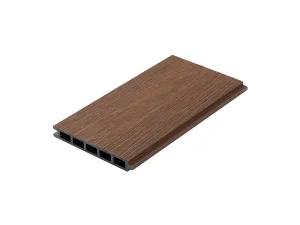
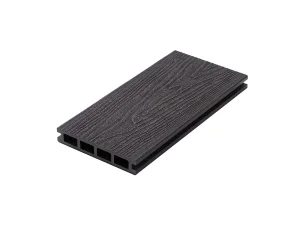
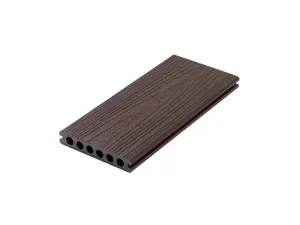
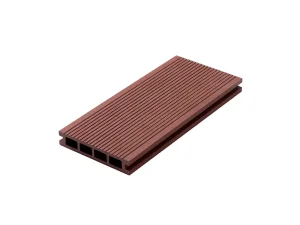
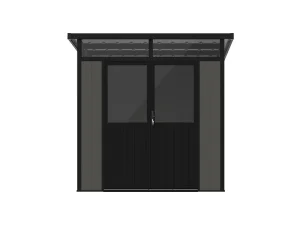
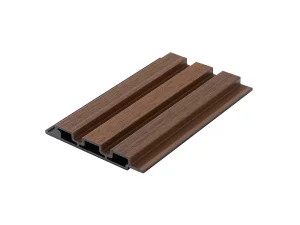
Deconstructing "WPC Fence Near Me": The Factory-Direct Paradigm Shift
When landscape architects, civil contractors, and volume distributors type "best WPC fence near me" into modern search engines, their underlying search intent goes far beyond locating a regional big-box retail shelf. Commercial stakeholders seek a confluence of hyper-local inventory availability, rigorous engineering conformance, and direct-from-source factory economics.
The historical disconnect in the fencing trade stemmed from an agonizing trade-off: local stocking distributors offered rapid delivery but at a 40% to 70% retail markup with limited customization; conversely, offshore sourcing traditionally carried communication friction and quality inconsistency. Today, Forestar (operating under Anhui Fumeida New Material Technology Co., Ltd. from our state-of-the-art industrial manufacturing hub in Xuancheng, Anhui, China) bridges this divide through an integrated supply-chain model. By combining full-spectrum OEM manufacturing with regional stocking logistics hubs and direct architectural consultation, we deliver "near me" agility backed by mega-factory scale.
Localized Microclimatic Engineering: Where "Near Me" Meets Material Science
No outdoor fence operates in a vacuum. A composite fence installed in the hyper-arid, high-UV deserts of Nevada or Phoenix requires radically different thermal stability formulations compared to a perimeter installation exposed to the sub-zero freeze-thaw cycles of Helsinki, or the high-humidity, marine-saline atmosphere of coastal Miami or Sydney. Forestar co-extruded WPC fences are engineered around five localized performance archetypes:
High-Wind & Hurricane Zones
Coastal corridors and open plains experience severe wind load stresses that snap conventional softwood pickets or buckle vinyl fencing. Forestar fencing integrates with custom high-tensile 6063-T6 architectural aluminum internal post inserts and interlocking tongue-and-groove profiles tested to withstand wind speeds exceeding 120 mph (Category 3 hurricane force), distributing lateral force uniformly across the structural framework.
Hyper-Solar & High-UV Regimes
In high solar radiation zones (UV Index 9-11+), traditional plastics embrittle and cedar turns patchy gray within one season. Forestar incorporates Hindered Amine Light Stabilizers (HALS) and inorganic nano-ceramic pigments within our Generation IV outer polymer cap. This molecular shield prevents polymer chain scission, preserving warm walnut, charcoal, and teak hues across 25+ year operational horizons.
Marine Saline & Pool Perimeters
Chlorine splashes and airborne sodium chloride corrode traditional wrought iron and rot timber footings. Forestar WPC boards feature an impermeable 360-degree modified HDPE shield with moisture absorption rates below 0.5% (ASTM D570 compliant). They are immune to brackish groundwater, fungal decay, and subterranean termite colonization.
Nordic Freeze-Thaw Resilience
Water intrusion trapped in wood pores freezes and expands, inducing micro-fractures and delamination. Our proprietary high-pressure fusion process completely encapsulates wood micro-fibers, ensuring stable thermal expansion coefficients (under 35 × 10⁻⁶ K⁻¹) through cyclical shifts from -40°C Nordic winters to +35°C summers.
Urban Acoustic Dampening Barriers
High-density multi-cavity composite fence profiles provide significant transmission loss benefits for urban edge environments adjacent to highways, light rail, and commercial zoning. The dense core composition (specific gravity >1.3 g/cm³) absorbs and reflects high-frequency noise pollution, creating tranquil residential enclaves.
Technology Roadmap: Next-Generation Co-Extrusion & Sustainable Chemistry
As a forward-leaning manufacturer, Forestar does not rely on outdated first-generation uncapped composite recipes. Our R&D team in Xuancheng continuously pushes the frontier of composite polymer science. Below is our verified technical performance roadmap compared against standard market benchmarks:
| Performance Parameter | Test Standard | Traditional Softwood Pickets | Standard PVC Fencing | Forestar Gen IV Capped WPC |
|---|---|---|---|---|
| Bending Strength (MOR) | EN 15534-1 / ASTM D790 | 18 - 25 MPa (Variable) | 35 - 45 MPa (Brittle in cold) | ≥ 38 MPa High Rigidity |
| Water Absorption (28-day soak) | ASTM D570 | 18% - 35% (Rot prone) | < 0.2% | ≤ 0.4% Impermeable |
| Linear Thermal Expansion | ISO 11359-2 | Anisotropic (Warps/twists) | ≥ 65 × 10⁻⁶ K⁻¹ | ≤ 32 × 10⁻⁶ K⁻¹ Stable |
| Fire Reaction Classification | EN 13501-1 / ASTM E84 | Class D / Class III | Class B / Self-extinguishing | Class B-s1, d0 / Class A Option |
| UV Accelerated Aging (ΔE) | ASTM G154 (3,000 hrs) | Severe discoloration (ΔE > 12) | Yellowing / Chalking | ΔE ≤ 2.5 Color Stable |
| Recycled Component Ratio | ISO 14021 Verification | 0% (Virgin forest timber) | 10% - 20% (Petroleum-based) | Up to 90% Eco Verified |
Full-Surround Micro-Capping
Complete 360-degree encapsulation of core boards preventing moisture capillary action even inside the tongue-and-groove connection slots.
Infrared Cool-Touch Pigments
Selective NIR-reflective colorants mitigating summer surface heat build-up by up to 8°C compared to conventional dark composite boards.
Bio-Polymer Matrices
Incorporating second-generation agricultural crop binders with recycled post-consumer polyolefins for near-zero cradle-to-gate carbon footprints.
Smart Acoustic Cavities
Aerodynamically baffled internal extrusions designed to suppress sound waves across commercial highway and suburban transit perimeters.
China Supply Chain Resilience: Scale, Precision & Factory Efficiency
When commercial contractors search for a "WPC fence factory near me," they inevitably discover that local domestic fabrication capacity is often constrained by high labor costs, limited tooling configurations, and sluggish lead times. Forestar leverages China's world-leading industrial manufacturing ecosystem to provide undeniable quality, cost, and logistics advantages:
Vertical Polymer Compounding
Unlike small-scale assemblers that purchase third-party pre-mixed pellets, Forestar executes complete in-house compounding. We source refined agricultural wood fibers and recycled high-density polyolefins directly, formulating proprietary coupling agents, antioxidants, and UV absorbers to maintain exact batch-to-batch polymer integrity.
Multi-Line Extrusion Capacity
Our facility in Xuancheng houses automated parallel twin-screw extrusion lines operating under precise digital PID temperature feedback controls. This ensures consistent wall thicknesses, flawless panel interlocks, and elimination of internal residual stresses that cause bowing in longer fence runs.
One-Stop Container Consolidation
Importers and large contracting firms can mix high-performance composite fencing systems with matching composite decking, wall cladding panels, and modular garden sheds in a single 40ft High Cube container. This drastically cuts ocean freight costs per unit and simplifies local project site delivery.
ISO 9001 & In-Line Quality Assurance
Every production batch undergoes destructive mechanical shear testing, 24-hour boiling water immersion tests for swelling, and colorimetry checks under standard D65 illuminants. Our export documentation provides complete material traceability reports for architectural compliance files.
Global Multimodal Freight Corridors
Located with direct access to primary maritime terminals (Shanghai/Ningbo ports), Forestar coordinates streamlined customs documentation, sea-freight booking, and door-to-port or door-to-warehouse delivery with transparent tracking across international corridors.
Global Industrial Panorama: Market Dynamics Driving Composite Fencing
The outdoor living sector is witnessing a decisive structural shift away from pressure-treated lumber and brittle virgin PVC. Across the globe, environmental legislation, escalating timber treatment regulations, and consumer demand for zero-maintenance living are driving rapid WPC adoption:
North America (USA & Canada)
Spurred by aging suburban housing stock and aggressive timber price volatility, North American buyers are replacing traditional cedar and treated pine fences. Homeowners Associations (HOAs) are rapidly updating architectural guidelines to permit approved composite fencing due to its uniform visual appeal and resistance to wind, insect damage, and rot.
Europe & UK (DACH, Nordics, France)
Driven by stringent EU green building mandates and the EU Deforestation Regulation (EUDR), commercial contractors are actively disincentivized from specifying virgin timber. Forestar's certified high recycled-content formulations align directly with LEED, BREEAM, and DGNB building certification requirements.
Oceania (Australia & New Zealand)
With intense UV indices and strict bushfire management standards (AS 3959), standard timber fencing presents both a maintenance nightmare and a fire spread vector. High-performance co-extruded composite fencing offers thermal resistance, termite immunity, and modern horizontal aesthetic profiles favored by contemporary urban architects.
Localized Support, Structural Compliance & Engineering Certifications
True compliance means giving architects, developers, and municipal inspectors the exact engineering documentation required for project approval. Forestar supports all global procurement tiers with comprehensive testing dossiers and tailored field engineering support:
Code Compliance & Certifications
Our products maintain full third-party test reports validated by SGS and Intertek, covering CE marking (EN 15534), REACH heavy metal and VOC screening, FSC chain-of-custody for timber fiber, and flame propagation standards under ASTM E84.
Architectural CAD & BIM Libraries
We provide complete 2D DWG detail drawings, 3D BIM objects, and step-by-step structural framing guidelines for post anchoring, concrete pier footings, embedded steel stanchions, and expansion gap tables customized to regional temperature spans.
Last-Mile Regional Fulfillment
Partnering with regional distributor networks and authorized logistics hubs across primary metropolitan corridors, Forestar facilitates both full-container direct-to-port import programs and localized flatbed job-site drops for approved contract volumes.
Frequently Asked Questions: Sourcing & Specifying WPC Fences
Critical answers for project engineers, landscape contractors, and regional distributors evaluating factory-direct composite systems versus local distribution channels.
How does buying directly from a China WPC fence factory compare to sourcing from a local distributor near me?
What is the actual life expectancy of a Forestar co-extruded composite fence?
How are Forestar WPC fences anchored against severe wind loads and hurricanes?
Can I mix composite fence panels with decking and garden sheds in one order?
How do you handle thermal expansion and contraction during on-site installation?
What are the Minimum Order Quantities (MOQ) and production lead times?
Featured Composite Systems & Privacy Profiles (Batch B)
Complete your landscape architecture envelope with our modular storage structures, concealed fastener privacy fences, and architectural exterior cladding systems built to exceed global standards.