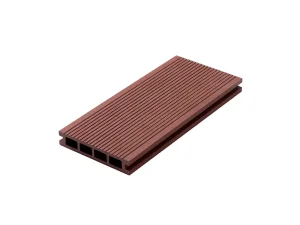
Engineered WPC Composite Systems & Structural Solutions
Heavy-duty exterior composites, modular weatherproof garden architecture, and fire-retardant engineered profiles ready for enterprise procurement.
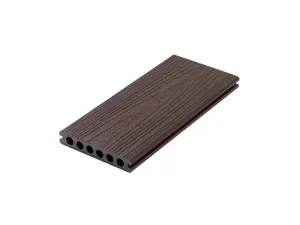
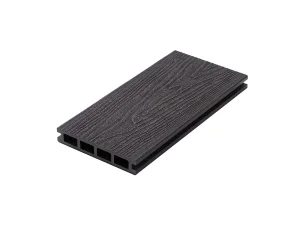
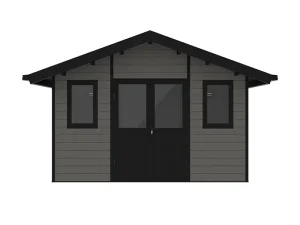
Strategic Manufacturing Advantages of China WPC Factories
China's composite industrial cluster in Anhui and Zhejiang represents over 65% of global high-performance polymer extrusion capacity, delivering unmatched efficiency, chemical stability, and economies of scale.
Monolithic Hollow & Solid Extrusion
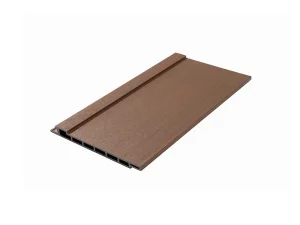
Advanced Chinese WPC door factories utilize multi-axis dual-screw extruders operating under high hydraulic pressure. This process consolidates fine wood flour and PVC/PE polymers into a solid, molecularly uniform door skin and structural frame with zero delamination risk.
Full Supply Chain Integration
By localizing raw polymer refining, bio-fiber drying, mold design, and surface vacuum-membrane presses within immediate industrial hubs, tier-one manufacturers reduce production cycles by 35% compared to fragmented western supply chains.
Strict Dimensional Stability (±0.5mm)
Unlike natural timber doors that warp under relative humidity swings, precision-controlled thermal cooling baths and automated CNC sizing stations ensure factory door leaves maintain squareness across extreme climate transitions (-30°C to +60°C).
Material Performance: WPC vs. Solid Timber vs. Hollow Core MDF
Rigorous lab testing parameters reveal why commercial specifiers and project engineers are transitioning to composite door systems for high-traffic environments.
| Evaluation Parameter | High-Spec Factory WPC Door | Solid Natural Hardwood | MDF / HDF Hollow Timber Door |
|---|---|---|---|
| Water Absorption (24h Immersion) | < 0.5% (Impermeable) | 8.0% - 15.0% (Risk of Swell) | > 25.0% (Delaminates) |
| Borer & Termite Vulnerability | 100% Resistant (Inorganic Core) | Requires Toxic Chemical Dip | Highly Susceptible |
| Formaldehyde Emissions | ENF Grade (<0.025 mg/m³) | Depends on adhesive/lacquer | E1 / E2 Grade Binder Emitting |
| Flame Retardancy (EN 13501-1) | Class B1-s1, d0 (Self-extinguishing) | Combustible (Class D) | Combustible (Class E) |
| Maintenance Cycle Over 15 Years | Zero Recoating Needed | Requires regular restaining | Requires regular repainting |
Engineered Systems Across Demanding Environments
Specially developed to solve chronic failure modes in moisture-heavy, sound-critical, and rigorous sanitation spaces.
Hospitality & Coastal Resorts
Resists continuous ambient salt spray, ocean humidity, and air conditioning condensation without peeling veneer, corroding internal locks, or swelling shut.
Healthcare & Cleanrooms
Seamless vacuum-laminated PVC surfaces tolerate aggressive chemical disinfectants, hypochlorite scrubbing, and steam sanitization without degradation.
Multi-Family & Social Housing
High impact resistance against blunt force minimizes landlord maintenance overheads, offering cost-effective durability across high-tenant turnaround schedules.
Subtropical & High-UV Climes
Formulated with specialized hindered amine light stabilizers (HALS) and inorganic pigments, protecting against thermal yellowing and embrittlement.
Navigating Global Sourcing: Supply Chain Optimization
How Tier-1 developers and distributors systematically audit, test, and containerize building solutions from Chinese facilities.
Avoiding Recycled Slag Contamination
Inferior suppliers dilute profiles with unregulated post-consumer plastic scrap, causing micro-voids and brittle breakages. Verified partner factories exclusively use virgin PVC resin or certified pre-consumer industrial feedstocks to preserve elastic modulus.
Coordinated Consolidation Strategy
By synchronizing door sets with composite wall paneling, perimeter fencing, and matching trims from a single manufacturer, project buyers bypass mismatched batch colors while fully optimizing 40ft High Cube container volumetric load capacity.
Certification & Compliance Files
Ensuring clear chain of custody documentation. Compliant factories provide comprehensive third-party physical properties reports, including ISO 9001 quality certificates, SGS fire test protocols, and REACH chemical safety clearances.
Frequently Asked Questions on WPC Door Supply
Expert analysis addressing critical technical, logistical, and architectural questions for enterprise procurement officers.
What precisely constitutes a high-grade WPC door manufactured in China?
Can WPC doors match traditional wooden doors in acoustic performance?
What are the lead times and container loading standards for international sea freight?
How does the factory control warping when shipping to varied climates?
Are custom surface finishes and private label logos supported for distributors?
Featured Industrial Outdoor Architecture Portfolio
Access our certified building systems engineered to complement modern residential landscapes and commercial developments.