
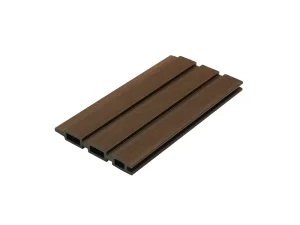
Engineered Composite Product Lines (Tier-1 Catalog)
Advanced exterior building solutions engineered under ISO 9001 and CE compliance for overseas commercial and civil architectural applications.
Best China Suppliers Factory: WPC Privacy Fencing for Modern Landscape Design
View Specifications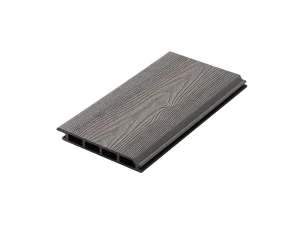
High-Quality China PlaneSleek WPC Exterior Cladding Panels UV Protection
View Specifications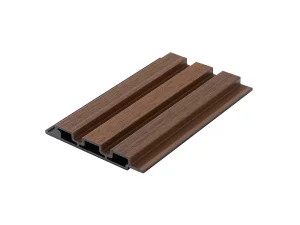
Best China Suppliers Factory CrestWall Wood Plastic Composite Wall Siding
View Specifications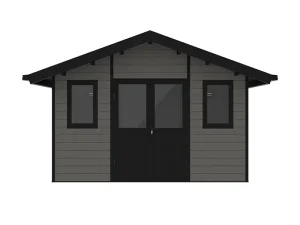
Heavy-Duty RidgeStar Waterproof Garden Shed - Heavy Snow Load Rated
View Specifications
High-Quality Factory WPC Privacy Fencing with Hidden Fasteners Defense
View Specifications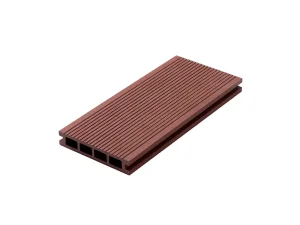
Best China TimberFlow WPC Decking Boards with Anti-Slip Surface
View Specifications
Best China Factory WPC Privacy Fencing for Modern Landscapes Defense
View SpecificationsGlobal WPC Decking Size Matrix & Structural Paradigms
Decoding cross-sectional geometry, moment of inertia, and linear thermal expansion coefficients across core commercial dimensions.
Standard Domestic: 138 × 23 mm
Optimized for suburban residential walkways, private gardens, and patio deck extensions. The lightweight hollow chamber reduces freight deadweight while maintaining mechanical integrity across 300–350 mm joist spans.
Heavy Commercial: 140 × 25 mm Solid
Designed for hyper-traffic public infrastructure, waterfront promenades, and hotel pool plazas. The solid cross-section yields maximum screw withdrawal resistance, minimal deflection under dynamic load, and peak impact resilience.
Wide Architectural: 150 × 21 mm
Favored by European and North American landscape architects targeting minimalist, continuous visual planes. Reduces visible fastener joint count by up to 12% across sprawling commercial installations.
| Profile Specification | Core Density (g/cm³) | Recommended Joist Span | Flexural Modulus (MOR) | Ideal Application Domain |
|---|---|---|---|---|
| 138 × 23 mm (Square Hollow) | 1.25 ± 0.05 | 300 mm c/c | ≥ 32 MPa | Residential verandas, garden terraces, balconies |
| 140 × 22 mm (Round Hollow) | 1.30 ± 0.04 | 350 mm c/c | ≥ 36 MPa | Resort walkways, light commercial boardwalks |
| 140 × 25 mm (Full Solid) | 1.38 ± 0.03 | 400–450 mm c/c | ≥ 40 MPa | Municipal boardwalks, marina docks, civic plazas |
| 150 × 21 mm (Engineered Capped) | 1.32 ± 0.05 | 350 mm c/c | ≥ 35 MPa | Commercial rooftop terraces, luxury hospitality |
China Advanced Manufacturing & Supply Chain Efficiencies
How state-of-the-art multi-screw co-extrusion clusters deliver economies of scale, strict batch consistency, and low lifecycle costs for global B2B procurement.
Aggregated Raw Material Ecosystem
Operating in primary manufacturing hubs like Anhui allows seamless procurement of pharmaceutical-grade recycled HDPE and refined hardwood micro-flour, driving raw material costs down by 18–24% compared to Western counterparts without compromising tensile matrix density.
Continuous Co-Extrusion Engineering
High-torque parallel twin-screw extruders operating continuously maintain precise profile thermal equilibrium. Automated gravimetric feeding units guarantee exact fiber-to-polymer distribution, yielding dimension tolerances within ±0.3 mm on cross sections.
Consolidated Mixed-Container Logistics
Chinese integrated manufacturing operations enable simultaneous loading of decking profiles, cladding boards, hidden clip systems, and aluminum substructure joists within single 40ft HQ ocean containers, drastically optimizing landed supply chain overheads.
Localized Climate Engineering & Application Scenarios
Real-world dimensional performance verified across extreme environmental stresses—from sub-zero Nordic frosts to high-UV equatorial exposures.
Nordic Freeze-Thaw Zones
Engineered hollow circular core boards installed in Helsinki and Oslo survive 50+ annual freeze-thaw cycles without internal micro-fractures, maintaining structural load ratings under heavy winter snow cover.
High UV Tropical Terraces
360-degree co-extruded capped boards deployed in Colombia and the Middle East reflect high radiant heat while proprietary organic pigments curb Delta-E color shift under continuous solar radiation.
Coastal Marina Platforms
Solid-core 140 × 25 mm profiles applied along Mediterranean and Caribbean boardwalks demonstrate zero vulnerability to saline corrosion, rot fungi, or marine wood-boring organisms.
Urban Commercial Rooftops
Ultra-low deadweight hollow profile installations on high-rise residential buildings in Vienna and New York comply with structural load restrictions while providing high fire resistance performance.
Industry Evolution: Material Science & Global Procurement Trends
Key technological disruptions shifting the composite landscape: Circular polymer lifecycles, functional additives, and institutional procurement demand.
Circular Economy & Up to 90% Recycled Matrices
Institutional carbon audits and LEED certifications dictate corporate tenders. Manufacturers are increasingly utilizing up to 90% post-industrial recycled plastics and FSC-certified reclaimed wood flour to drive structural circularity and shrink the embodied carbon footprint.
Micro-Foaming Structural Core Evolution
Third-generation cellular co-extrusion incorporates micro-foaming agents inside the composite nucleus. This technology reduces shipping weight by up to 20% while sustaining identical flexural stiffness, dramatically curbing international transport emissions.
Hidden Clamping & Rapid Assembly Systems
Global labor shortages demand optimized contractor efficiency. Modern WPC sizing architectures incorporate calibrated side-groove geometry tailored to one-click stainless steel fastener systems, accelerating installation times by over 35% compared to surface-face fastening.
Technical Specification & Procurement FAQ
Direct engineering guidance answering critical procurement queries regarding sizing, installation mechanics, and international import workflows.
How does WPC profile thickness influence substructure joist spacing?
Board thickness directly determines structural deflection limits. A standard 21–23 mm hollow profile mandates a maximum joist center-to-center span of 300 mm to 350 mm. For thicker 25 mm commercial solid boards, joist centers can safely expand to 400 mm to 450 mm while keeping deflection well below the critical L/240 standard under uniform design loads.
Why is linear thermal expansion compensation critical in WPC board sizing?
Composite materials expand and contract longitudinally along the extrusion axis due to thermal variance (approx. 0.03–0.05 mm/m/°C). Specifying precise installation expansion gaps (typically 4 mm to 6 mm at board end joints) prevents surface buckling, fastener shear, or perimeter frame deformation during peak summer operating temperatures.
What are the weight and shipping volume advantages of hollow versus solid decking?
Hollow circular-chamber profiles are 25% to 35% lighter than solid counterparts. A standard 40-foot container accommodates approximately 1,200 to 1,400 square meters of hollow profiles without exceeding legal gross highway weight limits, delivering significant savings on sea freight per square meter for international importers.
Can custom dimensional profiles and private-label tooling be commissioned?
Yes. Tier-1 Chinese manufacturers utilize in-house CNC mold and extrusion die tooling departments. Custom profile widths, groove placements, and cap thickness specifications can be designed, wire-cut, and tested within 25–35 days, providing customized OEM solutions for international distributors.
Commercial Extrusion Portfolio (High-Performance Series)
Engineered architectural profiles and outdoor storage building systems ready for wholesale container supply and distribution partnership.
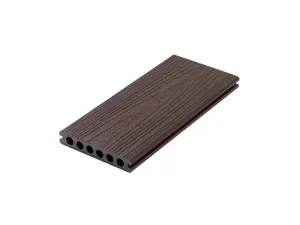
TerraShield Low Maintenance Wood Plastic Composite Decking Factory
View Specifications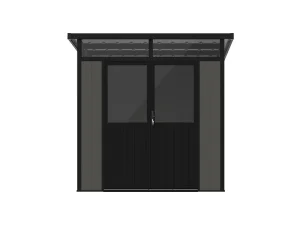
MiniStar WPC Outdoor Storage Shed with Lockable Door Weatherproof
View Specifications
CrestWall Low Maintenance Wood Plastic Composite Wall Siding Factory
View Specifications
Best China Factory WPC Privacy Fencing for Modern Landscapes
View Specifications
Best China TimberFlow WPC Decking Boards Anti-Slip Top Suppliers
View Specifications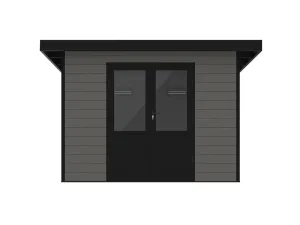
CeilingStar Premium Outdoor Storage Tool & Bike Shed with Lock
View Specifications
China Heavy Snow Load Rated Waterproof Garden Shed Backyard Storage
View Specifications