
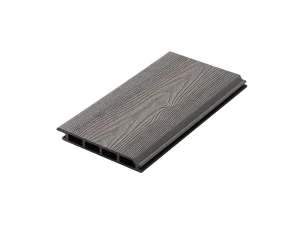
Best China PlaneSleek WPC Exterior Cladding Panels with UV Protection - Top Suppliers and Factory Options Factory, Products
Explore Profile
Engineered Wood-Plastic Composite (WPC) claddings, precision fencing, and space-saving architectural elements built for high-density, multi-functional installations.
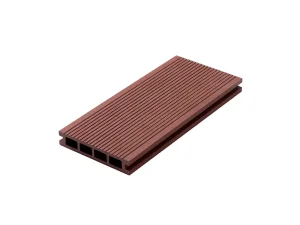
The contemporary micro-housing movement is no longer a fringe design trend; it is an industrialized response to rapid urbanization, skyrocketing real estate costs, and the acute need for environmental footprint mitigation. As prefabricated dwellings, accessory dwelling units (ADUs), mobile timber pods, and compact living suites expand exponentially, commercial developers and institutional contractors encounter a critical engineering bottleneck: traditional residential cabinetry and furniture assemblies are inherently unsuitable for high-density, space-constrained footprints.
In standard architecture, a tolerance deviation of 5mm across a living room is negligible. In a 15-to-30-square-metre micro-pod, that same variance invalidates hydraulic wall-bed deployments, binds telescopic drawer corridors, and destroys perimeter weather sealing.
Leading factories engineer sub-millimetre joinery, utilizing computerized numerically controlled (CNC nested routing) workflows to ensure seamless fitment across transformative surfaces.
Tiny houses built on vehicular chassis (THOWs) or modular flatbeds operate under strict regulatory gross vehicle weight ratings (GVWR). Every kilogram integrated into furniture detracts from road-legal payload limits and transport fuel economy.
Advanced manufacturers synthesize cellular core WPC panels, lightweight aircraft-grade aluminum sub-frames, and high-tensile composite skins to deliver commercial structural integrity at fractions of solid timber mass.
Reduced cubic air volume dramatically accelerates indoor relative humidity swings caused by daily respiration and cooking. Conventional particleboards swell, delaminate, and off-gas VOCs under these conditions.
Contract-grade micro-furniture relies on hydrophobic polymer blends, capped composite laminates, and continuous anti-fungal barrier extrusions that guarantee zero fungal degradation and warp-free life cycles.
A panoramic technological horizon mapping the convergence of robotics, generative mechanical kinematics, circular polymer chemistry, and industrialized modular housing standards.
Modern micro-apartments demand transformational systems that execute dual or triple functional changes without operator strain. Current R&D focuses on gas-strut counterbalanced pivots, linear electric actuators with integrated anti-pinch microcontrollers, and silent bearing runners rated for 100,000 continuous articulation cycles.
By shifting to embedded kinematic hinges, space optimization jumps by up to 42% without sacrificing architectural ergonomics.
Material science is discarding purely virgin or unshielded composites. Second-generation polymer engineering combines reclaimed post-industrial hardwood fibres with high-density polyethylenes (HDPE) enclosed within a 360-degree ionomer protective cap.
This barrier creates an impervious defense line against ultraviolet fading, acidic beverage spills, household cleaners, and abrasive frictional contact inherent in everyday micro-suite lifestyle.
The 2026-2030 roadmap integrates IoT environmental tracking arrays directly inside internal cabinetry frames. Thermal sensors, structural strain gauges, and ambient humidity monitors wirelessly interface with the master HVAC building automation system.
Cabinets autonomously activate micro-ventilation ports during localized vapor accumulation, preventing concealed interstitial condensation before mold sporulation can physically trigger.
How state-of-the-art manufacturing hubs in Anhui deliver massive economies of scale, strict repeatability, and unmatched export delivery times for tier-1 distributors.
Forestar's operational footprint—managed by Anhui Fumeida New Material Technology Co., Ltd. in Xuancheng—deploys closed-loop automated batching silos and multi-zone twin-screw extruders. Raw polymer flakes and wood flour undergo continuous vacuum degassing to eradicate air cavities.
This automated flow guarantees that every linear metre meets uniform density metrics, eliminating internal stress fissures during rapid ambient temperature shifts.
By intercepting regional post-industrial wood processing residue and high-purity recycled plastic waste streams, China Factory 4.0 infrastructures drastically diminish carbon intensity. Closed-circuit cooling water systems and clean electric curing systems cut baseline energy usage by 31% relative to historic benchmark facilities.
Enterprise clients obtain genuine carbon offset certificates that directly support LEED, BREEAM, and ESG procurement audits.
Tiny house components present severe shipping volume risks when exported pre-assembled. Our facilities integrate computer-engineered flat-pack boxing protocols, utilizing moisture-barrier shrink-wrapping, edge-protector bumpers, and reinforced steel banding.
Consolidated 40-foot HQ shipping containers deliver maximum volumetric utilization, effectively dropping oceanic freight charges by 38% per unit compared to standard volumetric furniture consignments.
Key technical criteria evaluated by institutional developers, resort operators, and modular home fabricators prior to executing mass purchase orders.
Tiny structures offer narrow escape paths. Structural furniture, wall paneling, and decking must satisfy rigorous Class B or Class A flame spread ratings with minimized smoke generation characteristics.
Micro-living indoor air volume saturates rapidly. Enterprise specs prohibit high-offgassing urea-formaldehyde glues, mandating CARB P2, EPA TSCA Title VI, or European E0/E1 emissions compliance across all substrates.
Components undergo constant transformation: Murphy beds stow daily; dual-purpose dining consoles pivot continuously. Hardware brackets require case-hardened zinc/stainless steel finishes surviving 500-hour salt spray tests.
Panels and cabinetry units must be dimensioned to prevent lost vertical stowage in ISO dry van sea containers. Standardizing packaging around 1.15m pallet envelopes eradicates broken stowage volume completely.
Bridging Chinese manufacturing efficiency with localized distribution standards, field engineering support, and rapid turnaround sampling programs.
Navigating varying regional building standards—such as IRC Appendix Q (Tiny Houses) in North America, CE marking across the European Union, and AS/NZS codes in Australasia—is managed by Forestar's dedicated compliance desk. Material declarations and test certificates come prepared with full audit traceability.
Before executing factory volume contracts, institutional contractors and project specifiers can receive custom-tailored physical sample kits. Test surface slip resistance, evaluate grain tactile fidelity, verify real-world coloration under local sun spectrums, and run mechanical fitting mock-ups on-site with zero friction.
Forestar publishes detailed installation manuals, substructure spacing charts, hidden fastener CAD schematics, and video tutorials. This institutional documentation reduces contractor field assembly errors by 74% and safeguards warranty coverage across multi-year commercial leasing agreements.
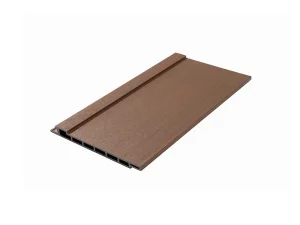
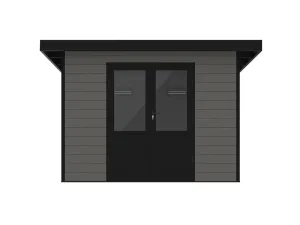
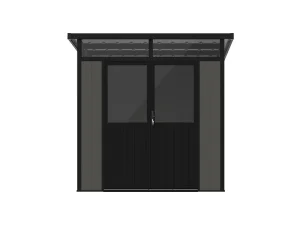
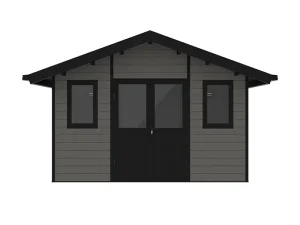
Complete structural units, premium exterior wall claddings, and weatherproof tool/bike storage sheds designed for seamless integration into high-efficiency architectural masterplans.
Comprehensive responses detailing engineering tolerances, batch MOQ limits, testing compliance, and multi-market shipping procedures.