Primary Engineering Series
Top Engineered Tiny House & Modular System Blocks
Explore our premium factory-direct Wood-Plastic Composite (WPC) cladding, high-density deck systems, heavy-duty structures, and modular building materials tailored for modern compact dwellings.
2008
Established Pioneer
Decades of Advanced Co-Extrusion R&D
90%
Circular Content
Eco-Polymer Closed Loop Formulation
45+
Export Continents & Hubs
USA, EU, Latin America, Nordics
1M+
Global Installations
Zero Structural Failures Under Seismic Stress
Technical White Paper
Architectural Foundations for Micro-Habitats & Off-Grid Units
In modular prefabrication and modern micro-housing architecture, the sub-base foundation and perimeter block form the critical barrier protecting timber frames and steel chassis from ground subsidence, interstitial condensation, biological rot, and thermal transfer.
Deflection Rigidity & Load Spread
Traditional masonry blocks crack during micro-shifts and freeze-thaw soil expansion. Our high-density composite blocks offer elastic strain absorption, distributing concentrated point loads from tiny house steel jacks across wide ground contact points without fracturing.
Hydrophobic Barrier Protection
Zero hygroscopic moisture wicking prevents ground saturation from climbing into sub-floor framing. Forestar encapsulated polymeric chains guarantee less than 0.5% water absorption under prolonged submerged baseline conditions.
Acoustic & Vibration Decoupling
Micro-living units suffer severely from footstep reverb and high-frequency structural vibration. The dual-phase viscoelastic behavior of wood-fiber reinforced polymers attenuates sound transmission directly into sub-grade gravel beds.
Regional Micro-Climatic Integration
Localized Engineering Applications Across Global Terrains
A true world-class Tiny House Block manufacturer must engineer components that withstand hostile environments ranging from alpine sub-zero permafrost to tropical humidity and desert thermal shocks.
Permafrost & Nordic Heave Zones
Scandinavia, Canada & Alaska: When soils experience severe frost-heave cycles, rigid concrete pads crack and heave unevenly. Forestar composite leveling blocks maintain high impact toughness down to -40°C, self-adjusting against subsoil movement while halting thermal bridge heat loss from conditioned spaces above.
Subtropical & Marine Coastal Sites
Florida, Southeast Asia & Caribbean: Extreme salt mist, high humidity, and subterranean termite colonies destroy lumber blocking within 18 months. Forestar co-extruded polymers are completely impervious to subterranean termites, fungus decay, and saline corrosion, ideal for beachfront cabins and glamping platforms.
High-UV Arid & Desert Sites
Arizona, Australian Outback & Middle East: Surface temperatures surpassing 70°C cause standard polyolefin blocks to warp and soften under sustained loads. Our proprietary nano-stabilized mineral matrix ensures minimal thermal expansion and prevents softening under long-term deadweight loads.
Anhui Manufacturing Hub
China Factory Direct: Vertical Supply Chain Resilience & Cost Parity
Operating from Xuancheng, Anhui, our manufacturing plant (Anhui Fumeida New Material Technology Co., Ltd.) combines massive automated compounders, closed-loop recycled polymer reclamation, and rapid container consolidation.
Vertically Integrated Sourcing
We source high-purity post-industrial timber flours and recycled polymer feeds directly from upstream processing partners, eliminating trading intermediate markups and guaranteeing raw lot homogeneity.
High-Capacity Co-Extrusion Lines
With dozens of dual-screw automated extrusion lines operating continuously, our annual production easily scales to fulfill multi-container contracts for nationwide building supply chains and modular home fleets.
One-Stop Modular Packing
Distributors consolidate deck boards, foundation blocks, tongue-and-groove cladding, and trim sets in a single 40HQ container, lowering freight spend per square foot by up to 28% compared to single-product vendors.
Export Packaging & Moisture Barrier
Goods travel through extreme ocean temperature zones. Our sea-freight crates feature heavy-duty edge protectors, thermal vapor wrap, and reinforced strapping to avoid racking, surface rub, and moisture intrusion.
Market Dynamics
Global Commercial Dynamics: The Shift from Concrete to Engineered Blocks
The worldwide tiny house, backyard ADU (Accessory Dwelling Unit), and modular hospitality industries are abandoning poured-in-place wet concrete due to carbon footprint penalties, lengthy curing windows, and rigid permitting constraints.
The Rise of Non-Permanent Permitting
In North America and Europe, structures built on demountable composite foundation blocks avoid costly, slow, and property-tax-raising permanent concrete building permits, enabling rapid deployment within days of municipal registration.
Decarbonization in Modern Construction
Portland cement production accounts for over 7% of worldwide greenhouse gas emissions. By replacing concrete block footings with 90% recycled composite polymer blocks, eco-village developers reduce their upfront embodied carbon profile.
Streamlined Contractor Labor Efficiency
Rising skilled carpentry labor rates worldwide require plug-and-play components. Our pre-grooved blocks and click-lock siding components install up to 55% faster on-site with standard battery-powered hand tools.
Innovation Pipeline
Technology Roadmap: The Next Generation of Micro-Structure Systems
Forestar's material science laboratory in Xuancheng continuously pushes boundaries in structural bio-composite formulations, digital smart sensors, and advanced thermal performance.
Phase I · Production Ready
Co-Extruded Shielding
360-degree capping across all four sides prevents localized moisture absorption and surface degradation in damp, low-clearance crawler spaces under tiny homes.
Phase II · Rollout
Aerogel Matrix Core
Incorporating silica-aerogel micro-spheres into the inner core formulation delivers an R-value rating superior to solid timber, cutting subfloor heat losses.
Phase III · In Field Trial
Self-Leveling Channels
Integrated top-access hex leveling jacks cast directly into the composite body allow owners to level off-grid tiny cabins in minutes without hydraulic machinery.
Phase IV · Vision 2030
IoT Structural Telemetry
Embedded wireless piezoresistive load sensors continuously monitor settlement, dynamic wind uplift, and moisture levels, feeding directly to mobile device apps.
Compliance & Assurance
Worldwide Regulatory Verification & Engineering Warranties
International building codes require proven test certification for all structural and building envelope components. Forestar delivers comprehensive regulatory testing documentation.
EN 13501-1 / ASTM E84
Flame Propagation Class
Tested by SGS for fire-resistance performance, critical for Tiny House communities located in Wildland-Urban Interface (WUI) fire zones.
REACH & RoHS
Non-Toxic Chemical Base
Free from volatile organic compounds (VOCs), formaldehyde, and heavy metals, safeguarding off-grid rainwater harvesting environments.
ISO 9001 / ISO 14001
Factory Audit Consistency
Every container batch undergoes internal tensile load testing, thermal cycle verification, and automated colorimetry matching before dispatch.
25-Year Warranty
Commercial Liability
Full commercial and residential replacement warranty covering splitting, rotting, structural failure, and excessive UV color fading.
Enterprise Strengths
Engineered for Decades, Not Seasons: The Forestar Edge
From factory floor compounders to worldwide port delivery, discover how our four synchronized production lines streamline your exterior modular projects.
Authentic Wood Aesthetics
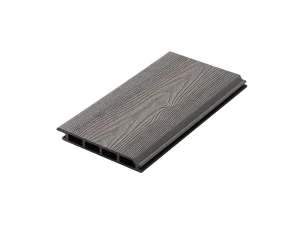
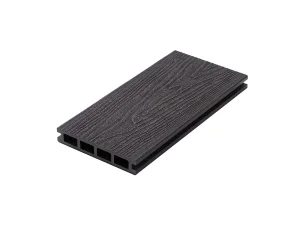
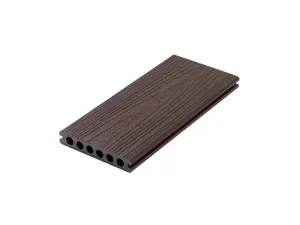
Deep 3D embossed woodgrain with authentic multi-tonal striations replicates premium natural hardwoods without requiring continuous seasonal chemical staining or sealing treatments.
Barefoot Comfort Formulation
Our heat-dissipating capping technology stays cooler underfoot during peak summer sunlight while engineered anti-slip textures ensure reliable traction around outdoor spas and pool perimeters.
Rot, Crack & Insect Proof
Encapsulated micro-wood fibers lock out environmental humidity, preventing the internal freezing and expansion fractures that crack ordinary timber and low-grade plastics.
Knowledge Center
Frequently Asked Questions: Tiny House Foundations & Wholesale
Detailed engineering, manufacturing, and procurement guidance for international importers, structural engineers, and modular builders.
What makes composite foundation blocks superior to concrete deck blocks for tiny houses?
Concrete deck blocks are heavy, brittle, and prone to cracking under uneven shear stresses or continuous freeze-thaw cycles. They absorb moisture from the earth and pass it directly to timber structures above. Forestar composite foundation blocks are lightweight for easy handling, completely waterproof, will not chip or crack during seasonal ground heave, and deliver superior compressive resilience under load.
Can Forestar composite blocks support heavy road-trailer tiny homes?
Yes. Our structural composite block formulations are engineered to withstand compressive loads exceeding 45 MPa (megapascals), comparable to industrial structural concrete. When installed under scissor jacks or perimeter outriggers, they safely carry dual and triple-axle tiny homes weighing over 10,000 kg without creep or deflection.
What products does Forestar manufacture at its Xuancheng, Anhui facility?
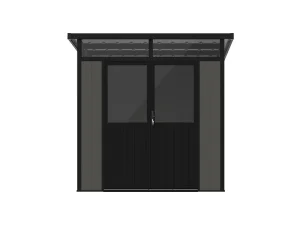
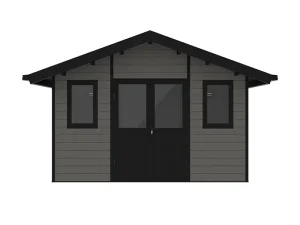
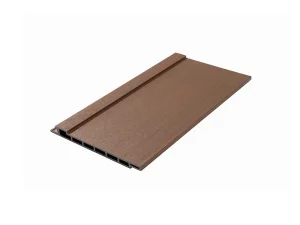
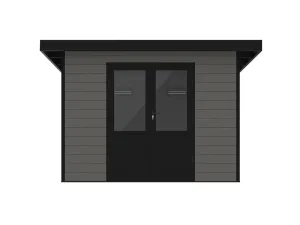
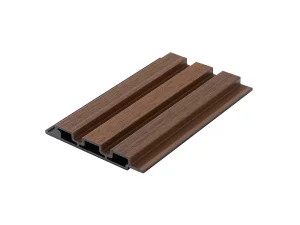
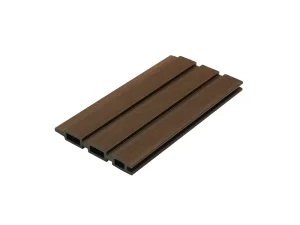
We manufacture a complete exterior ecosystem: WPC composite decking boards, exterior and interior wall cladding profiles, privacy fencing systems, garden storage sheds, and precision-engineered structural sub-base blocks. All products are manufactured in Xuancheng, Anhui, by Anhui Fumeida New Material Technology Co., Ltd.
What exact materials are used in Forestar's composite formulations?
Forestar composite materials blend kiln-dried reclaimed hardwood fibers with recycled polyolefin polymers, achieving up to 90% recycled content. Our co-extruded capped boards add an impenetrable 360-degree engineered polymer armor shell that resists fading, UV degradation, grease, and wine stains without ever needing sealants or stains.
Can international importers order physical sample boxes before volume orders?
Yes. We strongly encourage distributors, modular builders, and commercial contractors to test our physical samples under local ambient sunlight and climate conditions. Samples can be ordered directly through our Order Sample page with prompt international express delivery.
Do you offer OEM custom profiles, specific lengths, and private-label packaging?
Yes, custom extrusion molds, specific board lengths to eliminate construction site scrap, custom color matching, and custom printed barcode shrink wrap can be arranged. Provide your architectural project specs with your catalog inquiry, and our engineering team will evaluate custom tooling requirements.
Secondary Engineering Solutions
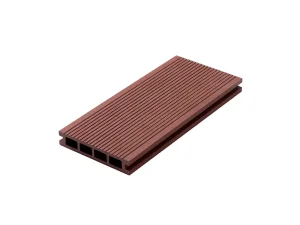
Engineered Cladding, Deck Substrates & Modular Shed Profiles
Complete your micro-living envelope with high-performance, fade-resistant composite siding, anti-slip deck profiles, and weather-sealed outbuildings.