
High-Performance WPC Wall Cladding & Outdoor Shed Systems
Engineered by Anhui Fumeida New Material Technology Co., Ltd. (Forestar), our premium composite assemblies integrate high-density polymer matrices with advanced UV barriers, providing structural stability across residential and commercial microclimates.
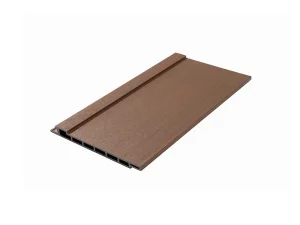
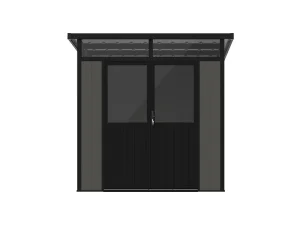
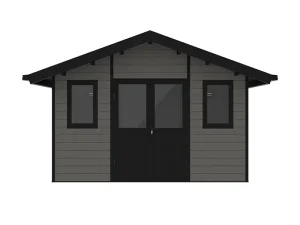
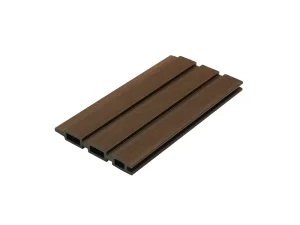
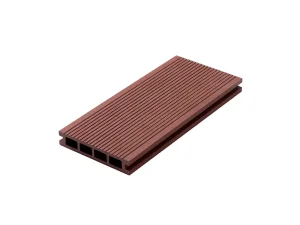
Next-Generation Panel WPC Formulations: Structural Co-Extrusion & Interfacial Chemistry
Modern architectural engineering requires wood-plastic composite (WPC) panels to withstand extreme weathering while preserving structural load metrics and aesthetic fidelity over a 25-to-30-year design life.
Multi-Phase Capping Chemistry
Traditional first-generation uncapped composite profiles exhibited vulnerability to deep-pore moisture intrusion, microbial growth, and organic pigment photolysis. Our factory's advanced co-extrusion engineering surrounds the high-density core matrix with a 360-degree cross-linked modified polyolefin shield. This non-porous outer cap encapsulates high-potency hindered amine light stabilizers (HALS), UV absorbers, and nano-ceramic functional anti-scratch particles.
Interfacial Coupling Modifiers
The structural efficacy of WPC panel extrusions rests upon mechanical stress transfer between hydrophilic cellulose microfibers (hardwood powder refined between 60 to 80 mesh) and hydrophobic thermoplastic polymer chains (HDPE/PP). Through maleic anhydride grafted polyethylene (MAPE) compatibilizers, our formulation forms covalent chemical bonds at the microscopic boundary layer, lifting flexural modulus beyond 3200 MPa while reducing hygroscopic water absorption to less than 0.8%.
Thermal Coefficient & Rheology
Thermal movement has historically presented structural challenges for linear exterior panels. By incorporating proprietary micro-cellular nucleating agents and multi-axial fiber orientation arrays during the twin-screw extrusion phase, our composite profiles demonstrate a linear thermal expansion coefficient under 35 × 10⁻⁶ K⁻¹, ensuring seamless stability when deployed across high-temperature swing regions such as the American Southwest, Northern Scandinavia, or the Middle East.
Industrial Synthesis Benchmark: Wood-plastic composite panel systems engineered at the Forestar manufacturing facility (Anhui Fumeida New Material Technology Co., Ltd.) undergo constant rheological profiling. Twin-screw conical extruders operate under continuous vacuum degassing at melt temperatures tightly regulated between 165°C and 185°C, eliminating volatile organic off-gassing and avoiding thermal degradation of structural lignocellulosic feedstock.
China Smart Manufacturing: Automated Compounding, Continuous Extrusion & Supply Chain Resilience
Examining how high-throughput automation, closed-loop raw material recycling, and digital quality monitoring empower our Xuancheng manufacturing complex to serve multi-container international contracts without batch variances.
Gravimetric Continuous Dosing
Eliminating batch-to-batch color shifts and structural density variations, our plant implements closed-circuit multi-component gravimetric feeding arrays. Raw wood flour moisture content is maintained at under 1.5% via multi-stage flash desiccation before being fed alongside virgin and post-consumer recycled polymer pellets, functional processing aids, and multi-spectral pigments, achieving a measurement precision within ±0.15%.
In-Line Laser Scanning & QC
Every meter of co-extruded WPC profile (including SlatWeave, TimberFlow, PlaneSleek, and CrestWall architectures) is inspected in-line by dual-axis high-speed optical laser micrometers and ultrasonic thickness scanners. Any micro-fissure, cap thickness deviance (< 0.5mm threshold), or dimensional warping triggers pneumatic sorting, ensuring strict compliance with ISO 9001 and ISO 14001 tolerances.
Port Proximity & Logistics Hub
Situated within the Yangtze River Delta industrial corridor in Xuancheng, Anhui, our manufacturing plant benefits from direct intermodal freight connections to Shanghai and Ningbo maritime terminals. This strategic positioning provides agile container consolidation for mixed-product exports—allowing importers to ship decking boards, cladding panels, fencing kits, and prefabricated sheds inside unified 40-foot High Cube (40HQ) containers.
| Performance Characteristic | Forestar Capped Panel WPC | Traditional Softwood Timber | Uncapped First-Gen WPC | Aluminum Composite Panels |
|---|---|---|---|---|
| Flexural Strength (MOR) | 38 - 42 MPa | 22 - 30 MPa (Variable grain) | 24 - 28 MPa | 120+ MPa |
| Water Absorption (24h soak) | < 0.65% | 22.0% - 35.0% | 3.5% - 6.0% | 0.00% |
| UV Degradation (ΔE after 3000h) | < 2.0 (Spectrophotometer) | Extreme greying (> 12.0) | 5.0 - 8.5 | < 1.5 |
| Slip Resistance (DIN 51130) | R11 - R12 Certified | R9 (Hazardous when wet) | R10 | R9 (Smooth anodized) |
| Flammability Standard | EN 13501-1 Bfl-s1 / ASTM E84 Class A | Class C / D (Combustible) | Class C / EN 13501-1 Dfl | Non-combustible A2 / B |
| Periodic Maintenance Overhead | Zero (Routine water rinse) | High (Annual staining, sealants) | Moderate (Scrubbing stains) | Low (Cleaning detergent) |
Global Enterprise Sourcing: How Tier-1 Distributors & Contractors Evaluate WPC Factories
A structured auditing framework utilized by commercial purchasers across North America, Europe, Australia, and the Middle East to verify factory capacity, raw material authenticity, and container yield efficiency.
1. Material Purity & Recycled Content
Global procurement teams must rigorously audit supplier polymer chains. Substandard factories utilize uncontrolled post-consumer recyclates contaminated with PVC or low-molecular plasticizers that trigger structural delamination. Forestar provides transparent raw material certifications confirming high-purity recycled PE resin paired with dry, cleaned industrial wood byproduct, achieving up to 90% recycled material metrics without sacrificing mechanical yield.
2. Tooling Precision & Profile Tolerances
Architectural facade cladding panels (e.g. SlatWeave, PlaneSleek, CrestWall) require precise interlocking tongue-and-groove tolerances. Sourcing departments demand tooling calibration reports showing profile width variations within ±0.5 mm and edge squareness within 0.25%. Forestar manufactures in-house precision extrusion dies, ensuring that field installers experience effortless friction-fit snap assembly without binding or visible alignment deviations.
3. Palletization & Cubic Efficiency
International ocean freight rates mandate maximized packing density. Forestar utilizes custom-engineered reinforced timber and polymer export skids engineered for multi-tier forklift unloading. By designing modular nesting profiles for our MiniStar and RidgeStar outdoor garden shed kits alongside compact flat-pack pallet systems for cladding boards, container volumetric efficiency exceeds 94%, reducing landed per-unit transport costs.
4. Third-Party Testing Transparency
Enterprise buyers require batch-specific test records from accredited testing laboratories such as SGS, Intertek, or TÜV. Critical evaluation parameters include ASTM D7031 (standard guide for evaluating mechanical properties of WPC products), ASTM D7032 (performance rating for decking and guardrail systems), and EN 15534 for compliance across the European Single Market.
5. Extended Warranty Legal Enforcement
A dependable manufacturer must back residential and commercial product lines with legally enforceable warranties (ranging from 15 to 30 years). Forestar warranties are grounded in empirical accelerated weathering tests (QUV chamber exposure exceeding 5000 hours without surface chalking, cracking, or catastrophic chromatic drift), protecting distributor reputations against catastrophic recall liabilities.
6. Flexible OEM & Private-Label Systems
For large-scale building supply retailers and brand houses, Forestar operates comprehensive OEM/ODM programs: bespoke embossed woodgrain molds, customized structural wall profiles, dual-sided texturing, custom length cuts to the exact millimeter, barcoded protective packaging sleeves, and retail-ready point-of-sale display cartons.
Macro Industry Engineering Solutions: Cross-Sector Architectural Deployments
From coastal boardwalks exposed to hyper-saline splash zones to luxury high-rise cladding façades, discover how Forestar engineered composite systems solve real-world architectural challenges.
Master-Planned Residential Communities
High-density villa communities and suburban single-family developments demand a unified architectural look. Forestar's coordinated system combines exterior cladding (CrestWall / PlaneSleek), residential decking (TimberFlow), and perimeter privacy screens (HorizonLine) in matching multi-chromatic natural timber tones, eliminating mismatched finishes across broad subdivisions.
Commercial Hospitality & Poolside Decks
Hotels, resorts, and wellness facilities face severe slipping liabilities and constant chemical exposure from chlorinated pool water. Forestar's TimberFlow boards feature an advanced deep-embossed grooved anti-slip surface tested to DIN 51130 R12, remaining cool under intense solar radiation while resisting food oils, alcohol spills, and sun lotions.
High-Altitude & Extreme Snow Loads
Sub-zero alpine environments destroy brittle plastics and rot standard timber framing through repeated freeze-thaw cycles. Our RidgeStar and MiniStar composite garden shed systems feature galvanized internal steel sub-framing paired with thick interlocking composite wall panels rated for heavy roof snow loads, delivering structural integrity across extreme winter environments.
Technical Roadmap & Future Outlook: Advanced Sustainable Composites
Anticipating structural material challenges and environmental regulations through next-generation bio-resins, nano-engineered thermal barriers, and digital lifecycle transparency.
1. Bio-Based Circular Polyolefins
While current composite extrusions divert millions of kilograms of plastic from municipal landfills, the next frontier centers on bio-polyethylene synthesized from agricultural residues and non-food chain biomass. Forestar's polymer laboratories are piloting closed-circuit formulations targeting a carbon-negative footprint by 2028, aligning with the EU Corporate Sustainability Due Diligence Directive (CSDDD).
2. Aerogel-Infused Thermal Barrier Cores
Urban heat island effects are driving stringent building insulation regulations. Forestar R&D is engineering co-extruded architectural panels integrated with silica-aerogel micro-void matrices. These lightweight structural panels boost facade thermal insulation (R-values) by up to 40% over conventional composite siding, substantially lowering heating and cooling loads for residential and commercial structures.
3. Digital Product Passports (DPP) & AI QA
In accordance with global circular economy standards, future Forestar production lines are incorporating laser-etched micro-QR signatures and embedded RFID markers onto every extruded profile. This grants architects, municipal inspectors, and recyclers instant access to raw material lot tracing, embodied carbon metrics, and end-of-life recycling pathways.
Localized Engineering Support, Building Code Compliance & Global Trade Assurance
Seamless international trade requires localized regulatory compliance, rapid sample logistics, and dedicated technical support spanning project specification through site installation.
International Building Code Alignment
Our composite profiles are engineered to meet and exceed international building codes. For North American markets, our panels are engineered to ASTM standard protocols. For European Union importers, full CE marking is maintained under EN 15534-1:2014, coupled with complete compliance with REACH regulations ensuring that our composite materials remain free of hazardous substances or toxic heavy-metal pigments.
Rapid Sample Dispatch & Regional Verification
We recognize that trade contractors and procurement directors cannot commit capital without physical validation. Through our expedited sample dispatch system, custom-cut physical samples in designated colors, grain patterns, and structural profiles are delivered via air courier to international destinations within 3 to 5 business days for direct project evaluation under local sunlight conditions.
B2B Commercial & Tender Documentation
For commercial developers competing in government or institutional tenders, Forestar provides comprehensive technical submittal binders: Architectural CAD/BIM profile cross-sections, structural load calculations, third-party fire testing laboratory certificates, Environmental Product Declarations (EPDs), and multi-lingual installation instruction packages.
Frequently Asked Questions for Importers, Distributors & Contractors
Comprehensive technical answers to address engineering specifications, ocean container logistics, structural assembly practices, and factory direct contract requirements.
What is the structural composition of Forestar Panel WPC products?
Our panels are manufactured by blending up to 90% recycled content—consisting of approximately 55% to 60% dry reclaimed industrial hardwood fibers and 30% to 35% recycled high-density polyethylene (HDPE), alongside 10% structural coupling agents, color masterbatch, UV absorbers, and processing stabilizers. Capped profiles feature a co-extruded 360-degree protective barrier that completely isolates the internal core from environmental humidity and UV rays.
What is the standard Minimum Order Quantity (MOQ) and production lead time?
Our standard production MOQ is one 20-foot GP container (approximately 800 to 1,000 square meters of decking or cladding). However, we support mixed-product container consolidation—enabling trade partners to combine decking boards, cladding panels, fencing kits, and prefabricated sheds within a single 40HQ container. Standard manufacturing lead time ranges from 15 to 25 business days from formal deposit and specification approval.
How does Forestar handle thermal expansion and contraction during installation?
Like all polyolefin-based composite building materials, WPC boards experience slight longitudinal expansion with temperature fluctuations. Forestar profiles feature a linear thermal expansion coefficient under 35 × 10⁻⁶ K⁻¹. We supply precision hidden fastener clips that automatically govern the required 5 mm side expansion gap, while our installation technical guide specifies exact end-to-end expansion spacing based on ambient temperatures during installation.
Can custom colors, profile cross-sections, and private-label packaging be engineered?
Yes. Our in-house engineering and tooling workshops specialize in turnkey OEM/ODM services. We can develop custom extrusion dies based on client CAD drawings within 20 days. Color matching is performed utilizing computerized spectrophotometers, achieving precise chromatic consistency against client-submitted RAL or Pantone color targets, coupled with bespoke barcoded retail sleeves.
How do Forestar composite garden sheds compare to metal and resin sheds?
Traditional thin sheet-metal sheds suffer from denting, condensation, rusting, and zero thermal insulation, while thin blow-molded resin sheds often degrade and warp under solar radiation. Forestar RidgeStar and MiniStar composite garden sheds combine heavy-gauge WPC interlocking wall panels with robust internal structural steel skeletons. This provides superior heavy snow load ratings, wind resistance, timber-like aesthetics, and zero seasonal maintenance.
What sub-framing joist spacing is recommended for TimberFlow decking boards?
For standard residential applications, we recommend a maximum center-to-center joist spacing of 400 mm (16 inches) for perpendicular board installations. In high-traffic commercial installations or when decking boards are installed at a 45-degree diagonal angle, joist spacing must be reduced to 300 mm (12 inches) on center. Proper sub-frame ventilation and drainage channels must always be maintained according to our engineering guidelines.
Architectural Decking, Exterior Cladding & Perimeter Fencing Solutions
Explore the remainder of our engineered export catalog, covering anti-slip decking boards, modern UV-protected exterior cladding systems, and modular perimeter privacy panels.
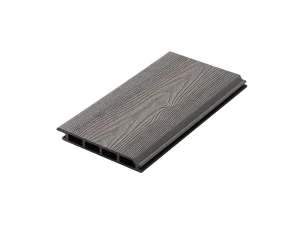
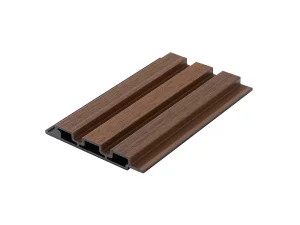
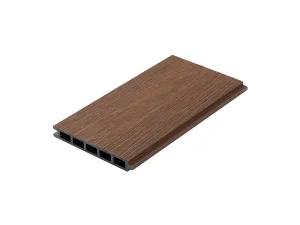
Partner with China's Premier WPC Manufacturing Facility
Whether you are launching a proprietary branded composite line, specifying a municipal boardwalk development, or optimizing container procurement margins, our engineering sales group provides complete technical and logistical backing.