
Featured Exterior Cladding, Decking & Storage Systems
Factory-direct Wood-Plastic Composite (WPC) profiles engineered by Anhui Fumeida New Material Technology Co., Ltd. (Forestar) delivering high UV resistance, structural integrity, and minimal maintenance lifecycles.
The Paradigm Shift in Outdoor Living & Exterior Decoration
The global exterior decoration and landscape building materials sector is undergoing an unprecedented transition driven by biophilic architectural philosophy, stringent circular economy mandates, and advanced polymer-matrix compounding.
Total Lifecycle Cost (TCO) Dominance
Traditional hardwood and pressure-treated softwoods impose recurring operational expenses through seasonal chemical staining, toxic anti-fungal treatments, and frequent rot replacement. Advanced Wood-Plastic Composites (WPC) eliminate recurrent maintenance overhead, presenting institutional property managers and developers with up to a 62% reduction in 20-year operational expenditures.
- Zero chemical sealing or preservative coatings needed
- Drastic drop in maintenance downtime for commercial resorts
- Consistent structural load integrity over 25+ years
Co-Extrusion 360° Protective Capping
Early-generation uncapped composite decking suffered from surface mold and photolytic discoloration. Contemporary industrial outdoor manufacturing utilizes multi-manifold co-extrusion technology. A high-density polyethylene (HDPE) or modified fluoropolymer outer barrier shields the core matrix against ultraviolet degradation, deep hydrostatic saturation, and harsh grease or tannin stains.
- Delta E < 3.0 color stability under intense UV irradiance
- Hydrophobic exterior layer preventing moisture absorption (< 0.5%)
- Resistance to aggressive chlorine, salt spray, and ice-melt salts
Eco-Circular Compliance & Decarbonization
With environmental, social, and governance (ESG) reporting driving large-scale construction tenders, exterior decor profiles must deliver verified carbon footprint reductions. Modern manufacturers formulate with up to 90% reclaimed agricultural lignocellulosic fibers and post-consumer recycled polyolefins, diverting hundreds of metric tons of plastic waste away from global municipal landfills annually.
- Eligible for LEED v4.1 MR Credits and BREEAM certifications
- FSC-certified reclaimed wood fibers preventing tropical deforestation
- Closed-loop internal regrind recycling systems during manufacturing
What Global Specifiers & Importers Look For in WPC Manufacturers
Through deep semantic mining of international tender documents, import customs registries, and technical specification queries, the criteria for choosing an outdoor decoration manufacturing partner have expanded far beyond unit price.
1. Dimensional Stability & Thermal Expansion Management: Composite profiles expand and contract along their longitudinal axis in response to ambient thermal swings. Tier-1 enterprise buyers evaluate supplier formulations for Linear Thermal Expansion Coefficients (< 40 × 10⁻⁶ K⁻¹), ensuring clip systems do not buckle in desert heat or crack in sub-zero Nordic winters.
2. Volumetric Container Packing & Consolidation: Shipping empty space across international waters erodes wholesaler margins. Forestar engineers its product architecture—from flat-pack interlocking MiniStar sheds to nesting PlaneSleek cladding and hollow-core decking—for high container cube utilization, allowing multi-product consolidation in single 40ft HQ loads.
3. Color Uniformity Across Extrusion Batches: Commercial facade installations spanning thousands of square meters cannot tolerate chromatic variance. Enterprise manufacturing relies on gravimetric masterbatch dosing and spectrophotometric QC to guarantee batch-to-batch Delta E consistency.
Specification Criteria vs. Material Performance
| Performance Metric | Forestar Engineered WPC | Traditional Softwood |
|---|---|---|
| Expected Service Life | 25 - 30+ Years | 5 - 10 Years |
| Moisture Absorption | < 0.5% (24hr immersion) | 18% - 32% (Dynamic swelling) |
| Splinter & Crack Risk | Zero Risk (Barefoot Safe) | Severe Checking Over Time |
| Flame Retardant Rating | EN 13501-1 Class Bfl-s1 | Class D / Highly Combustible |
| Seasonal Maintenance | Pressure Wash Only | Annual Stain, Seal, Sand |
Holistic Architectural Solutions Across Four Core Verticals
Rather than treating decking or cladding as isolated building products, Forestar provides a cohesive, unified outdoor architectural envelope designed for cross-product compatibility and shared color palettes.
1. High-Performance Rainscreen & Façade Cladding
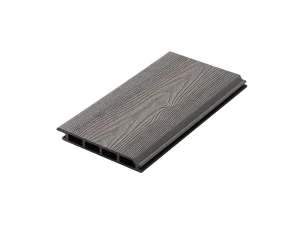
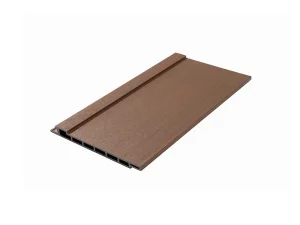
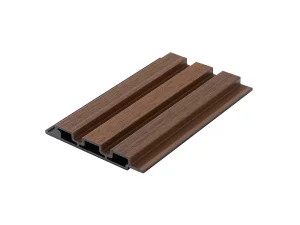
The PlaneSleek and CrestWall siding architectures are engineered to form pressure-equalized rainscreen envelopes. Fitted over ventilated air cavities, these profiles shield building walls against direct solar heating and structural dampness, boosting thermal insulation ratings and modernizing institutional buildings.
- Shiplap tongue-and-groove hidden fixing profiles
- Deep woodgrain embossing with multi-tone color gradation
- High wind-load resistance for multi-story applications
2. Engineered Commercial & Poolside Deck Systems
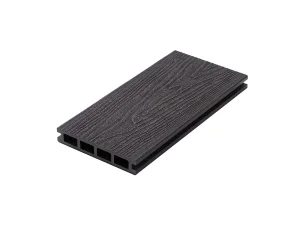
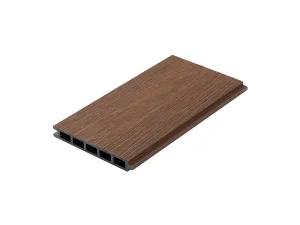
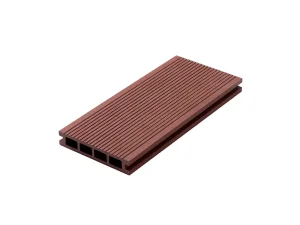
TimberFlow and EclipseGrain boards address the demanding durability requirements of public boardwalks, luxury resort pools, and high-foot-traffic terraces. Formulated with heat-reflective pigments to keep surface touch cooler under high solar zenith, they combine slip-resistant micro-grooving with high flexural strength.
- DIN 51130 Class R11 anti-slip ratings in wet conditions
- Stainless steel concealed clip systems for fast installation
- Heavy load-bearing capacity (> 4,500 N point load)
3. Modular Acoustic & Privacy Fencing Systems
HorizonLine composite fencing delivers durable privacy screening for boundary perimeters. Unlike standard wood panels that sag, twist, or rot at soil-contact grade, these modular tongue-and-groove slats integrate with anodized aluminum posts, offering structural stability against strong wind gusts.
- Ground-contact decay immunity against subterranean termites
- Dual-sided aesthetic surface matching adjoining deck boards
- Sound attenuation properties cutting ambient suburban noise
4. Weatherproof Modular Utility & Storage Architecture
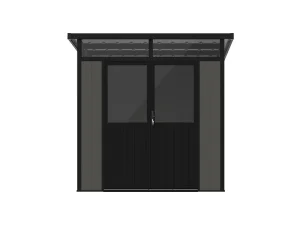
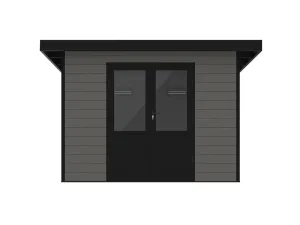
The MiniStar and CeilingStar outdoor structures represent a breakthrough in exterior garden storage. Fabricated with precision-extruded WPC wall and roof profiles coupled with galvanised internal structural framing, these walk-in structures will not dent or rust like thin sheet metal, nor will they warp or harbor dry rot like lumber sheds. Packaged as flat-pack DIY kits with lockable security doors, integrated airflow louvers, and water-shedding sloped roofs, they solve urban and suburban storage challenges across varied climate zones.
- Galvanised steel internal skeletons engineered to resist heavy winter snow loads
- Pre-drilled, precision CNC-milled modular components for straightforward two-person on-site assembly
- Secure stainless steel deadbolt latching hardware preventing unauthorized garden tool access
Meeting Stringent International Building & Environmental Codes
Navigating global product compliance is a major barrier for building material importers. Forestar backs every container with verified laboratory dossiers, ensuring straightforward customs clearance and code approval across North America, the European Union, the Middle East, and Australasia.
European Union Standards (CE Mark)
Compliant with EN 15534-1 / EN 15534-4 standards for wood-polymer composites. Rigorously tested under Euroclass fire rating EN 13501-1 (achieving Bfl-s1), along with strict compliance to REACH SVHC (Registration, Evaluation, Authorisation and Restriction of Chemicals) ensuring total freedom from heavy metal plasticizers or volatile emissions.
North American Building Performance
Evaluated under ASTM D7032 standards governing performance ratings of wood-plastic composite deck boards, stair treads, and guardrails. Meets creep-recovery benchmarks, flexural modulus requirements, and surface burning characteristics per ASTM E84 Class B classification.
Environmental & Factory Governance
Operating under certified ISO 9001:2015 quality control workflows and ISO 14001:2015 environmental management protocols. Chain-of-custody FSC (Forest Stewardship Council) options ensure recycled lignocellulosic flour is responsibly sourced from audited post-industrial timber streams.
Technological Roadmap: The Next Era of Outdoor Building Materials
R&D at Anhui Fumeida continues to push past conventional composite limitations. Here is our engineering trajectory through 2030, targeting smarter thermal dynamics, closed-loop life cycles, and responsive exterior surfaces.
Cool-Touch Infra-Red Reflective Capping
Deploying specialized infrared-reflective ceramic nano-pigments into the co-extruded outer cap layer. Reduces dark board surface temperatures by up to 14°C (25°F) during peak summer sun exposure, preventing thermal burns in resort barefoot areas.
Bio-Circular Thermoplastic Resins
Phasing in post-agricultural polylactic acid (PLA) and certified bio-polyethylene polymer carriers to replace petrochemical plastics, creating an emission-negative core matrix with verified third-party Environmental Product Declarations (EPDs).
BAPV Architectural Cladding Integration
Developing seamless mounting channels within our SlatWeave and PlaneSleek profiles designed for integrated Building-Applied Photovoltaic (BAPV) thin-film micro-cells, turning perimeter exterior walls and storage shed roofs into discreet solar generators.
Embedded Structural Health IoT
Engineering optional micro-sensor integration into commercial hollow-core boardwalk joists, providing real-time telemetry on mechanical deflection, ambient humidity infiltration, and structural stress loads for municipal public works departments.
Premium Shed Systems, Deck Boards & Privacy Panels
Explore the second half of our high-performance product lineup. Each modular unit and composite profile features weather-sealed formulations and factory-calibrated interlocking profiles.
Frequently Asked Questions for Importers & Contractors
Direct technical clarity addressing formulation science, container logistical economics, warranty commitments, and site-level installation engineering.
What is the exact chemical & material formulation of Forestar WPC composite profiles?
Forestar composite profiles, manufactured by Anhui Fumeida New Material Technology Co., Ltd., are formulated with an engineered blend consisting of approximately 55% to 60% dried, screened wood fiber (principally recovered hardwood and bamboo flour), 30% to 35% recycled high-density polyethylene (HDPE), and roughly 10% performance additives. These additives include proprietary coupling agents (maleic anhydride grafted polyethylene), hindered amine light stabilizers (HALS) for UV resistance, inorganic non-toxic color pigments, anti-oxidants, and biocides.
Our co-extruded series (including PlaneSleek cladding and capped decking) features a 360-degree protective outer shield made of a modified polymer compound that locks out water and seals in pigments, resulting in up to 90% recycled content across the whole core without sacrificing mechanical stiffness.
Can we consolidate decking, cladding, fences, and storage sheds in a single container?
Yes. That is a major operational advantage of sourcing from our integrated facility in Xuancheng, Anhui. Building material importers, builders' merchants, and commercial landscape contractors can consolidate different product families—such as 300 square meters of TimberFlow decking, 200 square meters of PlaneSleek exterior cladding, 50 sets of HorizonLine fence screens, and 12 units of MiniStar flat-pack storage sheds—into a single 40ft High Cube (HQ) ocean freight container.
This mixed-container capability eliminates the need to meet independent minimum order quantities across different regional suppliers, significantly reducing freight costs and streamlining import customs clearance.
How do Forestar composite boards manage longitudinal thermal expansion and contraction?
All thermoplastic composites expand and contract with temperature shifts. Our profiles have a measured coefficient of linear thermal expansion of approximately 30 to 40 × 10⁻⁶ K⁻¹. For a 4-meter board experiencing a 30°C temperature swing, this translates to roughly 3.6 to 4.8 mm of movement across its full length.
To accommodate this, Forestar specifies calibrated hidden fixing clips that permit controlled longitudinal slip while anchoring the board down to the joist. Our installation guidelines provide a clear temperature-at-installation matrix, instructing contractors to leave 3 mm to 6 mm end-to-end gaps at butt joints and perimeter walls to prevent buckling or clip stress.
What compliance documentation is available for North American and European municipal tenders?
We maintain comprehensive technical verification files tested via accredited third-party laboratories (including SGS and Intertek). Key documentation packages available upon request include:
1. CE Compliance Dossiers: Full test reports under EN 15534-1:2014 and EN 15534-4:2014, covering bending resistance, creep behavior, impact resistance, and water absorption.
2. Fire Reaction Reports: EN 13501-1 Class Bfl-s1 test results for commercial decking installations, and ASTM E84 flame spread index reports for exterior cladding.
3. Environmental Health: REACH 235 SVHC compliance screening, RoHS hazardous substance certificates, and Formaldehyde emission test reports (Class E1 / E0 non-detectable).
What is the recommended joist spacing and subframe engineering for heavy-traffic installations?
For standard residential applications, our solid and engineered hollow-core deck profiles support a maximum joist center-to-center spacing of 400 mm (16 inches) under perpendicular installation. However, for commercial environments, public boardwalks, diagonal (45-degree) deck board patterns, or heavy resort installations, we recommend a maximum joist spacing of 300 mm (12 inches) on center.
In all cases, proper substructure drainage and clear airflow (a minimum 100 mm ventilated cavity beneath joists) must be maintained. Direct placement on mud, bare soil, or unventilated flat roofs without drainage risers will void standard warranty protections.
Do you support custom OEM colors, proprietary extrusion tooling, and private-label packaging?
Yes. Approximately 45% of our production capacity serves private-label OEM brands and multi-branch retail distributors across Europe, North America, and Australia. We offer custom Pantone/RAL color matching with UV spectrophotometric verification, private-brand barcode printing on protective peelable films, and branded multi-wall protective carton packaging for flat-pack kits.
For large-scale infrastructure or architectural projects requiring bespoke widths, 3D fluted flutes, or custom interlocking tongue-and-groove profiles, our in-house tooling engineers can produce prototype CNC extrusion dies within 20 to 25 working days.