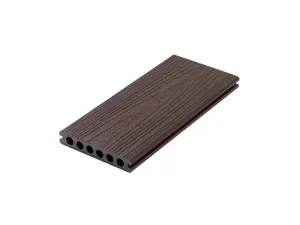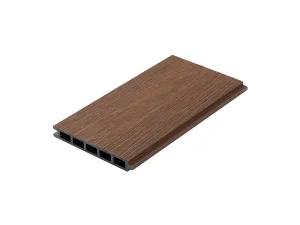
Featured Decking, Cladding & Outdoor Structures
Direct factory configurations manufactured with high-density polymer matrices and calibrated capping layers for premier architectural integrity.
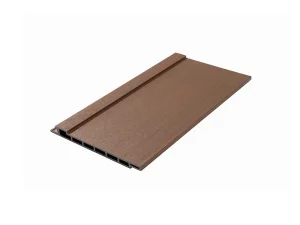
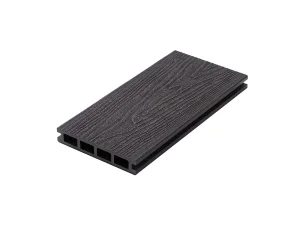
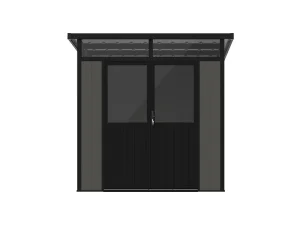
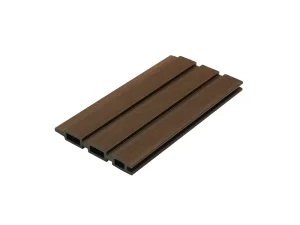
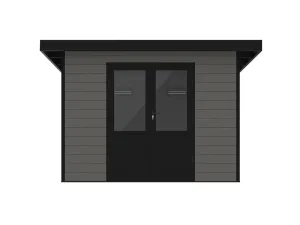
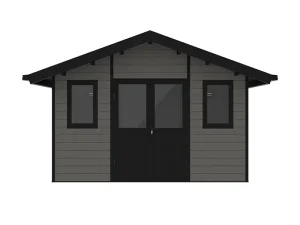
Commercial & Industrial Status of Decking and Joist Systems
The worldwide transition from timber to circular engineered composites is redefining structural outdoor architecture.
Across the international architectural, engineering, and construction (AEC) sectors, the demand for high-performance decking and joists products has shifted dramatically from aesthetic preference to mission-critical infrastructure compliance. Commercial outdoor installations—spanning high-traffic marine boardwalks, luxury multi-family rooftop terraces, and industrial municipal installations—demand decking surfaces that resist environmental degradation while operating synchronously with structural substructure joist networks.
Historically, the decking industry suffered from an asynchronous engineering paradox: surface decking boards engineered with wood-plastic composites (WPC) boasted lifespans surpassing 25 years, while traditional pressure-treated timber substructure joists failed within 10 to 12 years due to concealed interstitial rot, fastener shear from moisture swelling, and biological decay. Today, modern engineering mandates fully unified systems where composite deck boards and engineered joists (incorporating co-extruded polymers, reinforced structural aluminum, and cold-formed galvanized profiles) deliver equivalent lifecycles.
Timber Replacement Velocity
Global deforestation regulations and volatile lumber prices have accelerated commercial adoption of engineered composite systems by 28% in municipal tenders year-over-year.
Substructure Compatibility
Modern substructures utilize optimized thermal expansion coefficients matching composite boards, mitigating fastener failure and board buckling under thermal stress.
Environmental Compliance
LEED v4.1, BREEAM, and EU Green Taxonomy regulations increasingly favor WPC and recyclable structural joist profiles with low embodied energy and circular sourcing.
Substructure Mechanics: Joist Spans, Deflection & Physics
Evaluating the physics of load transfer, deflection criteria (L/360 vs L/240), and mechanical fastener behavior.
A deck installation is fundamentally a structural suspended flooring system. When evaluating the best decking and joists products, engineers scrutinize the Modulus of Elasticity (MOE) and Modulus of Rupture (MOR) of both the surface boards and supporting frame. WPC profiles exhibit viscoelastic properties; unlike solid sawn timber, their performance is time- and temperature-dependent, necessitating precise joist on-center (o.c.) calculations.
For standard residential traffic (40 psf / 1.9 kPa uniform live load), joist spacing of 16 inches (406 mm) on-center is customary. However, in commercial spaces subject to concentrated rolling loads, 100 psf (4.8 kPa) live loads, or diagonal 45-degree herringbone layouts, substructure joists must be tightened to 12 inches (305 mm) o.c. or framed with structural aluminum joists to prevent perceptible springiness and permanent creep.
| Substructure System Type | Material Formulation | Max Span (40 psf Live Load) | Thermal Expansion Index | Moisture/Rot Vulnerability | Service Life Rating |
|---|---|---|---|---|---|
| Capped Structural WPC Joist | Recycled Polymer + Wood Fiber | 350 mm - 400 mm o.c. | 35-45 × 10⁻⁶ / K | Immune / Zero Rot | 25+ Years |
| Extruded T6 Structural Aluminum | 6063-T6 Architectural Alloy | 1200 mm - 1800 mm o.c. | 23 × 10⁻⁶ / K | Complete Corrosion Barrier | 50+ Years |
| Galvanized Cold-Formed Steel | G550 Structural Steel / Z275 | 800 mm - 1200 mm o.c. | 12 × 10⁻⁶ / K | Rust-Protected | 30+ Years |
| Pressure-Treated C16/C24 Softwood | Micronized Copper Azole Pine | 400 mm - 600 mm o.c. | Variable / Hygroscopic | High Risk (Rot / Fungal) | 10-15 Years |
Ventilation & Interstitial Airflow
Ground-level installations require an uncompromised 100 mm minimum clearance beneath joists. Without adequate subterranean airflow, localized microclimates form, generating differential vapor pressure that accelerates fastener degradation and moisture-induced stresses.
Fastener Dynamics & Hidden Clips
Hidden austenitic stainless steel (grade 304 or 316) clip systems maintain precise lateral expansion tolerances between 4 mm and 6 mm. This prevents surface puncture, keeps moisture barriers unbreached, and distributes longitudinal expansion forces evenly across substructure joists.
Technology Roadmap & Industry Trends (2025–2030)
Next-generation polymer capping, circular recycled feedstocks, and automated substructure engineering.
Nano-Composite 4-Sided Capstock
Full 360-degree cross-linked polyethylene encapsulation with infrared-reflective pigmentation, achieving up to 15°C lower surface touch temperature under peak solar radiation.
Integrated Aluminum-Polymer Hybrid Joists
Combining the thermal stability and span reach of extruded architectural aluminum with high-damping composite screw-retention channels to eliminate walking squeaks.
Up to 95% Post-Consumer Circularity
Closed-loop manufacturing systems turning post-industrial ocean-bound polymers and reclaimed sawdust into Class A fire-rated structural decking profiles without virgin resins.
BIM & Parametric Substructure Modeling
Complete integration with Autodesk Revit and digital twins, generating automated cut lists, load calculation models, and container packing optimization for large-scale infrastructure projects.
Macro Industry Solutions & Localized Climate Scenarios
Tailoring decking profiles and joist subframes to survive extreme regional environmental stressors.
Nordic & Alpine Freeze-Thaw
In high-latitude installations (e.g., Finland, Austria), zero-water-absorption core formulations (under 0.5% after 28 days submersion) safeguard against internal crystallization and delamination during rapid freeze-thaw cycles.
Marine & Coastal Salt Spray
Salt fog and high humidity corrode traditional steel fixings in months. Our marine-grade assemblies pair high-load 316-grade stainless hardware with chemically inert composite joist bearers, avoiding galvanic corrosion completely.
Arid & High-UV Sunbelts
Deploying advanced UV-absorbers and Hindered Amine Light Stabilizers (HALS) prevents the surface chalking, brittleness, and extreme fading common in desert regions like Texas, Chile, and the Arabian Peninsula.
Frequently Asked Questions: Decking & Joists Products
Authoritative insights addressing procurement, structural calculations, and maintenance queries from global project specifiers.
What is the absolute maximum joist span for commercial composite decking?
Commercial decking typically requires joists spaced at 12 inches (300 mm) on-center to handle heavy live loads (up to 100 psf) without exceeding an L/360 deflection limit. In residential settings with perpendicular board installation, 16 inches (400 mm) o.c. is standard, whereas diagonal 45-degree layouts necessitate reducing spacing back to 12 inches.
Can composite deck boards be secured directly onto concrete without joists?
Never. Laying composite decking directly onto concrete slabs or waterproof membranes impedes drainage and traps moisture, creating hydrostatic pressure and voiding warranties. A minimum 50 mm sleeper joist or pedestaled aluminum framing system must be incorporated to facilitate continuous ventilation and stormwater egress.
How do composite joists compare to structural aluminum framing?
Composite joists offer superior acoustic damping and rot-proof longevity for low-clearance residential decks. Aluminum framing, however, provides unrivaled strength-to-weight ratios, perfectly straight spans up to 1.8 meters without center blocking, and is non-combustible (Euroclass A1/A2), making it the premier choice for commercial and high-rise roof terraces.
What allowance is required for longitudinal thermal expansion and contraction?
Wood-plastic composites expand and contract primarily along their longitudinal axis at approximately 3.0 mm to 5.0 mm per 5-meter board across a 30°C temperature delta. Installers must incorporate perimeter buffer zones and butt-joint clearance gaps adhering strictly to factory temperature charts during assembly.
Are capped composite profiles scratch and stain resistant in hospitality venues?
Yes. Modern co-extrusion technology applies an impermeable high-density polyethylene (HDPE) or ionomer shield around the wood-fiber core. This shield resists wine, barbecue grease, and chemical stains, allowing cleanups with standard power washers or warm soapy water within 48 hours without staining.
How does container consolidation work for global B2B distributors?
Importers can consolidate decking boards, joist subframes, wall cladding, fencing, and modular garden sheds in a single 40ft High Cube container. This reduces shipping overhead, ensures synchronized color matching across building envelopes, and minimizes port demurrage risks.
High-Efficiency WPC Solutions & Storage Architecture
Heavy-load rated boards, premium low-maintenance fencing systems, and modular weather-sealed garden storage buildings.