
Featured Decking & Cladding Solutions (Batch 01)
Precision-manufactured Wood-Plastic Composite (WPC) profiles, co-extruded architectural panels, and moisture-impermeable outdoor living assemblies verified for high-traffic installations.
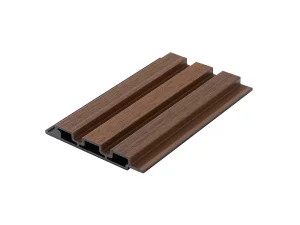
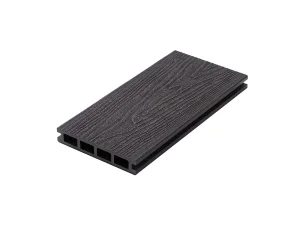
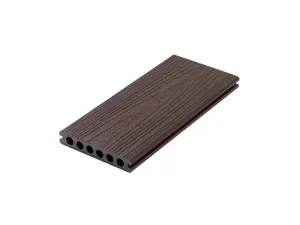
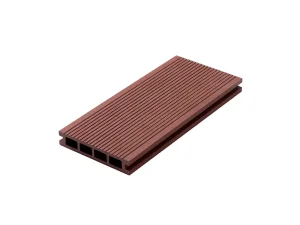
The Global Landscape of Deck Design Ideas & Products
Structural transitions in architectural outdoor envelopes, lifecycle decarbonization, and the shift from chemically treated softwoods toward polymer-wood matrix composites.
The global exterior decking and cladding sector is undergoing a profound structural metamorphosis. Historically anchored in timber harvested from slow-growth hardwoods (such as Teak, Ipe, and Cumaru) or chemically preserved pressure-treated softwoods (treated with Chromated Copper Arsenate or Micronized Copper Azole), the modern building materials market is now overwhelmingly dictated by circular economy mandates, rigorous fire mitigation codes, and long-term asset value optimization. In 2026, the overarching search intent behind "best deck design ideas product & products" has pivoted from purely aesthetic inquiries to high-level technical specifications: dimensional resilience across extreme thermodynamic shifts, hydrophobic resistance in coastal flood plains, slip-resistance coefficients under commercial footfall, and low-embodied-carbon verification.
In modern landscape architecture, outdoor platforms are no longer treated as peripheral appendages to residential or commercial buildings. Instead, they function as direct extensions of high-performance building envelopes. The commercial hospitality sector—encompassing luxury eco-resorts, urban rooftop venues, municipal riverfronts, and multi-family residential complexes—demands decking profiles that eliminate seasonal closure cycles for mechanical sanding, chemical stripping, and petrochemical staining. The operational cost of maintaining virgin timber decks across a 15-year commercial amortization period typically exceeds four times the initial material investment. Consequently, Wood-Plastic Composite (WPC) and fully capped co-extrusion technology have become the standard specification across North America, the European Union, Australasia, and Middle Eastern desert landscapes.
Furthermore, urbanization has introduced the concept of biophilic architectural terraces, where municipal building standards require Class Bfl-s1 or Class A flame-retardant exterior building products that do not release hazardous halogenated gases when exposed to radiant heat. The integration of high-density mineral fillers and advanced chemical flame retardants directly into the co-extruded shield has allowed composite profiles to penetrate dense urban environments where traditional timber construction is strictly prohibited by building codes.
Co-Extrusion Engineering: Molecular Integrity & Micro-Shielding
A granular breakdown of 2nd and 3rd Generation Capped Composites versus early monolayer extrusion technologies.
360-Degree Polymer Surfacing
Early-generation WPC profiles suffered from exposed cellulose fibers along the perimeter, enabling capillary moisture uptake, localized mold bloom, and structural micro-delamination during seasonal freeze-thaw events. Third-generation co-extrusion envelops the structural core in a high-density, modified polyethylene shell that extends into the hidden fastener channels, creating a continuous hydraulic and UV barrier.
Thermally Stable Core Rheology
The structural core balances 55-60% cleaned, graded industrial hardwood powder (60-80 mesh) with 30-35% high-molecular-weight recycled HDPE pellets, functional coupling agents (maleic anhydride grafted polyethylene), and zinc borate biocides. This exact rheological blend provides high modulus of elasticity (MOE > 3800 MPa) while mitigating thermal expansion along longitudinal planes.
Hindered Amine Light Stabilizers
Solar radiation triggers photo-oxidative degradation in conventional plastics. Our capping layer integrates Hindered Amine Light Stabilizers (HALS) and inorganic pigment nano-dispersions. Under accelerated QUV 3000-hour weathering simulations, Delta E (color shift) is maintained at ≤ 2.5, ensuring that rich architectural shades (Nordic Ash, Smoked Teak, Basalt Grey) retain visual integrity without greying.
| Performance Specification | 1st Gen Uncapped Composite | 2nd Gen Single-Side Capped | Forestar 3rd Gen 360° Co-Extruded | Pressure-Treated Pine |
|---|---|---|---|---|
| Hydraulic Water Absorption (24h) | 3.5% – 5.0% | 1.2% – 2.0% | < 0.1% (Near-Zero Absorption) | 22.0% – 35.0% |
| Coefficient of Friction (Wet Slip Rating) | Class R9 / Low Friction | Class R10 / Medium Friction | Class R11 / P4 Pendulum Safe | Class R9 (Severe Algae Risk) |
| Color Stability (QUV 3000-Hr Test) | Severe Fading (ΔE > 8.0) | Moderate Shift (ΔE > 4.5) | High Retentive (ΔE ≤ 2.0) | Complete Silver-Grey Oxidation |
| Surface Thermal Reflection (TSR) | Low Heat Dispersion | Standard Heat Retention | Cool-Touch Infrared Reflective | High Thermal Absorption |
| Flexural Strength (Modulus of Rupture) | 22 - 26 MPa | 28 - 32 MPa | 36 - 42 MPa | 20 - 45 MPa (Decays Over Time) |
China Factory Scale, Extrusion Precision & Cost Efficiency
How clustered supply chains, multi-line automated twin-screw extruders, and centralized raw material processing deliver scalable B2B competitive advantages.
In the international building materials sector, supply chain continuity and unit-cost economics dictate commercial viability. Forestar operates out of Xuancheng, Anhui, China, positioned inside the world's most dense manufacturing cluster for composite materials and precision tooling. The traditional bottleneck for overseas composite manufacturers resides in decentralized supply lines—where polymer recyclers, timber pellet processors, compounding facilities, and extrusion plants operate hundreds of miles apart, introducing compounding logistics markups and inventory latency.
The Chinese industrial model consolidates these nodes into an integrated ecosystem. Raw feedstocks—consisting of post-consumer detergent containers, recycled milk jugs, and secondary wood waste generated from domestic FSC-certified millwork—are collected, cleaned, shredded, and pelletized within closed-loop regional zones. This eliminates raw material price volatility and guarantees feedstock purity before the material enters the primary extruders.
Inside the production facilities of Anhui Fumeida New Material Technology Co., Ltd., automated parallel twin-screw extruders operate on continuous gravimetric loss-in-weight feeding systems. This equipment ensures precise micro-metering of organic wood flours, recycled thermoplastic resins, compatibilizers, and thermal antioxidants. By strictly controlling the melt temperature across 12 distinct heating zones, polymer degradation is avoided, resulting in a molecularly dense composite board free of internal air cavities or shear-induced weak planes.
High-Output Tooling
In-house CNC mold-making allows custom profile creation, from engineered hollow-grooved decking to solid commercial-grade planks, within 21 days of CAD sign-off.
Multi-System Consolidation
Importers consolidate WPC decking, wall siding (cladding), privacy fencing, and garden storage sheds into single 40ft High Cube containers, minimizing landed freight costs.
Rigid In-Line QA/QC
Laser sensors monitor dimensional tolerances (±0.5mm cross-section). Destructive batch testing verifies boiling water resistance, MOR, and hidden clip retention strength.
Port Proximity & Logistics
Located in Anhui with direct rail-water intermodal transit to Shanghai and Ningbo deep-water ports, orders transition from factory floor to international container vessels in under 48 hours.
Localized Architectural Scenarios & Field Installations
From sub-zero Scandinavian freeze-thaw boardwalks to humid tropical resorts and arid Southwestern sun exposures.
Nordic & Sub-Zero Climates
Field Context (e.g., Helsinki, Finland): Severe freeze-thaw cycles destroy timber via capillary water expansion. Our co-extruded capped boards achieve near-zero moisture absorption (<0.08%), preventing internal ice crystallization and frost cracking. Expansion gaps calculated at 4-6mm per 5.8m span accommodate seasonal thermal contraction down to -35°C without joist detachment.
Poolside & Saltwater Boardwalks
Field Context (e.g., Mediterranean & Florida): Constant chlorine exposure, saline spray, and bare-foot pedestrian traffic. Our EclipseGrain and TimberFlow formulations feature proprietary deep micro-embossing with barefoot-safe anti-slip ratings (BS 7976-2 Pendulum test value >36 in wet conditions). Unlike timber, composite surfaces do not splinter, crack, or leach chemical wood preservatives into aquatic systems.
High UV & Arid Desert Zones
Field Context (e.g., Texas, USA & Middle East): Extreme radiant heat causes warping, surface cupping, and wood-resin bleed. Our polymer shells integrate infrared-reflective nano-ceramic pigments that reduce surface temperatures under direct noon sun compared to standard dark composites. Advanced UV blockers prevent polymer chalking and polymer chain embrittlement.
Global Procurement, Distributor Sourcing & Compliance
Technical evaluation criteria for commercial importers, builders' merchants, landscape supply networks, and corporate specifiers.
Enterprise procurement executives and international distributors evaluate composite decking suppliers on criteria extending far beyond nominal per-meter pricing. Material procurement failure results in site warranty liabilities, installation delays, and reputational brand damage. Professional sourcing protocols demand third-party structural testing, documented compliance with regional fire safety regulations (such as EN 13501-1 and ASTM E84 Class B), and precise container space optimization.
One of the primary economic levers in cross-border building material trade is Container Space Utilization (CSU). Standard lumber shipments waste space due to irregular board warpage and manual bundling. Forestar profiles are precision-calibrated for dimensional accuracy, allowing automated mechanical bundling with protective shrink-wrapping and moisture-absorbing desiccant systems. Engineered hollow profiles reduce shipping weight without compromising load ratings, allowing distributors to hit maximum payload weight limits in standard 40ft High Cube containers (typically ~26.5 to 27 metric tons depending on port crane limitations).
International Testing Certifications
Production runs are verified by SGS, Intertek, and TÜV Rheinland against ISO 9001 quality standards, CE marking criteria under EN 15534 for composite materials, REACH chemical safety regulations, and FSC environmental tracking.
Private Label & Custom Tooling
Complete OEM & ODM support for global retail brands and distributors. We provide bespoke surface brushing, 3D grain embossing, laser-etched identification codes, custom lengths (2.2m, 2.9m, 3.6m, 4.0m, 5.8m), and branded packaging.
25-Year Commercial Warranty
Backed by documented batch retention samples and factory QC test logs. Our warranties cover structural splitting, rot, fungal decay, termite intrusion, and abnormal surface delamination across all qualified residential and commercial sub-frames.
Structural Sub-Framing & Installation Dynamics
Essential guidelines for structural joist spacing, airflow venting mechanics, expansion joints, and hidden fastener physics.
Sub-Frame Joist Spans
For standard residential foot traffic (perpendicular layout), maximum on-center joist spacing must not exceed 350mm to 400mm. For commercial installations, heavy dynamic loads, or 45-degree diagonal laying patterns, reduce joist centers to 300mm to eliminate board deflection.
Sub-Floor Cross-Ventilation
Composite decks must never be installed flat against concrete slabs or raw soil. A minimum clearance of 50mm to 100mm beneath the joists is required, alongside unobstructed perimeter ventilation pathways, to allow rapid drainage and avoid prolonged moisture accumulation.
Thermal Expansion Gaps
All polymer-based matrices undergo thermal expansion and contraction. Boards must be spaced using system-matched clips providing a 5mm to 6mm lateral drainage gap. Butt-to-butt end gaps (3mm to 6mm) must be calculated based on ambient installation temperature.
Hidden Fastening Systems
Face-screwing composite boards compromises the capping shield and creates water ingress pockets. We specify marine-grade 304 or 316 stainless steel hidden clips and screws that secure boards within side grooves, permitting natural expansion without surface damage.
Frequently Asked Technical & Sourcing Questions
Answers to common commercial questions regarding product formulation, structural performance, fire ratings, logistics, and warranty coverage.
Forestar utilizes up to 90% reclaimed high-density polyethylene (HDPE) polymer pellets combined with clean, 80-mesh hardwood cellulose fibers. Unlike low-cost uncapped composites, our 3rd-generation co-extrusion technology applies an uninterrupted 360-degree high-density polymer shell over the core. This micro-shield contains UV inhibitors, antioxidants, and anti-slip agents that stop water infiltration, oil stains, and color fading.
The linear coefficient of thermal expansion (LCTE) for our profiles ranges between 3.5 × 10⁻⁵ to 4.5 × 10⁻⁵ mm/mm/°C. In real-world terms, this translates to roughly 1.5mm to 2.5mm of linear movement per meter over a 30°C temperature fluctuation. System hidden clips provide engineered side spacing (5mm), while butt-joint end gaps must follow factory guidelines based on ambient temperatures during installation.
Yes. Our solid profile lines (such as TerraShield and heavy-duty TimberFlow) provide flexural strength (MOR) exceeding 38 MPa and a modulus of elasticity (MOE) above 3800 MPa. Installed with 300mm joist centers, they meet commercial concentrated live-load requirements (up to 4.8 kN/m²). They are regularly specified for resort boardwalks, civic parks, outdoor dining platforms, and marina walkways.
The protective outer mantle integrates Hindered Amine Light Stabilizers (HALS) and synthetic iron-oxide pigments. In accelerated weathering chambers (ASTM G154 / EN ISO 4892-2) running for 3,000 continuous hours of intense UV exposure and water condensation, the total color change remains under Delta E 2.0. Spilled red wine, barbecue grease, sunscreen oils, and pool chemicals can be cleaned with soap and water without surface staining.
Standard production MOQ is one 20ft Full Container Load (approx. 800–1,000 square meters depending on profile weight). However, we permit mixed container loading across our four product lines (decking, wall siding/cladding, fencing systems, and WPC garden sheds). Typical factory turnaround is 14 to 21 business days from deposit and packaging artwork approval.
Our standard formulations meet EN 13501-1 Class Cfl-s1 criteria. For specialized projects in high-risk bushfire regions (such as BAL-29 in Australia) or commercial urban terraces requiring higher compliance, we manufacture custom Class Bfl-s1 or ASTM E84 Class B fire-retardant profiles using mineral fire-suppressive additives that self-extinguish when flames are removed.
Featured Fencing, Sheds & Cladding (Batch 02)
Architectural outdoor storage buildings, interlocking privacy screens, and facade wall cladding engineered for low-maintenance, long-term exterior durability.
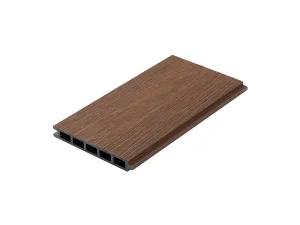
Direct Factory Specification & Sample Kits
Global importers, landscape contractors, and building material distributors can request physical sample cases containing co-extruded color chips, full profile cutaways, hidden clip assemblies, and complete technical data binders.