
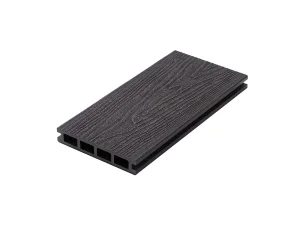
Primary Engineered Product Showcase
Standard and customized composite systems manufactured under ISO 9001 and CE directives, engineered with up to 90% recycled sustainable feedstock.
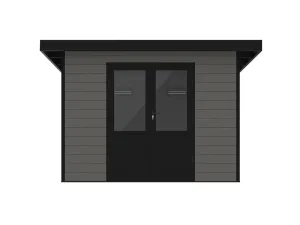
CeilingStar Premium Outdoor Storage Tool & Bike Shed with Lock Solutions
View Product Data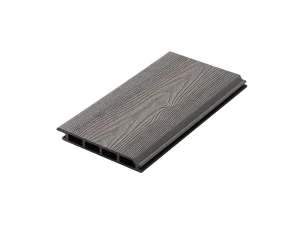
PlaneSleek WPC Exterior Cladding Panels with Enhanced UV Protection Core
View Product Data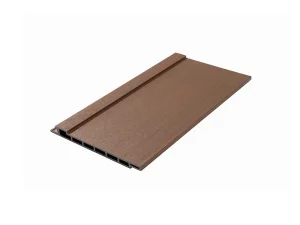
Waterproof Composite Deck Cladding - FORESTAR SlatWeave Architecture
View Product Data
Waterproof Composite Deck Cladding for Houses - FORESTAR SlatWeave Design
View Product Data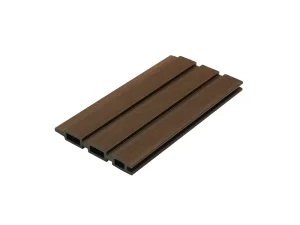
Factory WPC Privacy Fencing Systems with Hidden Fastener Integration
View Product Data
WPC Privacy Fencing - Unbreachable Wind Defense for Modern Landscapes
View Product Data
CeilingStar Premium Outdoor Heavy-Duty Storage Tool & Bike Enclosures
View Product DataMaterial Science Transformation: The Composite Paradigm
As global infrastructure codes push for sustainable, rot-proof alternatives to high-carbon or preservative-treated lumber, Wood-Plastic Composite (WPC) material science represents a fundamental evolutionary leap. Operating from our manufacturing base at Anhui Fumeida New Material Technology Co., Ltd. (Forestar) in Xuancheng, Anhui, China, our industrial R&D merges up to 90% reclaimed timber fibre with modified high-density polyolefins (HDPE) to engineer composite boards that completely bypass the biological vulnerabilities of traditional organic timber.
Lifecycle ROI Optimization
Unlike pressure-treated pine or exotic hardwoods requiring chemical sealing, annual staining, and frequent joist adjustments, co-extruded composite materials operate at near-zero maintenance overhead. Over a 20-year structural lifecycle, composite deck installations yield up to a 64% reduction in total operational cost.
Phase-Encapsulated Weatherability
Moisture absorption rates below 0.5% preclude the biological prerequisites for fungal rot, wet-rot structural breakdown, and pest infestation (including termites and marine borers). The polymeric protective envelope guarantees performance under deep freeze-thaw thermal cyclings from -40°C to +65°C.
Circular Carbon Economics
By valorizing clean post-industrial hardwood wood flour combined with traceable recycled HDPE plastics, our closed-loop continuous extrusion infrastructure diverts tens of thousands of metric tons of polymeric and timber waste from landfills annually, enabling international LEED certification attainment.
Technical Roadmap: The Next Frontier of Extruded Composites
Our active R&D pipelines address emerging microclimate vulnerabilities, infrared thermal accumulation, and circular longevity.
Horizon 2026-2027
Reflective Core Cool-Touch
Engineered inorganic pigments embedded directly into the outer shield reflect near-infrared (NIR) radiation wavelengths, lowering barefoot touch temperatures by up to 12°C in high-insolation equatorial marine applications.
Horizon 2027-2028
Nano-Graphene Cap Toughening
Integrating synthetic graphene platelets into the secondary outer co-extrusion mantle to dramatically elevate pencil surface hardness ratings to >4H, completely eliminating surface micro-scratching from outdoor furniture and high foot traffic.
Horizon 2028-2029
Bio-Circular Polyols
Transitioning base matrix binding polymer compositions from conventional fossil hydrocarbons to 100% bio-derived vegetable circular polyolefins, paving the path towards zero-carbon operational building certifications.
Horizon 2029-2030
Dynamic Self-Cleaning Surfaces
Photocatalytic titanium-oxide surface treatments that decompose airborne organic grease, wine stains, and particulate pollution under UV sunlight exposure, rinsed clean with standard rainwater.
Material Performance & Engineering Matrix
Standardized testing compliance based on ASTM, EN, and ISO structural and durability benchmarks.
| Evaluation Parameter | Forestar Capped WPC Composite | First-Generation Uncapped WPC | Treated Softwood (Pine/Fir) | Tropical Hardwood (Ipe/Teak) |
|---|---|---|---|---|
| Moisture Absorption (24h immersion) | < 0.4% (ASTM D1037) | 1.8% - 3.5% | 18.0% - 28.0% | 4.0% - 8.0% |
| Flexural Modulus of Rupture (MOR) | > 32 MPa (EN 15534) | 22 - 26 MPa | 14 - 24 MPa | 45 - 60 MPa |
| Surface Slip Rating (Wet Pendulum) | Class R11 / P4 (DIN 51130) | Class R9 / P2 | Variable / Dangerous when wet | Class R10 / P3 |
| Fungus & Termite Breakdown | Zero Degradation (Rating 10) | Edge-swelling localized risk | High vulnerability without biocide | Naturally resistant (High cost) |
| Dimensional Linear Expansion Coeff. | 3.2 x 10^-5 K^-1 | 4.5 x 10^-5 K^-1 | Hydration swelling erratic | Seasonal warping/twisting |
| 20-Year Maintenance Expenditure | Near Zero (Water Rinse) | Low-Medium (Deep washing) | Exceeds 250% initial board cost | Substantial (Oiling/stripping) |
China Factory 4.0: Scalability, Precision & Supply Chain Resilience
From our facility in Xuancheng, Anhui, we implement cutting-edge Industry 4.0 manufacturing processes to guarantee batch uniformity and high-capacity export consistency.
Automated Gravimetric Dosing
Our computerized continuous extrusion system uses multi-component gravimetric feeding arrays to calibrate polymer-to-wood flour ratios down to a 0.2% variance tolerance. This eliminates structural weak zones and delivers unyielding batch-to-batch density profiles across hundreds of export containers.
Single-Pass 360° Co-Extrusion
By utilizing dual-barrel co-extrusion technology, our capping mantle is molecularly grafted directly onto the hot dense composite core under extreme hydraulic pressure. The absence of mechanical adhesives ensures the shell can never blister, delaminate, or peel away under thermal shock or heavy shear force.
Real-Time In-Line Laser Metrology
Extrusion lines are monitored continuously with multi-axis non-contact laser scanning telemetry. Flaws in dimensional profile tolerances (>0.3mm), internal hollow void anomalies, or surface textural micro-shifts are flagged and segregated instantly prior to robotic staging.
Macro Industry Solutions & Strategic Sourcing
Engineered for large-scale procurement programs, municipal waterfronts, hospitality chains, and Tier-1 hardware distributor networks.
Commercial Boardwalks
Designed for public infrastructure subjected to millions of pedestrian impacts, saltwater immersion, and UV degradation. Heavy-duty solid profile configurations resist heavy commercial load-bearing thresholds with minimal joist flexing.
Resort Hospitality
Splinter-free surface architecture engineered for bare-foot safety around pool aprons, villas, and oceanfront dining platforms. High stain resistance prevents permanent discolorations from chemical sunscreen, food oils, and acidic beverages.
Mixed-Container Loads
Global procurement teams can consolidate decking boards, WPC exterior cladding, privacy fencing, and garden shed flat-packs in a single shipping container, maximizing space utilization, reducing freight overhead, and simplifying import duties.
Private-Label OEM/ODM
Complete custom profiling, woodgrain texture embossing, bespoke pigment color balancing, and custom packaging support for regional building material distributors seeking proprietary product differentiation.
Localized Compliance, Certification & Technical Assurance
Navigating regional building safety codes requires rigorous third-party verification. Forestar materials are backed by comprehensive international testing dossiers.
European Union (CE & EN 15534)
Fully compliant with EN 15534 for composite building elements. Fire-rating classifications up to Euroclass Bfl-s1, non-toxic environmental REACH certifications, and verified heavy metal absence under rigorous RoHS laboratory testing regimes.
North American Standards (ASTM)
Tested rigorously under ASTM D7031, D7032, and D6109 structural spanning codes, confirming adequate load capabilities for typical 16-inch (400mm) and 12-inch (300mm) joist frameworks. Accelerated QUV aging resistance tested to 3,000+ continuous hours.
Environmental Auditing & Traceability
FSC-certified wood fibre sourcing available upon order specification. Full Life Cycle Assessment (LCA) data packages and Environmental Product Declaration (EPD) reporting ready to support developer Green Building credit applications.
Technical & Commercial FAQ
Detailed insights into material properties, installation engineering, and international logistics for trade buyers.
What distinguishes co-extruded capped composite from traditional uncapped decking?
Uncapped decking features exposed wood fibres throughout its cross-section, leaving it susceptible to surface staining, mold growth, and gradual UV fading. Co-extruded (capped) decking incorporates a 360-degree high-density polyethylene polymer shell around the composite core. This barrier prevents moisture ingress, preserves color fidelity under intense sun, and wipes clean with simple water.
How does composite decking accommodate thermal expansion and contraction?
Unlike natural timber, which expands laterally from moisture absorption, composite materials fluctuate longitudinally with temperature variations. Forestar installation protocols specify precise expansion gap thresholds (typically 3mm to 6mm depending on ambient temperatures during installation) controlled via our concealed stainless steel clip system.
Can international distributors order mixed-category containers?
Yes. Forestar produces decking boards, exterior cladding, fencing systems, and prefabricated garden sheds from our Xuancheng manufacturing complex. Importers can consolidate multiple complementary systems within a single 40ft High Cube container, optimizing freight spend and maintaining matching woodgrain profiles across an entire outdoor living space.
What substructure spans are recommended for heavy commercial installations?
For standard residential decking applications, joist centers should not exceed 400mm (16 inches) on center. For high-traffic commercial boardwalks or diagonal board orientations, we recommend reducing joist spans to 300mm (12 inches) on center, paired with solid heavy-duty profiles to maintain structural stiffness.
Are physical samples provided before contract confirmation?
We supply sample kits containing color swatches, extrusion profiles, and texture options to authorized trade professionals, developers, and distributors. Evaluating color temperature and surface grain beneath regional sunlight is a standard step before confirming container-level orders.
How does the factory manage environmental sustainability metrics?
Our formulations use up to 90% recycled raw material feedstock by weight, combining reclaimed hardwood processing flour with recycled high-density consumer polyolefins. This closed-loop extrusion loop prevents deforestation and diverts plastic waste while keeping manufacturing energy consumption low.
Specialized Exterior & Storage Product Systems
Engineered outdoor storage structures, anti-slip profiles, and high-performance weatherboard claddings ready for international volume dispatch.
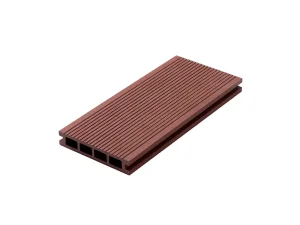
TimberFlow WPC Decking Boards with Advanced Anti-Slip Surface Profile
View Product Data
PlaneSleek WPC Exterior Cladding Panels with Protective UV Coating
View Product Data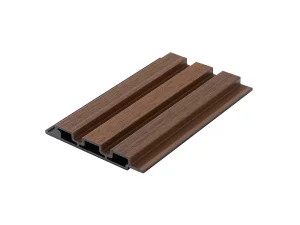
CrestWall Engineered Wood Plastic Composite Wall Siding Systems
View Product Data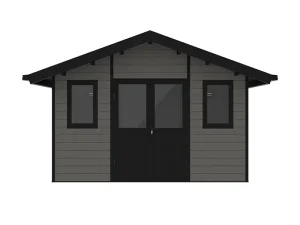
RidgeStar Heavy Snow Load Rated Waterproof Garden Modular Enclosures
View Product Data
High-Spec Outdoor Secure Tool & Bike Storage Shed Systems
View Product Data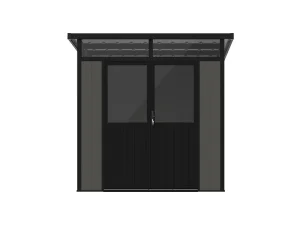
MiniStar Compact WPC Outdoor Utility Storage Shed with Security Door
View Product Data
RidgeStar Heavy Snow Load Reinforced Backyard Garden Structure
View Product Data