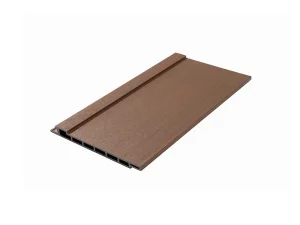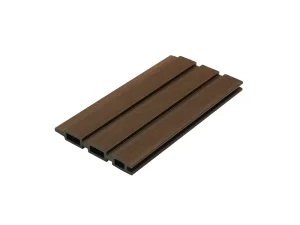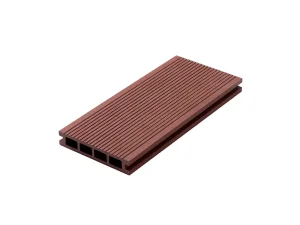
Featured Co-Extrusion Decking & Structural Outdoor Systems
Factory-direct Wood Plastic Composite (WPC) profiles manufactured with up to 90% recycled core polymers, dual-matrix multi-tonal woodgrains, and UV-stabilized capping shells.
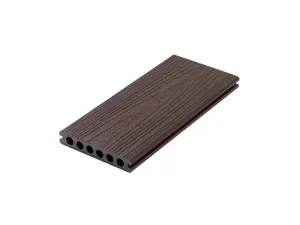
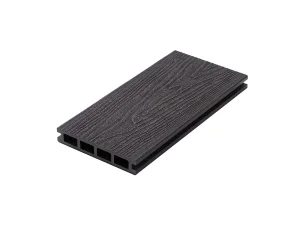
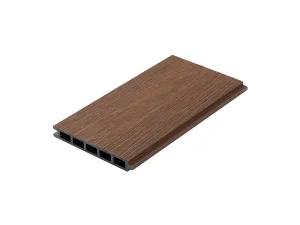
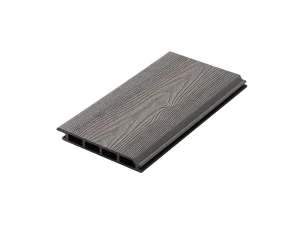
Global Market Dynamics: The Paradigm Shift in Composite Decking Colors
Across North America, the European Union, Australia, and emerging luxury enclaves in Latin America and the Middle East, composite decking color selection has transitioned from an aesthetic afterthought to a mission-critical engineering specification.
Thermal Dynamics & Albedo Performance
Modern building codes increasingly evaluate urban heat island (UHI) mitigation. Dark monochrome decking profiles can absorb excessive solar irradiance, yielding surface temperatures exceeding 65°C. High-performance composite manufacturers engineer multi-tonal hues incorporating infrared-reflective pigments, boosting the Solar Reflectance Index (SRI) without compromising deep visual richness.
Co-Extrusion Cap Layer Science
First-generation uncapped composites relied on unshielded pigment distribution throughout the wood-fiber substrate, leading to inevitable UV chalking and tannin leaching. Second- and third-generation composites deploy an impenetrable co-extruded polymer shell (such as modified HDPE or ASA core-shell resins) that locks in complex multi-hue color gradients and resists photo-oxidative decay.
B2B Margin Optimization & Color Retention
For bulk importers, merchant distributors, and commercial contractors, color failure is the leading driver of warranty claims and brand erosion. By sourcing from vertically integrated Chinese manufacturing hubs with closed-loop color spectrophotometry, B2B partners safeguard project continuity across expansive phased commercial developments.
Co-Extrusion Capstock Chemistry: How Best-in-Class Factory Formulations Prevent Degradation
Achieving photostable, hyper-realistic timber colorways requires deep metallurgical, chemical, and polymer engineering. A granular breakdown of our composite capping matrix demonstrates how multi-tonal stability is preserved across 25+ years of exterior exposure.
| Cap Layer Component | Technical Formulation | Function in Color Preservation | Industry Standard Compliance |
|---|---|---|---|
| Primary Polymer Matrix | Modified High-Density Polyethylene (HDPE) / Specialty Linear Acrylic Resins | Provides zero-porosity barrier isolation; prevents moisture penetration and color bleed. | ASTM D638 / ISO 527 |
| Inorganic Rutile Pigments | Surface-Treated Titanium Dioxide (TiO₂) & Complex Inorganic Color Pigments (CICP) | Maximum resistance to photo-reduction; prevents chalking and yellowing under UV-A/UV-B. | ASTM D476 / ISO 591 |
| Light Stabilizer System | Hindered Amine Light Stabilizers (HALS) + Hydroxyphenyl-benzotriazole UV Absorbers | Scavenges free radicals generated by polymer photo-oxidation; maintains chemical backbone. | ASTM G154 / ISO 4892-2 |
| Thermal Reflectance Modifiers | Mixed Metal Oxide (MMO) Infrared-Reflective Particle Dispersions | Reflects near-infrared (NIR) solar energy, dropping board equilibrium temperature by 8°C–12°C. | ASTM E1980 / CRRC-1 |
| Multi-Tonal Streaking Agents | Differential Rheology Masterbatch with Variable Viscosity Indices | Simulates non-repeating natural hardwood grain swirls (teak, ipe, walnut) during dynamic extrusion. | Factory QC Spec Forestar-Q3 |
Sub-Micron Pigment Micro-Grinding
Factory compounding utilizes ultra-high-shear bead mills to reduce raw inorganic pigment agglomerates to under 0.5 microns. This ensures complete colloidal dispersion throughout the cap layer melt, eradicating blotching, micro-streaking failures, or premature localized color washout.
360-Degree Total Shell Encapsulation
Unlike economy decking boards that only cap the top surface, our primary commercial lines engineer complete 4-sided 360-degree co-extrusion. This balances hydraulic stress across the profile, prevents asymmetric moisture absorption, and ensures groove color parity for hidden-fastener installations.
Accelerated Xenon Arc Verification
Every color iteration undergoes 3,000+ continuous hours of testing under ASTM D2565 / ISO 4892 Xenon Arc chambers. This simulates a minimum of 15 years of equatorial solar irradiance, guaranteeing a total color divergence of Delta E < 3.0, undetectable to the human eye in open outdoor spaces.
Localized Architectural Color Palettes & Global Application Scenarios
Geographical variations in solar azimuth, local timber history, and regional architectural vernacular demand precise colorway selection. Below are four key global macro-climates and their corresponding high-demand palette strategies.
Nordic & Central European Minimalist
Target Markets: Germany, Austria, Scandinavia, United Kingdom, Netherlands.
Dominant Palettes: Silvered Graphite, Scandinavian Ash, Basalt Grey, Weathered Oak.
Environmental Rationale: In regions with frequent overcast skies, cool undertones with light reflectance values (LRV 25-35) maximize spatial brightness. Engineered with dense surface crosslinking to resist freeze-thaw micro-fissuring and persistent surface moss/algae staining during damp, low-sunlight winter seasons.
Sunbelt, Desert & Coastal Arid Zones
Target Markets: Texas, Arizona, Southern California, UAE, Saudi Arabia, Australia.
Dominant Palettes: Sand Dune, Desert Teak, Bleached Driftwood, Warm Almond.
Environmental Rationale: Extreme direct ultraviolet exposure (UV Index 10+) and ambient heat exceeding 45°C mandate high-albedo, NIR-reflective surface layers. Dark tones here cause foot discomfort; lighter earth tones ensure barefoot comfort around resort pools while retaining complete color uniformity without chalking.
Tropical & High-Humidity Rain Belts
Target Markets: Florida, Southeast Asia, Colombia, Brazil, Caribbean Basin.
Dominant Palettes: Amazonian Ipe, Dark Teak, Royal Rosewood, Deep Charcoal.
Environmental Rationale: In dense tropical environments where humidity frequently exceeds 85%, natural exotic hardwoods rot, check, and leech heavy red tannins onto adjacent concrete. Our hydrophobic capped formulations emulate prized South American hardwoods with zero fungal decay and complete chlorine/saltwater resistance.
China Supply Chain Resilience: Industrial Scale & Compounding Precision
Headquartered in Xuancheng, Anhui, China, our advanced manufacturing hub (operated by Anhui Fumeida New Material Technology Co., Ltd.) leverages an agile, vertically integrated supply chain ecosystem that delivers unmatched cost efficiency, volumetric capacity, and chromatic uniformity.
In-House Masterbatch Synthesis
Rather than buying pre-formulated pigments off-the-shelf, we synthesize proprietary color masterbatches in-house. This direct control over pigment loading ratios gives international distributors custom RAL and Pantone matching within 7 days, maintaining exact color continuity across multi-year purchase orders.
Automated Gravimetric Dosing
Our continuous co-extrusion lines deploy computer-controlled loss-in-weight gravimetric feeders. Precision within 0.1% prevents color fluctuation down the extrusion line, ensuring that the first board extruded matches the hundred-thousandth board loaded into shipping containers.
Upstream Feedstock Integration
Direct access to purified, high-volume post-industrial recycled polymers and wood fiber processing mills in Anhui isolates our manufacturing from raw resin price spikes. We pass this cost advantage to foreign importers while upholding strict 90% recycled sustainability credentials.
Full Port & Logistics Synergy
Positioned strategically near major Yangtze River delta logistical arterials with rapid container drayage to Shanghai and Ningbo ports. Bulk multi-product container consolidation across decking, cladding, fencing, and sheds reduces freight overhead and simplifies customs clearance.
Technological Roadmap: The Next Decade in Composite Color Engineering (2026–2035)
As composite materials enter their next developmental stage, our R&D department continues pioneering next-generation material science, focusing on functional thermal reflection, self-healing surfaces, and digital batch formulation.
Next-Gen Cool-Touch Infrared Reflection
Integration of specialized ceramic multi-core pigments capable of reflecting the infrared solar spectrum. Dark walnut and deep espresso profiles will achieve thermal stability comparable to light grey boards, expanding architectural adoption in high-sun countries without barefoot burns.
Bio-Based Thermoplastic ASA Shells
Development of bio-derived Acrylonitrile Styrene Acrylate (ASA) capstocks utilizing agricultural plant oils. These shells deliver automotive-grade scratch dissipation, zero optical glossing, and molecular memory that self-heals micro-scratches under standard ambient solar heat.
AI-Driven Closed-Loop Metamerism Correction
Full implementation of automated machine-vision spectrophotometry along our active extrusion dies. In-line algorithms automatically detect subtle variations in incoming recycled fiber base tones, dynamically tuning liquid pigment micro-injectors in real time to hold Delta E to zero across infinite production batches.
Testing Standards & International Compliance Assurance
Exporting to over 45 countries mandates uncompromised conformity with global municipal building codes, slip resistance metrics, fire performance parameters, and environmental chemical health directives.
| Testing Domain | Applicable Standards | Forestar Performance Benchmark | Global Acceptance Scope |
|---|---|---|---|
| Colorfastness & Weathering | ASTM D2244, ASTM G154, ISO 4892-2 (Xenon Arc) | ΔE < 2.5 after 3,000 hrs UV exposure; zero chalking or surface blistering. | USA, Canada, EU, Australia |
| Fire Reaction & Flame Spread | EN 13501-1 (Euroclass), ASTM E84 (Tunnel Test) | Class Bfl-s1 (EU) / Class B Flame Spread Index (USA). Highly fire retardant. | International Commercial & Residential |
| Slip Resistance Rating | DIN 51130 (R-Value), EN 13893, AS/NZS 4586 | Certified R11 to R12 rating wet/dry; pendulum test value (PTV) > 36. | Pool surrounds, municipal walkways, parks |
| Mechanical Creep & Deflection | EN 15534-1/4, ASTM D7032 | Bending strength > 32 MPa; modulus of elasticity > 3500 MPa. Low span deflection. | High-traffic public infrastructure |
| Chemical Safety & Ecology | EU REACH (SVHC List), RoHS, FSC Recycled | Zero heavy metals, free of toxic phthalates; 100% compliant with REACH thresholds. | European Union, North America, Japan |
B2B Importer & Specifier Frequently Asked Questions
Engineered answers addressing procurement logistics, custom color compounding, long-term degradation risk, and container packaging protocols for commercial buyers.
What causes low-quality composite decking to fade or discolor, and how does your factory prevent it?
Can Forestar engineer proprietary custom colors to match local wood types or existing distributor catalogs?
How does board color impact thermal expansion and structural joist spacing calculations?
What is the minimum order quantity (MOQ) for bespoke colors, and can we consolidate lines in one shipping container?
What surface embossing methods are used to deliver authentic woodgrain without damaging the protective shell?
Where can overseas commercial procurement teams meet your technical representatives in person?
Explore Complete Exterior Systems: Cladding, Fencing & Heavy-Duty Decking
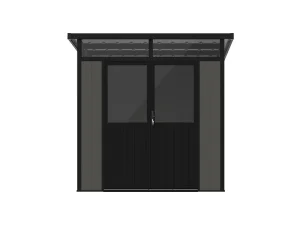
Precision-engineered matching profiles designed to create unified exterior landscapes with seamless colorways across walls, perimeters, outdoor living areas, and storage spaces.