
Featured Architectural WPC Decking & Cladding Profiles
Explore high-performance capped decking, waterproof cladding, and modular exterior solutions engineered by Forestar (Anhui Fumeida New Material Technology Co., Ltd.) for tier-1 distributors worldwide.
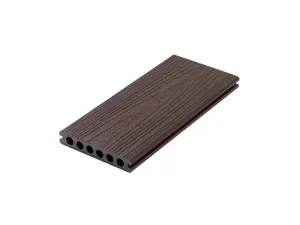
TerraShield Low Maintenance WPC Decking
View Product Specs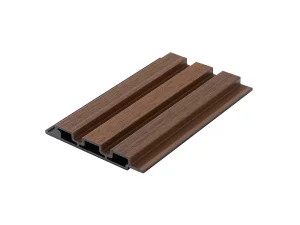
CrestWall Exterior WPC Wall Siding
View Product Specs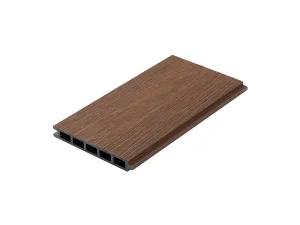
HorizonLine Engineered WPC Fence Panels
View Product Specs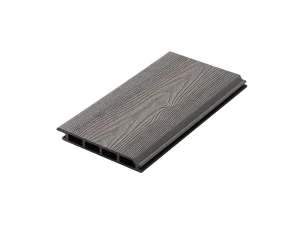
PlaneSleek UV-Shield Exterior Cladding
View Product Specs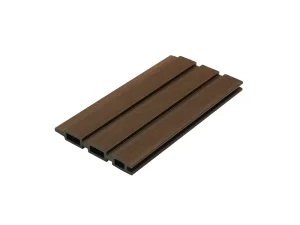
Unbreachable WPC Privacy Hidden Fastener Fence
View Product Specs
PlaneSleek Weather-Resistant Façade Panels
View Product Specs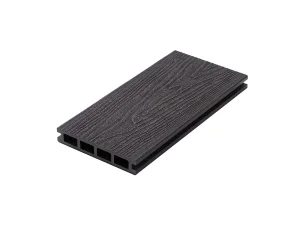
EclipseGrain Poolside Anti-Slip Decking
View Product Specs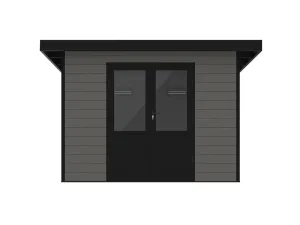
CeilingStar Modular Outdoor Storage Shed
View Product SpecsThe Global Commercial & Industrial Landscape of Composite Decking
A macroeconomic evaluation of composite decking brand architectures, supply-chain arbitrage, and the global transition away from treated softwood timber.
The global wood-plastic composite (WPC) market has transitioned from an alternative building niche into a multi-billion dollar cornerstone of modern commercial and residential infrastructure. Driven by stringent sustainability mandates, heightened timber deforestation concerns, and escalating labor costs associated with traditional lumber maintenance, exterior designers and tier-1 building material distributors are systematically reallocating inventory from pressure-treated lumber (PTL) toward advanced co-extruded polymers.
While legacy North American brands such as Trex, TimberTech, and Fiberon historically established retail brand recognition through big-box distribution, modern procurement channels reveal a pronounced structural shift. Global commercial specifiers, real estate REIT developers, and regional distributor networks are increasingly bypassing multi-tier retail markup by establishing direct OEM and ODM manufacturing partnerships with integrated, vertically aligned factories in China. This shift is not merely driven by cost arbitrage; it is catalyzed by superior extrusion agility, custom color-matching capabilities, and the capacity to consolidate complementary exterior systems—such as decking, exterior wall cladding, boundary fencing, and modular garden sheds—within a single, consolidated containerized supply chain.
The North American Pivot
In the United States and Canada, high interest rates and contractor labor shortages have catalyzed demand for rapid-install hidden clip systems and rot-proof substructures. Bulk procurement focuses on high-yield, scratch-resistant capped profiles that satisfy strict ICC-ES AC174 building codes while delivering 25-to-30-year limited residential warranties.
European Eco-Directives
Within the EU, the Circular Economy Action Plan and REACH directives mandate high reclaimed-material percentages and zero hazardous plasticizers. Importers in Germany, Austria, and Scandinavia prioritize third-party verified EPDs (Environmental Product Declarations) and low thermal expansion coefficients to endure demanding continental freeze-thaw cycles.
Emerging High-Growth Markets
In Australasia, Latin America, and the Middle East, extreme UV indices and coastal humidity rapidly degrade organic timber. Specifiers demand high Solar Reflectance Index (SRI) surfaces that mitigate barefoot surface temperature, alongside chlorine and saltwater chemical inertness for high-end resort boardwalks and municipal marina promenades.
Technical Roadmap: Next-Generation Polymer Engineering
How cutting-edge 4th-generation co-extrusion, crosslinked polymer matrices, and infrared-reflective pigments are rendering traditional wood-plastic composites obsolete.
The historical evolution of wood-plastic composites is delineated by four distinct technological generations. Early 1st-generation uncapped composite decking suffered from hygroscopic swelling, organic mold colonization, and rapid UV chalking due to exposed wood flours. Second-generation capped boards introduced a rudimentary polyethylene shield, which frequently delaminated under high shear stress or concentrated thermal cycles. Today, Forestar's state-of-the-art manufacturing utilizes advanced 4th-generation 360-degree continuous co-extrusion technology, bonding an ultra-durable, modified Surlyn-grade ionomer and high-density polyethylene (HDPE) polymer cap entirely around the core matrix, including within the groove channels.
| Performance Criterion | Forestar TerraShield 4th Gen Co-Ex | Generic Capped Composite | Traditional Pressure-Treated Timber |
|---|---|---|---|
| Encapsulation Integrity | 360° Complete Capped Core | Top/Sides Only (Moisture Penetrates Underside) | Unshielded Organic Cellular Structure |
| Water Absorption (ASTM D1037) | < 0.25% (Fully Hydrophobic Barrier) | 1.2% - 2.5% | 25.0% - 60.0% (Severe Swelling & Warping) |
| Flexural Modulus (ASTM D790) | > 3,200 MPa (High Structural Stiffness) | 2,100 - 2,600 MPa | Variable (Prone to Grain Splitting & Knots) |
| UV Degradation (ASTM G154 2000hrs) | Delta E < 2.0 (Virtually Indetectable Greying) | Delta E > 5.0 (Visible Color Shift) | Severe Fading, Surface Checking, Greying |
| Slip Resistance (DIN 51130 / EN 15534) | Class R11 / Pendulum Test Value (PTV) > 36 | Class R9 / Marginal Wet Traction | Extremely Slippery under Algal Film Growth |
| Annual Maintenance Burden | Occasional Soap & Water Wash (Zero Coating) | Pressure Wash, Spot Clean | Annual Stripping, Chemical Sanding, Restaining |
Cool-Touch Chemistry
By blending nanoscale infrared-reflective pigment compounds directly into the co-extruded shield, thermal absorption is minimized, reducing walk-on temperatures by up to 15°C compared to conventional dark WPC formulations under peak solar irradiation.
Coupling Agent Optimization
Proprietary maleic anhydride grafted polyethylene (MAPE) compatibilizers guarantee absolute molecular cohesion between recycled cellulosic wood micro-fibers and thermoplastic resin polymers, preventing internal moisture voids.
Engineered Flame Retardance
Integrated inorganic magnesium hydroxide and aluminum trihydrate micro-fillers facilitate self-extinguishing behavior, achieving EN 13501-1 Class Bfl-s1 and ASTM E84 Class B commercial flame spread classifications without halogen release.
Circular Bio-Economy
Composed of up to 90% reclaimed inputs—including post-industrial clean timber flour and recycled consumer packaging polymers—our closed-loop manufacturing prevents landfill diversion while remaining 100% recyclable at end of service life.
China Factory Supply Chain Resilience & Forestar Infrastructure
How centralized industrial clusters, vertical compounding integration, and rigorous QA automated extrusion lines generate unbreachable wholesale competitive advantages.
Global supply chain volatility has underscored that material quality is inseparable from manufacturing reliability. Operating out of our modern industrial complex in Xuancheng, Anhui, China (Anhui Fumeida New Material Technology Co., Ltd.), Forestar delivers an unprecedented combination of precision engineering and massive production capacity. Unlike fragmented regional fabricators that outsource compounding or profile design, our end-to-end vertical integration provides foreign importers with unmatched cost predictability and batch consistency.
In-House Compounding & Granulation
Forestar controls raw material purity from the start. We wash, pulverize, and compound recycled HDPE and kiln-dried 80-120 mesh wood powder internally, ensuring complete control over polymer melt index (MFI), density, and moisture content before profile extrusion.
Automated High-Torque Extrusion
Our facility operates multi-cavity, twin-screw parallel extruders equipped with continuous gravimetric dosing and vacuum calibration tables. Real-time computerized laser thickness sensors ensure dimensional tolerances remain strictly within ±0.3mm across 5.8-meter commercial board spans.
One Container, 4 Integrated Lines
Consolidate your inventory without multi-vendor freight overhead. Importers can combine high-margin composite decking, exterior cladding, boundary fencing, and modular garden shed kits within a single 40ft High Cube container, optimizing cash flow and matching architectural colorways perfectly.
Localized Application Scenarios: Engineered Across Diverse Microclimates
From sub-zero Arctic freeze-thaw cycles to high-salinity tropical oceanfronts, Forestar composite systems perform reliably where natural timber fails.
Alpine & Nordic Sub-Zero Climates
Deployment: Helsinki (Finland), Vienna (Austria), Canadian Rockies.
Engineering Challenge: Internal moisture freezing causes expansion, creating micro-fissures, structural cracking, and delamination.
Forestar Solution: TerraShield's near-zero hygroscopic absorption (<0.25%) prevents moisture ingress, while calibrated stainless-steel expansion clips facilitate controlled thermal contraction without board distortion.
High UV, Arid & Desert Zones
Deployment: Dallas & Houston (USA), Santiago (Chile), Middle East.
Engineering Challenge: Photolytic polymer bond breakdown causes surface embrittlement, chalking, and severe fading.
Forestar Solution: Synergistic hindered amine light stabilizers (HALS) and antioxidant additives block UV radiation, ensuring multi-decade color fastness and structural stability under extreme solar conditions.
Tropical, High-Humidity & Marine
Deployment: Medellín (Colombia), Coastal Florida, Caribbean Resorts.
Engineering Challenge: Constant fungal rot, subterranean termite attack, wood-boring insects, and saltwater chlorine corrosion.
Forestar Solution: Non-porous capped outer shields prevent fungal spore adhesion. Chemically inert surfaces withstand continuous marine splash zones, chlorinated pool decks, and tropical rains without maintenance.
International Compliance, Certifications & Trade Assurance
Full regulatory documentation supporting smooth customs clearance, municipal building permits, and project tenders across North America, the European Union, and the United Kingdom.
ASTM International
Tested rigorously under ASTM D7032 (standard specification for performance-rated composite wood decks) and ASTM D6109 for flexural properties and structural support load spans.
CE / EN 15534 Standard
Fully compliant with harmonized European standard EN 15534 parts 1, 4, and 5 for wood-plastics composites, covering dimensional stability, mechanical impact resistance, and slip friction.
REACH & RoHS Compliance
Chemical analysis certified by SGS demonstrating zero presence of SVHCs (Substances of Very High Concern), toxic heavy metals, phthalates, or volatile organic compounds (VOCs).
FSC & ISO 9001/14001
Wood flour components originate from sustainably managed timber waste with certified chain-of-custody tracking. Operating under strict ISO 9001 quality and ISO 14001 environmental frameworks.
Structural Installation Engineering: Minimizing Warranty Claims
A technical guide for general contractors, deck installers, and commercial landscapers to achieve optimal dimensional stability and aesthetic longevity.
Substructure Joist Spacing
Maintain maximum 300mm to 350mm on-center joist spacing for commercial applications and 45-degree diagonal installations; maximum 400mm on-center for standard residential load configurations. Never span composite decking without proper support joists.
Continuous Cross-Ventilation
Ensure an unobstructed sub-deck ventilation clearance of at least 100mm above permeable ground or 50mm over concrete slabs. Trapped humidity beneath decking frames produces differential thermal expansion and upward cupping forces.
Thermal Expansion End Gaps
Because thermoplastic polymers expand and contract along board lengths with ambient temperature changes, butt joints require calibrated expansion gaps: 3mm to 6mm depending on installation temperature. Utilize double-joist configurations at butt junctions.
Engineered Fastener Hardware
Always utilize Forestar-certified marine-grade 304 or 316 stainless-steel hidden clips. Hidden clip channels maintain uniform 5mm side drainage spacing while allowing the composite profile to slide naturally through seasonal thermal cycles without stress fractures.
Comprehensive Architectural Building Envelopes & Modular Systems
Complete your supply chain procurement with heavy-snow rated sheds, interlocking wall cladding, and high-tensile privacy fencing factory-direct from Anhui, China.
HorizonLine Acoustic WPC Privacy Fence
View Product Specs
TerraShield Heavy Commercial Decking
View Product Specs
CrestWall Architectural Building Cladding
View Product Specs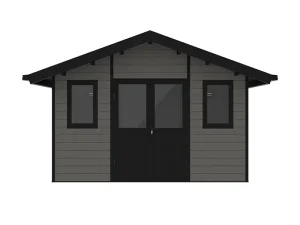
RidgeStar Heavy Snow Load Garden Shed
View Product Specs
RidgeStar Waterproof Weather-Tight Shed
View Product Specs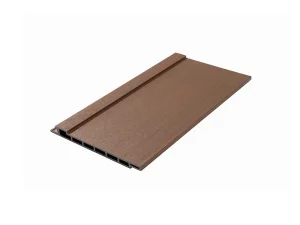
FORESTAR SlatWeave Interlocking Cladding
View Product Specs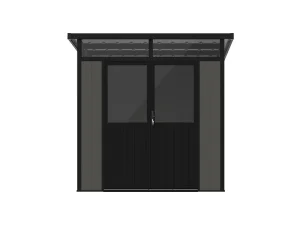
MiniStar Secure Lockable Storage Shed
View Product Specs
SlatWeave Commercial Architectural Cladding
View Product SpecsFrequently Asked Questions for Importers, Distributors & Specifiers
In-depth responses covering commercial factory audits, testing verification, OEM private labeling, container consolidation, and warranty compliance.
What raw material inputs differentiate Forestar WPC from budget competitors?
Forestar utilizes strictly virgin-grade reclaimed industrial HDPE plastics and premium 80-120 mesh dry wood flour. Unlike low-tier manufacturers that introduce cheap calcium carbonate (chalk) fillers or recycled PVC that becomes brittle, our 4th-generation co-extruded boards incorporate high-load maleic anhydride coupling agents, UV light stabilizers (HALS), and high-density antioxidant packages for lasting structural resilience.
Can foreign distributors order physical samples before committing to container volumes?
Yes. We operate an express sample delivery service for qualified distributors, landscape architects, and construction contractors. We strongly recommend evaluating physical deck board cutouts, cladding profiles, and color chips under your region's natural sunlight conditions to inspect the 3D embossed woodgrain textures and evaluate surface heat absorption.
Do you support customized colors, custom lengths, and private-label packaging?
Absolutely. We regularly engineer custom extrusion lengths (such as 2.4m, 3.6m, 4.8m, and 5.8m to optimize 40ft container loading without dead freight space). We provide custom RAL/Pantone color matching with Spectrophotometer verification and full private-label packaging, including custom-branded protective films, barcode tags, and corner-protected export crates.
What is the factory lead time and typical Minimum Order Quantity (MOQ)?
Our standard production lead time is 15 to 25 days from deposit confirmation to port loading (FOB Shanghai or Ningbo). Our standard MOQ is one 20ft Full Container Load (approx. 800-900 sqm of decking), but we allow cross-category product consolidation—combining decking, wall siding, fences, and garden sheds into a 40ft High Cube container to lower distributor inventory risk.
How does Forestar composite compare with Trex, TimberTech, and Fiberon?
From a material science perspective, Forestar TerraShield co-extruded boards achieve equivalent or superior technical performance in water absorption (<0.25%), flexural strength (>3,200 MPa), and UV color retention (Delta E < 2.0). By purchasing factory-direct from Anhui, China, commercial importers eliminate multiple distributor markups, securing a 35% to 55% landed cost advantage while retaining direct OEM engineering support.
What commercial warranties and certifications are provided for project tenders?
Forestar composite decking lines carry 25-to-30-year limited residential warranties and 10-to-15-year commercial performance warranties covering structural degradation, rot, splintering, and severe fading. We provide official test reports from SGS and Intertek for CE (EN 15534), ASTM D7032, ASTM E84 Class B flame spread, slip rating Class R11, and FSC certification for government tenders.