
Engineered Architectural Profiles & Outdoor Solutions
High-density co-extruded composite decking, structural wall siding, concealed defense fencing, and modular outdoor storage engineered for severe environment durability.
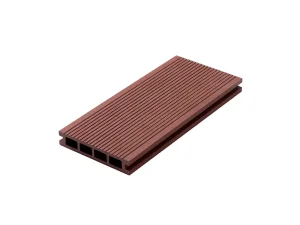
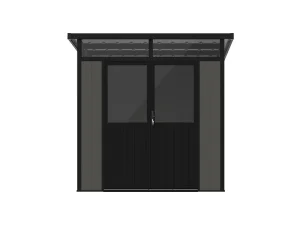
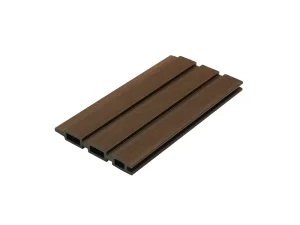
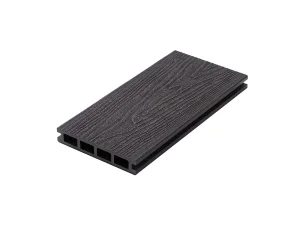
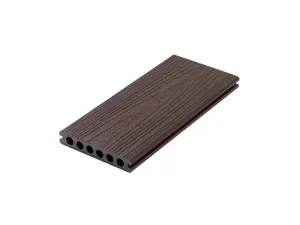
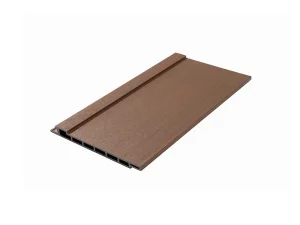
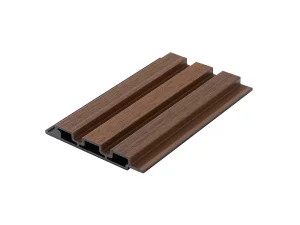
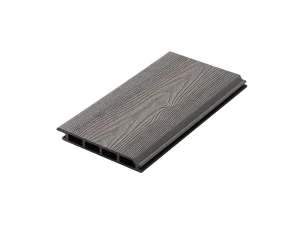
Global Macro Landscape & Black Decking Board Dynamics
How material science, polymer modification, and automated extrusion lines overcome thermal absorption in deep carbon black architectures.
Across the international landscape of landscape architecture, modern hospitality development, and residential decking infrastructure, black decking boards (deep charcoal, jet black, midnight carbon, and obsidian ash) have transitioned from a niche minimalist accent to a dominant architectural specification. From sleek infinity pool surrounds in Miami and Dubai to winter terraces in Helsinki and alpine retreats in Austria, black composite decks deliver an unmatched luxury aesthetic that frames natural landscaping with sharp, contemporary contours.
However, from an extrusion engineering standpoint, black and dark-toned Wood-Plastic Composite (WPC) profiles present stringent chemical and thermodynamic challenges. Traditional dark polymers suffer from excessive thermal solar absorption, accelerated photolytic oxidation (UV degradation), and localized coefficient of linear thermal expansion (CLTE) stress. Leading manufacturing facilities such as Anhui Fumeida New Material Technology Co., Ltd. (operating as Forestar) solve these structural vulnerabilities through advanced polymer science: utilizing 360-degree fully encapsulated co-extruded capping (surlyn/high-density polyethylene shells) infused with specialized inorganic infrared-reflective pigments, anti-oxidants, and UV-hindered amine light stabilizers (HALS).
Solar Reflective Index (SRI) Engineering
Through nano-scale thermal barrier pigmentation, our black capped decking profiles reflect up to 35% more near-infrared (NIR) radiation than standard unshielded dark composite profiles, mitigating surface heat under intense solar irradiation.
360-Degree Protective Cap Encapsulation
Unlike early-generation unshielded composite boards that suffer from localized micro-cracks and fiber bleeding, our multi-layer co-extrusion chemically anchors an impermeable outer shell that completely seals the core against oil, wine, grease, and rain.
Circular Carbon Recycled Matrix
Utilizing up to 90% reclaimed high-density polyethylene (HDPE) polymer streams and purified structural hardwood micro-fibers, our automated compounding eliminates deforestation pressures while producing high-tensile structural profiles.
Physical & Chemical Performance Matrix
Forestar co-extruded black decking profiles benchmarked against traditional virgin softwood timber and generic unshielded WPC profiles.
| Evaluation Parameter | Forestar Capped Black Composite | Generic Unshielded WPC | Pressure-Treated Softwood Timber |
|---|---|---|---|
| Surface Water Absorption (24h immersion) | < 0.5% (Impermeable) | 2.5% – 5.0% | 18.0% – 30.0% (Risk of Rot) |
| Flexural Strength (Modulus of Rupture - MOR) | ≥ 38 MPa (High Load Rated) | ≥ 22 MPa | ≥ 25 MPa (Degrades with Age) |
| Coefficient of Thermal Expansion (CLTE) | 2.8 × 10⁻⁵ / °C (Controlled) | 4.5 × 10⁻⁵ / °C | Highly Anisotropic (Swelling/Shrinkage) |
| Color Fastness (QUV Accelerated Weathering 3000h) | ΔE*ab ≤ 2.5 (No Fade) | ΔE*ab ≥ 7.0 (Noticeable Greying) | Complete Silvering / Bleaching |
| Slip Resistance Classification (Pendulum Test) | Class 3 / P4 - P5 (Dry & Wet Safe) | Class 2 / P2 | Class 1 / P1 (Severe Algae Hazard) |
| Maintenance & Chemical Treatments | None (Mild Soap & Water Wash) | Periodic scrub / Mild stain risk | Annual Oil, Sanding, Fungicide & Staining |
| Recycled Composition Ratio | Up to 90% Industrial Circularity | Variable / Unverified | 0% (Virgin Harvest) |
Localized Architectural Scenarios & Global Compliance
Configuring black decking profiles to meet distinct building codes, microclimates, and architectural demands across key export markets.
North American High-Heat & Coastal
In regions such as Texas, Florida, and California, black composite boards are optimized with ASTM E84 Class B flame spread compliance and enhanced UV-absorber chemistry to withstand extreme solar index levels without chalking or dimensional cupping.
Nordic & Central Alpine Freeze-Thaw
Decks installed across Finland, Sweden, and Austria demand exceptional freeze-thaw resilience. Forestar's dense polymer formulation resists moisture ingress, preventing internal ice crystallization, internal cleavage, and brittle fracture down to -40°C.
European CE & REACH Regulatory Standard
Fully compliant with EN 15534 standards for wood-plastic composites. Certified free from harmful plasticizers, phthalates, and SVHC under EU REACH regulation, allowing builders to comfortably deploy our systems in sensitive LEED and BREEAM developments.
Technological Roadmap & Sustainable Horizons
Forestar's strategic evolution in co-extrusion technology, raw material purifications, and digital factory integration.
Ultra-Shield Cap Encapsulation
Full commercialization of 360-degree high-density co-extrusion shells with multi-tone black woodgrain textures and anti-slip micro-grooves.
Infrared Cool-Step Additives
Integration of specialized ceramic reflective compounds reducing solar heat absorption by up to 10-15°C in deep black surface treatments.
Bio-Circular Polymer Matrices
Pioneering post-consumer agricultural waste fibers paired with circular ocean-bound plastics for verifiable carbon-negative product declarations.
Smart Structural Monitoring
Embedding passive sensor channels into large-span commercial boardwalks for real-time load displacement and moisture monitoring.
Factory-Direct Composite Building Systems
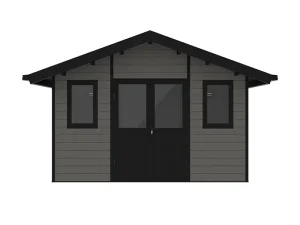
Consolidated multi-line manufacturing enabling full 40ft container loadouts with synchronized batch color matching across decking, siding, and sheds.
Frequently Asked Questions for Importers & Engineers
Detailed insights addressing mechanical tolerances, surface heat mitigation, OEM customization, and logistics consolidation.
While dark colors inherently absorb more thermal energy than light shades, our co-extruded black decking boards utilize specialized near-infrared (NIR) reflective pigments within their outer polyethylene cap layer. This micro-layer reflects up to 35% of solar heat rays compared to raw unshielded black plastic, keeping surface foot contact temperatures significantly lower around poolside and residential terraces.
For residential deck projects with boards installed perpendicular to subfloor joists, we mandate a center-to-center spacing of 350mm to 400mm (14" to 16"). For heavy commercial foot traffic, boardwalk applications, or installations laid on a 45-degree diagonal angle, joist spacing must be reduced to 300mm (12") to ensure maximum deflection rigidity and support.
Yes. Because all four product lines are manufactured directly under our unified quality management system at our facility in Xuancheng, Anhui, China, trade clients can cross-consolidate decking profiles, exterior wall cladding, fence screens, and modular flat-pack garden sheds within single 40ft High Cube containers. This dramatically reduces inventory risk and freight overhead.
Early unshielded composite boards exposed raw wood particles directly to rain and sunlight, leading to mildew colonization and deep greying. Our automated co-extrusion technology molecularly bonds a non-porous polymer shield completely around the composite core. This shields the internal fibers from liquid uptake, chemical spillage, and long-term photolytic breakdown, maintaining a vibrant deep black hue for decades.