
Enterprise Sourcing Portfolio · Section 01
Featured Industrial Structural Profiles
Factory-direct co-extrusion composites, fused density bamboo boards, and modular enclosure architectures tested under ASTM and EN structural durability standards.
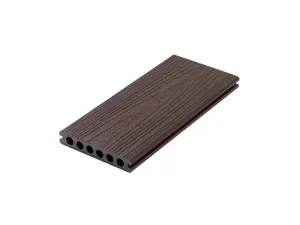
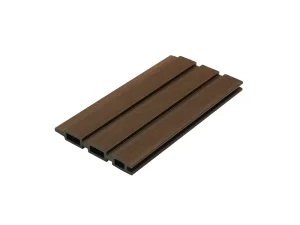
TerraShield Low Maintenance WPC Decking
Configure Profile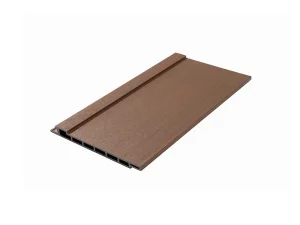
Forestar Engineered Waterproof Façade Cladding
Configure Profile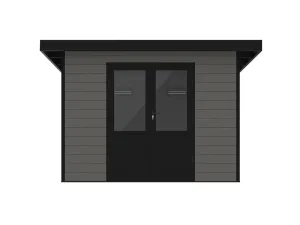
CeilingStar Lockable Modular Utility Architecture
Configure Profile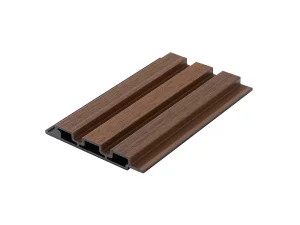
CrestWall Heavy-Duty Composite Wall Siding
Configure Profile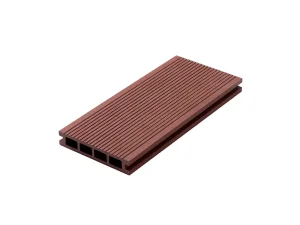
TimberFlow High-Traction Slip-Resistant Planks
Configure Profile
TimberFlow Standard Structural Deck Planks
Configure Profile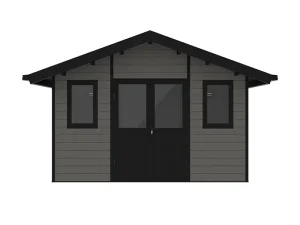
RidgeStar Structural Snow-Load Garden Shed
Configure Profile2008
Established Infrastructure
90%
Recycled Bio-Polymer Base
45+
Sovereign Export Markets
1.2 g/cm³
Thermal Pyrolysis Density
Global Commercial Ecosystem
Industrial Macro Trends: The Structural Shift from Softwood to Fused Bamboo Composites
The international architectural landscape is experiencing an accelerated technological migration away from silica-treated softwoods and deforestation-linked tropical hardwoods (such as Ipe, Cumaru, and Teak). Global anti-deforestation legislations, specifically the European Union Deforestation Regulation (EUDR) and US Lacey Act provisions, have created an unprecedented supply shock in traditional exterior lumber.
As a Tier-1 bamboo deck manufacturer, our engineering paradigm addresses this rupture. Phyllostachys edulis (Moso Bamboo) completes its lignification and structural maturation within 4 to 5 years, sequestering up to 4 times the volume of CO2 per hectare compared to standard oak plantations. Through deep phenolic thermal treatment and thermo-hydro-mechanical densification under 3,000-metric-ton presses, the resulting high-density strand-woven composite achieves mechanical resilience rivaling high-tensile structural steel while remaining permanently carbon-negative cradle-to-gate.
Empirical Engineering Metrics
Parametric Material Science Comparison
Forestar fused-strand manufacturing vs. traditional wood-plastic composites and virgin slow-growth lumber.
| Performance Vector | High-Density Fused Bamboo | Co-Extruded HDPE WPC | Standard Treated Pine | Ipe (Tropical Hardwood) |
|---|---|---|---|---|
| Volumetric Density | 1.15 – 1.25 g/cm³ | 1.25 – 1.35 g/cm³ | 0.45 – 0.55 g/cm³ | 1.05 – 1.10 g/cm³ |
| Modulus of Rupture (MOR) | 120 – 145 MPa | 28 – 35 MPa | 60 – 75 MPa | 130 – 160 MPa |
| Modulus of Elasticity (MOE) | 12,500 – 15,000 MPa | 3,500 – 4,500 MPa | 8,000 – 10,000 MPa | 15,000 – 18,000 MPa |
| Dimensional Swelling (24h soak) | < 0.4% | < 0.8% | 12.5% – 16.0% | 3.5% – 5.0% |
| Reaction to Fire (EN 13501-1) | Bfl-s1 (Self-Extinguishing) | Cfl-s1 / Bfl-s1 | Dfl-s1 | Bfl-s1 |
| Biological Durability (EN 350) | Class 1 (Very Durable) | Class 1 (Bio-Inert) | Class 4–5 (Vulnerable) | Class 1 |
| Lifecycle Carbon Index | -1.24 kg CO2e / kg | +0.85 kg CO2e / kg | -0.45 kg CO2e / kg | High Transport Footprint |
Localized Application Paradigms
Global Macro-Climatic Deployments
Calibrated resilience deployed across extreme maritime, sub-zero, and high-UV commercial zones.
Nordic Freeze-Thaw Thermal Loops
Projects across Scandinavia (e.g., Helsinki and Oslo) subject surfaces to cyclical hygroscopic stresses and micro-fracturing. Our strand-fused profile incorporates hyper-condensed phenolic resin barriers that eliminate hydrostatic absorption, completely neutralizing frost-heave internal cleavage.
Equatorial & Hyper-UV Exposure
Installed across the Gulf Coast, Middle East, and Latin America. Proprietary co-polymer thermal dissipation layers reflect high-energy UV spectrums, maintaining surface core temperatures up to 8.5°C cooler under direct 1,000 W/m² solar load than first-generation polymers.
Hyper-Saline Maritime Infrastructure
Commercial boardwalks, marinas, and resort piers requiring uncompromised salt-fog spray defense. The inert molecular alignment prevents ionic decomposition and galvanic fastening breakdown, retaining complete shear strength over multi-decade cycles.
Enterprise Supply Chain Solutions
Full Lifecycle Engineering Architecture
From raw fiber pyrolysis to automated container packing and BIM structural compliance integration.
Carbon-Zero Feedstock Control
Raw culms harvested exclusively from monitored high-altitude reserves. Fiber strips undergo automated crushing, fiber isolation, and hot de-sugaring baths to extract bio-nutrients that attract rot or termites.
Hyper-Pressure Polymer Impregnation
Strands are submerged in low-VOC thermosetting phenolic matrices, then processed through continuous 220°C high-heat carbonization to achieve irreversible crystallization and Class A/B fire resistance.
Precision CNC Tooling & Calibrated Kerfs
Every board is profiled with sub-millimeter automated four-side planers. Lateral grooving interfaces directly with 304/316 marine-grade stainless fasteners, creating a dynamic load-sharing sub-deck system.
Automated Container Consolidation
Our OEM logistics facility manages 4 diversified outdoor lines under one quality verification pipeline. Consolidate high-density deck boards, WPC cladding, and garden structures into unified shipping manifests.
Innovation Trajectory
Technical Roadmap & Next-Gen Composite Horizons
R&D allocations designed to lead the transformation toward carbon-negative, sensor-integrated smart composite systems.
2026-2027: Bio-Based Polyfurfuryl Resins
Phase-out of synthetic chemical binding agents in favor of agricultural-derived furfuryl alcohol. This transition increases the total biological/recycled material ratio from 90% to 98% while achieving near-zero formaldehyde emissions (EN 717-1 standard: E0 classification).
2028: Smart-Substructure Embedded Sensors
Integration of low-frequency passive RFID and piezoelectric strain nodes within the hollow core of structural joists, allowing automated deflection, moisture, and structural fatigue auditing via handheld IoT readers for public infrastructure tenders.
2029+: High-Reflectance Albedo Nanocoatings
Application of sub-micron titanium oxide molecular shielding within cap layers to achieve a Solar Reflectance Index (SRI) > 78, resolving urban heat island (UHI) accumulation across large-scale municipal plazas and pedestrian thoroughfares.
Enterprise Sourcing Portfolio · Section 02
Specialized Exterior Systems & Enclosures
Direct factory allocation of snow-load engineered sheds, poolside UV capped decks, and co-extruded architectural façades.
RidgeStar Heavy Snow Load Garden Utility Shed
Configure Profile
TerraShield Ultra-Shield Low-Maintenance Deck
Configure Profile
RidgeStar Extreme Environment Modular Building
Configure Profile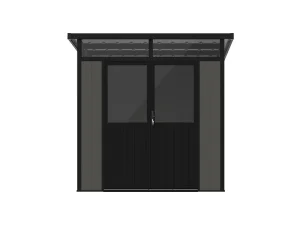
MiniStar Compact Garden Lockable Storage
Configure Profile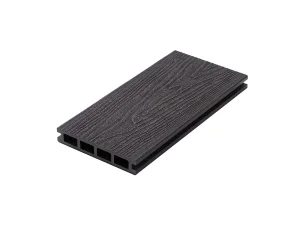
EclipseGrain Waterproof UV-Stabilized Pool Deck
Configure Profile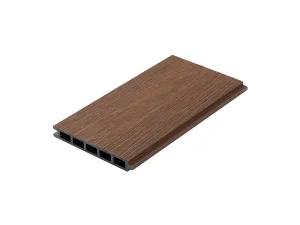
HorizonLine Boundary System Fence Panels
Configure Profile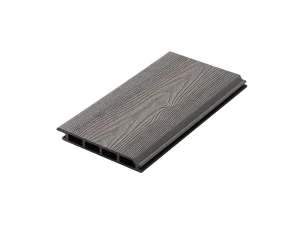
PlaneSleek UV Protected Exterior Architectural Wall
Configure Profile
PlaneSleek High-Tolerance Façade Cladding Siding
Configure Profile
Enterprise Procurement Intelligence
Technical & Procurement FAQ
Definitive answers covering raw material chemistry, structural spans, and container export requirements.
What distinguishes strand woven fused bamboo decking from traditional WPC boards?
Strand-woven fused bamboo is manufactured through deep thermo-pyrolysis and hydraulic compaction of 100% long-strand natural bamboo fibers impregnated with thermosetting phenolic resins under extreme heat. This yields a board density of over 1.2 g/cm³ and a Modulus of Rupture exceeding 120 MPa. Conversely, traditional WPC combines wood flour and polyethylene polymers, yielding higher ductile flexibility but significantly lower tensile load-bearing capacities.
How does high-density bamboo deck satisfy fire and structural safety ratings?
Because oxygen and micro-air pockets are completely compressed out of the cellular matrix under 3,000-ton hydraulic compression, high-density bamboo inherently inhibits flame propagation. When tested according to EN 13501-1 and ASTM E84, it qualifies consistently for European Bfl-s1 and North American Class A/B flame spread indexes without requiring continuous topical retardant coatings.
What substructure joist spacing (span) is mandated for commercial installations?
For standard 20mm profile strand bamboo installations subjected to residential loading, a center-to-center joist span of 400mm (16 inches) is optimal. For heavy commercial walkways, boardwalks, or public hospitality terraces, center-to-center spacing must be reduced to 300mm–350mm (12 to 14 inches) to minimize deflection under 5.0 kN/m² dynamic live load parameters.
Can wholesale distributors order consolidated containers of varied lines?
Yes. Forestar facilities specialize in container-level consolidation. Importers may combine strand-woven bamboo decking, co-extruded HDPE WPC deck boards, fluted exterior cladding, and flat-pack outdoor garden sheds within a single 40ft HQ container, significantly reducing terminal inventory overhead and testing new lines with reduced MOQ risk.
What are the lifecycle maintenance protocols for heavy-traffic public decking?
Unlike virgin timbers that rot, crack, or require yearly scraping and sealing, strand fused bamboo and capped composites merely require periodic pressure washing with clean water or mild bio-degradable detergent. Depending on UV exposure severity, an open-pore penetrating oil finish may be applied every 3 to 4 years strictly to replenish original deep color pigmentation, though structural integrity remains unaffected.