
What Are the Top 10 Types of WPC Board?
Table of Contents
- WPC Board Basics: Composition, Features, and Common Uses
- How WPC Boards Are Classified by Structure and Surface Design
- The Top 10 Types of WPC Board Explained by Material and Application
- How to Compare WPC Board Types for Strength, Durability, and Appearance
- Choosing the Right WPC Board for Indoor and Outdoor Projects
- FAQS
- Conclusion
- Related Posts
Choosing the right Wpc Board begins with understanding how each type behaves in real conditions. A board used for a bathroom wall faces moisture, heat, and daily cleaning. An outdoor decking board must also resist ultraviolet exposure, temperature changes, and repeated foot traffic. These demands are not identical. Neither are the products.
This guide examines the top 10 types of Wpc Board and explains where each one performs best. The comparison considers core materials, surface texture, dimensional stability, water resistance, installation methods, and maintenance needs. It also looks at common uses, including wall panels, ceiling systems, fencing, decking, furniture, and decorative interiors. Product quality can vary widely. Resin content, wood fiber selection, additives, pressing temperature, and surface treatment all influence service life. A smooth board may look attractive but become slippery when wet. A hollow profile may reduce weight but require careful support spacing. Small details matter.
The information reflects practical installation concerns and established material knowledge, not merely catalog descriptions. However, classifications sometimes overlap between manufacturers. One supplier’s “co-extruded board” may differ from another supplier’s version. That deserves attention. Buyers should review technical data, load ratings, fire performance, warranty terms, and local building requirements before ordering. No material is perfect. Even a well-made board can fail when drainage is poor or fasteners are unsuitable. Understanding these ten categories creates a clearer path toward safer choices, better appearance, and longer performance.
WPC Board Basics: Composition, Features, and Common Uses
What Are the Top 10 Types of WPC Board?
WPC board combines wood fiber or flour with a thermoplastic polymer and performance additives. The blend is heated, pressed, and shaped into boards or panels. Common polymers include PE, PP, and PVC. Each changes the board’s hardness, flexibility, and moisture response. Additives may improve color stability, fire performance, or resistance to insects.
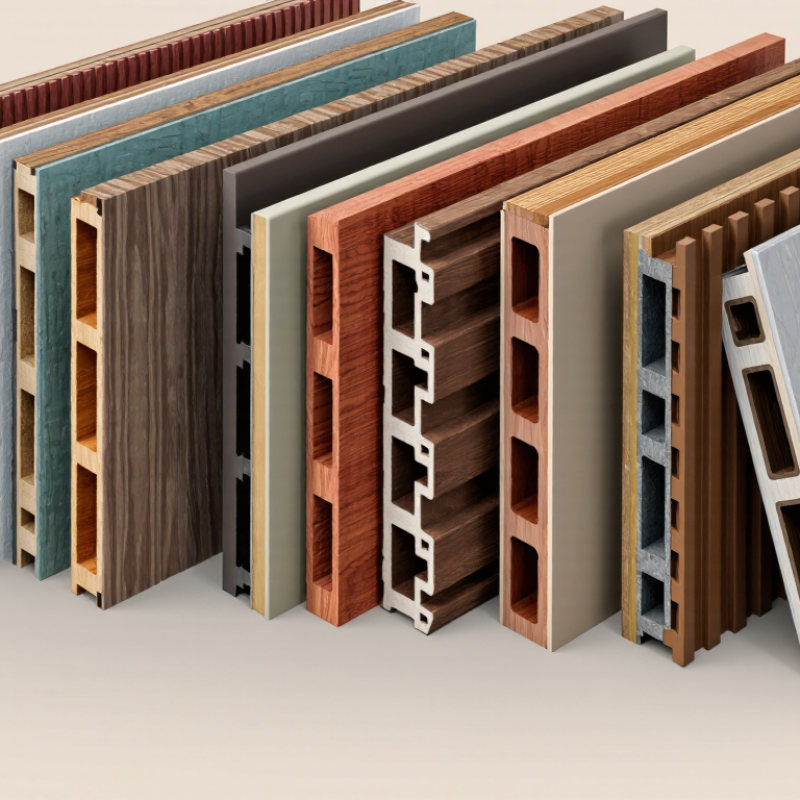
The ten widely used types include PE-WPC boards, PP-WPC boards, PVC-WPC boards, solid boards, hollow boards, co-extruded boards, embossed boards, laminated boards, fire-retardant boards, and decking boards. Solid boards suit cabinets, partitions, and heavy-duty furniture. Hollow boards reduce weight and often serve as wall cladding or ceiling panels. Co-extruded boards use a protective outer layer. They perform better against stains and moisture. Embossed surfaces can imitate wood grain, but appearance varies with production quality.
In practical installation, I check the board’s density, edge quality, screw holding, and expansion allowance. A bathroom panel may resist splashes, yet repeated standing water can still damage weak joints. I would not call every WPC board waterproof. That claim needs test evidence. Outdoor decking also requires proper spacing, ventilation, and stable support. Dark colors may absorb more heat and expand noticeably. Cutting can produce fine dust, so controlled ventilation and eye protection remain sensible. WPC is useful, but it is not maintenance-free. Poor installation can weaken even a well-made board.
Top 10 Types of WPC Board
WPC boards combine wood fibers or flour with thermoplastic polymers and additives. The chart compares representative common thicknesses for major WPC board formats; actual dimensions vary by manufacturer, load requirements, profile design, and installation method.
How WPC Boards Are Classified by Structure and Surface Design
What Are the Top 10 Types of WPC Board?
How WPC Boards Are Classified by Structure and Surface Design
“Top” does not mean universally ranked. WPC boards are classified differently across markets. In practical specification work, structure comes first. The main structural types are hollow-core, solid-core, foamed-core, co-extruded capped, and laminated-core boards. Hollow-core boards reduce weight and material use. Solid-core boards provide stronger screw holding. Foamed-core boards are easier to cut, but may dent under impact. Co-extruded boards add a protective outer layer. Laminated boards use a bonded decorative film. These categories can overlap.
Surface design creates five more recognizable types: smooth, embossed, woodgrain, brushed, and matte-finish boards. Smooth surfaces clean easily. Embossed patterns improve visual depth. Woodgrain designs imitate timber pores. Brushed finishes create fine linear texture. Matte finishes reduce glare in bright interiors. Grand View Research reported that the global WPC market reached about USD 7.12 billion in 2023, with continued growth expected through 2030. This expansion increases demand for lighter cores and more realistic textures. ASTM D7031 also emphasizes testing for moisture, strength, and dimensional stability. Surface appearance alone is not enough. A beautiful board can still warp. Specifications should check density, water absorption, screw retention, and thermal movement. Classification remains imperfect, especially when one board combines a hollow core, a capped layer, and embossed grain.
The Top 10 Types of WPC Board Explained by Material and Application
WPC boards combine wood fibers with thermoplastics, but their performance varies by material and application. The ten common types include PE-WPC decking, PVC-WPC wall panels, PP-WPC furniture boards, wood-flour boards, bamboo-fiber boards, solid boards, hollow boards, capped boards, fire-retardant boards, and acoustic boards. Each type has a different balance of strength, moisture resistance, weight, and surface finish.
PE-WPC decking suits balconies, walkways, and garden platforms because it handles outdoor moisture well. PVC-WPC panels work for interior walls and ceilings, where easy cleaning matters. PP-WPC boards are useful for cabinets and furniture parts. Wood-flour boards provide a warmer texture, while bamboo-fiber boards can create a finer visual surface. Solid boards feel stable under load, but they are heavier. Hollow boards reduce weight and material use, although poorly designed cavities may collect water. Capped boards add a protective outer layer for demanding outdoor areas. Fire-retardant boards support selected public or commercial interiors, subject to local testing rules. Acoustic WPC boards use grooves or perforations to soften reflected sound.
Tips: Check the plastic base, fiber ratio, board density, and edge sealing before buying. A wet-area board is not automatically suitable for structural use. Ask for water absorption, slip resistance, fire, and load data. Some classifications overlap, and that can confuse even experienced buyers. I would also inspect a cut edge; a smooth core usually reveals better manufacturing control. Dark surfaces may become hot in direct sun.
What Are the Top 10 Types of WPC Board? - The Top 10 Types of WPC Board Explained by Material and Application
| No. | WPC Board Type | Polymer Matrix | Main Wood or Mineral Content | Typical Board or Profile | Common Applications | Key Characteristics | Main Considerations |
|---|---|---|---|---|---|---|---|
| 1 | HDPE Wood-Plastic Board | High-density polyethylene (HDPE) | Wood flour, sawdust, or recycled wood fibers | Solid decking boards, cladding boards, outdoor planks | Decking, garden structures, outdoor furniture, pedestrian walkways, wall cladding | Good moisture resistance, impact resistance, corrosion resistance, and outdoor durability; can be profiled and fastened with conventional methods. | Thermal expansion can be significant; prolonged heat and ultraviolet exposure require suitable formulation and stabilization. |
| 2 | PP Wood-Plastic Board | Polypropylene (PP) | Wood fibers, wood flour, or agricultural fibers | Rigid flat panels, interior boards, molded profiles | Interior partitions, cabinets, vehicle components, furniture parts, technical panels | Higher stiffness and heat resistance than many polyethylene-based grades; relatively low moisture absorption when properly compounded. | Requires good fiber dispersion and compatibilization; outdoor grades need protection against ultraviolet degradation. |
| 3 | PVC Wood-Plastic Board | Polyvinyl chloride (PVC) | Wood flour, plant fibers, or mineral additives | Foamed or solid decorative panels, trim boards, wall boards | Wall paneling, ceiling systems, door components, window surrounds, interior decoration | Low water absorption, good dimensional stability, easy machining, and compatibility with extrusion-based panel production. | Can become brittle at low temperatures or under impact if improperly formulated; recycling requires controlled material separation. |
| 4 | Recycled Polyolefin WPC Board | Recycled HDPE, LDPE, PP, or a controlled polyolefin blend | Recycled wood fibers, sawdust, or post-consumer plant fibers | Outdoor boards, pallets, landscaping profiles, utility panels | Temporary flooring, landscaping, agricultural structures, outdoor seating, packaging supports | Uses recovered polymer and fiber feedstocks; offers moisture resistance and can reduce demand for virgin material. | Properties may vary with contamination, polymer mixing, fiber moisture, and processing history; quality control is especially important. |
| 5 | Bamboo-Fiber Plastic Board | Usually HDPE, PP, PVC, or a biodegradable polymer | Bamboo fibers, bamboo flour, or bamboo processing residues | Decorative panels, decking profiles, furniture boards | Interior furniture, wall coverings, outdoor decking, partitions, decorative products | Renewable lignocellulosic reinforcement with a natural appearance; can provide useful stiffness and surface texture. | Bamboo is moisture-sensitive before encapsulation; drying, fiber treatment, and uniform particle size affect final performance. |
| 6 | Rice-Husk Plastic Board | HDPE, PP, PVC, or another thermoplastic matrix | Rice husk powder or rice-husk fiber | Decking boards, cladding, outdoor furniture panels | Exterior wall cladding, garden products, walkway boards, non-structural panels | Makes use of an agricultural by-product and can provide a textured, low-wood appearance with good resistance to biological moisture damage. | Silica-rich husk particles can increase tool wear and may require careful processing and compatibilizer selection. |
| 7 | Natural-Fiber Bioplastic Board | PLA, PHA, starch-based polymer, or another bio-based thermoplastic | Wood flour, hemp, flax, kenaf, bamboo, or other plant fibers | Interior panels, molded sheets, lightweight components | Furniture components, exhibition displays, packaging inserts, interior decorative products | Can contain a high proportion of renewable feedstock and offers a lower-fossil-carbon material route when appropriately sourced. | Many bioplastics have limited heat and moisture resistance; biodegradability depends on the exact polymer and industrial composting conditions. |
| 8 | Mineral-Filled WPC Board | PVC, PP, HDPE, or a polymer blend | Wood fiber combined with calcium carbonate, talc, or other mineral fillers | Rigid wall panels, door boards, trim, and technical sheets | Interior construction, cabinetry, partitions, decorative wall systems, and trim applications | Higher stiffness, improved dimensional control, and a more uniform surface can be achieved through mineral reinforcement. | Excess filler can increase brittleness and density; formulation must balance stiffness, impact strength, weight, and machinability. |
| 9 | Foamed WPC Board | Foamed PVC, HDPE, PP, or another thermoplastic | Wood flour, plant fiber, and physical or chemical foaming agents | Lightweight sheets, hollow profiles, decorative wall boards | Interior wall panels, ceilings, signage, furniture parts, and lightweight construction elements | Lower density and easier handling than solid boards; can provide good dimensional stability and a smooth, paintable surface. | Lower density generally reduces load-bearing capacity and screw-holding strength; edges may need reinforcement for demanding uses. |
| 10 | Co-Extruded or Capped WPC Board | WPC core with a polymer-rich protective outer layer | Wood fiber or wood flour in the core; cap may contain limited or no wood fiber | Capped decking, exterior cladding, railing, and trim profiles | High-exposure decking, balconies, pool surrounds, façades, and outdoor public areas | Protective skin can improve stain resistance, color retention, scratch resistance, and resistance to moisture entering the core. | Usually costs more than uncapped WPC; cutting or damaging the cap can expose the more moisture-sensitive core. |
Note: Actual performance depends on polymer grade, fiber content, additives, density, profile design, surface treatment, manufacturing quality, and installation conditions.
How to Compare WPC Board Types for Strength, Durability, and Appearance
What Are the Top 10 Types of WPC Board?
WPC boards are commonly grouped as hollow, solid, co-extruded, embossed, wood-grain, capped, UV-resistant, fire-retardant, anti-slip, and recycled-content boards. These categories can overlap. A capped board may also be hollow and UV-resistant. That detail matters when comparing performance.
Solid boards usually provide higher impact resistance and stronger screw holding. Hollow boards are lighter and easier to carry, but their edges need careful sealing.
Co-extruded boards add a protective outer layer, which can reduce staining and moisture entry. However, the core quality still affects long-term strength.
Check flexural strength, density, water absorption, and screw-holding data instead of trusting appearance alone.
Durability and Installation Considerations
Durability depends heavily on exposure and installation. For outdoor use, compare UV resistance, freeze-thaw performance, surface temperature, and drainage design. Anti-slip embossing can improve grip, but deep textures may collect dirt. Fire-retardant grades may support safer construction, yet they must match local testing requirements.
Appearance also needs practical review. Wood-grain embossing hides small scratches, while smooth boards show color variation more clearly.
Dark colors often look elegant, but they can become noticeably hotter in direct sun. View samples outdoors, not only under showroom lighting.
Leave the required expansion gaps. A strong board can still warp when installed too tightly.
No type wins every test. The best choice depends on load, climate, maintenance habits, and the finish you can accept after several years.
Choosing the Right WPC Board for Indoor and Outdoor Projects
What Are the Top 10 Types of WPC Board?
Choosing the right WPC board depends on location, moisture, load, and appearance. Common types include solid, hollow, co-extruded, capped, foam, embossed, grooved, fire-rated, UV-resistant, and recycled-content boards. Solid boards suit stair treads, benches, and heavy-use areas. Hollow boards reduce weight for wall cladding and ceilings. Co-extruded boards add a protective outer layer, which helps on sunny patios. For indoor projects, embossed or grooved boards can create warm wall textures without regular painting.
Solid boards suit stair treads, benches, and heavy-use areas.
Outdoor conditions demand closer inspection. A UV-resistant board is useful beside large windows or on exposed balconies. Waterproof construction matters near showers, kitchens, and garden paths. Fire-rated boards may be required for specific interior applications, but ratings must be verified through local testing documents. I have seen attractive boards fail because installers ignored expansion gaps. Small details matter. WPC can still move with temperature changes.
Tips:
Check the board’s technical sheet before buying. Compare thickness, density, surface wear, slip resistance, and temperature limits. Use stainless or approved fasteners outdoors to reduce staining. Leave the recommended gaps at joints and around walls. For indoor use, confirm ventilation and low-emission information. A capped board may cost more, yet it can reduce cleaning work in dusty outdoor spaces. Still, no board is perfect. Color samples can look different under morning sun, and texture may feel too artificial in a quiet room. Test one small section before committing to the full project.
FAQS
It combines wood fiber or flour, thermoplastic polymer, and performance additives. Heat and pressure form the mixture into panels. The polymer affects hardness, flexibility, and moisture response.
Common types include solid, hollow, co-extruded, embossed, laminated, fire-retardant, decking, capped, UV-resistant, and anti-slip boards. These categories can overlap. One board may fit several types.
Solid boards usually offer better impact resistance and screw holding. They suit cabinets, partitions, and heavy furniture. Hollow boards weigh less, but their edges need careful sealing.
Not always. A board may resist splashes but fail after repeated standing water. Weak joints can swell or deteriorate. Test evidence matters more than a waterproof label.
Check density, flexural strength, water absorption, edge quality, and screw-holding performance. Inspect a real sample. Appearance alone can hide weak construction.
Yes, some are suitable for decking, cladding, or outdoor panels. Check UV resistance, drainage, ventilation, and freeze-thaw performance. Leave expansion gaps. Tight installation can cause warping.
Dark boards can become hotter in direct sunlight and expand more noticeably. Embossed grain can hide small scratches. Deep textures may collect dirt. Smooth surfaces show color changes more clearly.
No. They still need cleaning and occasional inspection. Poor drainage, tight joints, or weak supports can shorten service life. I may overestimate their durability without site details.
Installation requires stable support, suitable spacing, and careful edge treatment. Cutting may create fine dust, so use ventilation and eye protection. Measure twice. Mistakes remain visible.
Conclusion
Wpc Board is a versatile composite material made by combining wood fibers or flour with thermoplastic polymers and selected additives. Its balanced composition provides moisture resistance, dimensional stability, low maintenance, and a natural-looking surface. Depending on its structure and finish, WPC boards may be classified as solid, hollow, co-extruded, embossed, laminated, or wood-grain surfaced products. These variations make them suitable for wall panels, ceilings, flooring, partitions, furniture components, outdoor decking, fencing, landscaping, and other decorative or construction applications.
The top ten types of WPC board can be compared according to material composition, internal structure, surface design, intended use, strength, durability, and appearance. Solid boards generally offer greater impact resistance, while hollow boards are lighter and easier to install. Co-extruded and specially treated surfaces often provide enhanced protection against moisture, stains, and weather exposure. For indoor projects, appearance, workability, and low emissions may be priorities; for outdoor projects, water resistance, UV stability, load-bearing capacity, and temperature tolerance are more important. Selecting the right type requires matching these performance characteristics with the project’s environment, design goals, and maintenance expectations.

Blog Tags: