
How to Choose the Best WPC Pool for Global Buyers in 2026?
Table of Contents
- What Is a WPC Pool and Why Is It Suitable for Global Buyers?
- Which WPC Pool Materials and Construction Features Matter Most?
- How to Compare WPC Pool Sizes, Designs, and Installation Methods
- What Quality, Safety, and Climate Standards Should Buyers Check?
- How to Evaluate Suppliers, Costs, Shipping, and After-Sales Support
- FAQS
- Conclusion
- Related Posts
Choosing the best Wpc Pool in 2026 requires more than comparing glossy photographs and low prices. Global buyers must examine material composition, drainage, installation support, warranty terms, and local climate exposure. A pool beside a humid coastline faces different risks from one installed in a freezing inland region. Small details matter, including textured steps, concealed fasteners, UV resistance, and the distance to replacement-part suppliers.
Market evidence supports careful selection. Grand View Research estimates the global wood-plastic composites market at approximately USD 7 billion in 2023, with continued growth through 2030. MarketsandMarkets also identifies construction and outdoor applications as important WPC demand areas. These reports describe the wider material market, not every Wpc Pool sale. That distinction matters. Industry data is useful, but it cannot replace factory audits, sample testing, or installer references.
Professor Andrzej K. Bledzki, a respected WPC materials researcher, describes the foundation clearly: “Wood-plastic composites are materials made from wood and thermoplastics.” Buyers should ask how much wood fiber and polymer the product contains. They should also request test results for water absorption, slip resistance, color retention, and load performance. A beautiful surface can still hide weak engineering.
No checklist is perfect. Product labels may sound stronger than the evidence. Independent verification remains essential. In this guide, global buyers will compare construction quality, environmental claims, certification practices, logistics, and after-sales service. The best Wpc Pool is not always the cheapest or the largest. It is the option that performs predictably where it will actually be installed.
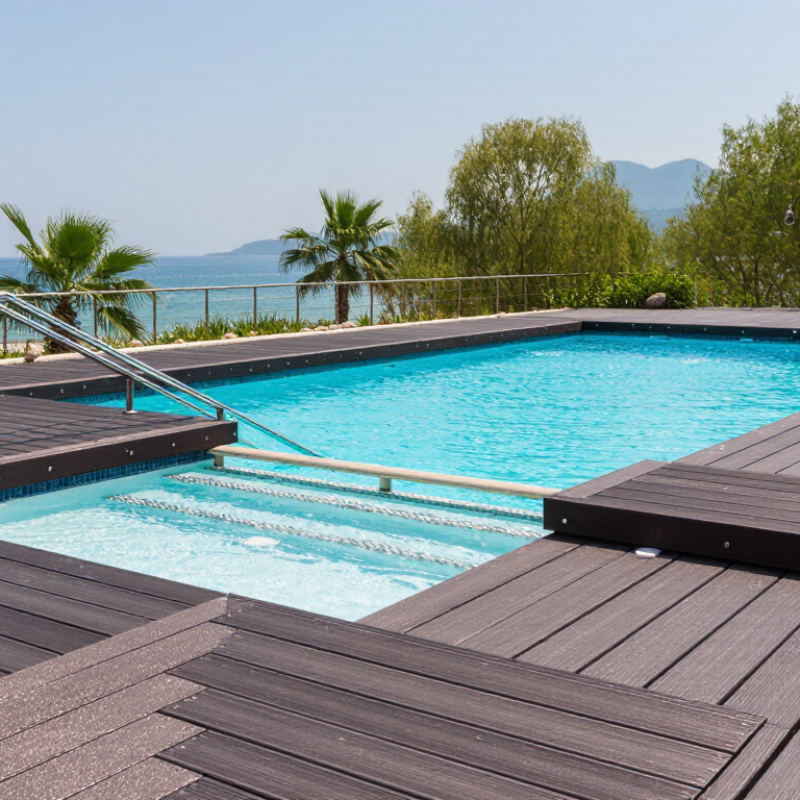
What Is a WPC Pool and Why Is It Suitable for Global Buyers?
A WPC pool uses wood-plastic composite panels, usually made from wood fibers and thermoplastics. The material feels warmer than metal and looks closer to timber. Yet it is not ordinary wood. Properly engineered WPC resists moisture, rot, and surface cracking better than untreated timber.
The global WPC market was estimated at about USD 7.1 billion in 2023, with strong growth forecast through 2030, according to Grand View Research.
This growth reflects demand for durable, lower-maintenance outdoor products. For international buyers, WPC pool systems can offer lighter modular construction, easier cleaning, and flexible installation. They may suit coastal gardens, hotel terraces, and compact residential spaces. However, WPC quality varies significantly. A decorative panel is not automatically suitable for water pressure, sunlight, or repeated temperature changes. EN 15534 and relevant ASTM testing can help buyers check composite performance, but local pool regulations still control the final installation.
Tips: Ask for water-absorption, UV-aging, slip-resistance, and load-test results. Check the liner, frame, drainage, and replacement process, not only the panel color. Confirm chemical compatibility with the planned treatment system. Shipping distance also matters; oversized components can reduce the environmental advantage. I would not choose WPC from photographs alone. A sample left outdoors for several weeks can reveal heat buildup, fading, and surface movement. That small test may prevent an expensive mistake.
Which WPC Pool Materials and Construction Features Matter Most?
Choosing the best WPC pool starts with the material formula, not its surface color. WPC usually combines wood fiber with thermoplastic resin and stabilizing additives. The balance matters. Too much wood may increase moisture absorption. Too much plastic can reduce texture and heat resistance. Ask for water absorption, UV aging, slip resistance, and fire performance data from an independent laboratory.
A dense, well-finished wall should resist swelling, cracking, and repeated wet-dry cycles. However, thicker boards are not always better. Internal reinforcement, joint design, and load distribution often matter more. Look for corrosion-resistant fasteners, sealed connections, and a stable support frame. Proper drainage is essential, especially in regions with heavy rain or freezing temperatures. Water trapped behind panels can quietly damage the structure.
Construction quality decides how the pool performs after installation. Experienced installers should allow movement between WPC panels because heat causes expansion. The foundation must remain level, compact, and properly drained. I have seen attractive pools fail because installers ignored ground settlement. That mistake is easy to overlook. Buyers should request installation drawings, maintenance instructions, test reports, and clear warranty terms. Local climate also deserves attention. A design suitable for a mild coastal area may need different reinforcement in a hot inland region. No material is maintenance-free, despite what some product descriptions imply.
How to Compare WPC Pool Sizes, Designs, and Installation Methods
Choosing a WPC pool in 2026 starts with dimensions, not appearance. Measure the usable area, access route, and equipment space before comparing catalogs. A compact 4 x 2.5 meter pool may suit a narrow courtyard, while larger models need stronger ground preparation and wider delivery access. Depth also affects safety, water volume, cleaning time, and heating costs. In my installation reviews, buyers often underestimate the space around the pool. Leave room for filtration, maintenance, and safe movement.
Compare designs by structure, not only color. WPC wall profiles should feel rigid, align evenly, and resist swelling during repeated moisture exposure. Ask for load data, drainage details, warranty terms, and installation drawings. Some pools use modular panels and a liner; others arrive as more complete units. Panel systems can pass through narrow gates, but they demand accurate leveling. Above-ground installation may reduce excavation, while partially buried designs blend better with gardens. Concrete bases are stable, yet they require curing time and careful drainage. Soil conditions vary. A local installer should confirm frost depth, water discharge, electrical protection, and applicable pool rules.
Tips: Request a sample panel and inspect it outdoors. Compare actual internal dimensions, not advertised footprint. Photograph the delivery path. If one measurement feels uncertain, pause. My own mistake was trusting a flat site that sloped after rain; correcting the base cost more than expected. A written checklist helps, but it cannot replace a site inspection.
How to Choose the Best WPC Pool for Global Buyers in 2026? — Comparing WPC Pool Sizes, Designs, and Installation Methods
Practical comparison of common WPC pool configurations. Dimensions and capacities are indicative planning values; final specifications depend on structural design, local building codes, site conditions, and the selected filtration system.
| Pool Category | Typical Internal Size (L × W × Water Depth) |
Approx. Water Volume* | Recommended Design | Typical Installation Method | Foundation Requirement | Indicative Installation Time | Best For | Main Advantages | Key Planning Considerations |
|---|---|---|---|---|---|---|---|---|---|
| Compact | 3.0 × 2.0 × 1.2 m 9.8 × 6.6 × 3.9 ft |
Approximately 6.5 m³ 6,500 litres 1,700 US gallons |
Plunge pool, compact rectangular pool, or spa-style pool | Above-ground or semi-inground | Level reinforced concrete slab or engineered compacted base; drainage is required around the structure | About 1–3 days after the base and access route are ready | Small gardens, patios, urban homes, holiday rentals, and cooling off | Lower water consumption, easier access to restricted sites, and shorter installation time | Limited swimming length; verify equipment space, safety barriers, and local setback rules |
| Family | 6.0 × 3.0 × 1.35 m 19.7 × 9.8 × 4.4 ft |
Approximately 21.9 m³ 21,900 litres 5,800 US gallons |
Family leisure pool with entry steps or a shallow lounging zone | Semi-inground or fully inground | Reinforced concrete base, stable side support, perimeter drainage, and suitable backfill | About 3–7 days, excluding excavation, curing, utility work, and landscaping | Family use, entertaining, residential gardens, and rental properties | Balanced footprint, comfortable depth, and broad usability for recreation | Allow circulation space around the pool and plan for filtration, electrical supply, and water drainage |
| Large | 8.0 × 4.0 × 1.5 m 26.2 × 13.1 × 4.9 ft |
Approximately 43.2 m³ 43,200 litres 11,400 US gallons |
Large rectangular leisure pool, resort-style pool, or pool with integrated steps | Fully inground | Engineered reinforced base, verified soil conditions, hydrostatic-pressure management, and perimeter drainage | About 5–10 days for the pool structure and equipment installation, excluding civil works | Larger residences, villas, hospitality projects, and high-use recreational areas | More swimming and lounging space with stronger visual impact | Higher excavation, water-treatment, heating, transport, and site-access requirements |
| Lap | 10.0 × 2.5 × 1.35 m 32.8 × 8.2 × 4.4 ft |
Approximately 30.4 m³ 30,400 litres 8,000 US gallons |
Long, narrow lap pool with uniform depth and optional swim current | Fully inground; semi-inground where local ground conditions permit | Engineered reinforced slab, accurate level control, side restraint, and effective groundwater drainage | About 5–10 days for the pool installation, excluding excavation and finishing work | Fitness training, narrow plots, modern residential projects, and wellness facilities | Efficient use of narrow land and suitable geometry for continuous swimming | Requires sufficient length, safe access, non-slip entry details, and careful positioning of circulation outlets |
| Custom | Project-specific dimensions Common depths: 1.2–1.5 m |
Calculated from the approved design Nominal volume should be confirmed by the pool engineer |
Freeform, L-shaped, stepped, corner, or mixed-depth layout | Usually fully inground; complex sites may require retaining structures | Site-specific structural design, soil assessment, drainage, waterproofing details, and access planning | Typically 1–3 weeks for installation; complex civil works may extend the schedule | Architectural projects, irregular plots, luxury homes, and commercial developments | Maximum design flexibility and better use of unusual site geometry | Higher engineering, fabrication, transport, coordination, and maintenance-planning requirements |
| Above-Ground | Usually 3.0–6.0 m long Water depth commonly 1.0–1.35 m |
Approximately 5–24 m³ 5,000–24,000 litres |
Simple rectangular or compact modular design | Above-ground installation with visible exterior wall panels | Rigid, level, load-bearing slab; do not install directly on soil, grass, or loose paving | About 1–4 days after base preparation | Temporary or low-disruption projects, patios, restricted-access sites, and rental properties | Minimal excavation, easier inspection, and generally faster site preparation | Exterior bracing, child safety, wind exposure, visual integration, and local permit requirements must be checked |
| Semi-Inground | Commonly 4.0–8.0 m long Water depth commonly 1.2–1.5 m |
Approximately 15–43 m³ 15,000–43,000 litres |
Partially recessed pool with a raised deck, retaining wall, or sloped-land adaptation | Semi-inground installation with partial excavation | Reinforced slab, engineered lateral support, drainage behind retained sections, and controlled backfill | About 3–8 days after excavation and base preparation | Sloping sites, elevated gardens, split-level landscapes, and projects seeking easier access | Reduces excavation while creating a more integrated appearance than a fully above-ground pool | Retaining-wall loads, groundwater, drainage outlets, and changes in finished ground level require professional review |
| Fully Inground | Commonly 6.0–10.0 m long Water depth commonly 1.35–1.5 m |
Approximately 22–54 m³ 22,000–54,000 litres |
Family, lap, large rectangular, freeform, or architectural design | Fully inground with permanent surrounding finish | Engineered reinforced base, stable excavation, groundwater control, drainage, and suitable backfill materials | About 1–3 weeks including typical structural and equipment work; landscaping may take longer | Permanent residential, hospitality, wellness, and commercial installations | Clean architectural appearance, improved integration with decking, and broad design options | Requires the most detailed planning for excavation, permits, utilities, access, safety, and long-term maintenance |
*Volume note: Approximate volumes are based on a rectangular water surface and an assumed operating fill level of about 90% of the stated internal depth. Actual water volume is reduced by steps, benches, slopes, wall thickness, skimmers, and other internal features. Metric units are primary; imperial conversions are rounded. Installation times are indicative working-time ranges and exclude permitting, ground investigation, excavation, concrete curing, utility connections, landscaping, and adverse weather.
What Quality, Safety, and Climate Standards Should Buyers Check?
How to Choose the Best WPC Pool for Global Buyers in 2026?
What Quality, Safety, and Climate Standards Should Buyers Check?
A reliable WPC pool should have documented material testing, not only attractive surface samples. Ask for the wood-plastic composition, resin type, density, and batch consistency. Check resistance to water absorption, warping, cracking, UV exposure, and repeated temperature changes. Ask for evidence. Independent laboratory reports are more useful than general marketing claims.
Safety requires practical inspection. Confirm slip resistance around wet surfaces, rounded edges, stable handrails, and secure access steps. The pool structure should support expected water pressure, ground movement, and local wind conditions. Drainage also matters. Poor drainage can leave water beneath the structure, especially after heavy rain. Verify that electrical components meet the installation rules of the destination country. Qualified installers should provide clear assembly instructions and maintenance limits.
Climate testing deserves close attention. Coastal buyers should examine salt-air resistance, while colder regions need freeze-thaw performance data. In hot climates, check color retention and surface temperature after prolonged sunlight. I have seen beautiful panels fade quickly when shade was ignored during planning. That mistake is easy to make. A sample may look perfect indoors but behave differently outdoors. Request installation references from a similar climate, inspect warranty exclusions, and confirm replacement-part availability. No checklist catches every site mistake, so an independent local inspection remains worthwhile.
How to Evaluate Suppliers, Costs, Shipping, and After-Sales Support
Choosing a WPC pool in 2026 requires more than comparing catalog prices. Grand View Research valued the global wood-plastic composites market at about USD 7.1 billion in 2023, with projected annual growth of 11.6% through 2030. This growth attracts new suppliers, but experience matters. Request production photos, material specifications, UV-resistance results, and independent load or slip tests. A low price can hide weak profiles, poor drainage, or inconsistent color batches.
Calculate the landed cost, not only the factory quotation. Include packaging, inland delivery, ocean freight, insurance, duties, installation parts, and local handling charges. UNCTAD’s Review of Maritime Transport 2024 reported continuing disruption and volatility in shipping networks. Ask suppliers for two freight options and a clear Incoterm. My first estimate is often wrong. Container volume changes quickly when panels need protective frames.
After-sales support deserves a written test. Ask how quickly technical questions receive answers, which parts remain available, and who pays for replacement shipments. A practical supplier should provide installation drawings, water-treatment guidance, spare components, and a claims process with photo evidence. Check whether the warranty covers fading, cracking, fittings, and structural failure separately. Do not accept “lifetime” without conditions. Small details matter. A video call with the factory can reveal storage problems, rushed packing, or unclear responsibility. Supplier audits and a paid sample may feel slower, but they reduce expensive surprises.
FAQS
A WPC pool uses wood-plastic composite panels. These panels combine wood fibers and thermoplastics. They look like timber but resist moisture better than untreated wood. The surface may feel warmer than metal.
Modular panels can simplify transport and installation. They may suit coastal gardens, hotel terraces, and compact homes. Cleaning can also be easier. However, local installation rules still apply.
No. Decorative panels may not handle water pressure or repeated temperature changes. Ask for load, water-absorption, UV-aging, and slip-resistance test results. Appearance alone proves little.
Check the liner, frame, drainage, fittings, and replacement process. Confirm chemical compatibility with the planned water-treatment system. A complete sample matters more than a glossy photograph.
Leave a sample outdoors for several weeks. Watch for fading, heat buildup, warping, and surface movement. It is a small test. It may prevent a costly mistake.
Include packaging, inland delivery, freight, insurance, duties, installation parts, and local handling. Oversized protective frames can increase container volume. My first estimate may be wrong.
Request production photos, technical specifications, and independent test results. Ask about spare parts and response times. A video call can reveal rushed packing or poor storage. Small details matter.
The warranty should separate fading, cracking, fittings, and structural failure. Ask about claim evidence and replacement shipping costs. Do not accept vague lifetime promises. Conditions matter.
Conclusion
Choosing the best Wpc Pool for global buyers in 2026 requires more than comparing appearance and price. Buyers should understand how wood-plastic composite materials combine water resistance, structural stability, and low maintenance, while checking the pool’s frame, liner, drainage, filtration, and connection systems. Size, shape, depth, and installation method should match the available site, local climate, intended use, and construction capabilities. Modular designs may simplify transportation and assembly, while customized solutions can better suit complex spaces.
Before placing an order, buyers should verify material quality, load capacity, slip resistance, water safety, weather durability, and compliance with applicable regional standards. Supplier evaluation should include manufacturing experience, product testing, technical documents, transparent quotations, packaging quality, shipping arrangements, installation guidance, spare parts, warranty terms, and responsive after-sales support. A reliable decision balances long-term performance, total ownership cost, logistics, and service—not simply the lowest initial price.

Blog Tags: